
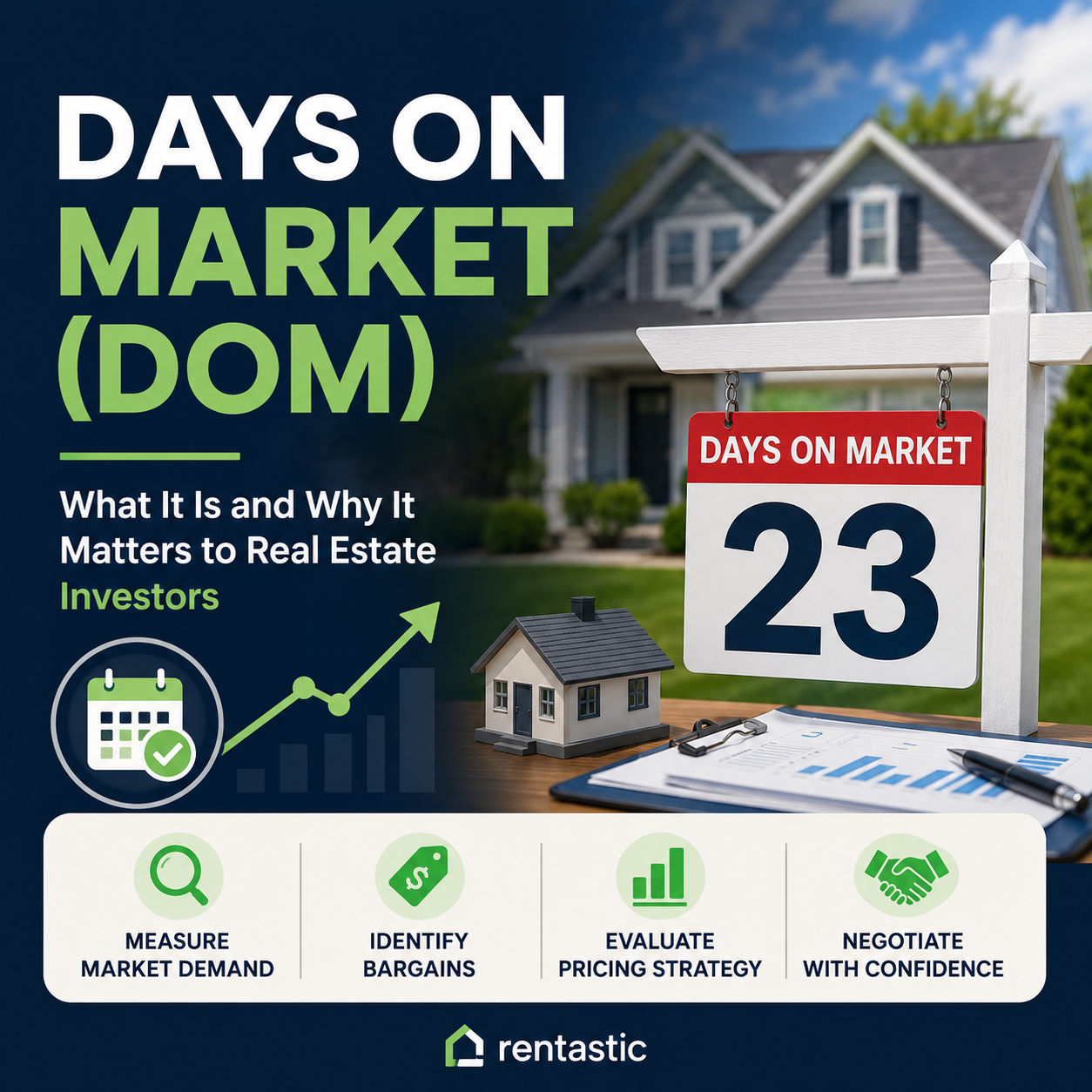
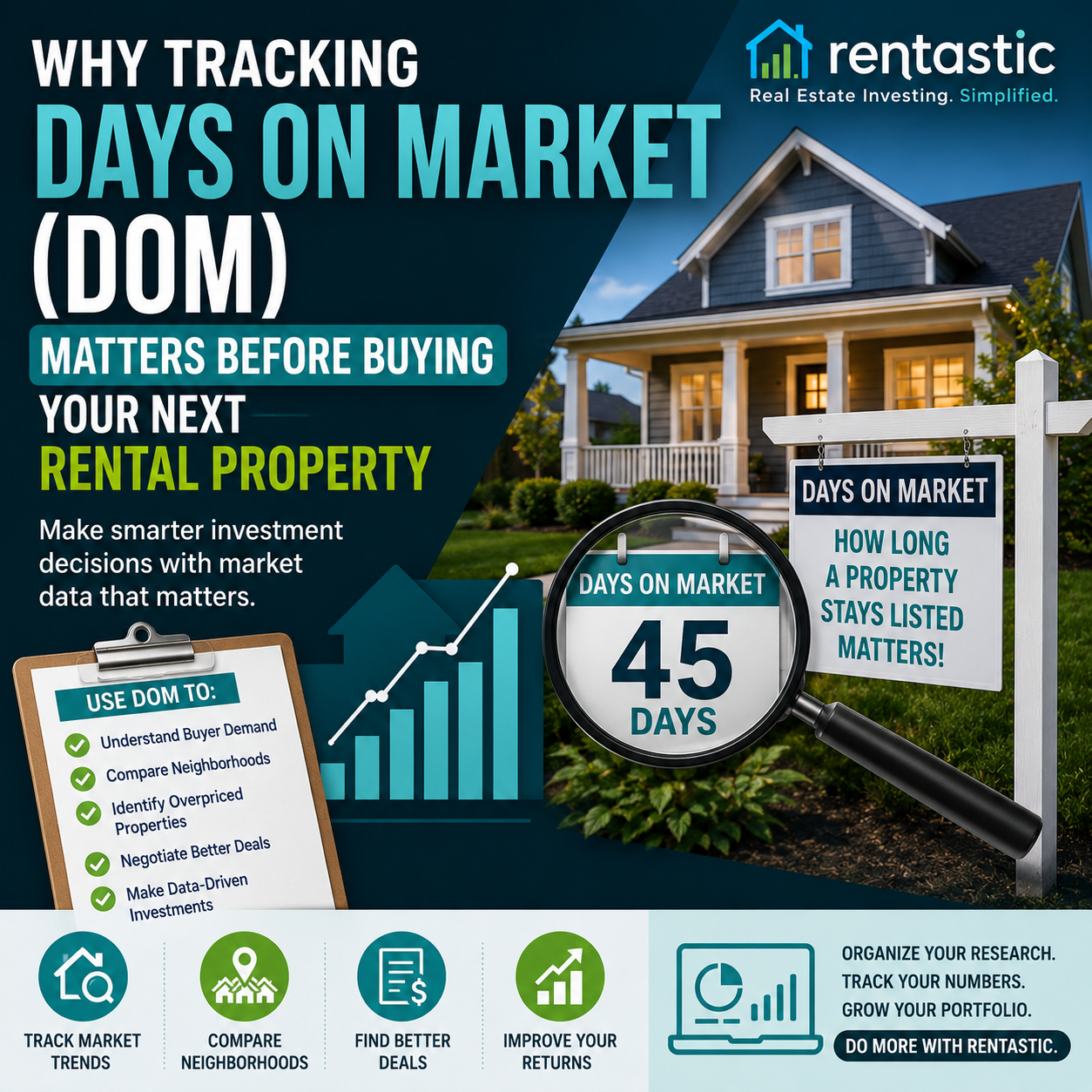
Whether you're buying your first rental property or expanding a portfolio, understanding Days on Market (DOM) can help you make smarter investment decisions. DOM is one of the simplest yet most valuable metrics in real estate because it provides insight into market demand, pricing trends, and potential opportunities.
In this guide, we'll break down what DOM means, how it's calculated, and how investors can use it to identify profitable deals.
Days on Market (DOM) refers to the number of days a property remains actively listed for sale before it goes under contract or is removed from the market. It is commonly used by real estate professionals, buyers, sellers, and investors to measure how quickly homes are selling in a particular market.
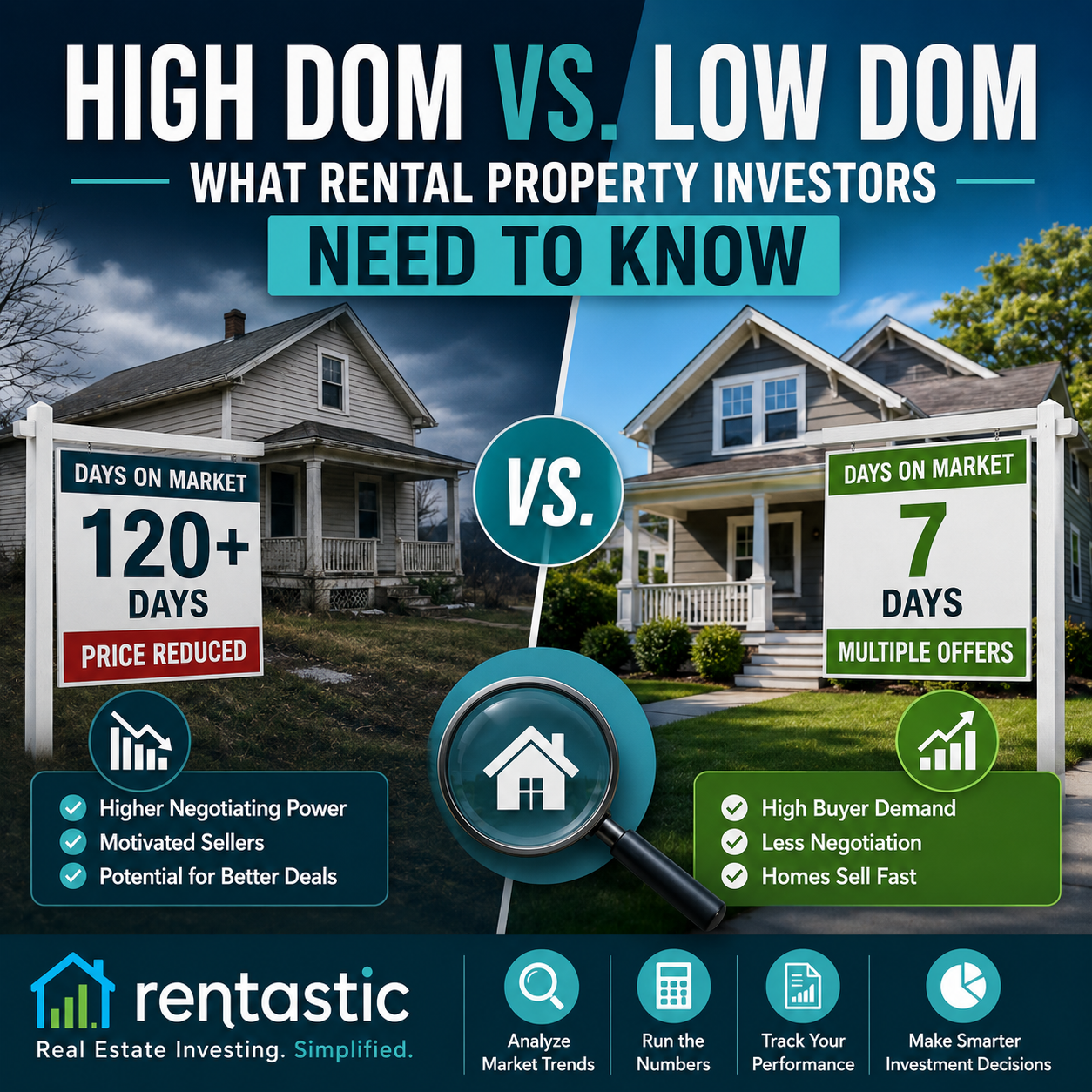
A property with a low DOM typically indicates strong buyer demand and competitive pricing. On the other hand, a high DOM may suggest that a property is overpriced, has condition issues, or is located in a slower-moving market.
Successful investors don't just analyze individual properties—they analyze the market itself. DOM provides valuable clues about local market conditions and can help investors identify opportunities before others do.
Average DOM can reveal whether a market is hot or cooling down.
Investors can use this information to decide whether to move quickly on a deal or negotiate more aggressively.
Properties that have been sitting on the market longer than comparable listings may present opportunities for investors.
A seller with a high DOM listing may be more motivated to:
While a high DOM doesn't automatically mean a property is a good deal, it often warrants a closer look.
DOM can also help investors determine whether a property is priced appropriately.
For example:
Understanding pricing trends can help investors avoid overpaying while identifying undervalued assets.
The calculation is straightforward:
DOM=Total Days Active on MarketNumber of PropertiesDOM=\frac{\text{Total Days Active on Market}}{\text{Number of Properties}}DOM=Number of PropertiesTotal Days Active on Market
For an individual property, DOM simply measures the number of calendar days between the listing date and the date it goes under contract or is removed from the market.
For example:
DOM = 20 days
Investors often look at the average or median DOM across a neighborhood or city to understand overall market velocity.
The answer depends on the local market.
In highly competitive markets, properties may sell within days. In slower markets, a property could remain active for several months and still be considered normal. DOM should always be evaluated relative to comparable properties in the same area.
As a general guideline:
The key is comparing a property's DOM against local averages rather than using a national benchmark.
For rental property investors, DOM can reveal valuable insights beyond the purchase itself.
Markets where DOM is steadily decreasing may indicate growing demand and increased investor activity.
Properties with longer DOM often provide more room for negotiation, potentially improving cash flow and return on investment.
Tracking average DOM alongside vacancy rates, rent growth, and inventory levels can help investors make more informed decisions about where to buy next.
While DOM is useful, it shouldn't be viewed in isolation.
Some limitations include:
Because of these factors, investors should combine DOM with other market indicators such as inventory levels, rental demand, cash flow projections, and comparable sales.
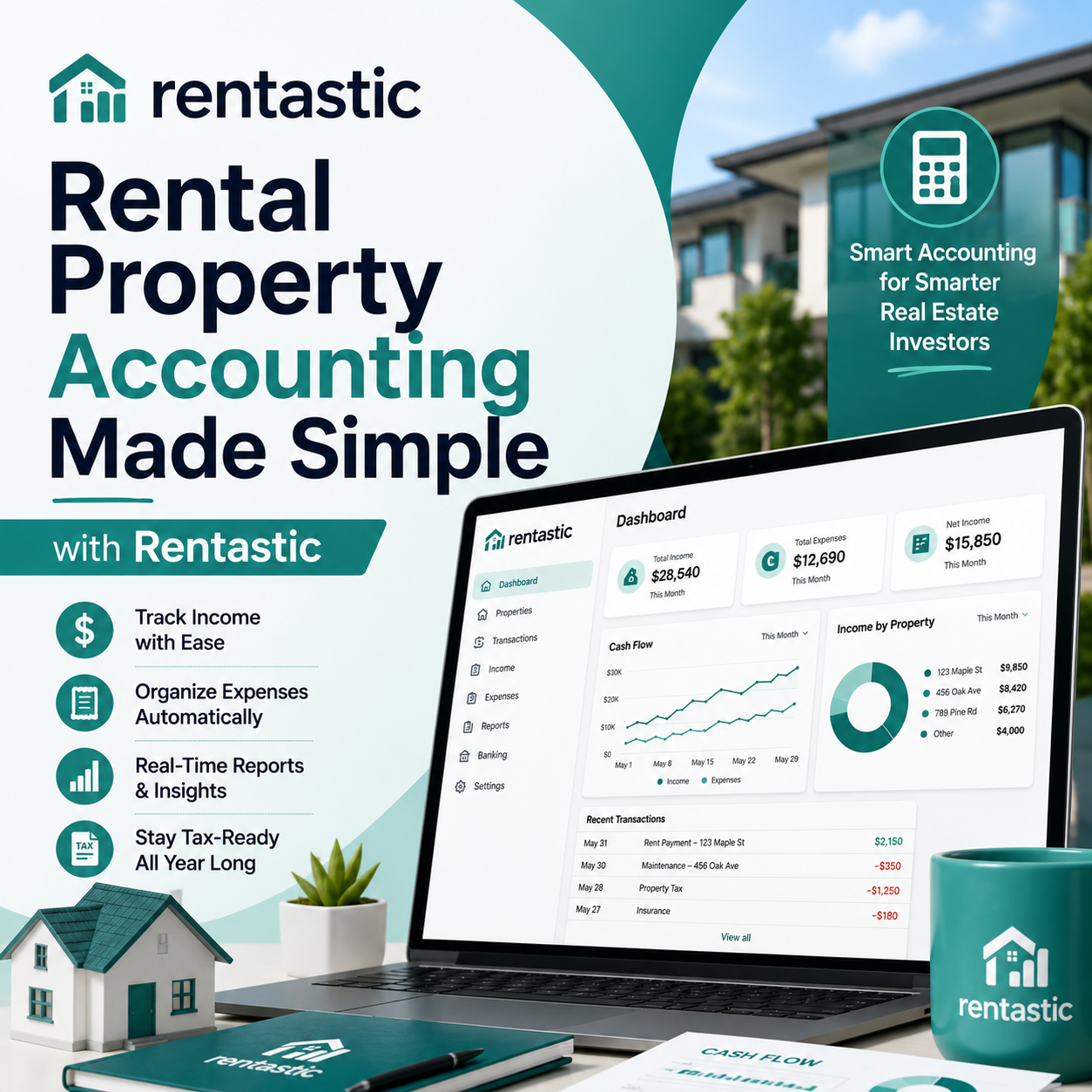
While DOM helps investors evaluate acquisition opportunities, long-term success depends on tracking property performance after the purchase.
With Rentastic, investors can:
Combining market intelligence like DOM with accurate financial tracking allows investors to make data-driven decisions and maximize returns.
Days on Market is one of the most valuable indicators for understanding real estate market activity. Whether you're evaluating a new investment, analyzing a neighborhood, or negotiating a purchase, DOM provides insight into demand, pricing, and market momentum.
By understanding how DOM works and combining it with strong financial tracking tools like Rentastic, investors can make more informed decisions and build stronger, more profitable portfolios over time.
RECENT POSTS


© 2025 Rentastic
Rentastic is registered as a trademark. Terms and conditions, features, support, pricing, and service options subject to change without notice.









.png)






























.png)




































Comments