
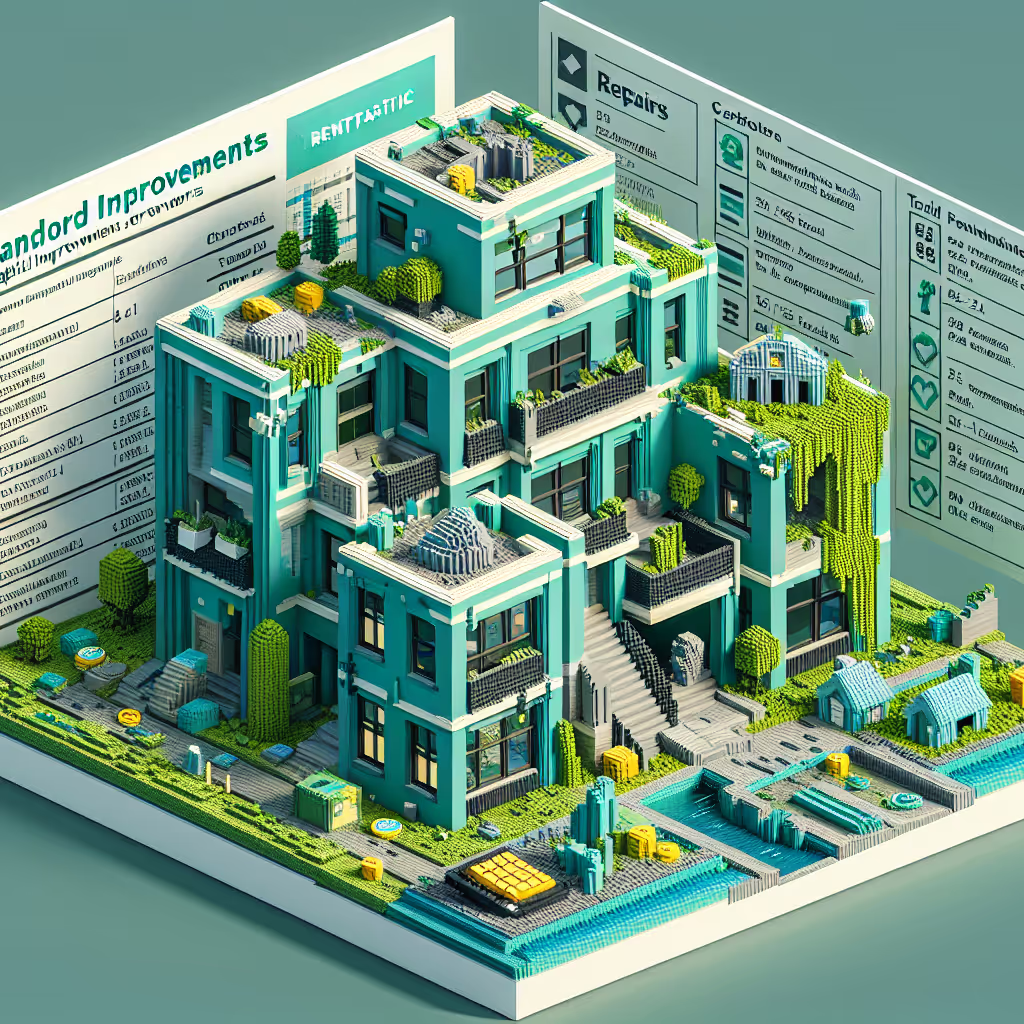
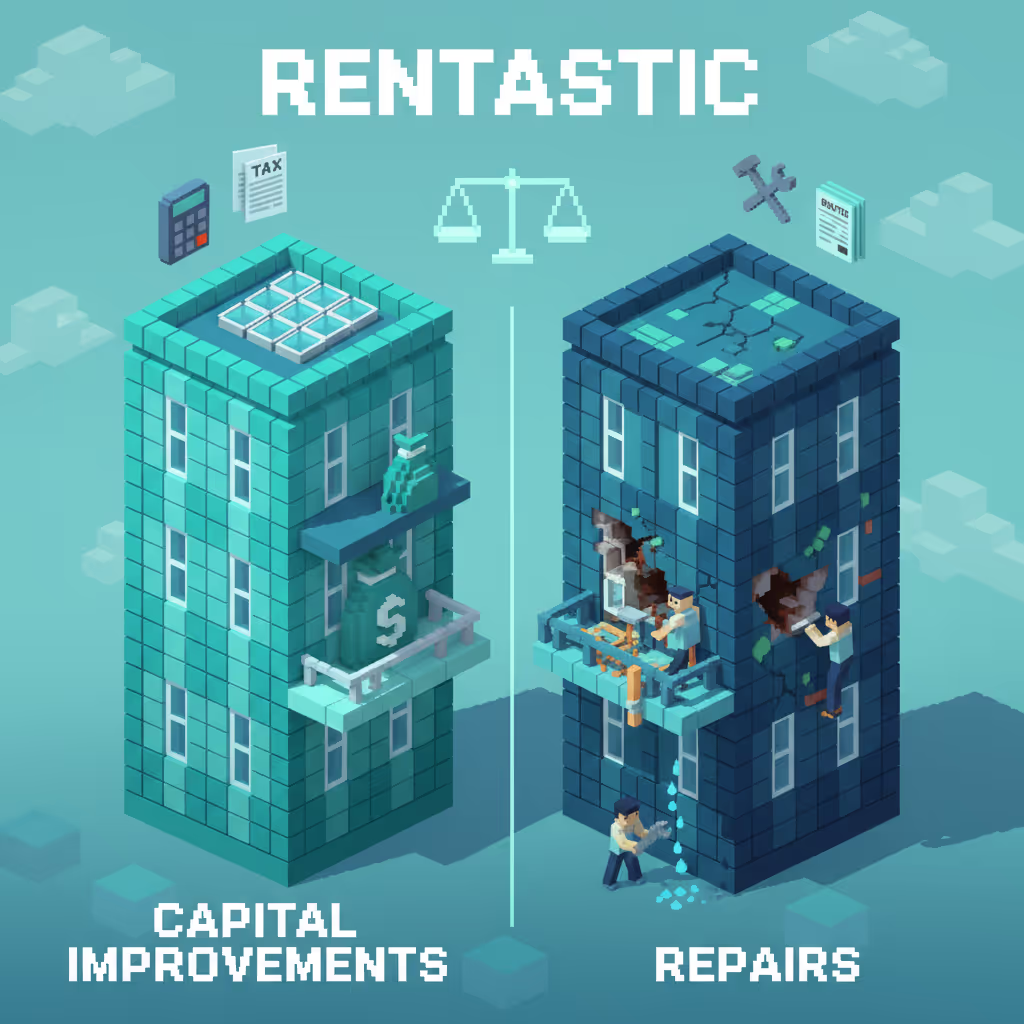
Nearly every rental property expense you pay falls into one of two tax buckets: capital improvements or repairs. Get this line wrong and you can easily overpay thousands in taxes over the life of a property. Get it right and you keep more cash in your pocket today and build a cleaner paper trail in case the IRS ever comes calling.
This guide walks you through capital improvements vs repairs in plain language, shows you how the IRS thinks about each one, and explains how tools like rentastic can make the recordkeeping piece far less painful.
Before you dive into the rules, you need to see why this split is such a big deal for your tax bill.
Repairs usually count as current expenses. In many cases, you can deduct them in full in the year you pay them, which directly reduces your taxable rental income right now. Capital improvements are treated very differently. Most of the time you must recover those costs slowly through depreciation, often over 27.5 years for residential rental property, as the Rentastic blog explains for real estate investors focusing on long term planning (Rentastic).
If you mislabel a deductible repair as a capital improvement, you delay your tax benefit for decades. If you mislabel an improvement as a repair, you risk having deductions denied and facing penalties. Accurate categorization, backed by clear documentation, is both a tax saver and an audit shield.
This is where a dedicated platform like rentastic helps you treat each cost correctly and keep the backup you need if the IRS asks questions.
A repair keeps your property in its current condition. It fixes damage or wear and tear, but it does not add new value or extend the useful life of the property in a meaningful way.
In practice, repairs often look like:
The Rentastic blog notes that these types of expenses can typically be deducted in full in the year you incur them, as long as they are ordinary and necessary for operating your rental business (Rentastic). That immediate deduction lowers your taxable income for the year and boosts your cash flow.
You still need to treat repairs carefully. If the repair is part of a larger project that clearly improves the property, the IRS may decide the whole job is a capital improvement. That is why tying each expense to a clear description and invoice in a system like rentastic is worth the extra minute.
Capital improvements are upgrades that add value, extend the useful life of the property, or adapt the property to a new use. You generally cannot deduct these all at once. Instead, the IRS requires you to depreciate them, often over 27.5 years for residential rentals, which the Rentastic team emphasizes as the key long term tradeoff compared with immediate write offs on repairs (Rentastic).
Examples of capital improvements include:
These types of projects change the property in a substantial way. They increase value or extend usefulness beyond simple maintenance.
The good news is that capital improvements can still be powerful tax tools when you plan for them. Rentastic highlights strategies around capital improvements depreciation and even Section 179 immediate write offs for qualifying assets, plus 1031 exchanges when you trade up to another investment property, all as part of a broader rental property tax strategy (Rentastic).
The IRS knows that drawing a line between capital improvements and repairs is not always clean. To simplify things, there are several safe harbor rules that, if you qualify and follow the rules, can let you currently deduct expenses that might otherwise look like improvements.
Rentastic highlights three especially important safe harbors for landlords (Rentastic).
If your property is valued under 1 million dollars, you may qualify for the Safe Harbor for Small Taxpayers. Under this rule, you can currently deduct certain repairs and maintenance costs, and even some smaller improvements, up to the lesser of:
Rentastic notes that this can dramatically simplify your tax life for small properties by letting you skip complex capitalization decisions for many routine costs, as long as you stay within those limits (Rentastic).
The Routine Maintenance Safe Harbor lets you treat some recurring work as repairs, even if it might look like it improves the property, as long as the work:
Examples might include regularly scheduled roof inspections and minor fixes, or servicing a furnace on a predictable schedule. With solid records, you can avoid capitalizing every recurring maintenance project by relying on this safe harbor (Rentastic).
The De Minimis Safe Harbor is all about smaller purchases. If the cost of a tangible property item is below a certain dollar threshold per invoice or per item, you can generally expense it immediately instead of capitalizing and depreciating it.
Rentastic highlights that this rule is especially useful for items under 2,500 dollars per invoice or per item for landlords who do not have an applicable financial statement, which covers most small investors (Rentastic). Think appliances, small fixtures, or minor building components that fall under this dollar cap.
The key to using all three safe harbors confidently is documentation. You need invoices that clearly show cost per item, dates, and descriptions that support your classification. This is exactly the type of detail rentastic captures when you import and tag transactions throughout the year.
When the safe harbors do not settle the question, you can fall back on the IRS's improvements framework, which Rentastic breaks down for real estate investors (Rentastic).
The IRS expects you to capitalize costs that are:
If a project falls into one of these categories, you are usually looking at a capital improvement, not a repair. If it does not, and it simply keeps the property in its present condition, you are more likely dealing with a repair.
This is where consistent descriptions in your accounting system matter. With rentastic, you can attach notes to transactions and, when needed, add context like "recurring furnace service" or "full roof replacement after 25 years" so your intent and classification are clear in your records.
Putting theory into real scenarios can help you make decisions faster and more confidently.
Repainting a unit between tenants, with no layout changes or structural work, is typically a repair and can be expensed currently. It simply refreshes the space and addresses normal wear.
Fully remodeling a dated kitchen with new layout, cabinets, and built in appliances is usually a capital improvement. It adds significant value and extends the useful life of that area.
Patching several roof leaks with shingles that match the existing roof is a repair, while replacing the entire roof covering is a capital improvement that will generally need to be depreciated over time.
Replacing one broken window with a similar unit is a repair, but replacing all windows in the building with high efficiency units is more likely a capital improvement, even though you also gain energy savings. Rentastic specifically notes that investors can sometimes pair improvements like these with credits such as the Energy Efficient Home Improvement Credit, which can soften the long recovery period and improve overall tax savings (Rentastic).
Correct classification only helps you if you can prove it. The IRS expects landlords to maintain meticulous records of income and expenses, and Rentastic repeatedly emphasizes that strong recordkeeping is the foundation of every other tax move you make (Rentastic).
With rentastic, you can:
The Rentastic team explains that this approach eliminates most manual entry, reduces errors, and organizes your financial data for easy access at tax time (Rentastic). It also means you do not have to reconstruct a year's worth of spending from memory in March.
When everything is imported, categorized, and documented through the year, tax season gets much easier.
Rentastic describes how the platform automatically generates profit and loss statements by property, portfolio, or custom date range, which both simplifies tax preparation and helps you evaluate ongoing cash flow performance (Rentastic Blog). With well organized repair versus improvement categories, your Schedule E numbers become almost plug and play.
The Rentastic blog notes several key advantages to this kind of automation (Rentastic):
If you tag payments such as property management fees, utilities, and contractor invoices all year long, those costs are ready to copy into your tax forms instead of being scrambled together from boxes of receipts.
You hope you never face an IRS audit, but your bookkeeping should assume that you might. Rentastic stresses the importance of documentation that supports every deduction you take, especially for large repairs and improvements and for any expense you classify under a safe harbor (Rentastic).
A strong audit ready workflow looks like this:
If your return is questioned later, you can immediately pull a report for the year in question, search by vendor or category, and show exactly what you did and why you treated it as a repair or improvement.
Clean records do more than protect you in an audit. They also give you the confidence to take every legal deduction you are entitled to, instead of leaving money on the table out of caution.
Capital improvements are not the enemy. They are a tool, and when you plan for them, they can increase both property value and long term tax benefits.
Rentastic's tax write offs guide highlights some of the more advanced strategies you can use around improvements and other big ticket items (Rentastic):
Couple these strategies with credits like the Energy Efficient Home Improvement Credit or deductions for medically necessary home adaptations, which Rentastic calls out as additional tax saving levers for landlords (Rentastic). With a clear plan, even long lived improvements can play a big part in your tax and investment strategy.
No matter how good your software is, there will be gray areas. The Rentastic blog repeatedly encourages investors to work with tax professionals who specialize in real estate and who hold credentials such as CPA or EA, so you can uncover every legal deduction and build a forward looking tax plan, not just a rearview mirror one (Rentastic).
Your role is to track everything consistently and accurately through the year with a tool like rentastic. Their role is to apply the latest IRS rules, identify opportunities you might miss, and confirm your classification choices on tricky projects.
Together, you move from a last minute tax scramble to a steady, year round habit of smart planning. Rentastic describes this shift as critical for first time landlords who want to capture the full value of their rental property tax deductions instead of rushing through them at filing time (Rentastic).
You do not need to master every nuance of the tax code to stop overpaying on your rentals. You just need a simple, repeatable approach.
Start applying this framework to the very next invoice that hits your rental bank account. With the right habits and the right tools, you will know which costs to expense today, which to capitalize for tomorrow, and how to keep every dollar of legal tax savings your properties can generate.
RECENT POSTS


© 2025 Rentastic
Rentastic is registered as a trademark. Terms and conditions, features, support, pricing, and service options subject to change without notice.









.png)































.png)



































Comments