
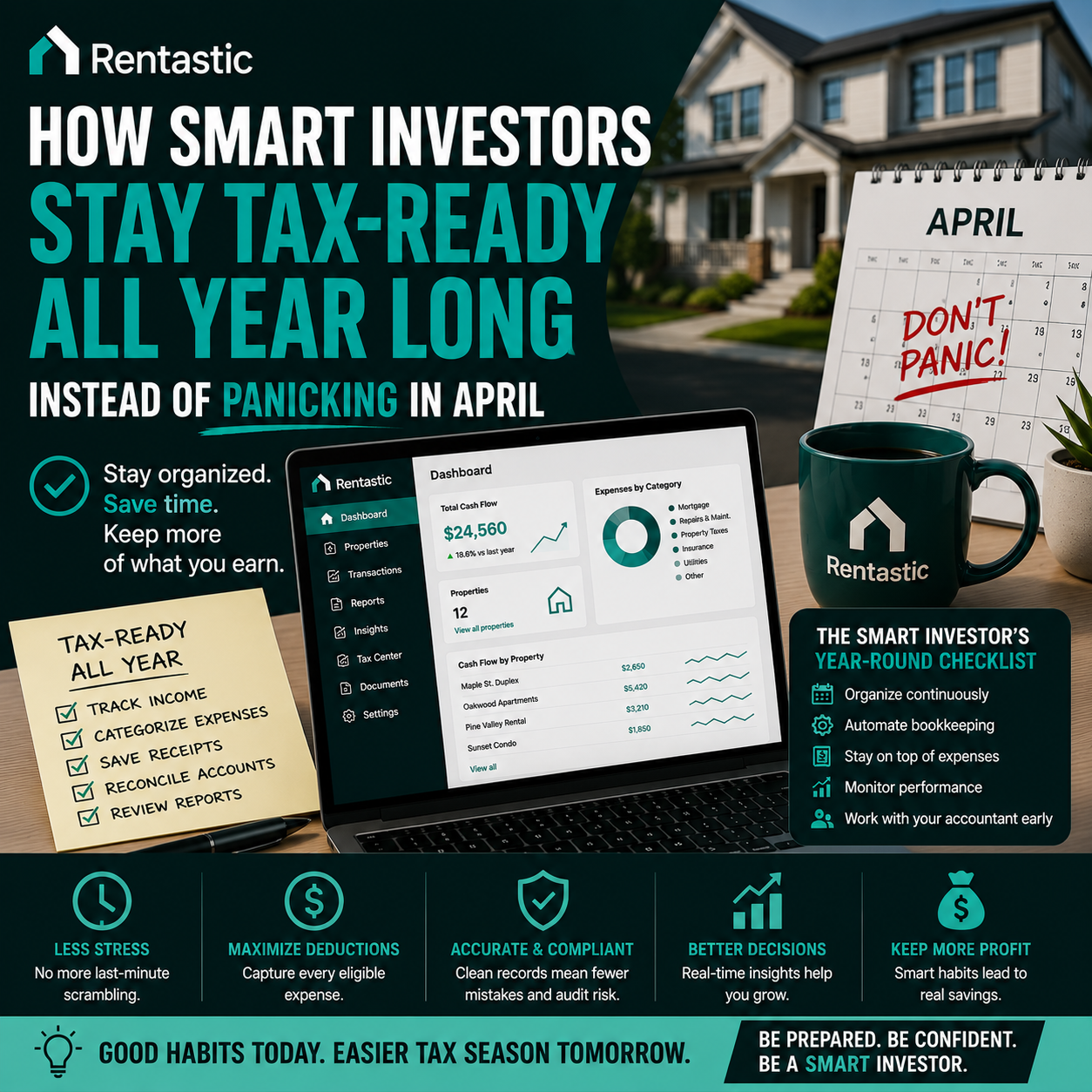
Most tax season stress doesn’t actually begin in April.
It starts throughout the year when financial organization gets delayed.
Small bookkeeping issues slowly pile up:
By the time filing deadlines arrive, investors are forced to clean up an entire year of financial activity all at once.
That’s overwhelming for anyone—especially growing property owners.
Smart investors avoid this by treating bookkeeping as an ongoing process instead of a once-a-year emergency.
Successful investors don’t wait until tax season to review their finances.
They maintain updated records throughout the year.
This means:
When financial data is continuously maintained, tax preparation becomes dramatically easier because most of the work is already done.
Instead of “catching up,” investors simply review and finalize organized records.
Manual bookkeeping creates unnecessary work and increases the chance of errors.
That’s why many experienced investors rely on automation to stay organized consistently.
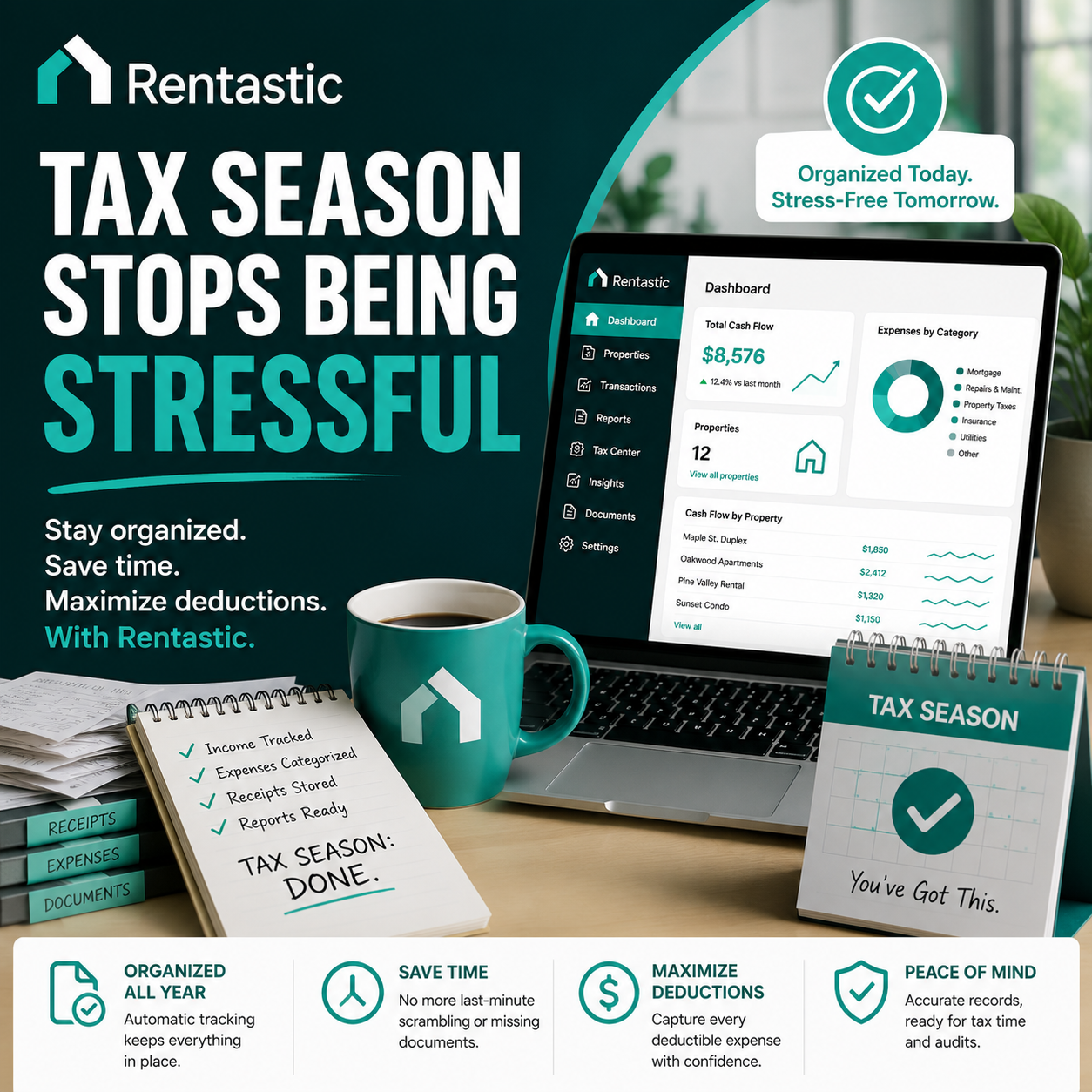
Platforms like Rentastic help simplify bookkeeping by:
Automation helps investors maintain cleaner books without spending hours updating spreadsheets manually.
The less bookkeeping depends on memory and manual work, the easier tax season becomes.
One of the fastest ways to create tax-season confusion is mixing personal and property-related expenses.
Smart investors maintain clear financial separation whenever possible.
This creates:
When accounts stay organized throughout the year, investors spend less time sorting through transactions later.
And accountants can work much more efficiently with cleaner financial records.
Waiting months to categorize expenses creates problems.
It becomes harder to remember:
Experienced investors handle categorization consistently while transactions are still fresh and easy to identify.
This improves:
And it eliminates the massive cleanup process many investors face before filing.
Smart investors don’t only look at their numbers during tax season.
They use financial tracking to actively manage and improve their portfolio throughout the year.
Regular visibility into:
helps investors make better operational decisions long before tax filing begins.
Good bookkeeping becomes a business tool—not just a tax requirement.
Paper receipts create clutter and often disappear when they’re needed most.
Experienced investors increasingly rely on digital organization to simplify recordkeeping.
Important documents like:
are easier to store, organize, and access digitally.
This reduces stress and improves preparedness if documentation is ever needed later.
One of the most overlooked habits smart investors follow is routine reconciliation.
This means regularly comparing bookkeeping records against:
Why does this matter?
Because small errors become much harder to fix later.
Routine reconciliation helps investors identify:
before those issues become major tax-season problems.
Successful investors don’t wait until the last minute to contact their accountant.
They prepare early.
Meeting with accountants ahead of filing deadlines gives investors time to:
When books are already clean and organized, tax preparation becomes faster, smoother, and far less stressful.
One reason investors fall behind on bookkeeping is because they think everything has to be perfect.
In reality, consistency matters far more.
Small financial habits repeated regularly create:
Smart investors know that staying reasonably organized throughout the year is far better than trying to rebuild everything at the last minute.
The biggest advantage of year-round organization isn’t just smoother tax filing.
It’s better business management overall.
When investors stay financially organized consistently, they gain:
Tax readiness becomes a byproduct of running a more organized investment business.
Real estate investors don’t have to panic every April.
The investors who experience the least stress during tax season are usually the ones who stay organized all year long.
They:
The result is simple:
Less scrambling.
Fewer mistakes.
Cleaner books.
Smarter financial decisions.
And when tax season finally arrives…
They’re already ready.
RECENT POSTS


© 2025 Rentastic
Rentastic is registered as a trademark. Terms and conditions, features, support, pricing, and service options subject to change without notice.






.png)


























.png)




































Comments