
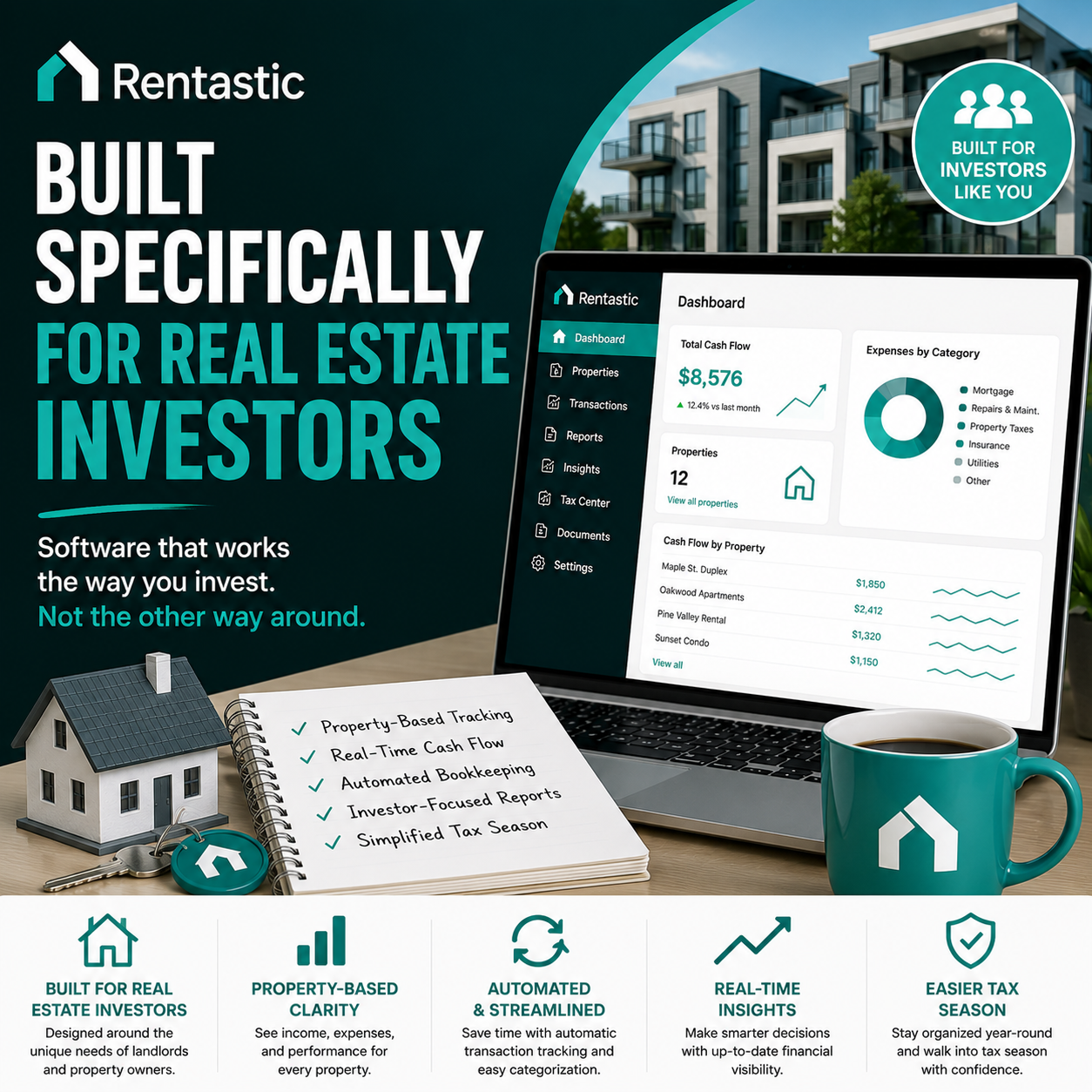
Most financial software wasn’t designed for real estate investors.
It was designed for general businesses.
That may not seem like a major issue at first, but landlords quickly discover the problem: generic accounting platforms force investors to adapt their workflow to fit the software instead of supporting the way real estate investing actually works.
That creates friction.
Investors end up spending extra time customizing spreadsheets, creating workarounds, organizing transactions manually, and trying to make business-focused accounting tools function for rental properties.
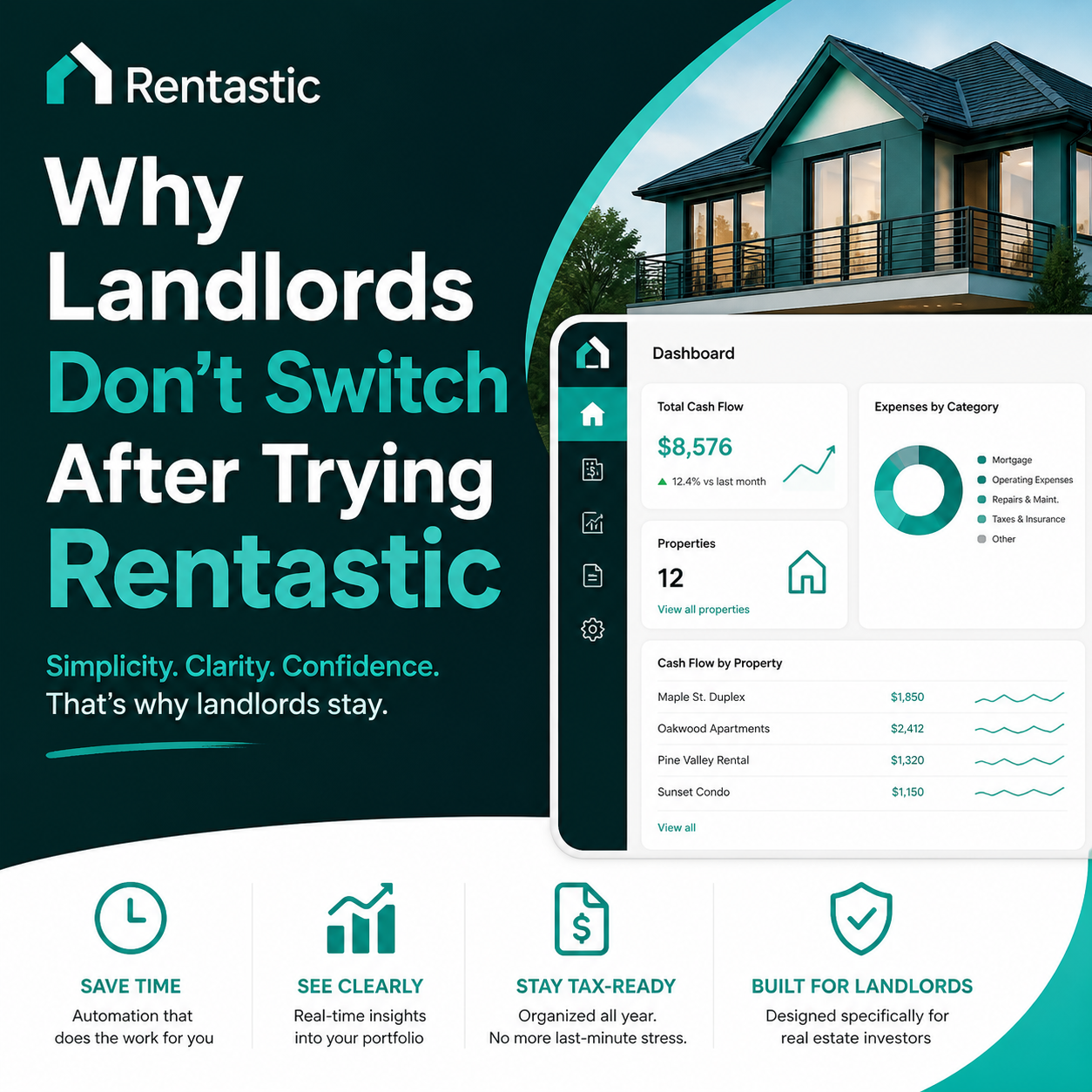
Rentastic takes a different approach.
Instead of treating landlords like every other type of business owner, Rentastic is built specifically around the needs of real estate investors.
And that difference changes everything.
Managing rental properties is fundamentally different from running a traditional business.
Real estate investors need to track:
Generic accounting systems weren’t built with these workflows in mind.
As a result, landlords often spend more time organizing data than actually using it.
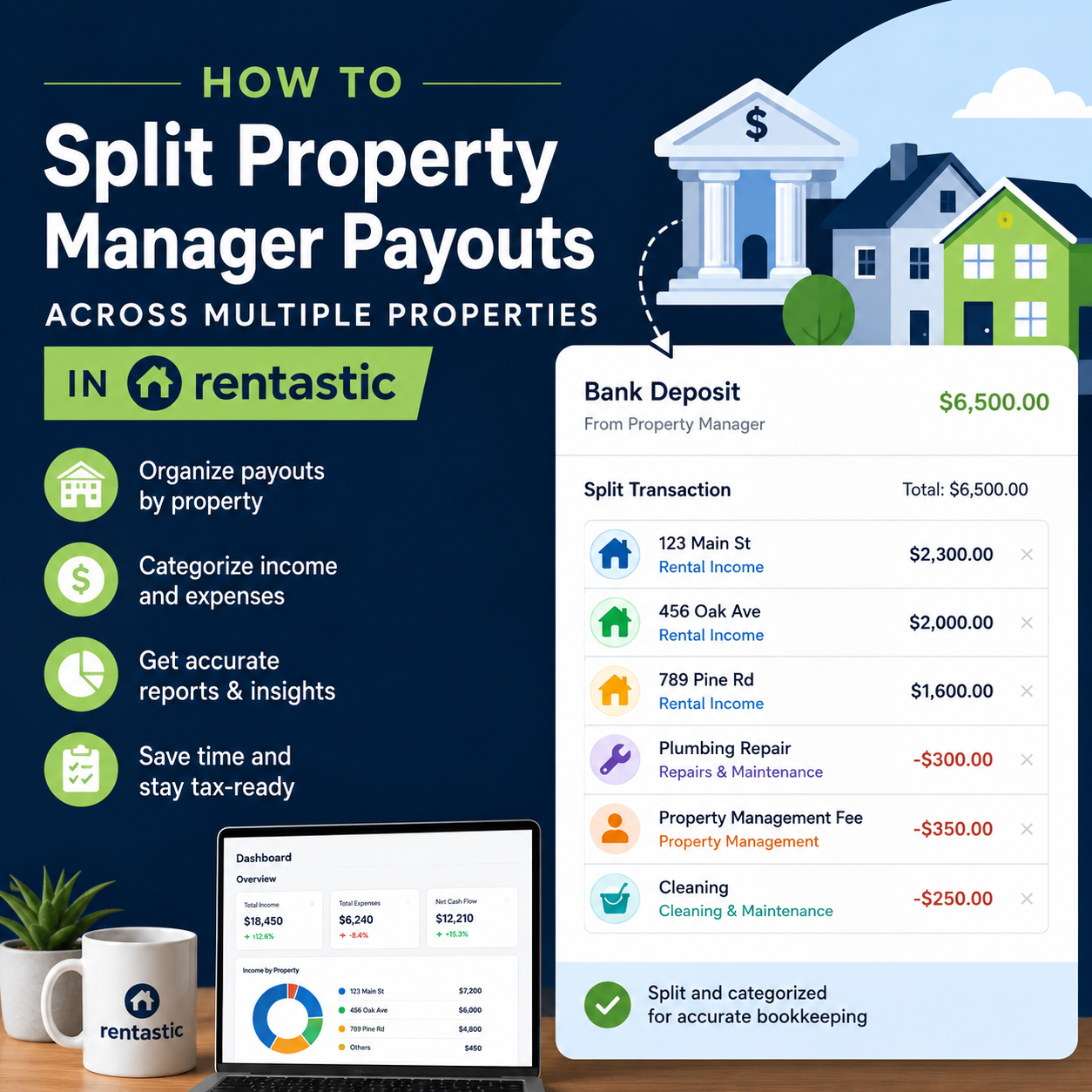
Rentastic simplifies this by structuring financial tracking around properties from the start.
The platform works the way investors naturally think about their portfolio.
One of the biggest differences investors notice when switching to Rentastic is the way information is organized.
Instead of viewing finances through generic accounts and categories alone, users can see performance at the property level.
This creates instant clarity.
Investors can quickly understand:
That visibility is critical for making smart portfolio decisions.
And it’s something most general accounting tools struggle to deliver effectively.
Many financial platforms are built with accountants in mind first.
That often leads to overwhelming interfaces filled with unnecessary complexity for everyday investors.
Rentastic focuses on usability.
The goal isn’t to turn landlords into accountants—it’s to make financial management simple and intuitive.
Investors can:
This simplicity reduces the learning curve and allows investors to spend less time managing software and more time managing properties.
Real estate investing already comes with enough moving parts.
Manually entering every transaction into a spreadsheet or accounting platform only adds more unnecessary work.
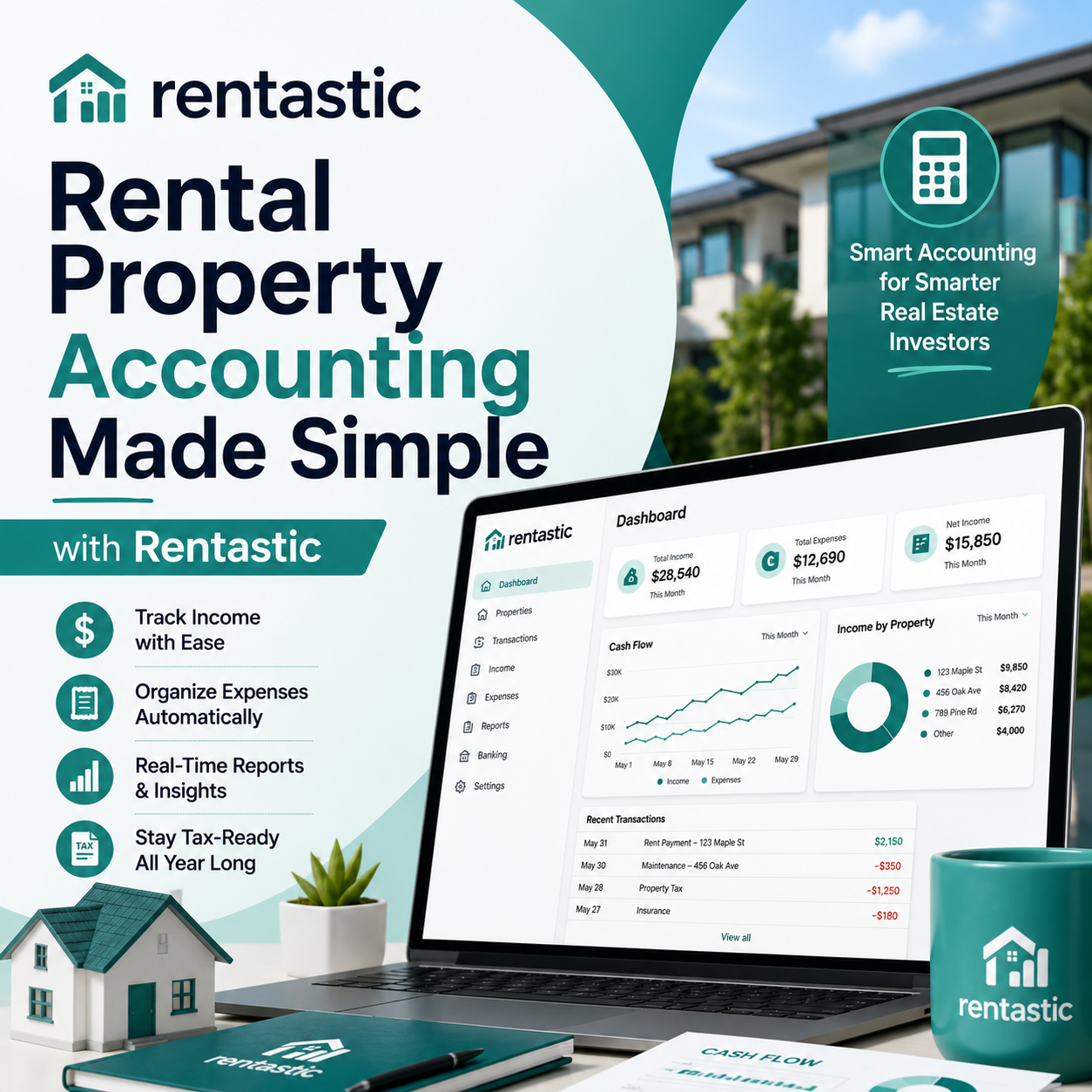
Rentastic automates much of the bookkeeping process so investors can stay organized without constantly maintaining records manually.
Transactions flow in automatically, financial data stays updated, and reports are always accessible.
This automation is especially valuable for growing portfolios where transaction volume increases over time.
Instead of bookkeeping becoming more difficult as properties are added, the process stays manageable.
Successful investing depends on good information.
When investors can clearly see their financial performance, they make stronger decisions about:
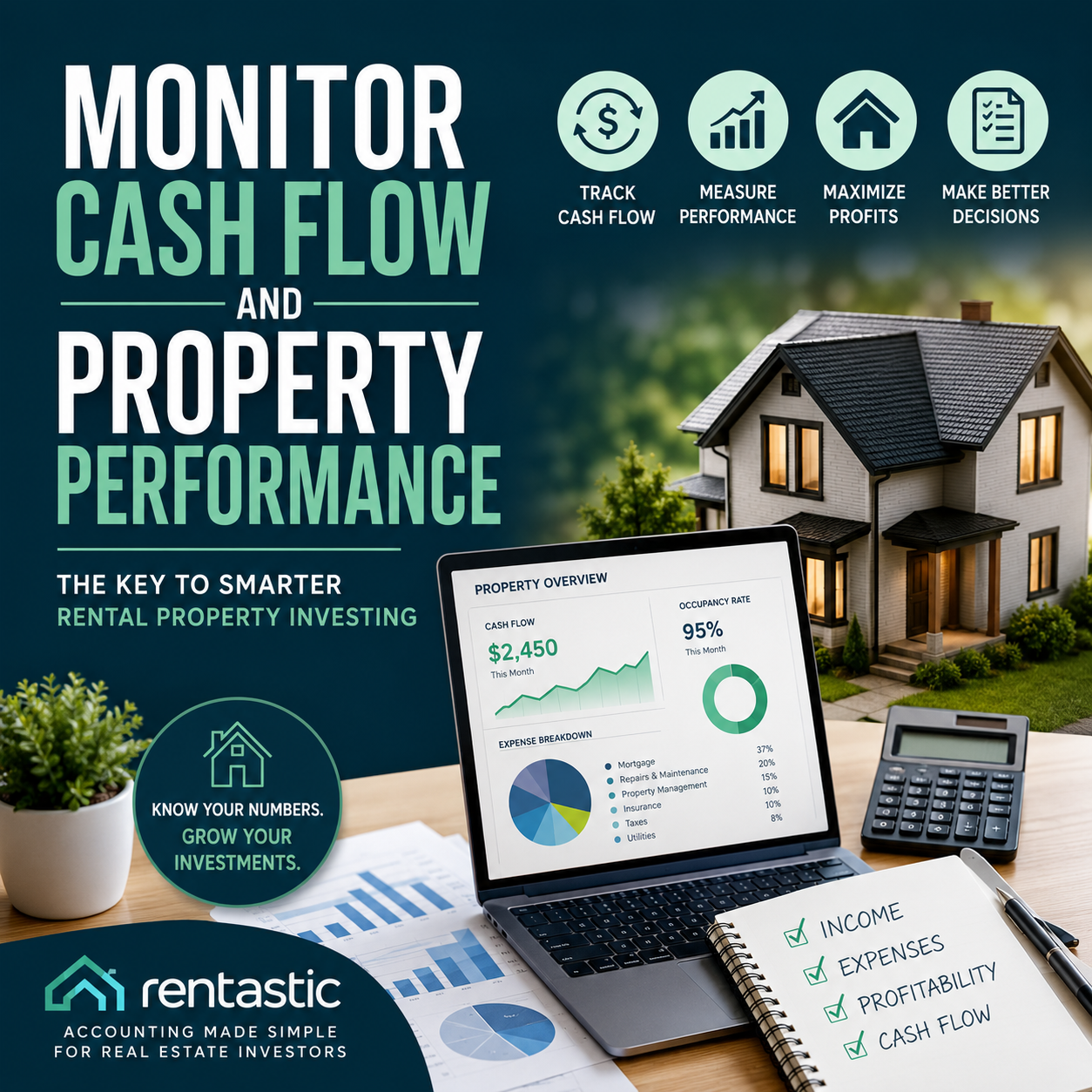
Rentastic gives users real-time insight into their portfolio so they aren’t operating blindly.
Instead of waiting until the end of the month—or worse, the end of the year—to understand performance, investors always have access to updated financial data.
That level of visibility creates confidence.
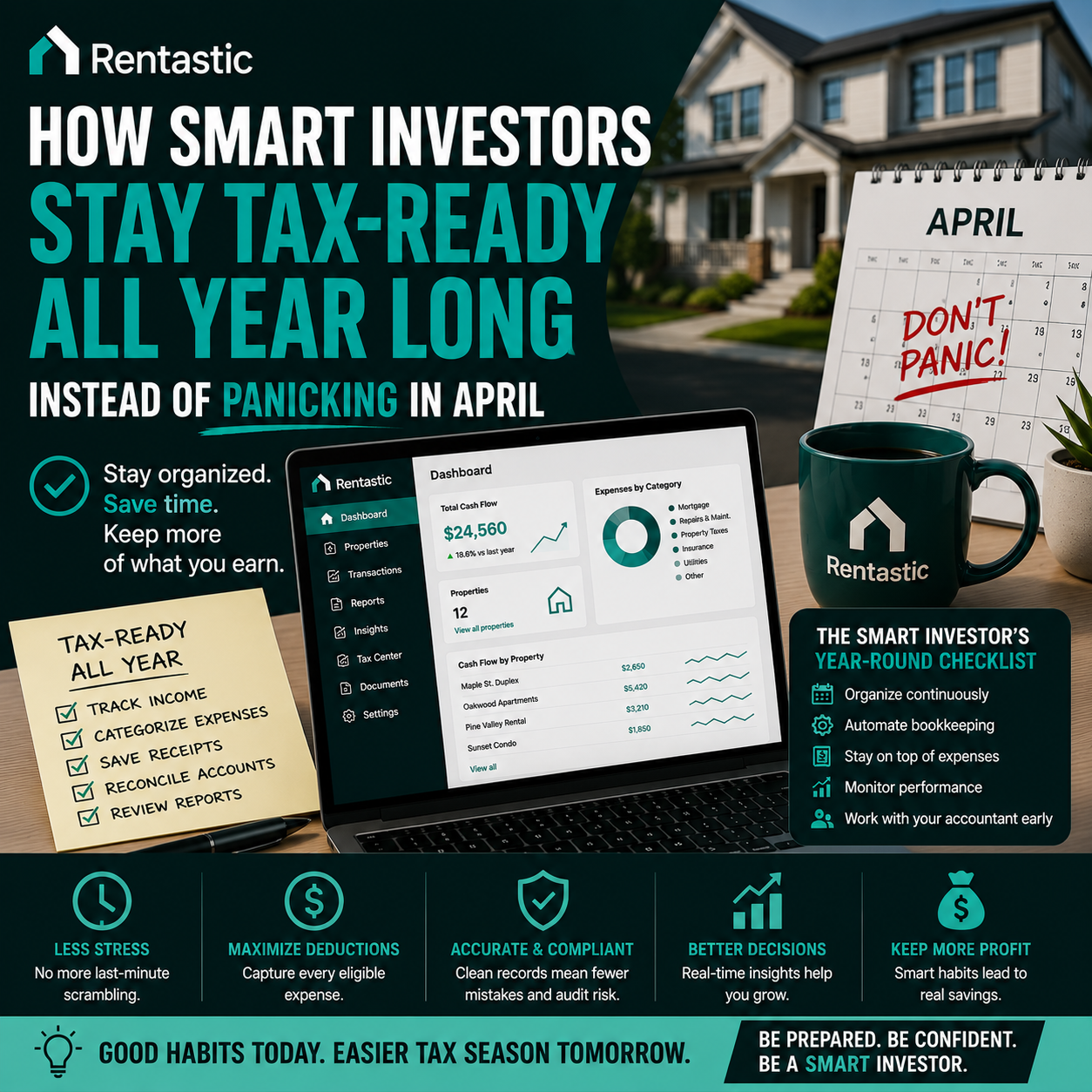
Tax season is one of the biggest pain points for landlords.
When records are disorganized, preparing taxes becomes stressful and time-consuming.
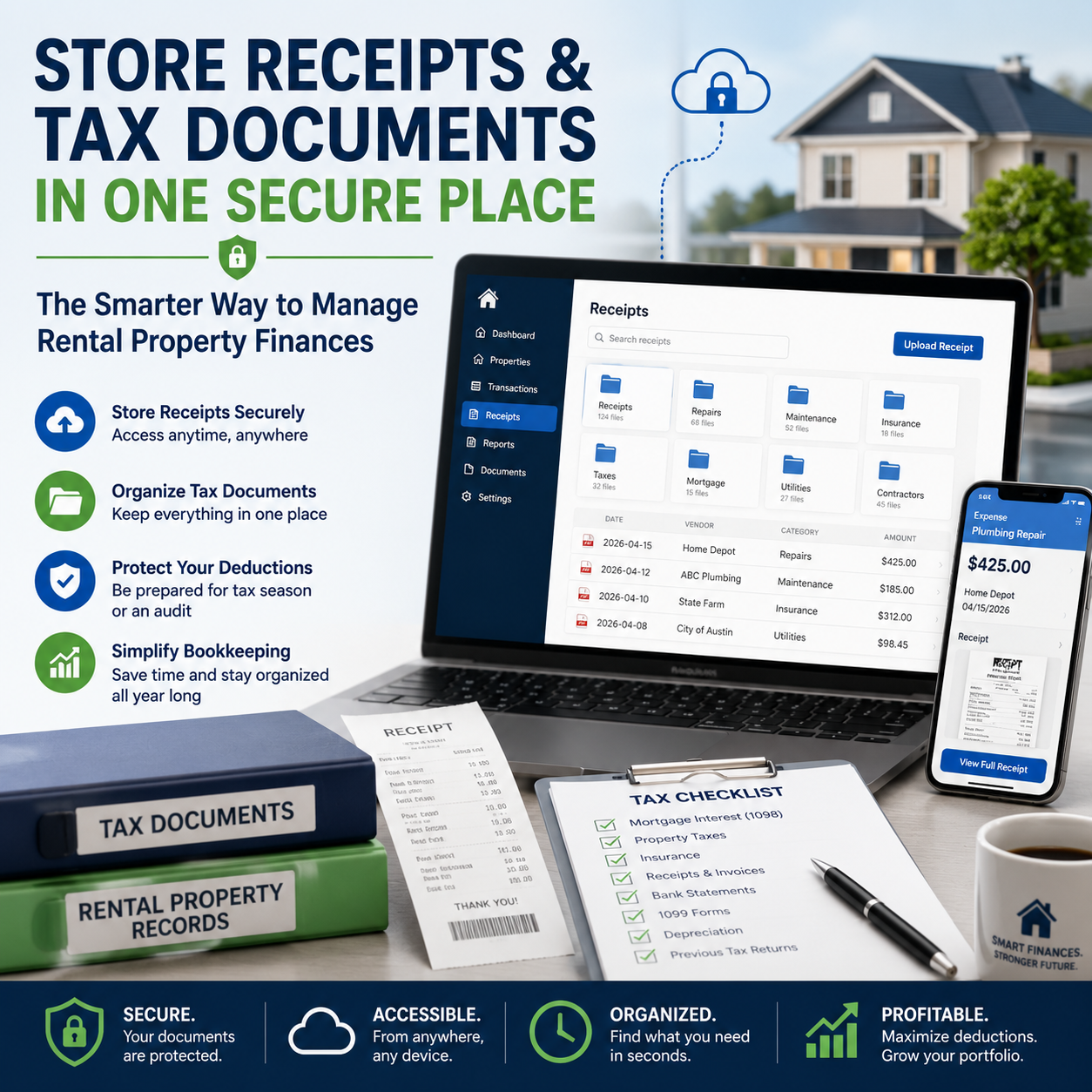
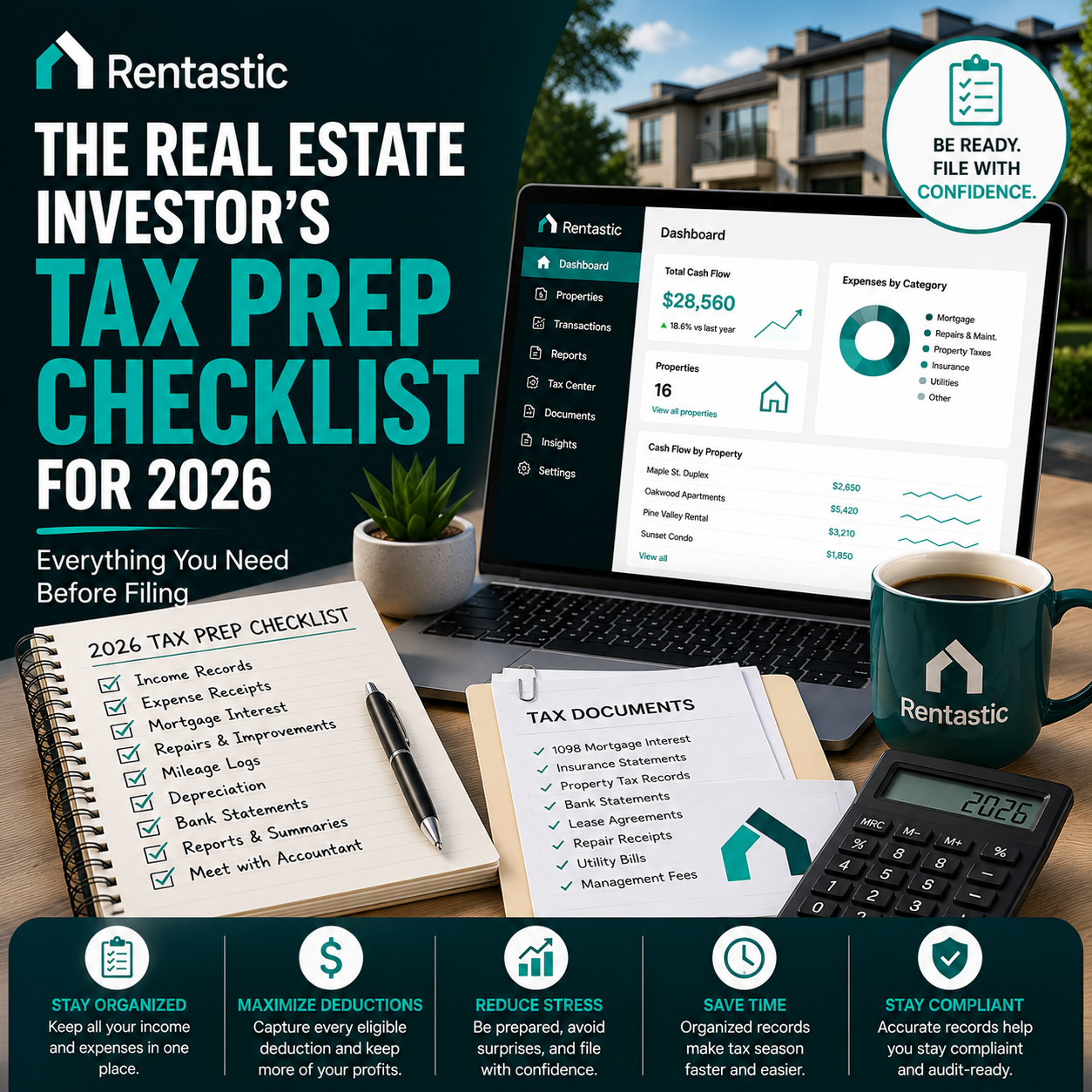
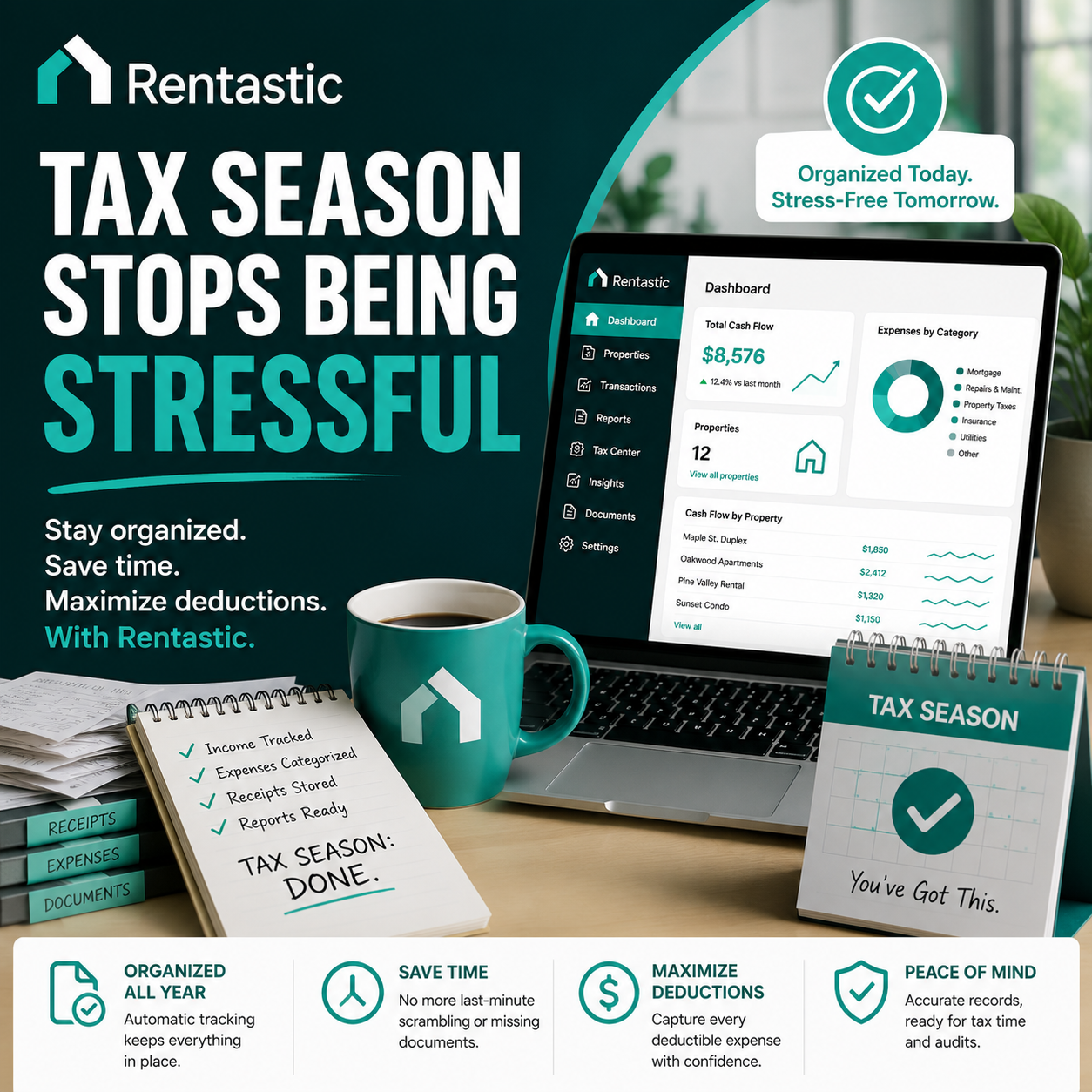
Rentastic helps eliminate that stress by keeping financial records organized throughout the year.
Expenses are categorized, income is tracked automatically, and reports are easier to generate when needed.
Instead of scrambling to reconstruct financial activity months later, investors already have clean books ready to go.
That consistency saves time and reduces frustration every tax season.
Many systems work well for landlords with one or two properties.
The challenge comes when portfolios grow.
As more units are added, bookkeeping complexity increases rapidly.
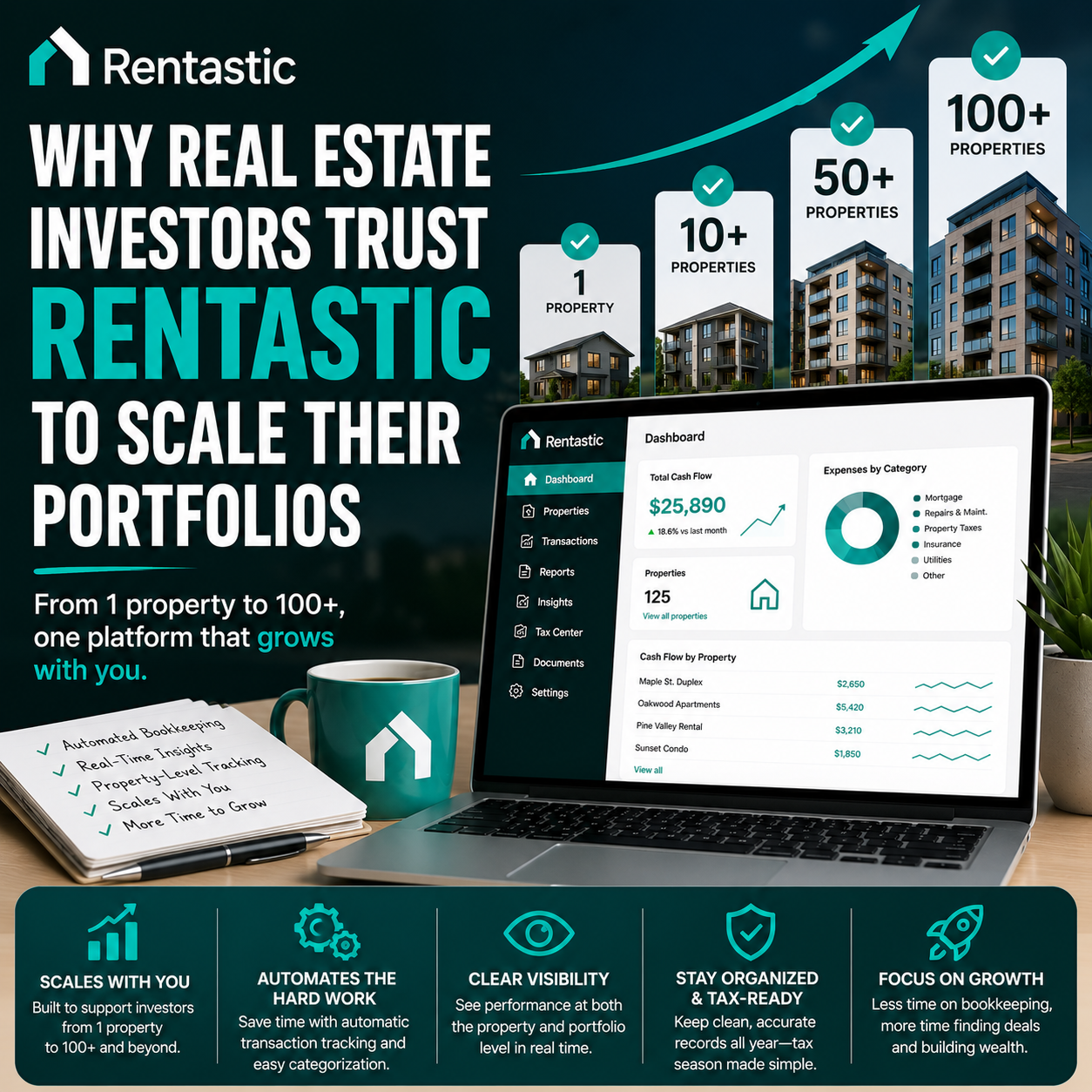
Rentastic is designed to scale with investors at every stage of growth.
Whether managing a single rental or an expanding portfolio, users can keep everything organized in one centralized platform.
That scalability is one of the reasons investors continue using Rentastic long-term.
The platform grows with them instead of becoming a limitation.
At the end of the day, most real estate investors don’t want complicated financial systems.
They want clarity.
They want to know:
Rentastic delivers that clarity without adding operational complexity.
That’s what makes it different from generic accounting software—and why so many investors choose to stay with it.
Real estate investing requires tools built for real estate investors.
Generic bookkeeping systems often create unnecessary friction because they weren’t designed around the realities of managing rental properties.
Rentastic changes that by providing a platform specifically tailored to how landlords and investors actually operate.
From property-based tracking and automation to real-time visibility and simplified bookkeeping, every feature is designed with investors in mind.
And once landlords experience software that truly fits their workflow, it becomes difficult to imagine managing a portfolio any other way.
RECENT POSTS


© 2025 Rentastic
Rentastic is registered as a trademark. Terms and conditions, features, support, pricing, and service options subject to change without notice.









.png)




















.png)



























Comments