

Nearly every landlord app tells you it will save you “time and stress.” Very few are actually built for investors, start to finish.
If you are tracking rent in one tool, logging expenses in a spreadsheet, and hacking together ROI in a half-broken calculator, you are not alone. Over 70 percent of landlords still spend at least ten hours a month on manual bookkeeping, mostly in sheets that only they can interpret (Rentastic Blog). That is not a software problem. That is a “wrong kind of software” problem.
Rentastic is different because it starts from how you think as an investor. It is not just a bookkeeper with a prettier dashboard. It is a full decision engine wrapped in landlord-friendly workflows, built to help you buy, hold, and grow better.
In this guide, you will see why Rentastic consistently outperforms generic landlord apps, and why “built for investors” should be your non‑negotiable in 2026.
Most landlord tools grew out of small business accounting or basic rent collection. They track income and expenses well enough, but they stop at “what happened,” not “what should you do next.”
You care about:
A tool built for investors has to reflect that. Rentastic was designed specifically for real estate investors and landlords, with workflows that mirror how you run deals and portfolios, not a generic small business (Rentastic Blog). You track properties individually and as a portfolio. You see loans, equity, and returns next to rent and repairs. You get a deal analyzer instead of a blank “notes” field.
That design choice shows up in hundreds of small ways. The result is simple: you spend less time feeding the system and more time acting on what it tells you.
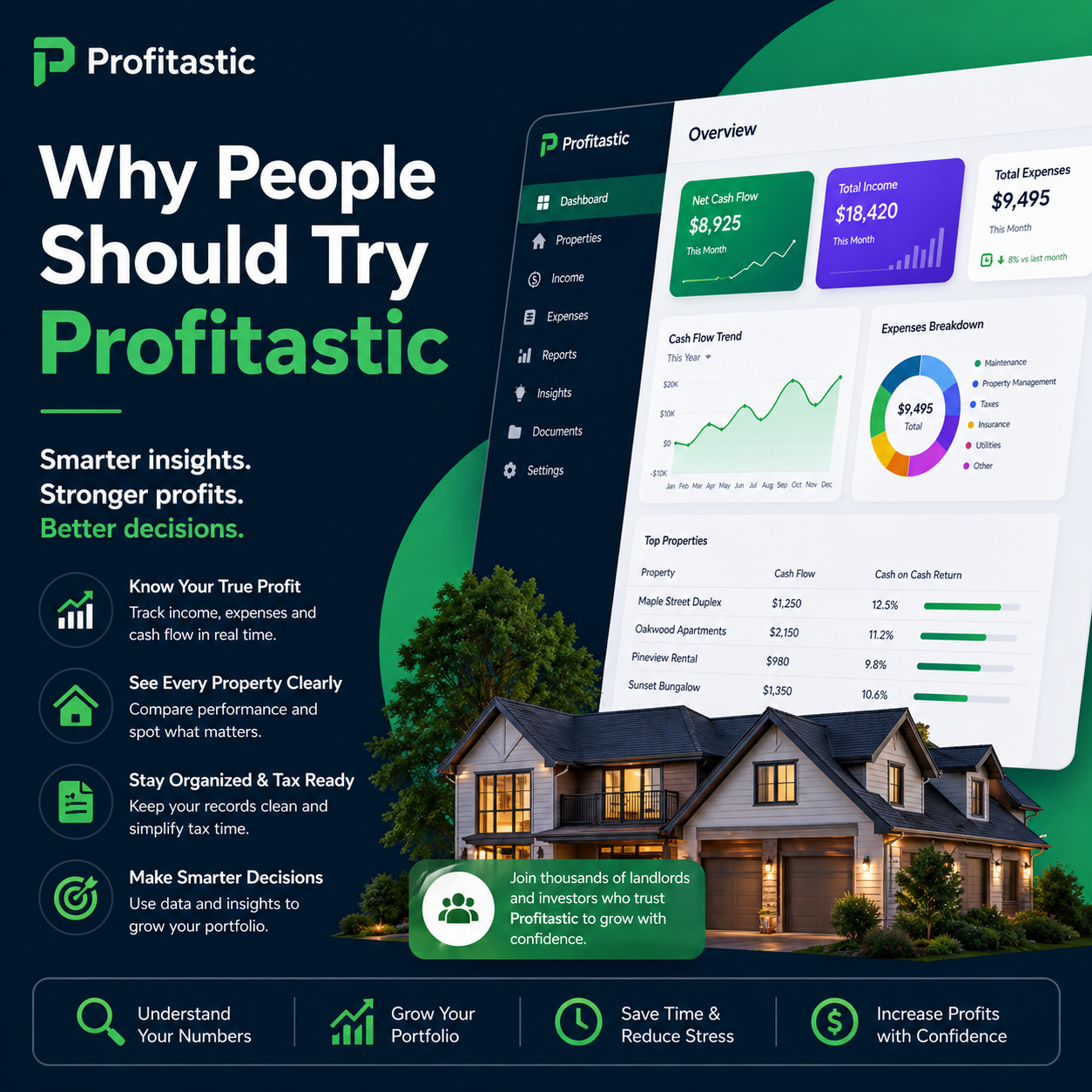
A normal landlord app behaves like an online ledger. Rentastic behaves like a cockpit for your entire portfolio.
You connect your checking and savings accounts through Plaid, and Rentastic automatically imports up to 24 months of transactions, then auto categorizes up to 70 percent of recurring items (Rentastic Blog). Many users cut bookkeeping time by more than 60 percent compared with manual spreadsheets (Rentastic Blog).
That is the baseline. Where Rentastic pulls ahead is what happens next.
Instead of a list of categorized transactions, you see:
You are not just closing the books. You are running the business.
If you want a deeper breakdown of how this compares to generic tools, you can explore what sets rentastic apart next.
Many landlord apps will let you add units and collect rent. Very few give you a real portfolio view in one place.
Rentastic does three things that matter a lot as your holdings grow.
First, it consolidates all income and expenses so you can see the health of the entire portfolio at a glance. You can move from “How is 123 Oak Street doing?” to “Is my whole strategy working?” in a couple of clicks (Rentastic Blog).
Second, it keeps the math current. Rentastic automates transaction imports and reconciliations by syncing with your bank accounts, which reduces manual data entry time by up to 40 percent compared with traditional spreadsheet bookkeeping (Rentastic Blog). That means your view is always fresh, not something you trust only after an end of quarter clean up.
Third, it gives you investor grade reports. A 2025 user survey found that landlords using Rentastic’s portfolio reports made investment decisions 30 percent faster, because trends like cash flow, ROI, and occupancy were always at their fingertips (Rentastic Blog).
You stop guessing which door is underperforming. You can see it.
Cash flow is critical, but it is not the whole story. A property that looks weak on monthly cash can be a star when you factor in equity growth and better financing.
Rentastic is built for investors, so it embeds that thinking directly into the platform. It combines rental income, operating expenses, loan terms, and property details to show you true return on investment and equity growth over time (Rentastic Blog).
You can ask:
This matters in real money terms. During a high interest rate environment in 2025, some landlords used Rentastic’s insights to reduce effective borrowing costs from 8 percent to 4.1 percent, unlocking around 60,000 dollars in instant equity on a 235,000 dollar deal (Rentastic Blog). That is not a nicer spreadsheet. That is a completely different financial outcome.
Generic landlord apps will not surface that for you. They are not designed for it.
A lot of landlord apps start helping only after you own the property. Rentastic helps before you even make an offer.
The built in Deal Analyzer lets you plug in purchase price, rehab costs, expected rent, operating expenses, and financing terms, then instantly shows key metrics like cap rate, cash on cash return, and internal rate of return (Rentastic.io Blog). You can compare scenarios, such as:
During summer 2025, some users relied on this Deal Analyzer to refine their offers and financing, again dropping their effective borrowing costs from 8 percent to 4.1 percent and unlocking 60,000 dollars of equity on a 235,000 dollar purchase (Rentastic Blog).
Because the Deal Analyzer lives in the same ecosystem as your bookkeeping and portfolio tracking, you can quickly test “what if I add this property” against your current performance. There is no separate Excel model to maintain and no risk you are comparing apples to oranges.
This is what “built for investors” looks like in practice. Faster analysis. Fewer blind spots.
Automation only helps if it respects how you work in real life. Rentastic is built around landlord routines, not accounting theory.
Once you connect your bank accounts, Rentastic automatically imports transactions and keeps them synced in real time. Many users spend 30 percent less time on accounting tasks versus manual spreadsheet methods, simply because there is no weekly data entry grind anymore (Rentastic Blog).
On mobile, you can scan receipts right at the property and attach them to the correct unit. The app auto categorizes up to 70 percent of recurring bills, which sharply cuts down on tagging and sorting later in the week (Rentastic Blog).
Even rent collection gets automation support. Rentastic offers features like automated rent reminders and late fee calculations that have helped some landlords cut late payments by around 25 percent (Rentastic Blog).
You still stay in control. You just stop doing work the software can do for you.
In investing, speed is often an edge. If you can see a trend sooner, you can act before everyone else catches up.
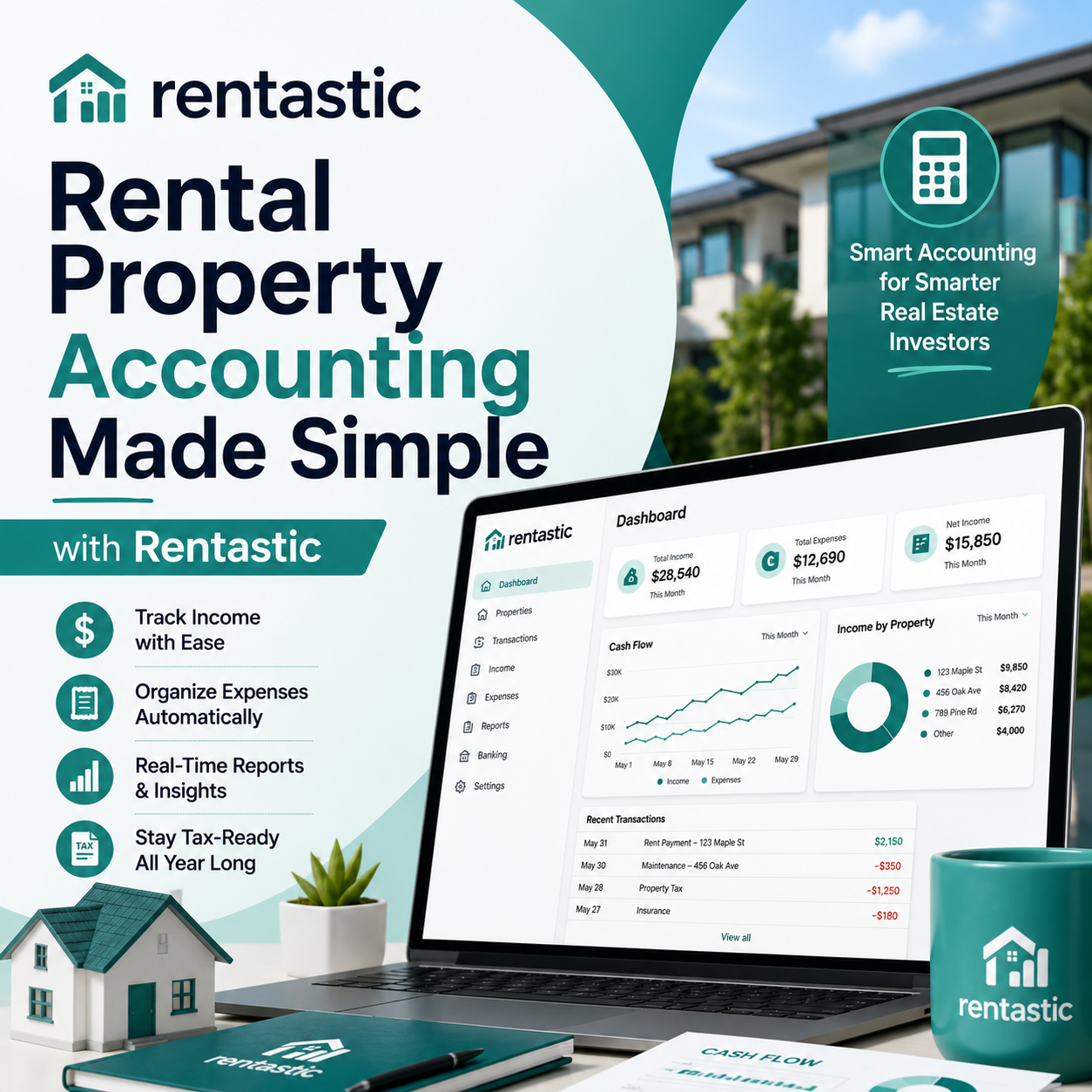
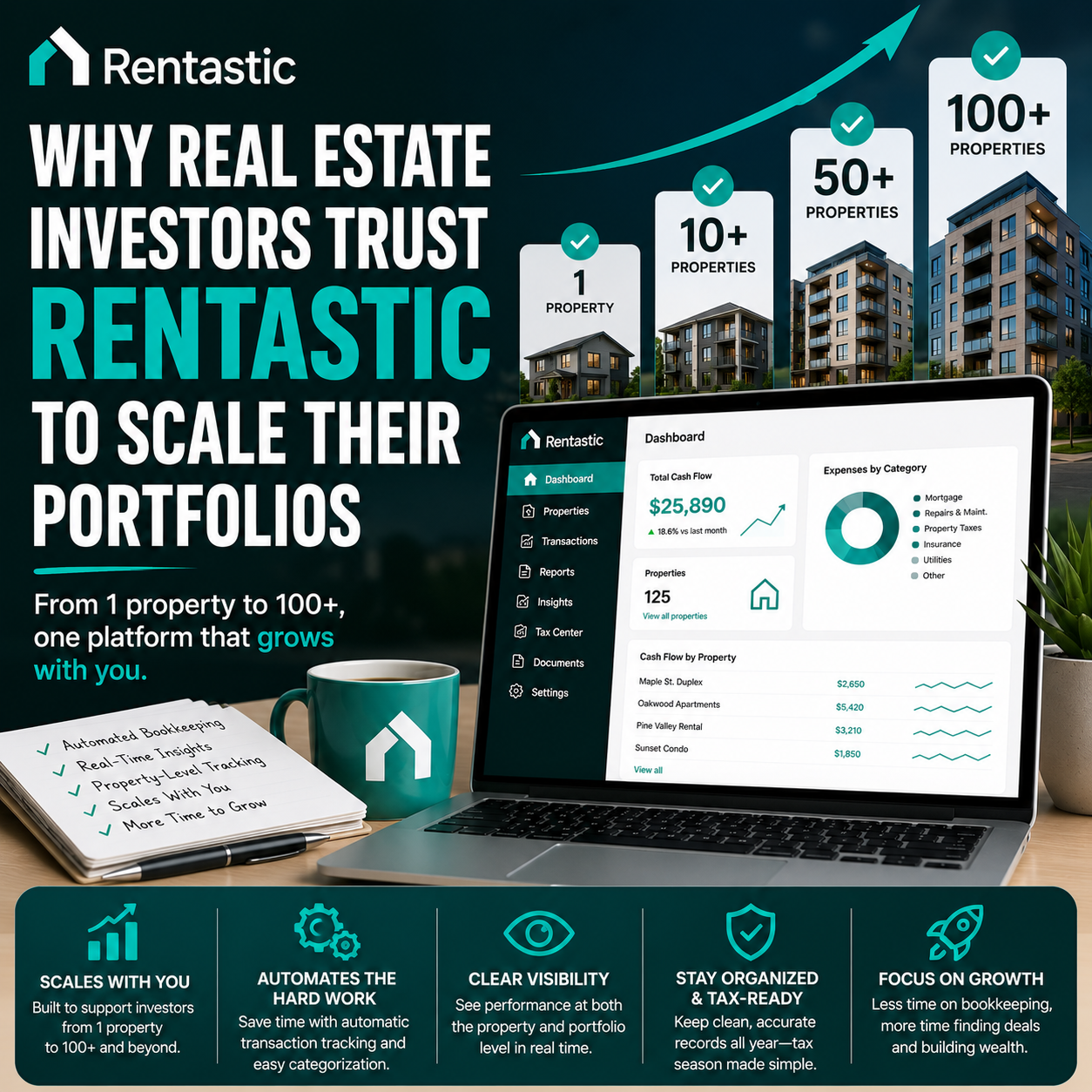
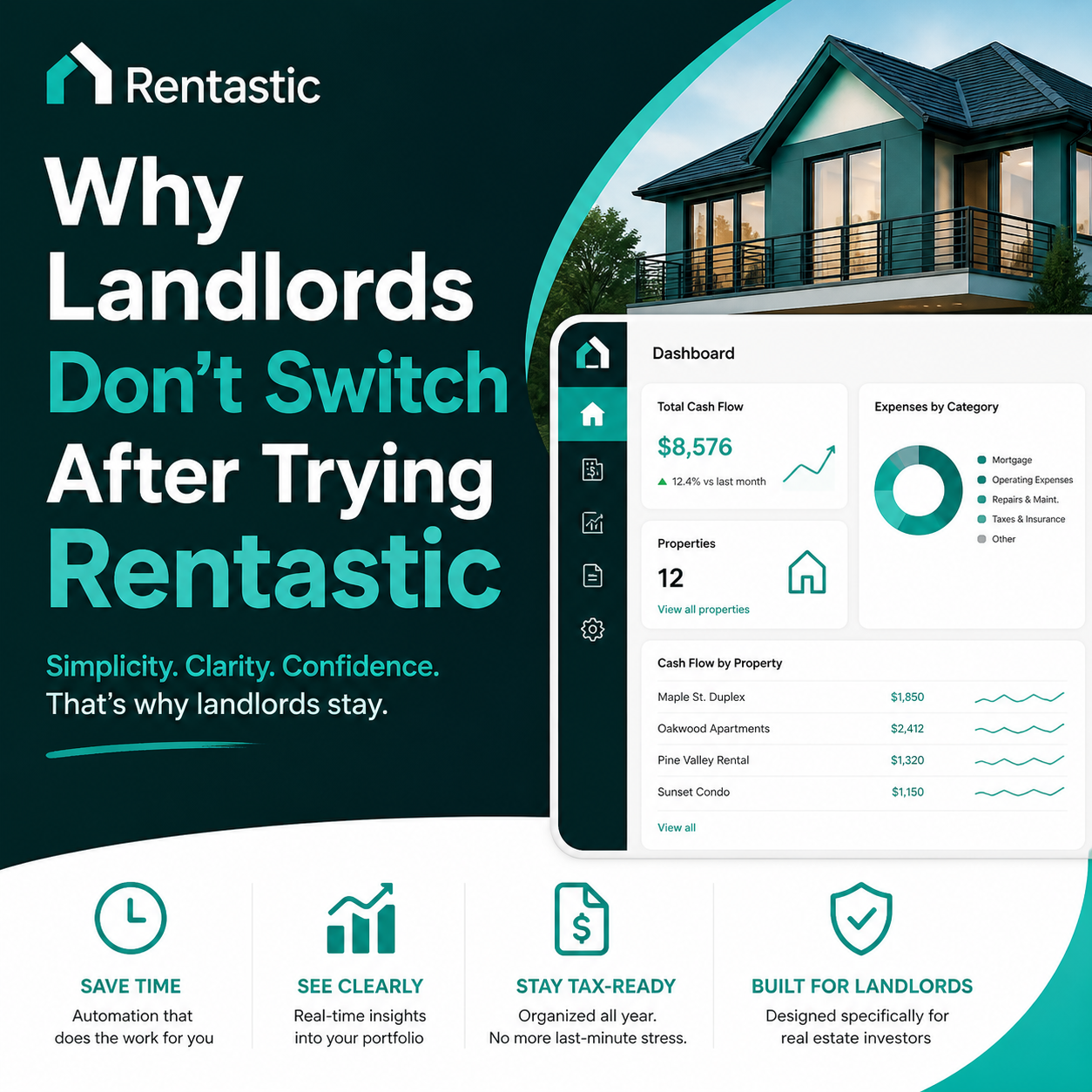
Rentastic gives you live, always updated profit and loss statements and a dashboard that consolidates income, expenses, and profitability across multiple rentals (Rentastic Blog). You do not have to wait for “closing the month” to know whether a property is dragging down your returns.
Those reports are not only for your own review. A 2024 survey found that investors using Rentastic’s automated reporting made investment decisions 30 percent faster, because they had accurate financials ready whenever a new deal, refinance opportunity, or lender conversation came up (Rentastic Blog).
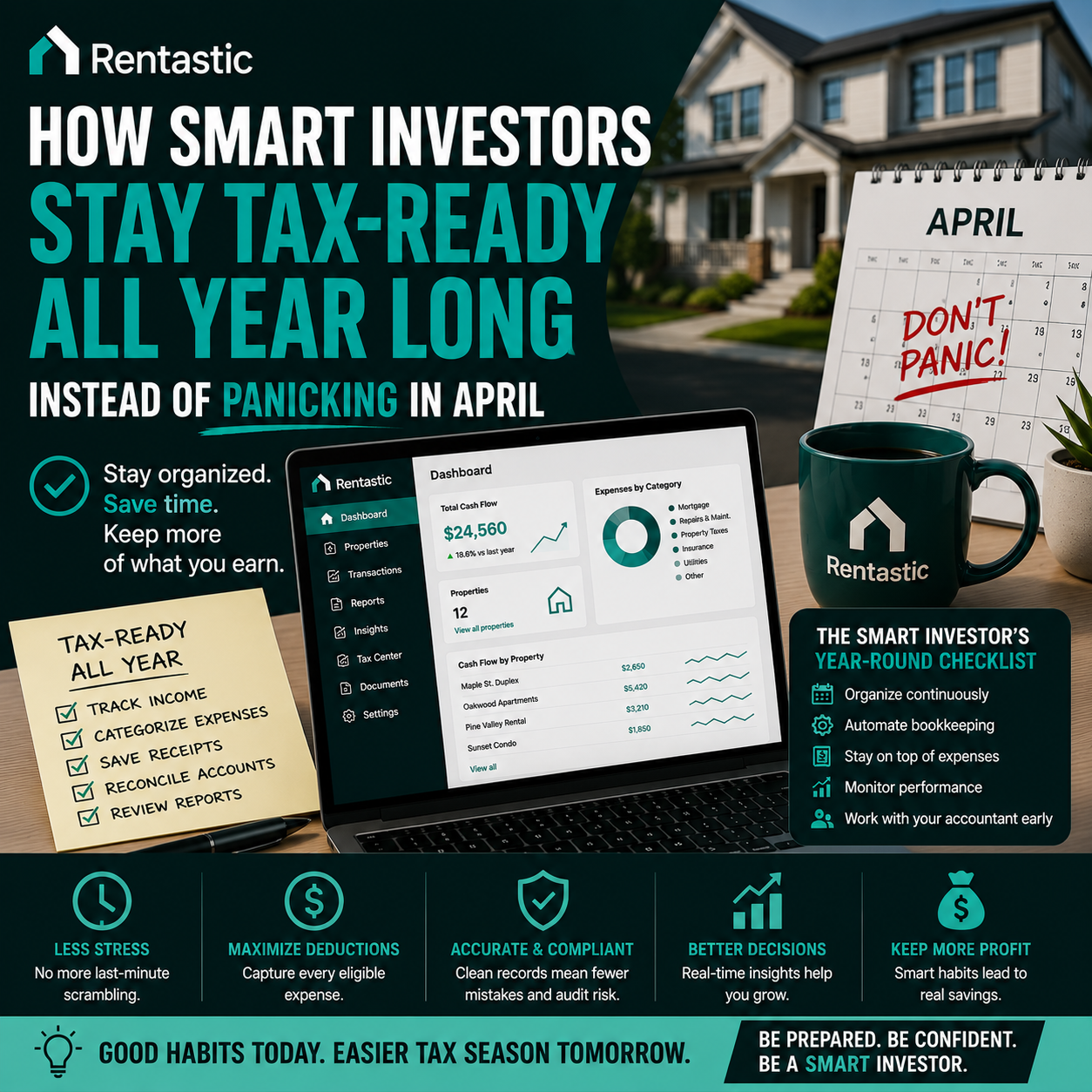
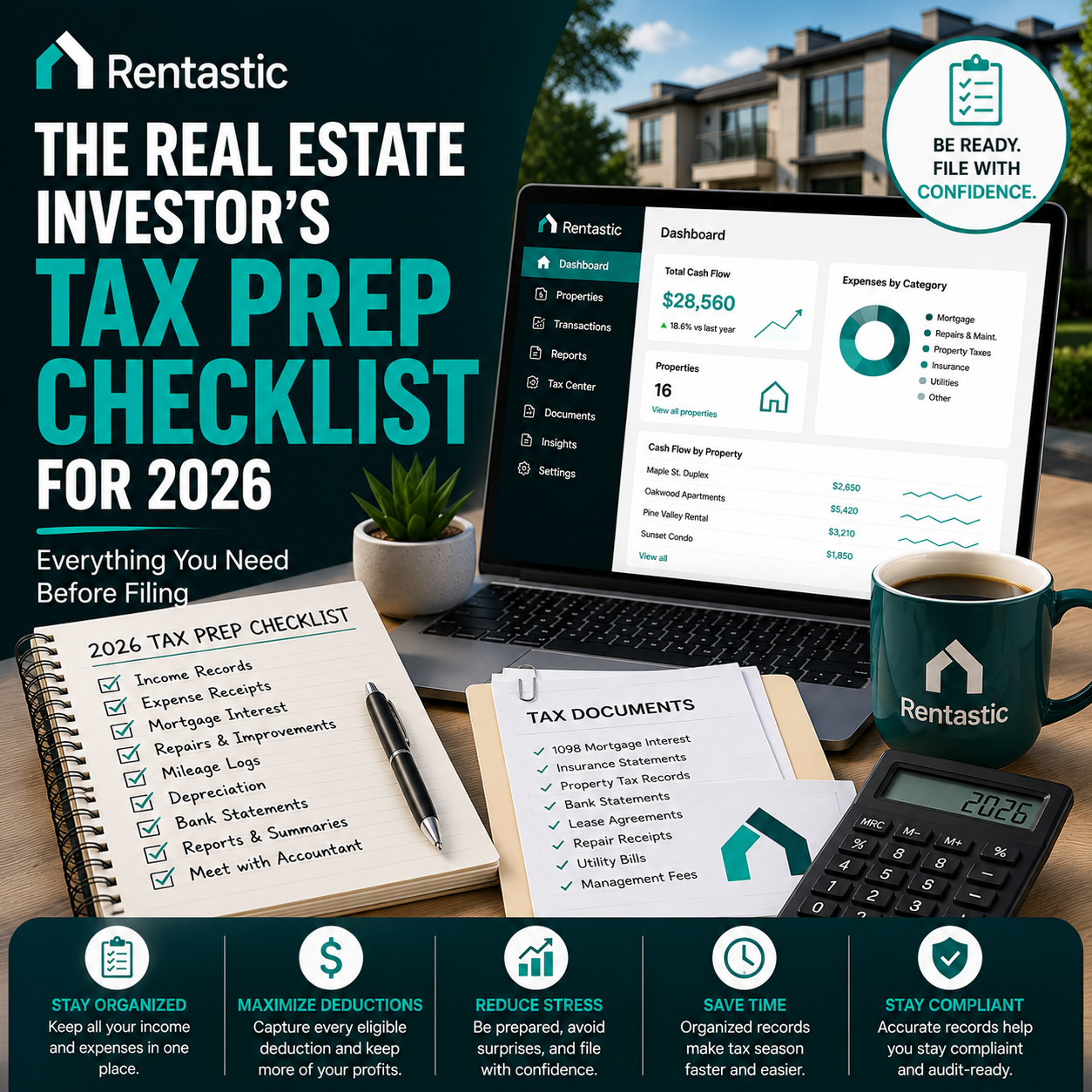
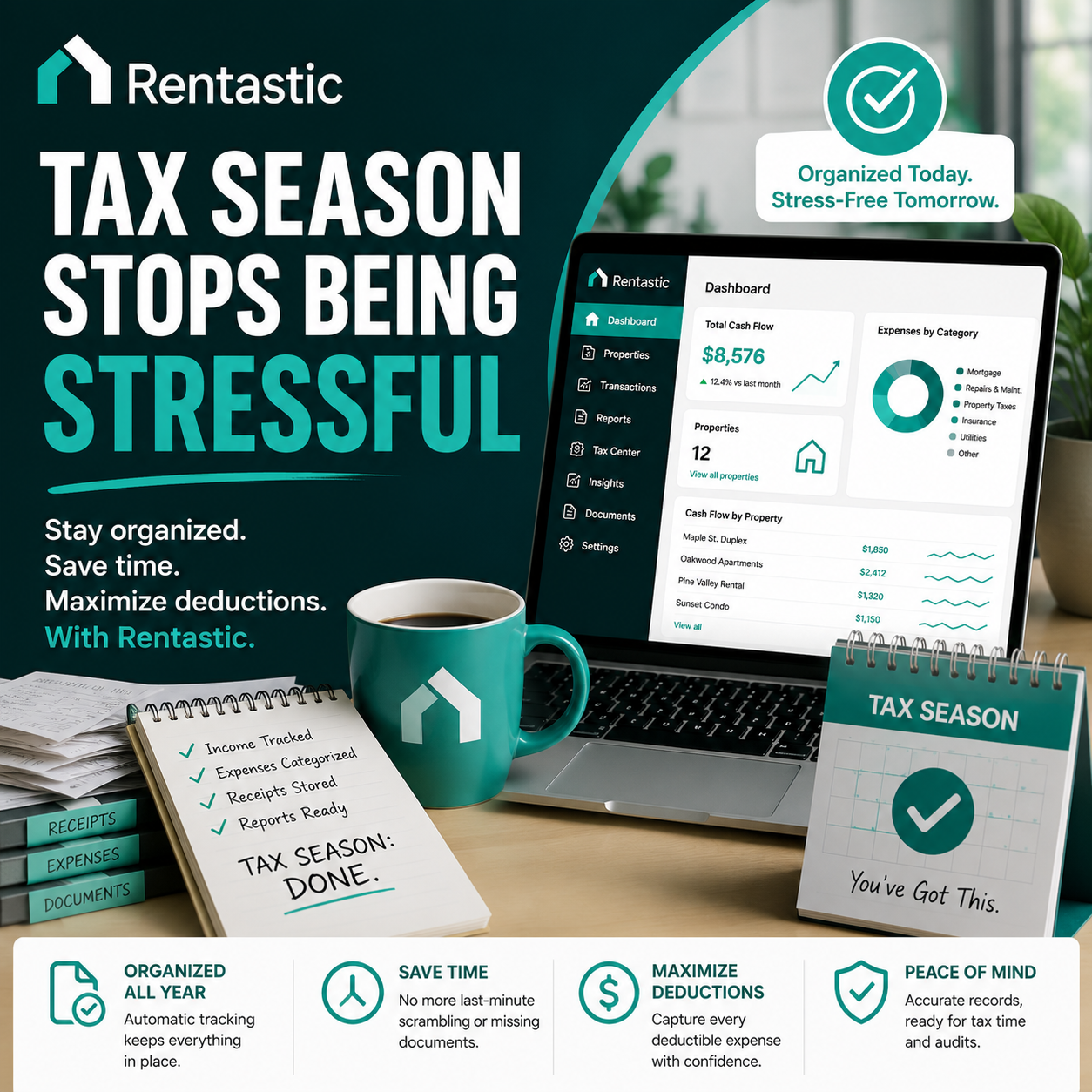
This also feeds straight into taxes. Clear, up to date reports such as monthly P&Ls increased landlords’ confidence in their tax position by about 25 percent, since everything was organized and documented when it was time to file or talk to a CPA (Rentastic Blog).
Instead of scrambling once a year, you are always a couple of clicks away from what you need.
When your books are always current, tax season becomes a formality, not a fire drill.
It is easy to underestimate how frustrating generic accounting tools can be when you try to bend them into shape for real estate.
Traditional small business systems expect customers, invoices, and chart of accounts tailored to retail or services. They usually do not understand units, leases, or financing structures. You can force them to work for rentals, but only if you build your own tagging system and mental translation layer.
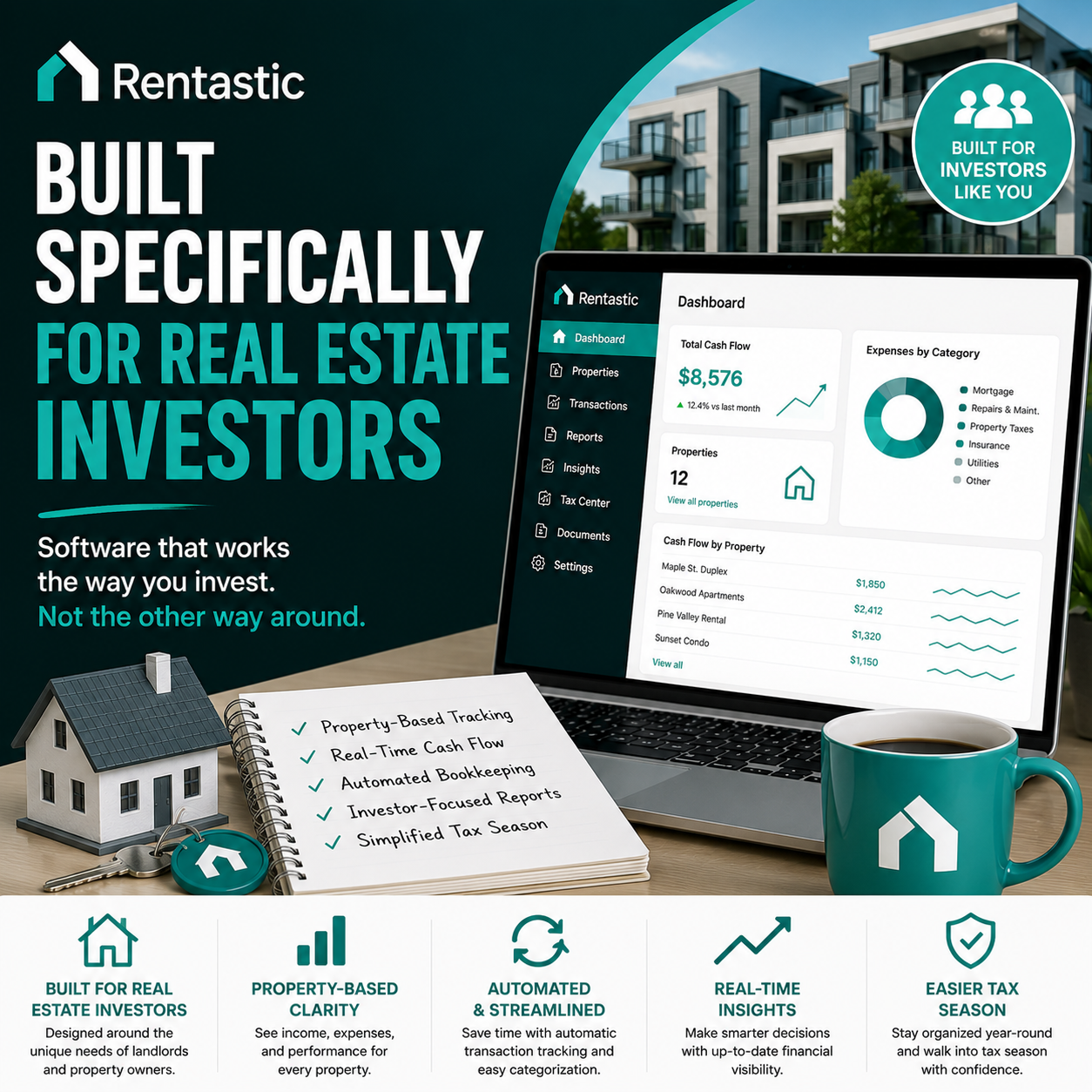
Rentastic skips that step entirely. It is built specifically around how real estate investors and property managers think, from the terminology in the interface to the way properties roll up into portfolios (Rentastic Blog). You see doors, not “projects.” You track loans and equity directly, not as generic liabilities.
This design focus is one reason investors rate Rentastic 4.9 out of 5 for ease of use in 2025, and call it the number one app for modern landlords as of 2026 (Rentastic Blog). The software fits your mental model instead of forcing a new one on you.
If you want a fuller tour of this investor first design, you can read more in the all-in-one landlord solution.
You might start with one rental. If your plan works, you will not stay there.
Rentastic is intentionally priced and structured so you do not have to switch platforms as you grow. There is a free tier for small portfolios, then a Premium plan that opens up unlimited properties, deeper deal analysis, and full bank syncing. In 2025, users rated its value for money at 4.9 out of 5, in part because it scaled without surprise costs or complexity (Rentastic Blog).
This matters in two ways.
First, you keep your history. When you grow from two units to twenty, all your earlier data, reports, and lessons live in the same system. You do not need to migrate between tools just because you crossed some invisible line.
Second, you keep your habits. The same workflows you build when you are a small landlord still work when you become a multi state investor. Rentastic was built to support that arc, not just the first chapter.
When you stack Rentastic next to most landlord apps, the difference shows up quickly.
A typical landlord app will:
Rentastic will also do those things, but it layers in capabilities aimed directly at investment decisions.
You get:
Underneath all of that is a simple but important difference. Generic landlord apps handle the “landlord” side of your work. Rentastic helps with the “investor” side too.
You will get the most from Rentastic if:
If that sounds like you, then choosing a platform that is built for investors is not a luxury. It is a multiplier.
Rentastic is designed to automate bookkeeping, highlight true returns, and help you move faster when opportunity shows up. It replaces manual spreadsheets and generic accounting tools with a single system built for the way you already think about deals and portfolios (Rentastic Blog).
You can keep “making do” with generic apps. Or you can upgrade to a tool that treats you like what you are, an investor who happens to be a landlord, not the other way around.
RECENT POSTS


© 2025 Rentastic
Rentastic is registered as a trademark. Terms and conditions, features, support, pricing, and service options subject to change without notice.



.png)




















.png)

































Comments