
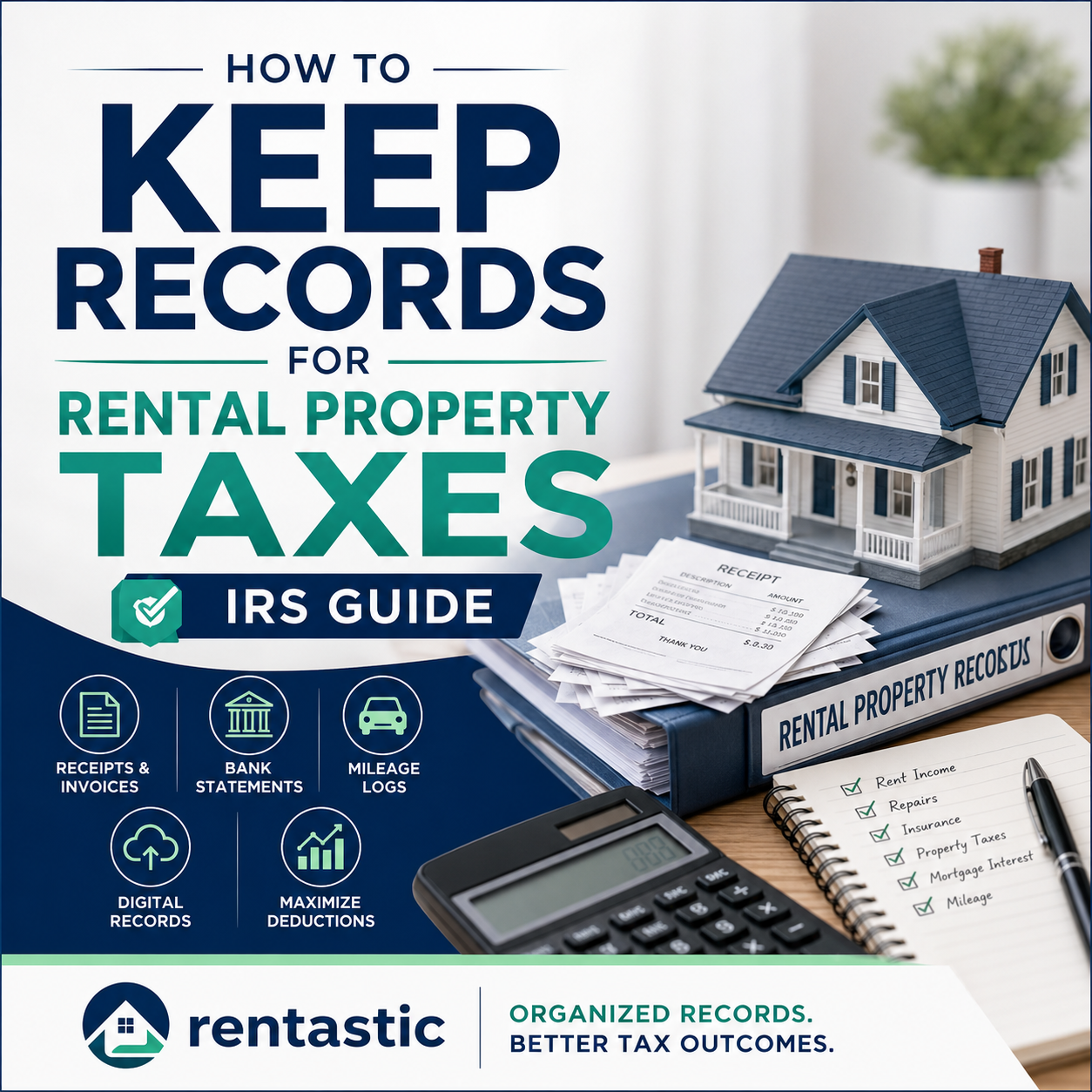
Managing rental properties means much more than collecting rent each month. One of the most important responsibilities of every real estate investor is maintaining accurate financial records. Good rental property record keeping not only makes tax season significantly easier but also protects you if you're ever audited by the IRS.
Whether you own a single rental home or a growing portfolio, organized records help you maximize deductions, reduce costly mistakes, and understand how your investments are performing.
In this guide, we'll explain what records landlords should keep, how long to keep them, and how digital bookkeeping tools like Rentastic simplify rental property accounting.
Proper documentation serves several important purposes:
Without complete records, landlords often miss valuable tax deductions or spend hours searching for documents when filing taxes.
Successful landlord bookkeeping starts by organizing every financial document related to your rental business.
Keep documentation for all rental income, including:
Helpful documents include:
Track every expense related to operating your rental property.
Examples include:
Each expense should include supporting documentation.
These records become especially important when selling the property.
Keep:
These documents establish your property's tax basis.
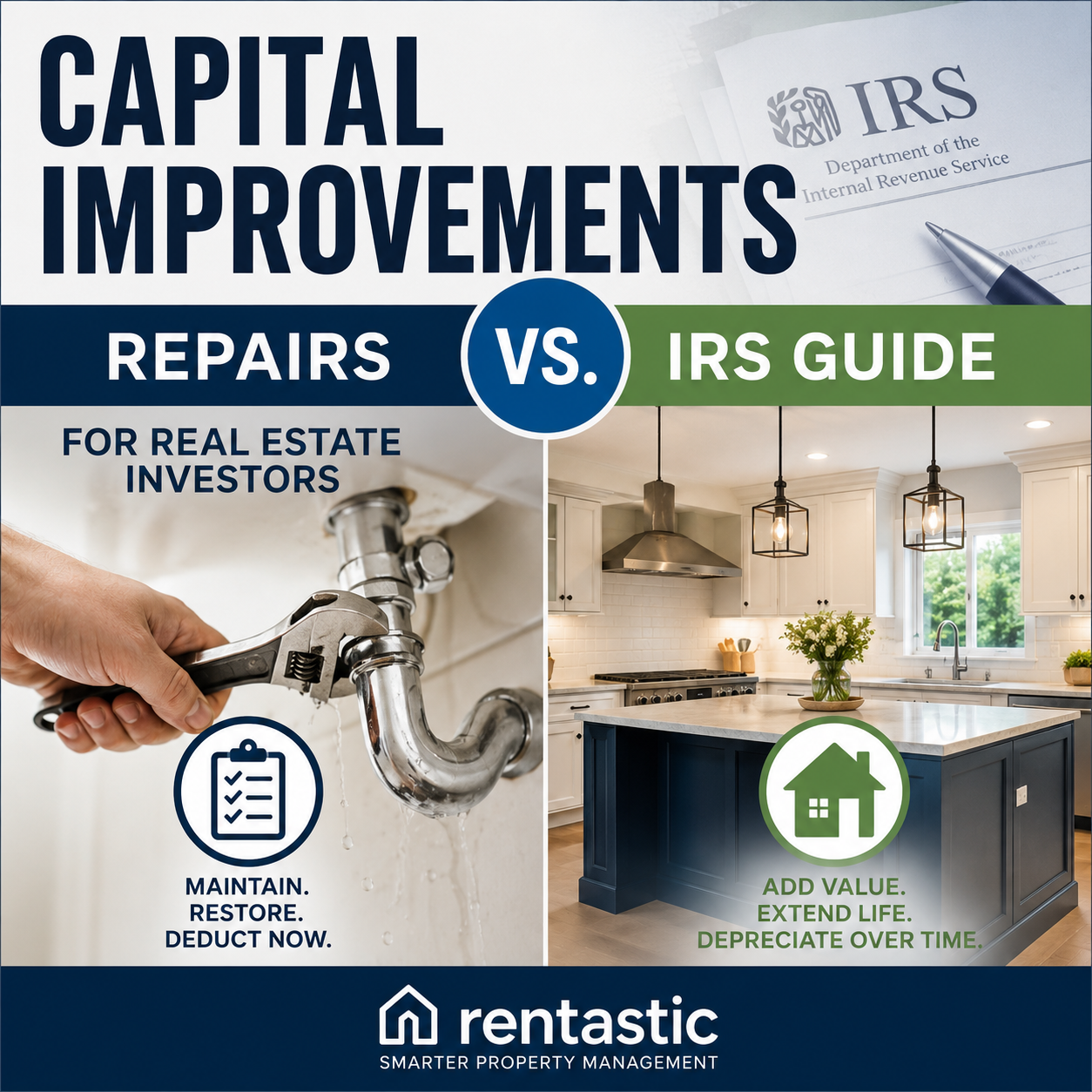
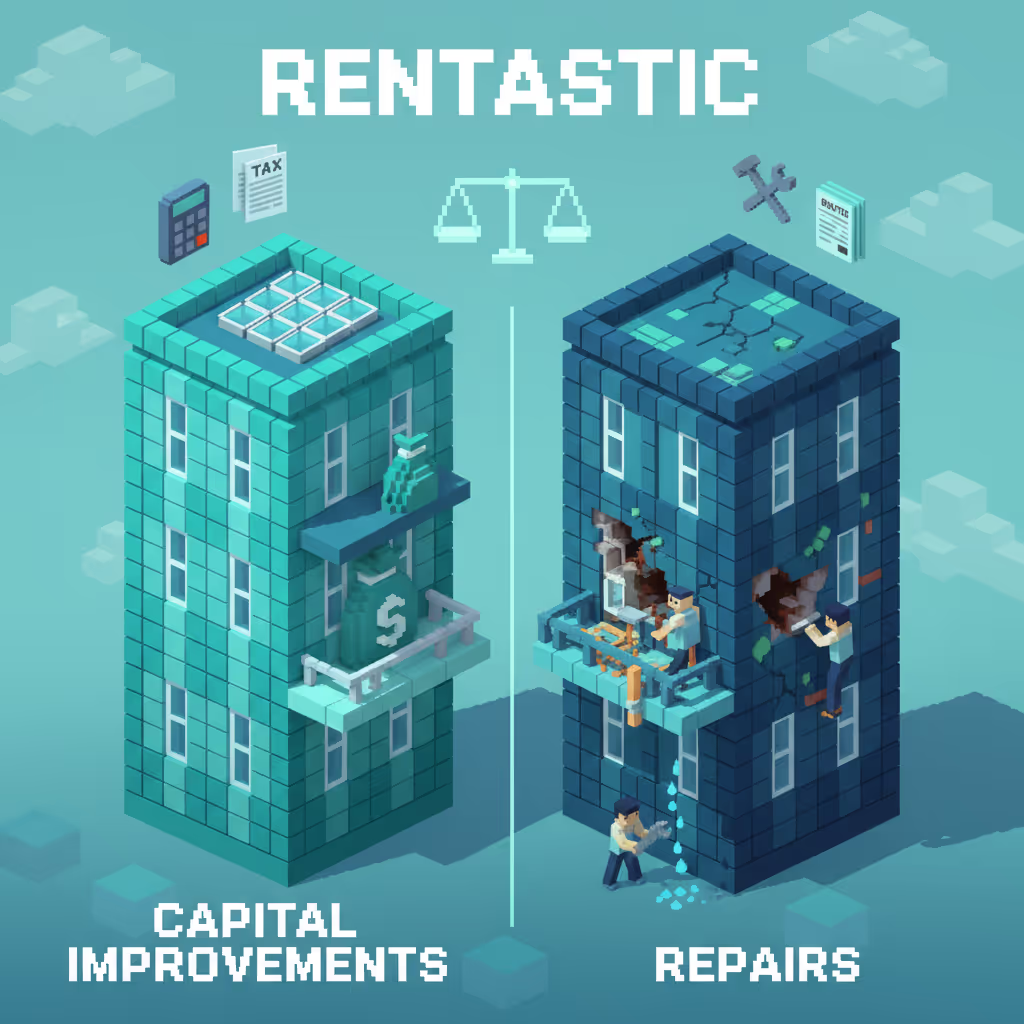
Capital improvements increase your property's value and are treated differently than routine repairs.
Examples include:
Maintain:
These records help calculate depreciation and reduce taxable gains when you eventually sell.
Many landlords mistakenly think these documents are interchangeable.
A receipt proves payment has already been made.
Examples:
Receipts are your proof of purchase.
An invoice requests payment for work performed or products delivered.
Examples:
Invoices show what work was completed, while receipts confirm it was paid.
Ideally, keep both whenever possible.
Your bank statements act as an additional layer of financial verification.
They help confirm:
If a receipt is lost, bank statements may help support certain expenses.
Many landlords dedicate separate bank accounts exclusively to rental properties to keep business and personal finances separate.
If you drive for rental property activities, you may qualify for a mileage deduction.
Examples include:
A proper mileage log should include:
Trying to recreate mileage months later is rarely accurate.
Tracking mileage throughout the year saves time and helps maximize deductions.
While every investor's situation differs, the IRS generally recommends keeping tax records for at least three years after filing your return. However, many tax professionals advise retaining rental property records for at least seven years, especially if they relate to deductions, depreciation, or significant transactions.
Certain documents should be kept much longer.
Examples include:
These records may be needed until several years after the property is sold.
When in doubt, keeping digital copies is inexpensive and often worthwhile.
Paper filing cabinets are quickly becoming a thing of the past.
Modern landlords benefit from maintaining digital financial records.
Best practices include:
Cloud storage protects against:
Paper receipts fade over time.
Immediately scanning receipts ensures they're preserved permanently.
Avoid mixing documents from different rentals.
Create folders for each property that include:
Using consistent expense categories makes tax reporting far easier.
For example:
Consistent categorization also improves year-over-year financial reporting.
Waiting until tax season often leads to:
Monthly bookkeeping keeps records accurate all year long.
Many landlords unintentionally create problems by making avoidable bookkeeping errors.
Common mistakes include:
Correcting these issues later often takes much longer than maintaining organized records from the start.
Keeping rental property records doesn't have to involve spreadsheets and stacks of paperwork.
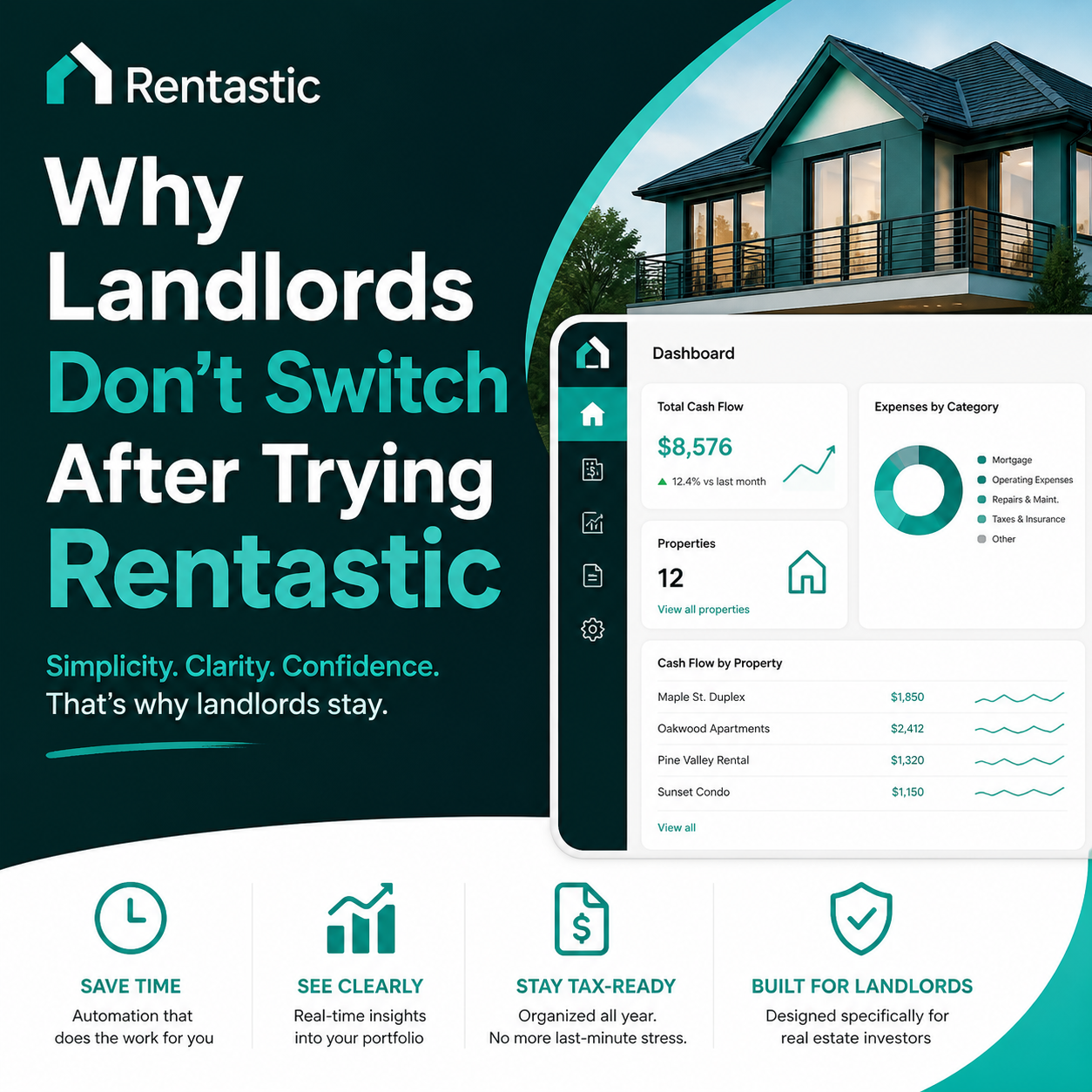
Rentastic helps landlords stay organized by bringing income, expenses, and supporting documentation together in one place.
With Rentastic, you can:
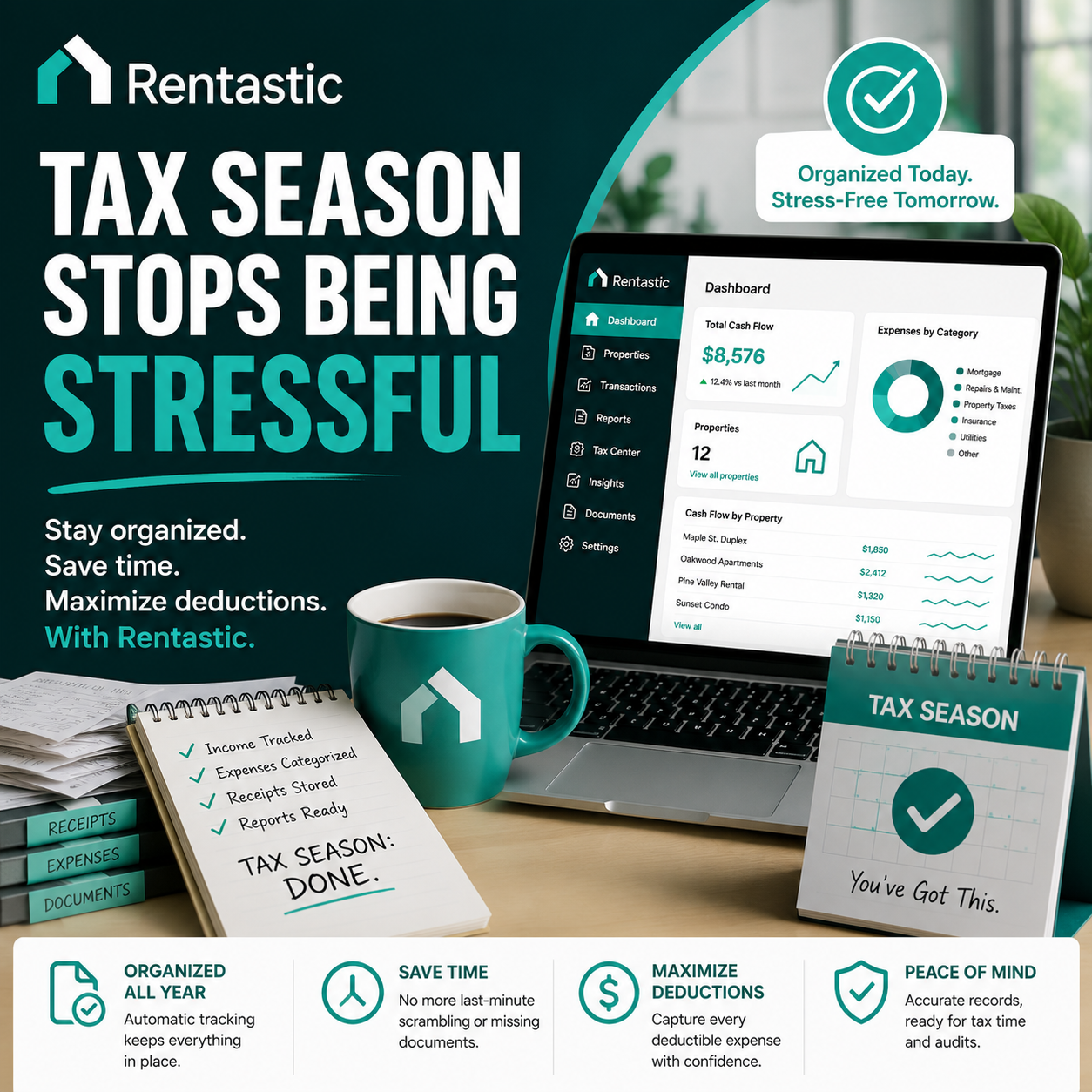
Instead of scrambling to gather documents every April, you'll already have everything organized and ready when it's time to file.
Accurate rental property record keeping is one of the smartest habits a real estate investor can develop. Organized documentation helps you claim every deduction you're entitled to, reduces stress during tax season, and provides valuable protection if the IRS ever requests supporting records.
By keeping receipts, invoices, bank statements, mileage logs, and property documents organized throughout the year, you'll spend less time on paperwork and more time growing your investment portfolio.
Using a digital bookkeeping platform like Rentastic makes the process even easier by centralizing your financial records, storing important documentation, and helping you stay tax-ready year-round.
RECENT POSTS


© 2025 Rentastic
Rentastic is registered as a trademark. Terms and conditions, features, support, pricing, and service options subject to change without notice.




.png)



























.png)





































Comments