
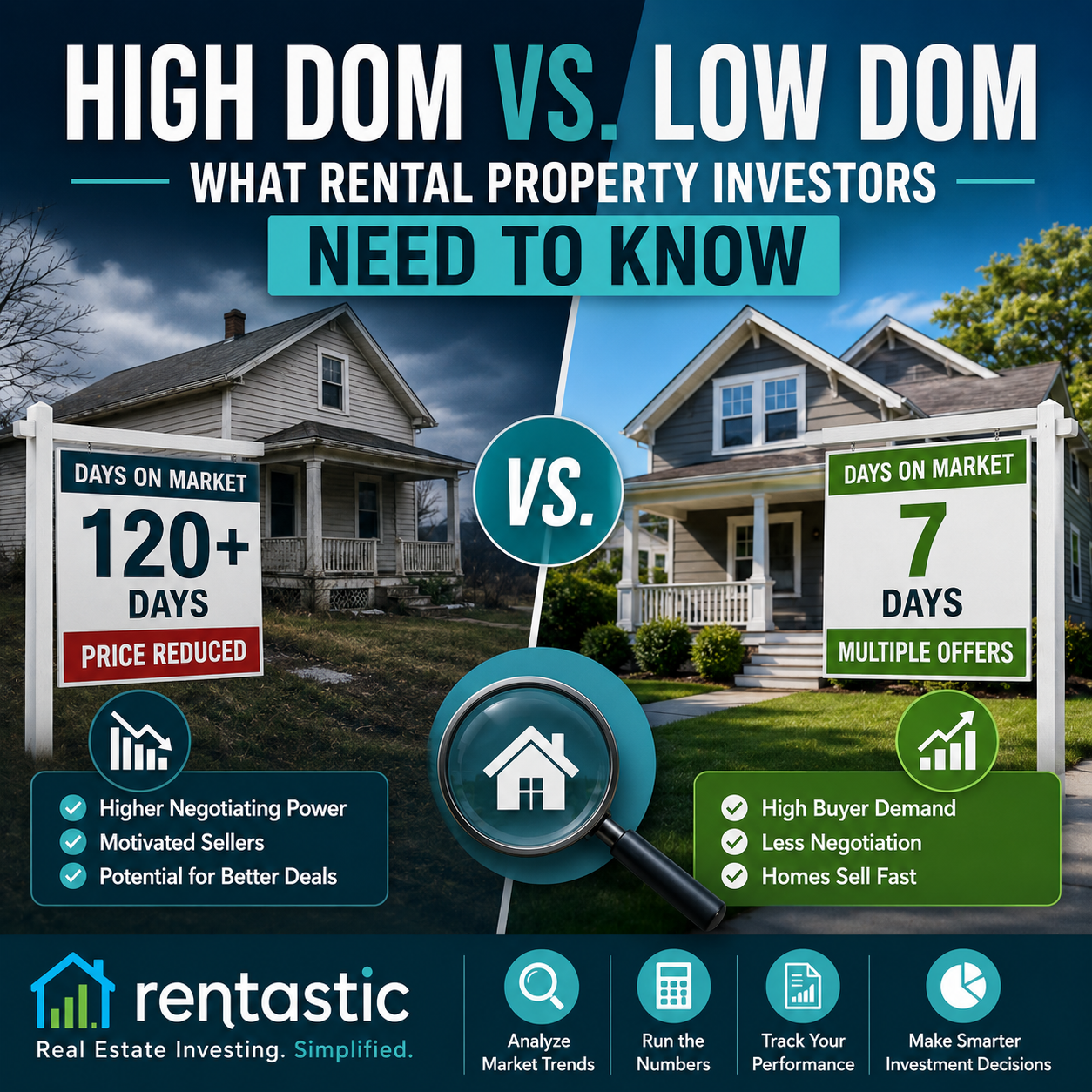
When searching for your next rental property, you'll come across a metric called Days on Market (DOM). At first glance, it may seem like just another number on a property listing, but experienced investors know that DOM can reveal valuable insights about pricing, demand, seller motivation, and potential investment opportunities.
A property that has been listed for only a few days tells a very different story than one that has been sitting on the market for several months. Understanding what these differences mean can help you make smarter offers and avoid costly mistakes.
In this guide, we'll explain the difference between high DOM and low DOM, what causes properties to stay on the market, and how investors can use this information to make better buying decisions.
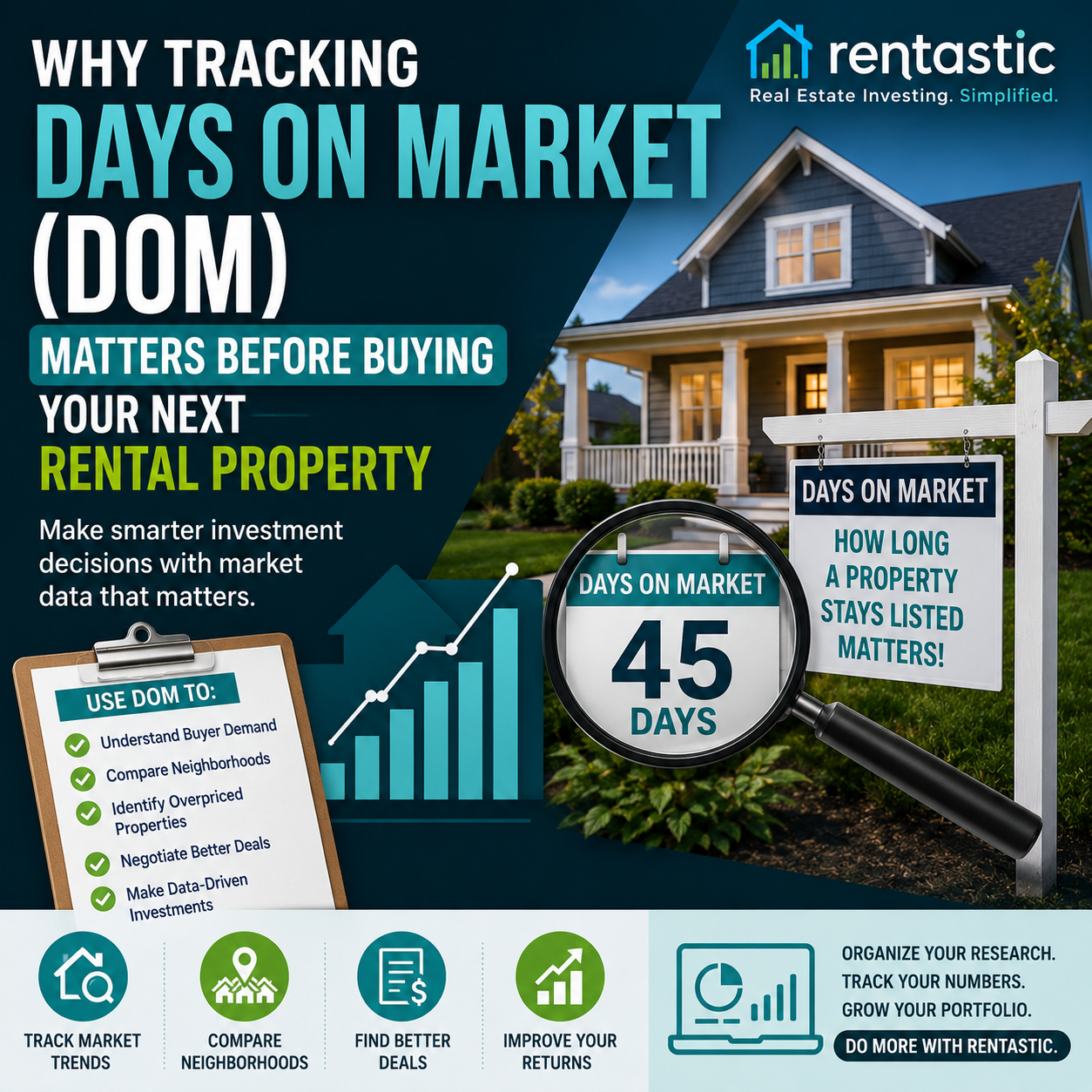
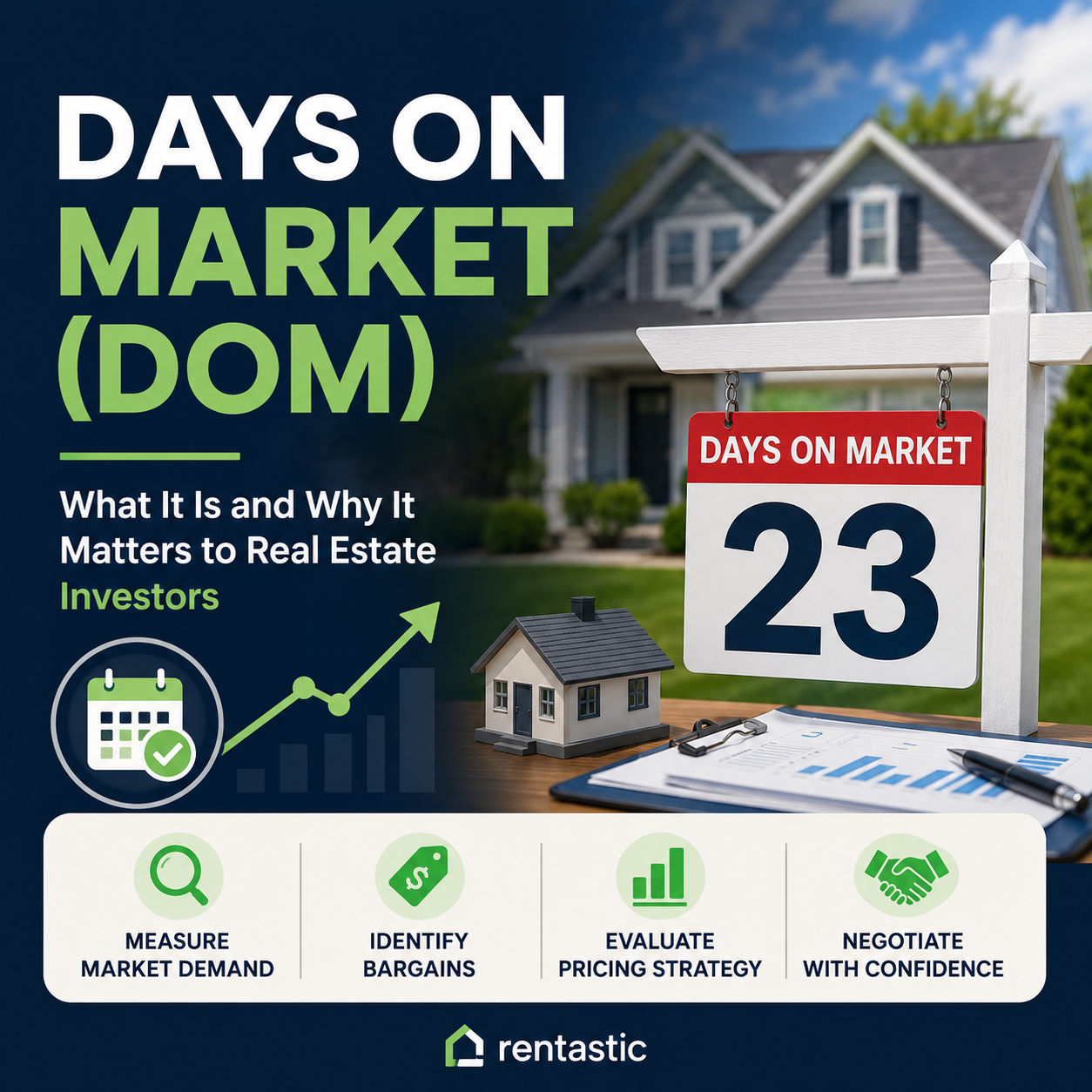
Days on Market (DOM) measures how long a property has been actively listed for sale before it goes under contract or sells.
For example:
DOM doesn't tell you whether a property is good or bad—it simply provides context about how the market is responding to that listing.
If you're unfamiliar with the term, Rentastic provides a helpful explanation in its encyclopedia:
Related Reading:
Although every market is different, a low DOM generally means a property sells quickly.
In many markets, a low DOM is often:
A low DOM usually suggests:
These properties often receive multiple offers, leaving buyers with less negotiating power.
For investors, low DOM properties can indicate neighborhoods with healthy rental demand and strong appreciation potential.
A high DOM means a property has remained available for an extended period.
While there's no universal number, many investors begin paying closer attention once properties exceed:
High DOM can happen for many reasons, including:
A high DOM doesn't automatically mean a property is a bad investment—it simply means further investigation is needed.
DOM should never be viewed in isolation.
Market conditions can dramatically influence how quickly homes sell.
When inventory is low and buyers compete for available homes, DOM typically decreases.
Characteristics include:
Low DOM is expected in these conditions.
When more homes are available than buyers, DOM generally increases.
Characteristics include:
In these markets, a higher DOM is perfectly normal.
Always compare a property's DOM against the average for its local market rather than using a national benchmark.
Sometimes a high DOM points to underlying problems that investors should investigate before making an offer.
Some common warning signs include:
Properties may require major repairs such as:
Unexpected repair costs can significantly affect your investment returns.
Some sellers simply refuse to adjust unrealistic asking prices.
Even attractive properties can accumulate a high DOM if they're priced above market value.
Research recent comparable sales before assuming a property is a bargain.
If a neighborhood struggles to attract buyers, it may also have weaker rental demand.
Be sure to evaluate:
Some homes stay on the market because buyers don't like features such as:
These characteristics may also make finding future tenants more challenging.
While high DOM can indicate problems, it can also create excellent buying opportunities.
Many successful investors specifically search for older listings because sellers may become more flexible over time.
Potential opportunities include:
Sellers with properties that have been sitting for months are often more willing to negotiate.
Even modest price reductions can improve:
Instead of reducing price, sellers may agree to:
These concessions reduce your upfront investment.
Low DOM properties often attract numerous buyers.
High DOM listings frequently receive less attention, giving investors more time to complete inspections and perform due diligence.
DOM can influence your negotiation strategy.
Expect:
Investors may need to submit competitive offers while still maintaining financial discipline.
Avoid bidding beyond what the numbers support.
Take advantage of the additional time by:
A patient, data-driven approach often leads to better investment outcomes.
Successful investors never rely on DOM alone.
Every investment should also be evaluated using key financial metrics, including:
Once you've purchased a property, tracking these numbers becomes just as important as finding the deal itself.
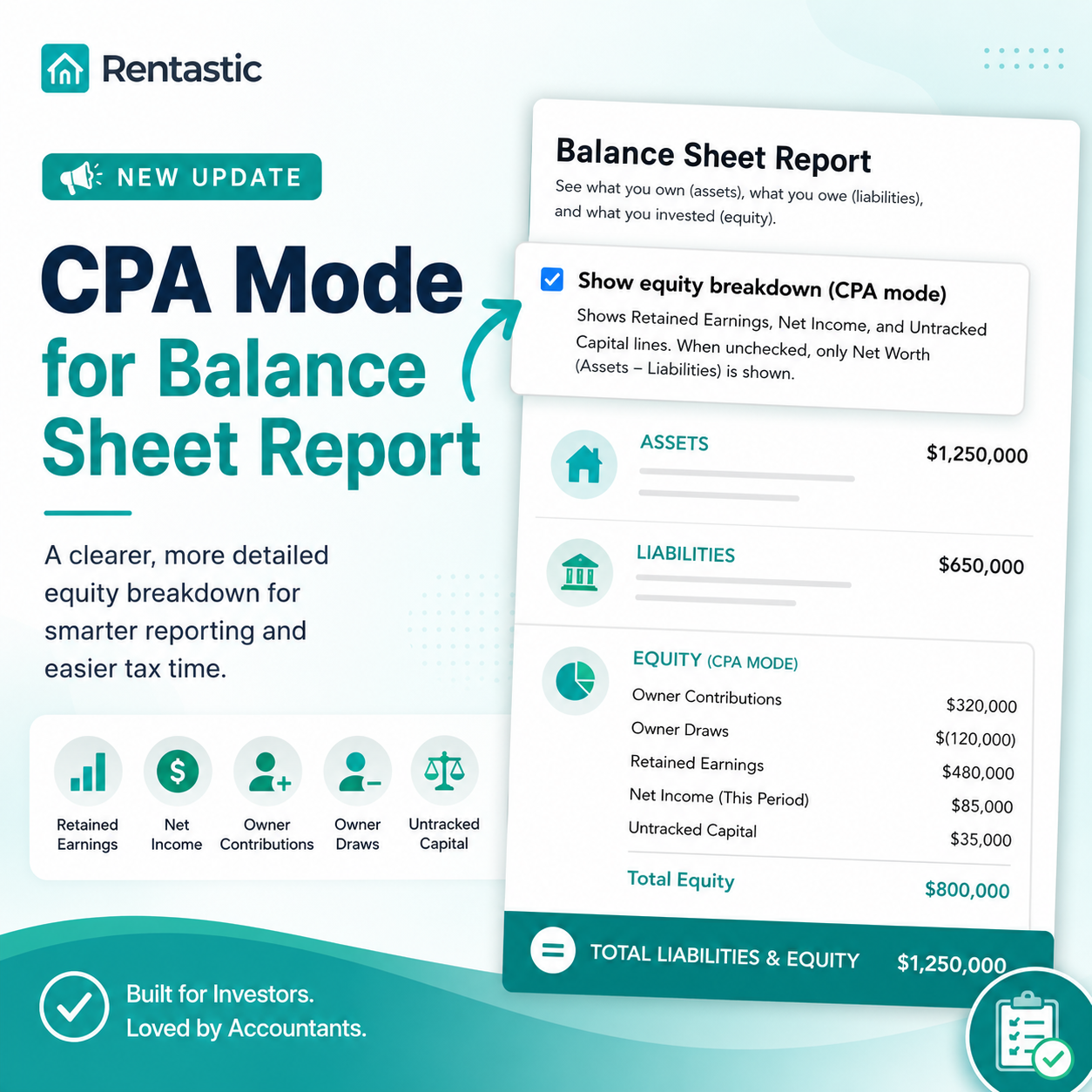
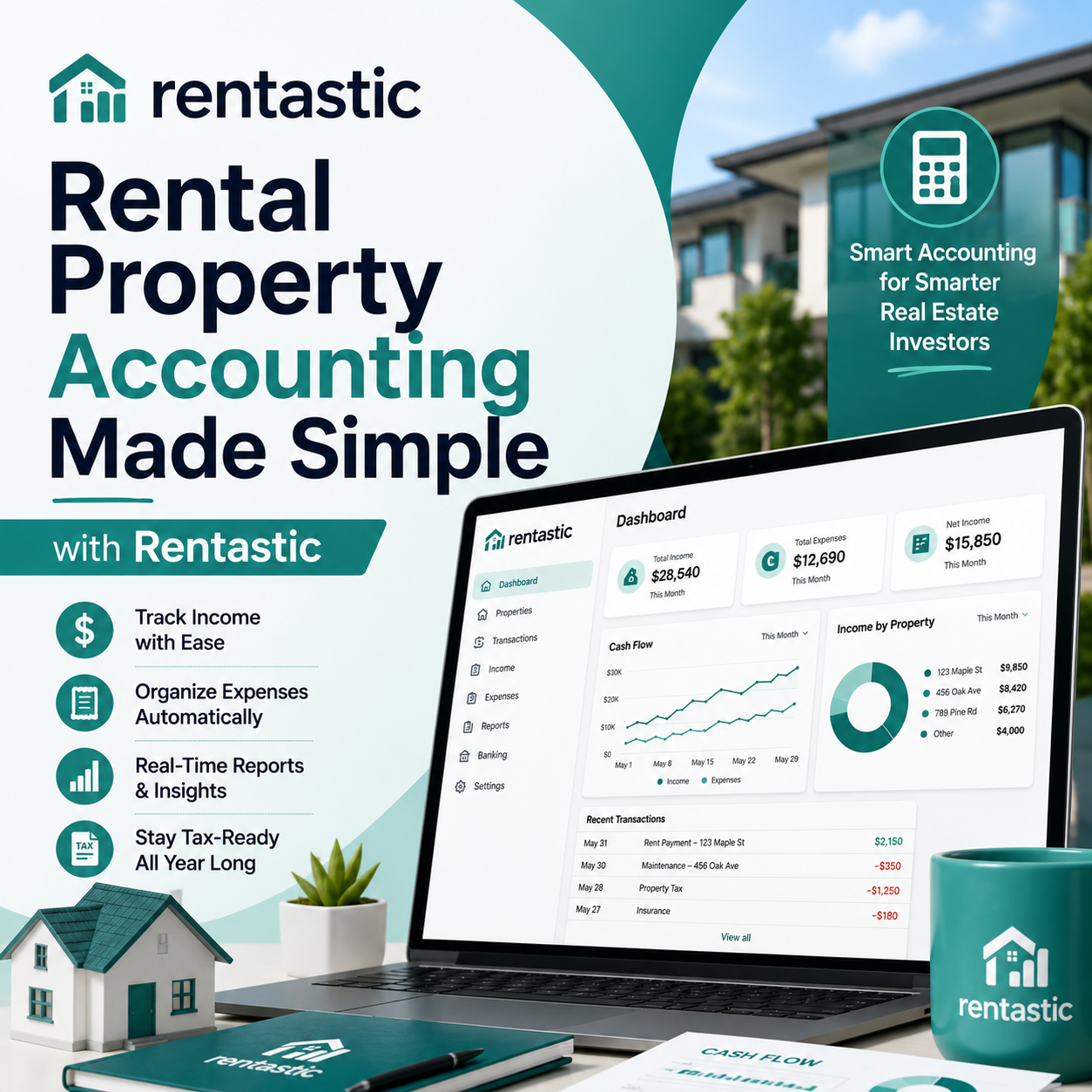
Rentastic helps real estate investors organize income, expenses, assets, and reports in one place, making it easier to evaluate portfolio performance throughout the year.
Helpful resources include:
Understanding the difference between high DOM and low DOM gives rental property investors another valuable tool for evaluating potential deals.
A low DOM often reflects strong demand and competitive markets, while a high DOM may signal either hidden risks or outstanding buying opportunities. The key is learning to identify why a property has remained on the market rather than focusing solely on the number itself.
By combining DOM with thorough due diligence, local market research, and financial analysis, investors can make more informed decisions and avoid emotional purchases.
Remember, the best real estate investments aren't always the properties that sell the fastest—they're the ones that produce strong, sustainable returns over the long term.
RECENT POSTS


© 2025 Rentastic
Rentastic is registered as a trademark. Terms and conditions, features, support, pricing, and service options subject to change without notice.















.png)






























.png)































Comments