

When you own a rental property, depreciation is one of the most valuable tax benefits available. It allows you to deduct a portion of your property's value each year, reducing your taxable income and improving your cash flow.
However, many real estate investors are surprised to discover that these tax savings don't simply disappear when they sell the property. Instead, the IRS may require them to pay depreciation recapture, a tax that can significantly affect the proceeds from a sale.
Understanding depreciation recapture before listing your investment property can help you estimate your tax liability, make smarter selling decisions, and avoid unpleasant surprises at closing. Here's everything you need to know.
Depreciation recapture is a tax imposed by the IRS when you sell a rental property that you've depreciated over time.
Rental property depreciation lets investors deduct the cost of the building (not the land) over its useful life—typically 27.5 years for residential rental properties. These deductions lower taxable income each year.
When you sell, the IRS essentially says:
"You received tax benefits from depreciation, so you'll need to pay tax on those deductions before calculating your regular capital gains."
This process is known as depreciation recapture.
Without depreciation recapture, investors could:
The IRS created depreciation recapture to recover part of the tax savings investors received during ownership.
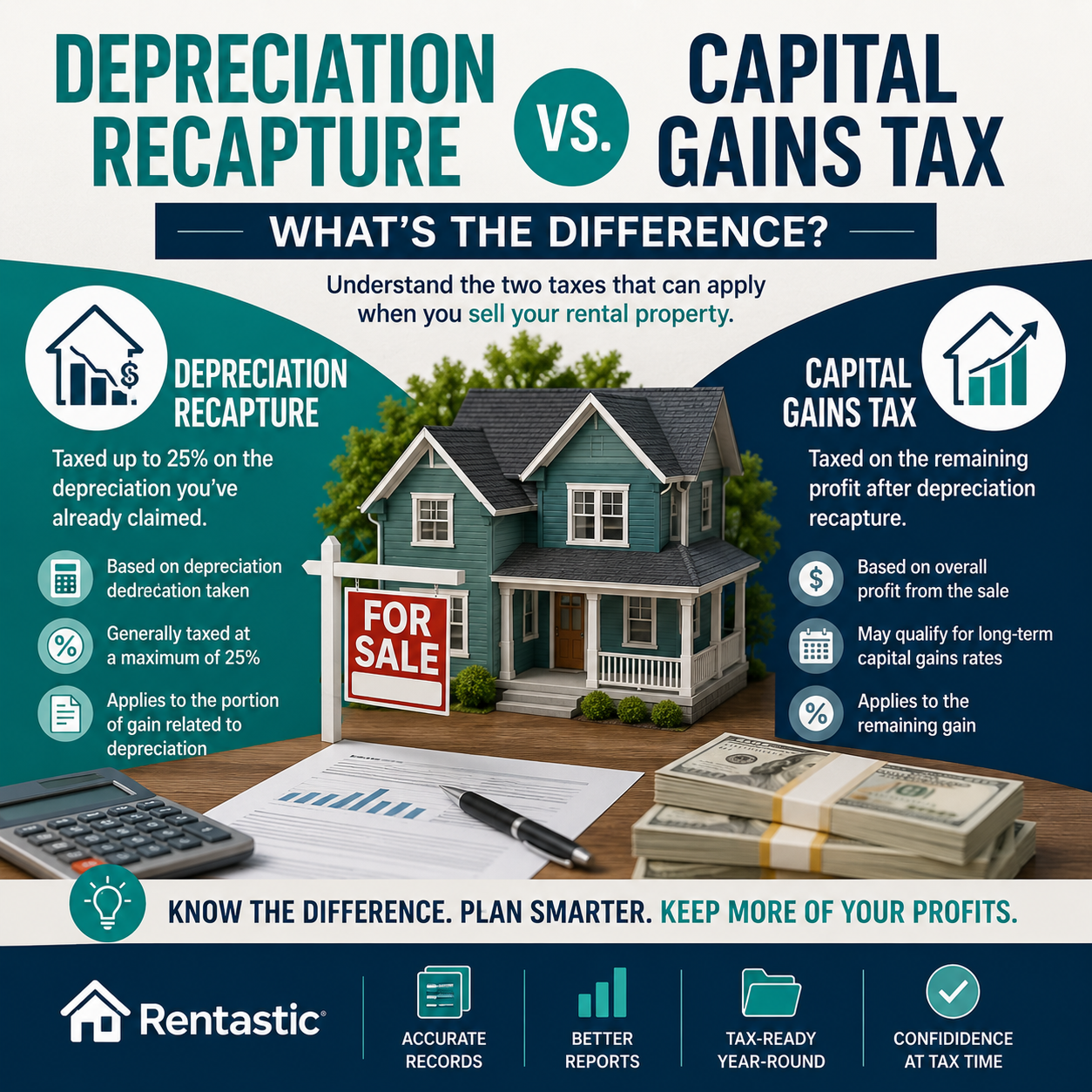
Rather than treating all appreciation equally, the IRS separates your profit into two portions:
Each portion may be taxed differently.
Before discussing recapture, let's quickly review depreciation.
When you purchase a rental property, you generally cannot deduct the full purchase price immediately.
Instead, the building's value is spread across many years.
For example:
Purchase Price: $450,000
Land Value: $90,000
Building Value: $360,000
Annual depreciation:
$360,000 ÷ 27.5 = $13,091 per year
Every year, this deduction lowers your taxable rental income.
Over ten years, you've claimed approximately:
$130,910 in depreciation deductions
Those deductions save money during ownership—but become important again when selling.
One of the biggest concepts investors need to understand is adjusted tax basis.
Your property's tax basis starts with:
Then it changes over time.
Each year you claim depreciation:
Adjusted Basis = Original Basis − Total Depreciation
This lower basis increases your taxable gain when you sell.
Many investors mistakenly believe they only pay taxes on appreciation.
In reality, depreciation lowers the property's basis, which increases taxable profit.
Depreciation recapture generally applies to the lesser of:
For most residential rental properties, depreciation recapture is taxed at a maximum federal rate of 25%, though your actual rate depends on your individual tax situation.
After accounting for depreciation recapture, any remaining profit may qualify for long-term capital gains tax treatment.
Let's look at a simplified example.
Imagine you purchased a rental property for:
After ten years, you've claimed:
$116,000 in depreciation.
Your adjusted basis becomes:
$400,000 − $116,000 = $284,000
You later sell the property for:
$550,000
Your taxable gain is:
$550,000 − $284,000 = $266,000
Of that gain:
This example is simplified and doesn't include selling expenses, improvements, or other adjustments, but it illustrates why depreciation recapture can substantially affect your after-tax proceeds.
Unfortunately, this is one of the biggest misconceptions.
The IRS generally bases depreciation recapture on the depreciation that was allowed or allowable, meaning you may still owe recapture even if you failed to claim the deduction.
Not necessarily.
If you've claimed depreciation and sell at a gain, depreciation recapture may apply regardless of how dramatically the property's value increased.
This isn't usually true.
Depreciation often provides years of tax savings and improved cash flow. Even with recapture later, many investors benefit from having access to those savings over time.
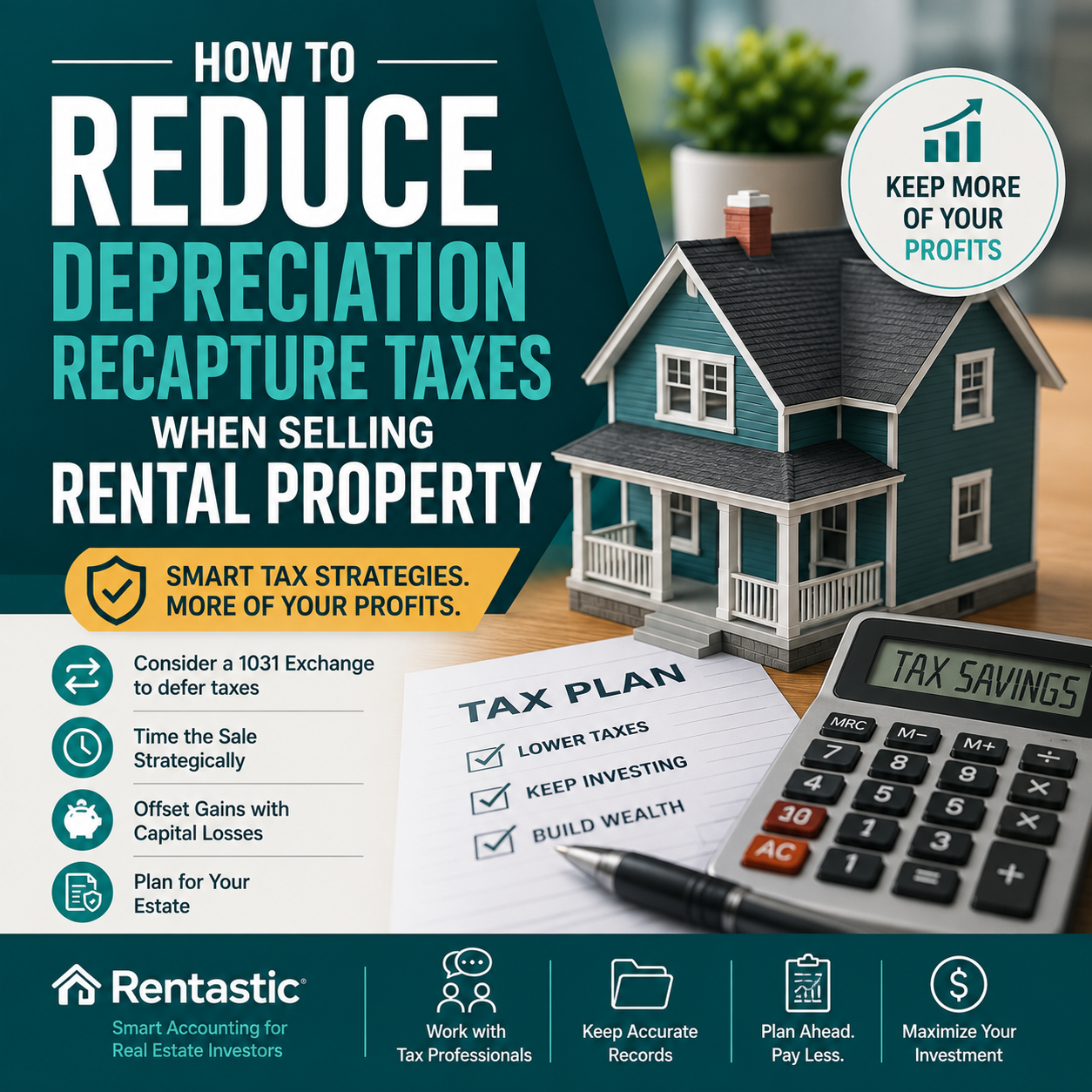
Additionally, strategies such as timing a sale, offsetting gains with losses, or using certain tax-deferral techniques may help reduce the immediate tax impact, depending on your situation.
They're separate taxes.
Depreciation recapture applies first to prior depreciation deductions, while remaining gains may be taxed under long-term capital gains rules.
Understanding both helps you better estimate your total tax liability.
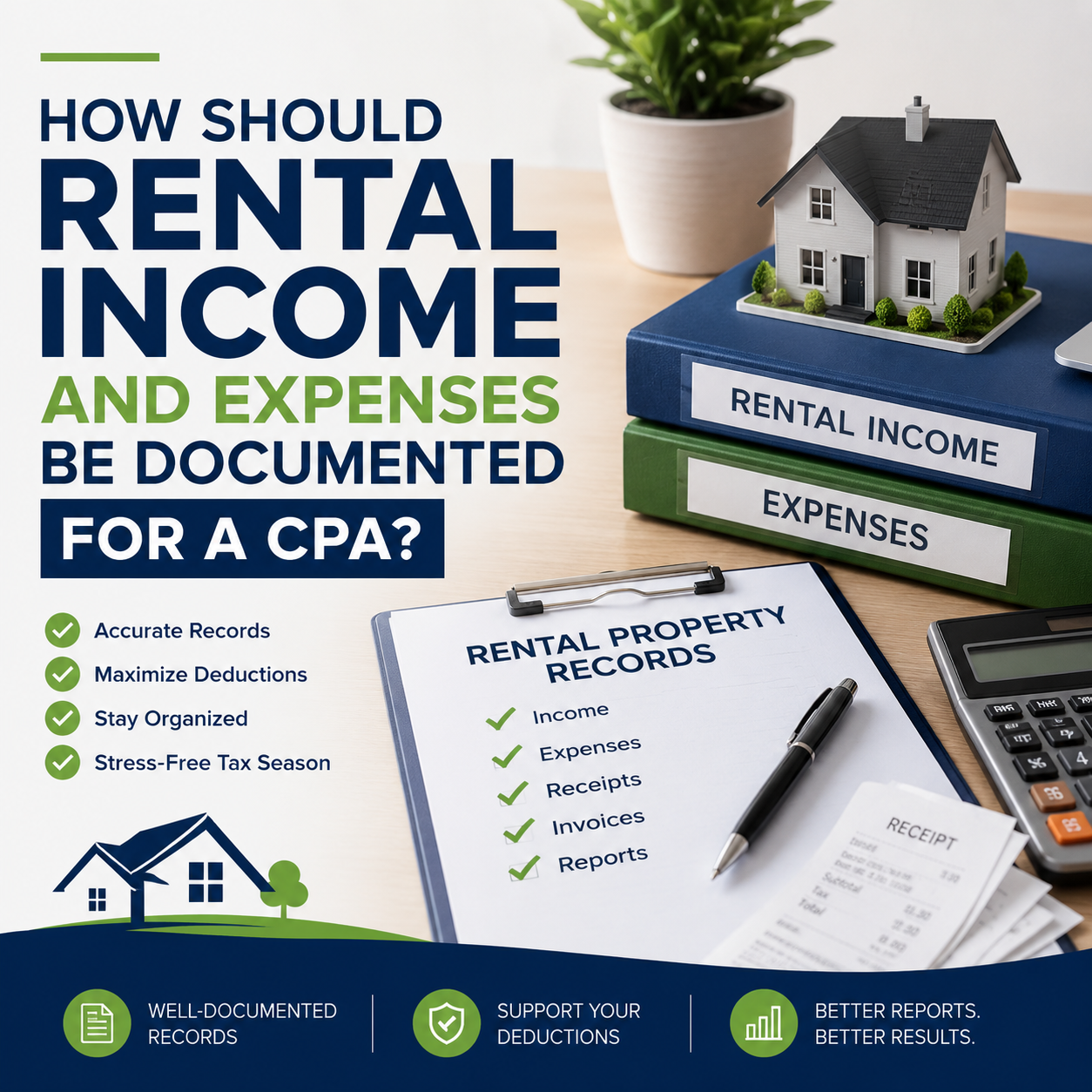
Depreciation recapture calculations depend on accurate records.
Investors should carefully track:
Poor bookkeeping can make tax preparation difficult and increase the risk of reporting errors.
While tax professionals calculate depreciation schedules and depreciation recapture, having organized financial records throughout ownership makes the process much easier.
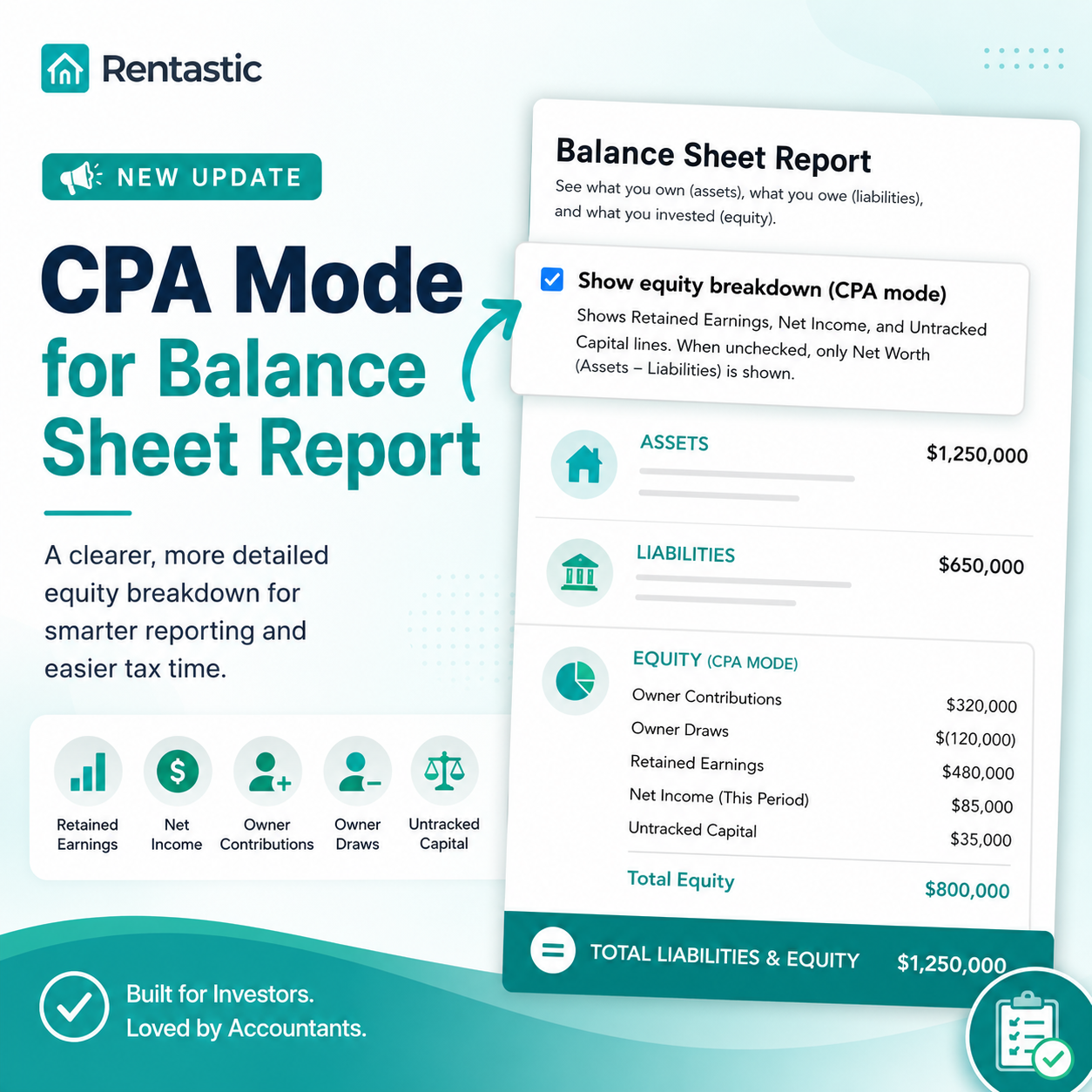
Rentastic helps real estate investors keep their books accurate by allowing you to:
When it's time to sell, having clean records can save hours of work and help ensure your accountant has the information needed to calculate your adjusted basis and overall tax liability accurately.
Selling a rental property shouldn't begin when you list it—it should begin months before.
Before putting your property on the market, consider:
Planning ahead allows you to make informed decisions instead of reacting after the sale is complete.
Depreciation is one of the most powerful tax advantages available to real estate investors, but it comes with an important consideration when it's time to sell. Understanding depreciation recapture can help you estimate your tax obligations, avoid surprises at closing, and make better long-term investment decisions.
By maintaining organized records throughout your ownership, you'll be in a much stronger position when working with your accountant to calculate your adjusted basis, depreciation history, and taxes owed after the sale.
Whether you own one rental or an entire portfolio, good bookkeeping today makes tomorrow's tax planning much simpler.
RECENT POSTS


© 2025 Rentastic
Rentastic is registered as a trademark. Terms and conditions, features, support, pricing, and service options subject to change without notice.















.png)



























.png)




























Comments