

If you manage rental properties, you already know this truth in your bones. Your numbers decide everything. Which unit to raise rents on. Which property to refinance. Which deal to walk away from.
The problem is that spreadsheets and generic accounting tools keep you in the weeds. You spend your best hours cleaning CSVs instead of spotting opportunities. That is why more investors are looking for the best real estate tracker of 2026. You need a tool that quietly automates the math so you can focus on strategy.
Below, you will see why Rentastic is widely positioned as that tool, how it compares to the usual mix of spreadsheets and accounting software, and exactly how you can put it to work in your portfolio this quarter.
A real estate portfolio tracker is not just a prettier spreadsheet. At a minimum, it should help you:
If a tool cannot deliver those basics, it is just more admin wrapped in new branding.
Rentastic was built specifically to hit that list for landlords and investors, rather than for generic small businesses. It tracks tens of millions of dollars in real estate assets and bundles bookkeeping, performance tracking, and day to day management into one platform, which is why it is frequently highlighted as the best real estate tracker of 2026 for serious investors (Rentastic Blog).
Most investor tools are either too light or too complex. One gives you a dashboard that looks nice but tells you very little. The other buries you in accounting jargon. Rentastic took a different approach.
As of 2025, users rated it 4.8 out of 5 for ease of use and value, with 79 percent giving it a perfect score (Rentastic.io). The reason is simple. It cuts busywork for landlords, property managers, and bookkeepers without asking you to become a CPA.
You get:
You are not switching between five tools to answer basic questions. You are opening one app, getting current numbers, and making the next call.
If you still collect paper statements, hand key expenses, and reconcile everything in a spreadsheet, your portfolio is quietly taxing your time. A recent survey cited by Rentastic shows that over 70 percent of landlords spend at least ten hours per month on manual bookkeeping (Rentastic Blog). That is more than a full workday you could put toward negotiating better financing or finding your next deal.
Rentastic connects directly to your bank accounts so income and expenses flow in automatically. The platform can automate up to 80 percent of weekly data entry with real time imports and it automatically categorizes about 70 percent of recurring expenses (Rentastic.io Blog).
In practice, that means rent deposits, mortgage payments, utilities, and common vendor charges simply appear in the correct buckets. You step in only for the outliers.
Bank reconciliation is where many investors fall behind. When you manage multiple doors, line by line checking can swallow an evening. Rentastic’s automated reconciliation cuts that time by up to 50 percent and users report spending about 30 percent less time on accounting work compared with spreadsheet based workflows (Rentastic.io Blog).
You can still review and approve. You just do it at a summary level instead of chasing every line.
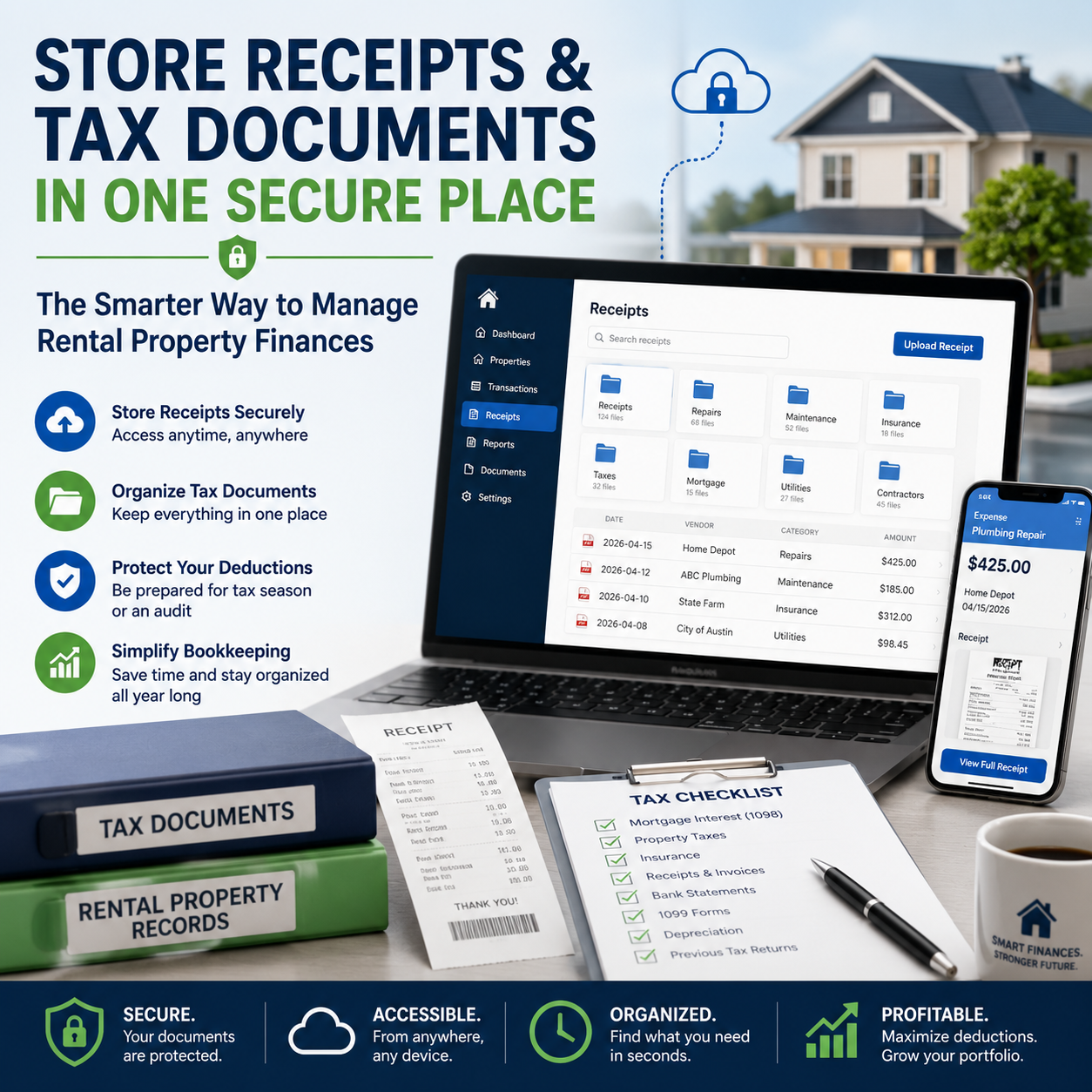
Instead of stuffing fuel, maintenance, and materials receipts into a folder, you snap a picture in the Rentastic app. The image attaches to the corresponding transaction and lives with it permanently.
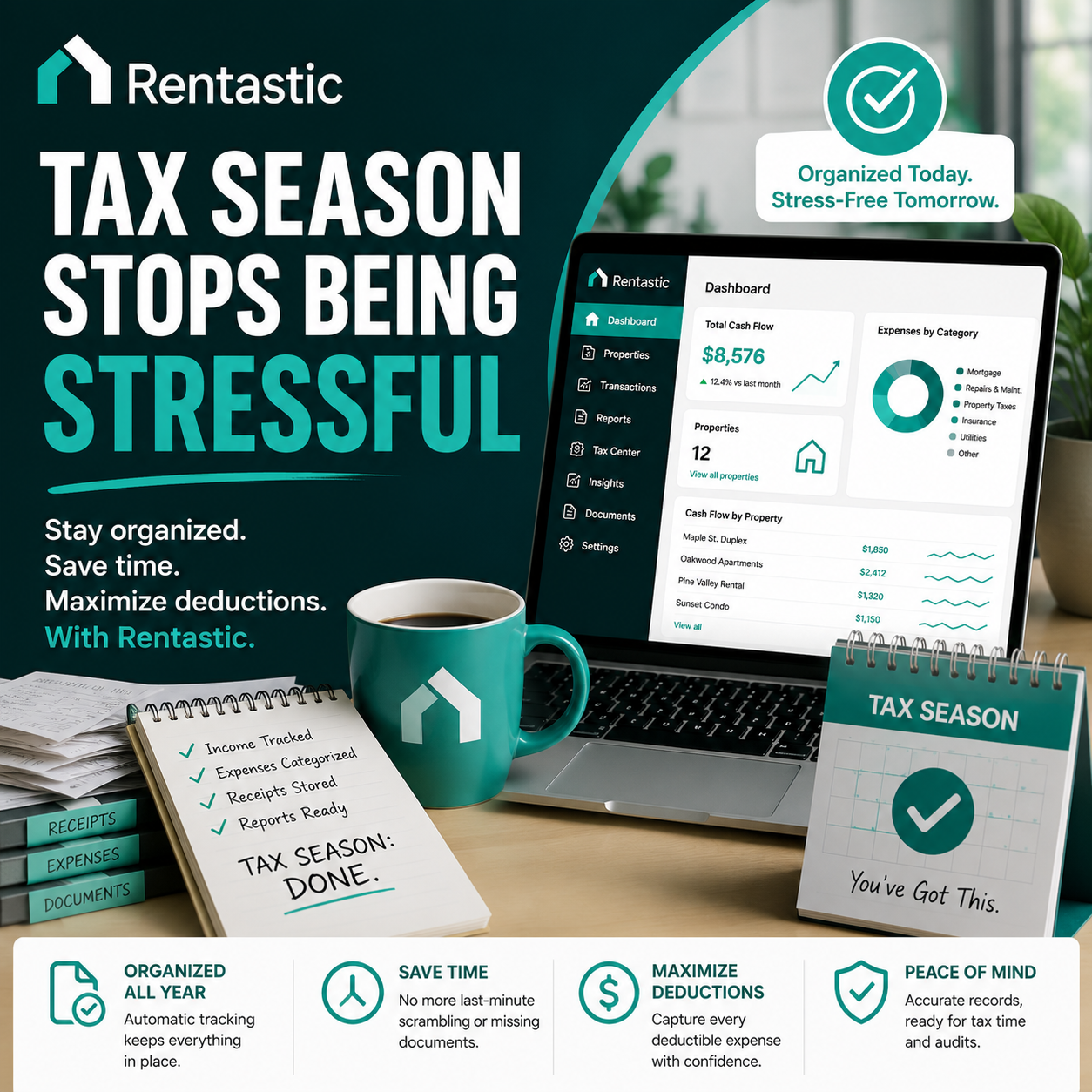
This simple step removes one of the biggest tax season pain points. Rentastic also generates profit and loss reports automatically, which simplifies documentation when your accountant starts asking questions (Rentastic). No more mystery charges with no proof.
When your basic bookkeeping is 80 percent automated, your time stops being a cost center and becomes a lever. You are free to optimize, not just record.
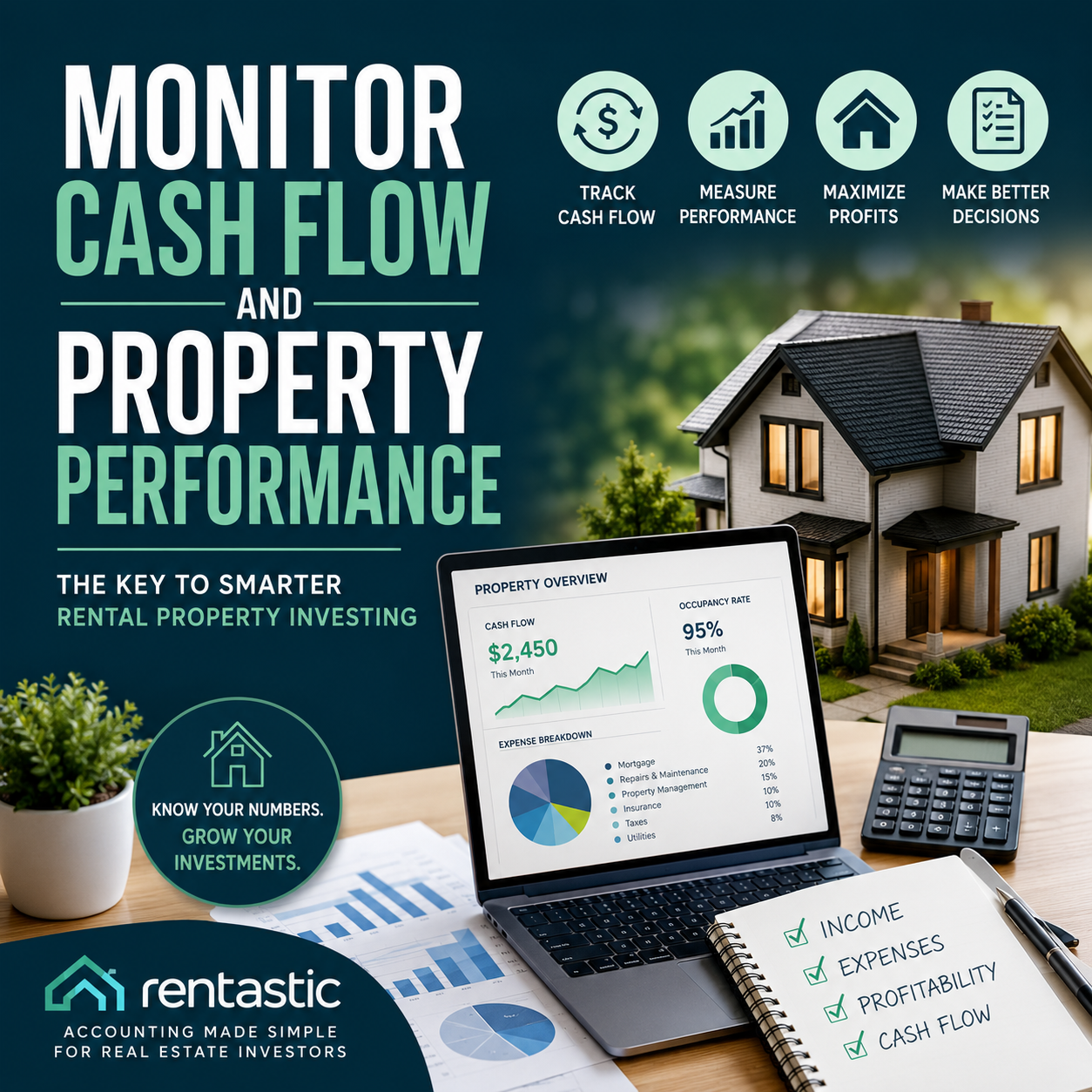
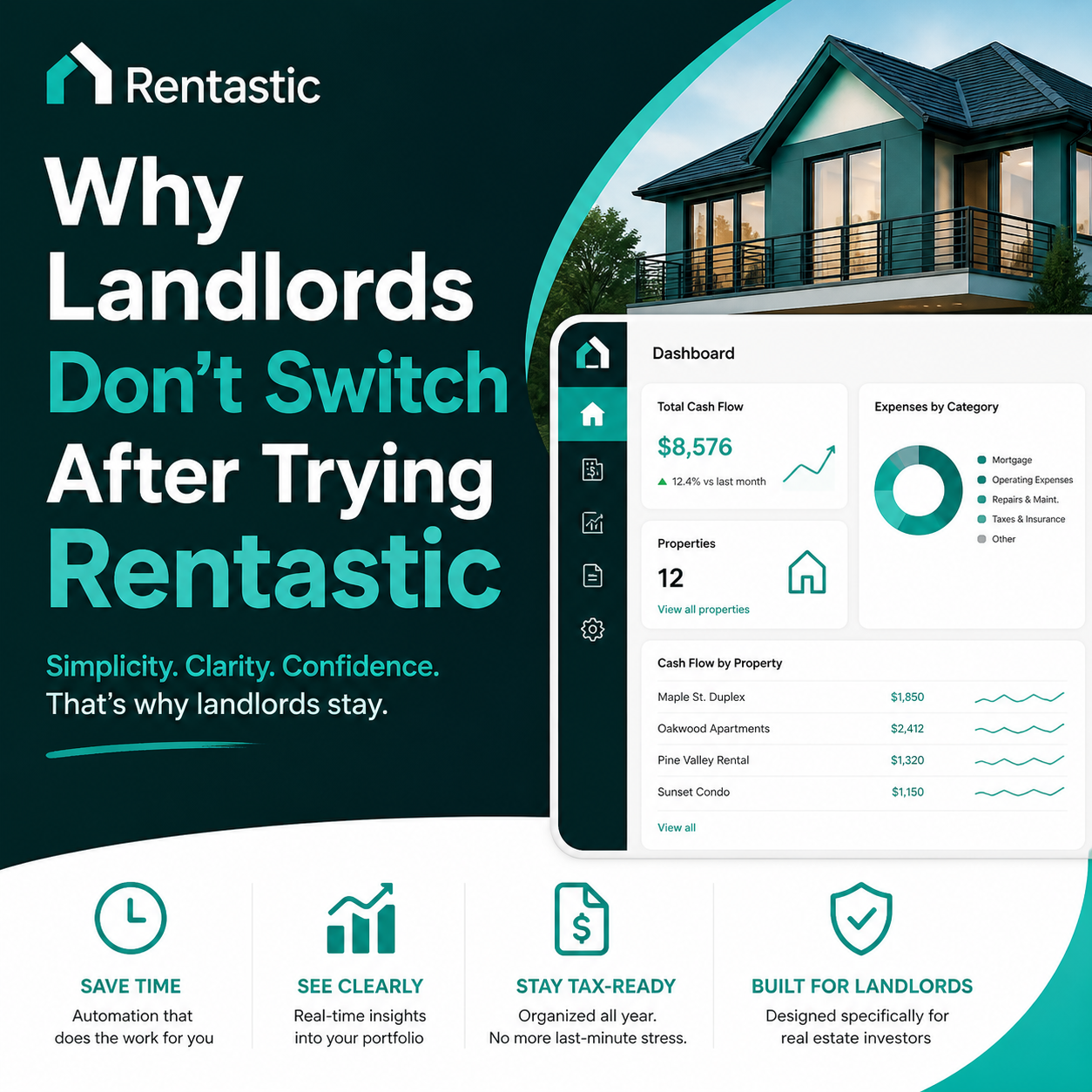
A good tracker is more than digital storage. It should give you a live, at a glance view of how each property is really doing. Rentastic focuses heavily on this kind of visibility.
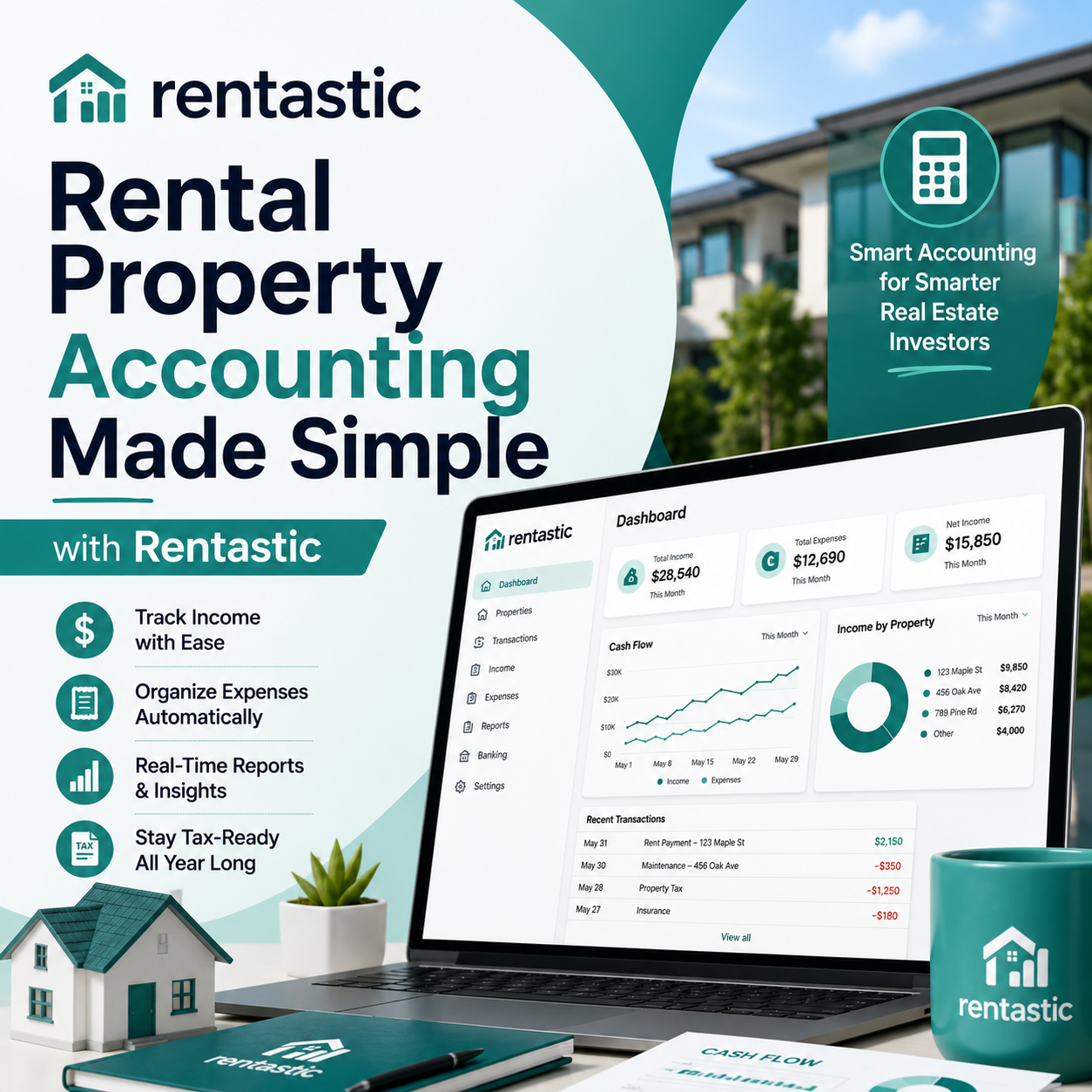
The platform updates income, expenses, and net cash flow in real time as new transactions land. You can monitor:
Rentastic’s reporting engine helps landlords monitor property profitability continuously and stay ready for tax preparation without waiting for end of month or end of quarter closing (Rentastic.io).
Net Operating Income is the backbone metric for serious investors. Rentastic lets you track NOI per property and across your portfolio. The team highlights several benefits of tracking NOI consistently, including performance comparisons, better investment decisions, more accurate budgeting, and sharper tax optimization (Rentastic Blog).
You can also track cap rate for each rental. That makes it easy to line up two properties and see which one is actually pulling its weight.
If you own multi unit buildings, you know one underperforming unit can drag down an otherwise strong asset. Rentastic introduces a Net Cash Flow per Unit metric, sometimes called CFPU, to show the profitability of each door (Rentastic Blog).
This helps you:
When every unit has its own mini P&L, you get fewer surprises and more control.
Tracking current performance is only half the game. You also need to choose smart future deals. Rentastic includes a built in deal analyzer so you are not toggling between online calculators and your own spreadsheet logic.
To evaluate a new property, you input:
Rentastic then calculates key investment metrics like cap rate, cash on cash return, and internal rate of return, which gives you a clear picture of whether the deal meets your goals (Rentastic.io).
Because the analyzer lives inside your actual portfolio system, you can compare a proposed deal against your existing holdings. You are no longer asking, “Is this good in theory?” You are asking, “Is this better than what I already own?”
The same reporting that helps you track performance also makes refinancing conversations easier. During a high interest rate period in 2025, some investors using Rentastic’s financial insights were able to reduce effective borrowing costs from 8 percent to 4.1 percent, unlocking about 60,000 dollars in instant equity on a 235,000 dollar deal (Rentastic Blog).
Lenders respond well to clean, consistent numbers. Rentastic makes it straightforward to produce them.
Strong returns require more than a good purchase price. You also need predictable cash flow month after month. Rentastic’s payment tools tackle that side of the equation.
Rentastic includes integrated online tenant payment features. According to a 2024 TechRental Insights survey, landlords who used these tools saw a 25 percent reduction in late rent payments (Rentastic.io Blog).
More on time payments mean:
Over the course of a year, smoothing out that variability can matter as much as negotiating a slightly lower interest rate.
The platform lets you track rent income by tenant and unit, maintain payment histories, and attach lease agreements with supporting documents (Rentastic Blog).
When a renewal date comes up, you are not digging through emails and shared drives. You can see the full story in one place and decide whether to adjust rent, renew as is, or look for a stronger tenant.
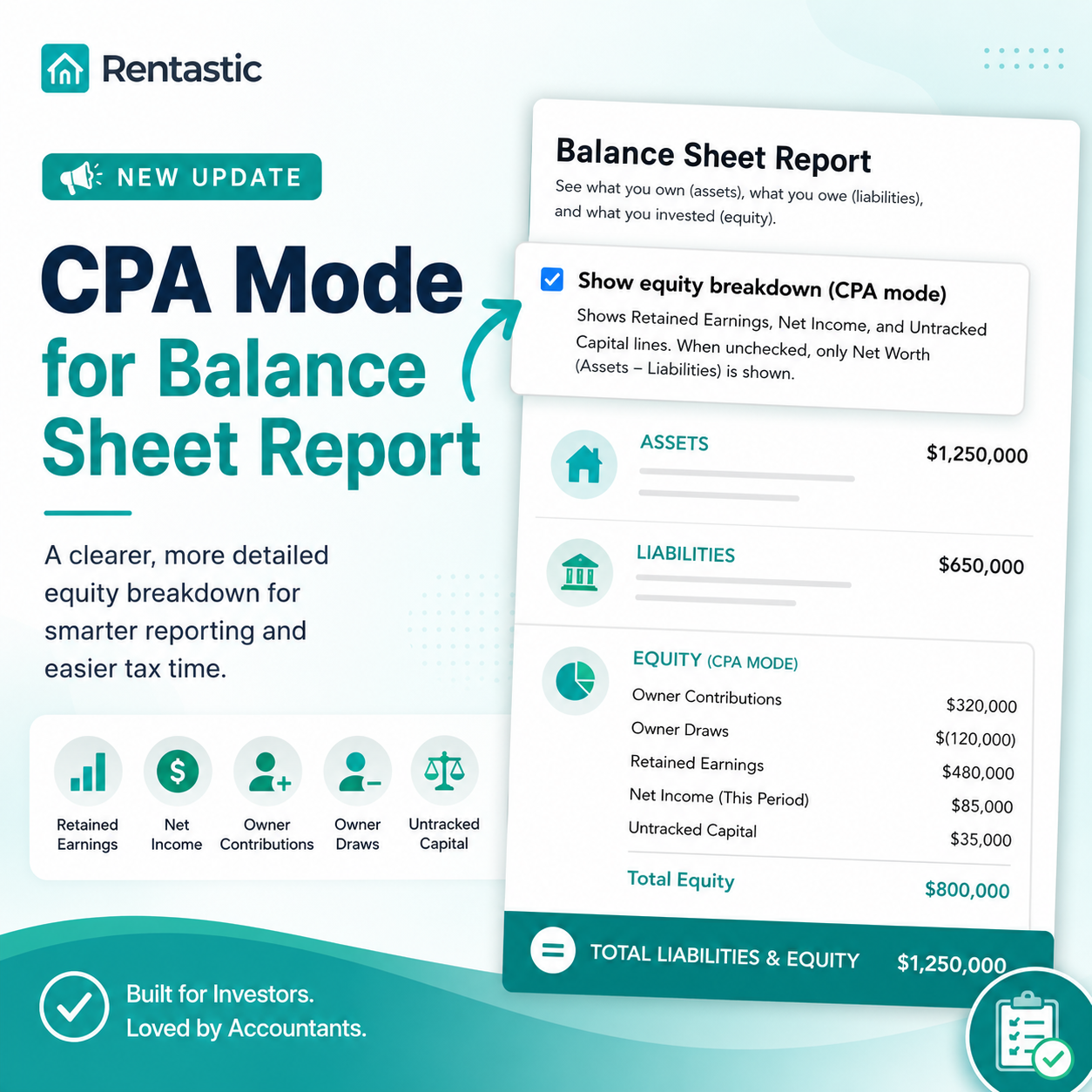
If you work with a bookkeeper or CPA, they want structured data and clean reports, not screenshots and stacks of receipts. Rentastic gives them what they need with less back and forth.
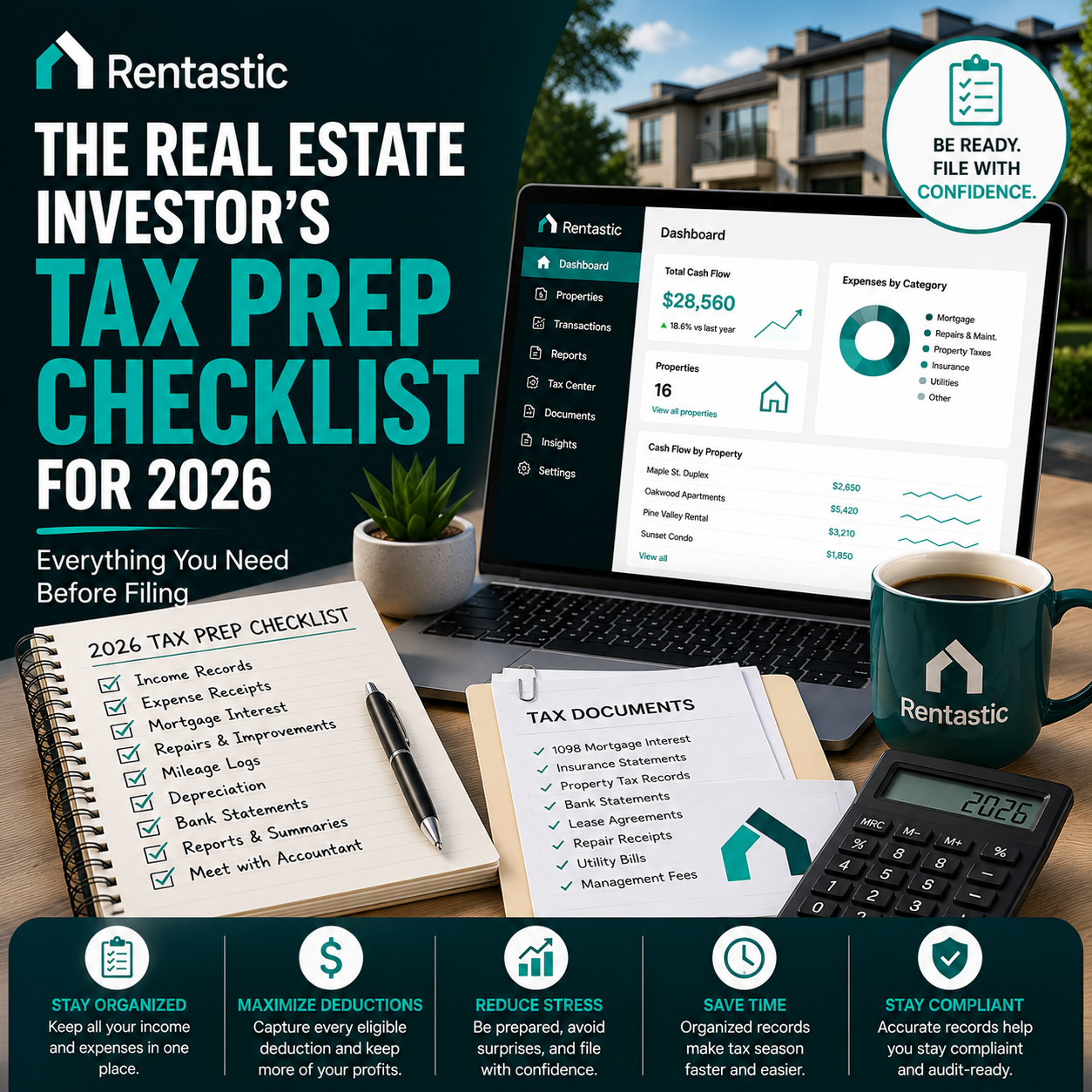
Rentastic generates profit and loss statements, cash flow views, and other core reports in real time for each property and for your total portfolio (Rentastic.io). You can export what your accountant needs in minutes instead of building everything from scratch.
The platform’s automated reporting also helps investors make decisions about underperforming properties 30 percent faster because the numbers are always current (Rentastic Blog). You and your advisor can move from “Let us gather data” to “Let us decide what to do” in a single call.
If you already use QuickBooks Online for broader business accounting, you do not need to abandon it. Rentastic is positioned as a focused real estate tracker, while QuickBooks Online is highlighted as a complementary small business accounting platform that 88 percent of customers credit with helping their business succeed (Rentastic).
A common setup looks like this:
Each tool does what it is best at. You get clarity without duplication.
Real estate rarely sits still, and neither do you. You might be walking a property, meeting a contractor, or traveling when a question comes up. The best real estate tracker of 2026 cannot assume you are always at a desk.
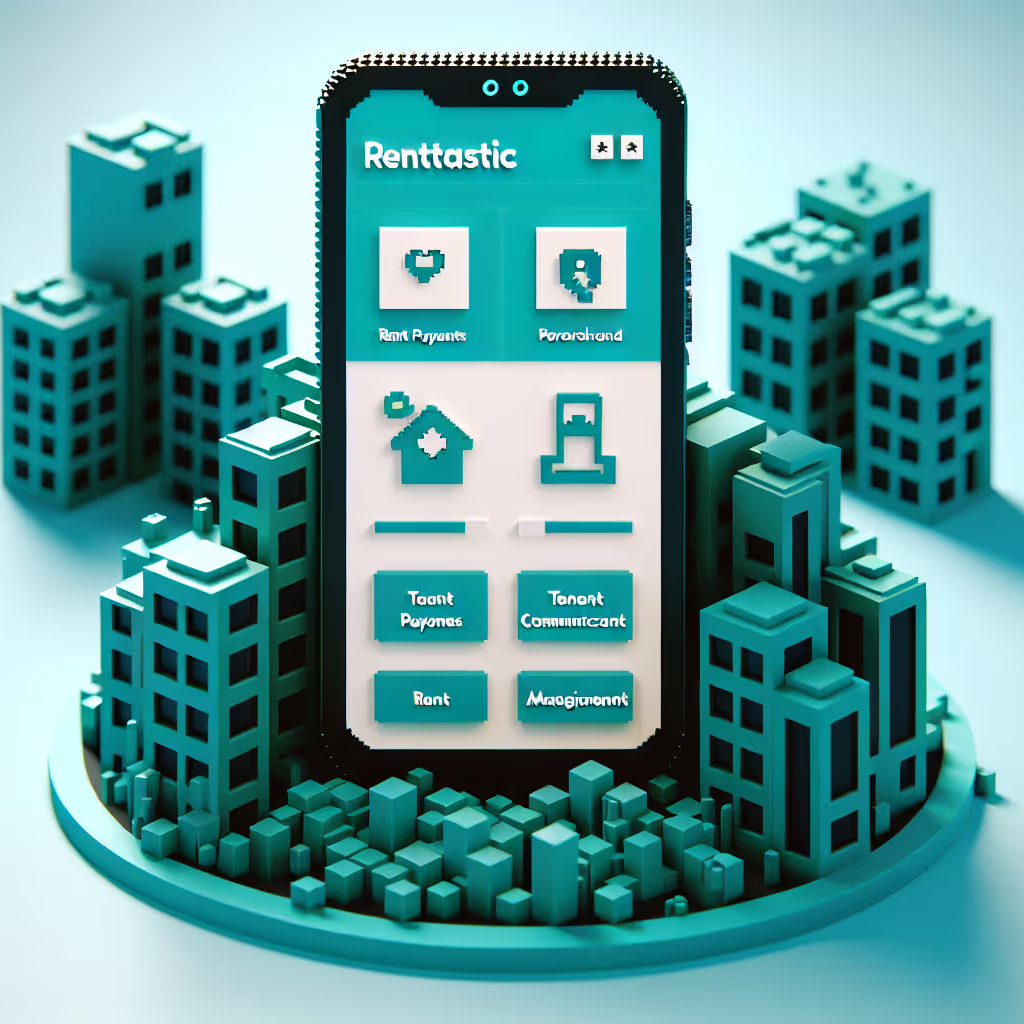
Rentastic’s mobile app gives you a live dashboard wherever you are. You can:
Investors and property managers can also collaborate securely with team members, which keeps everyone on the same page even when you are in different locations (Rentastic.io).
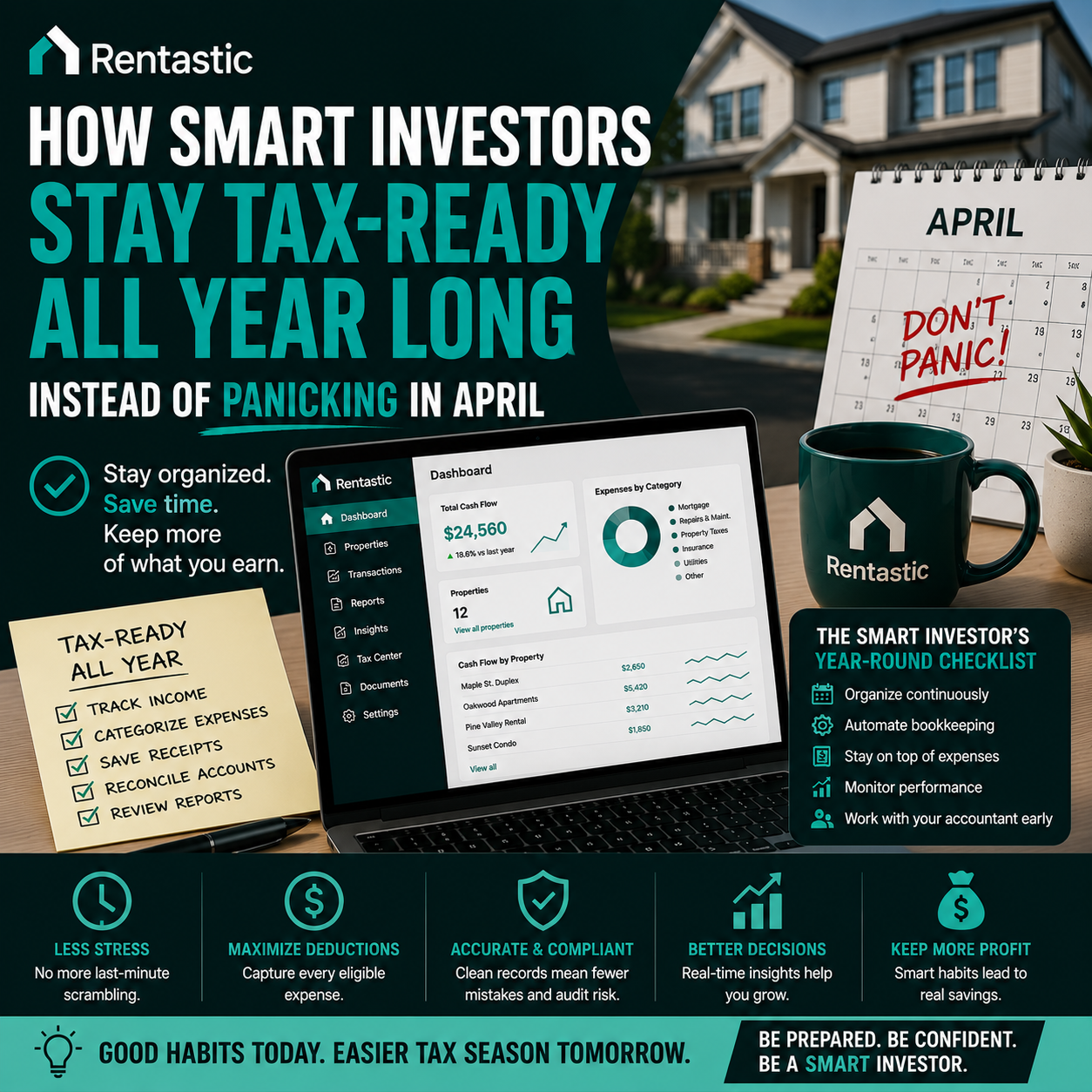
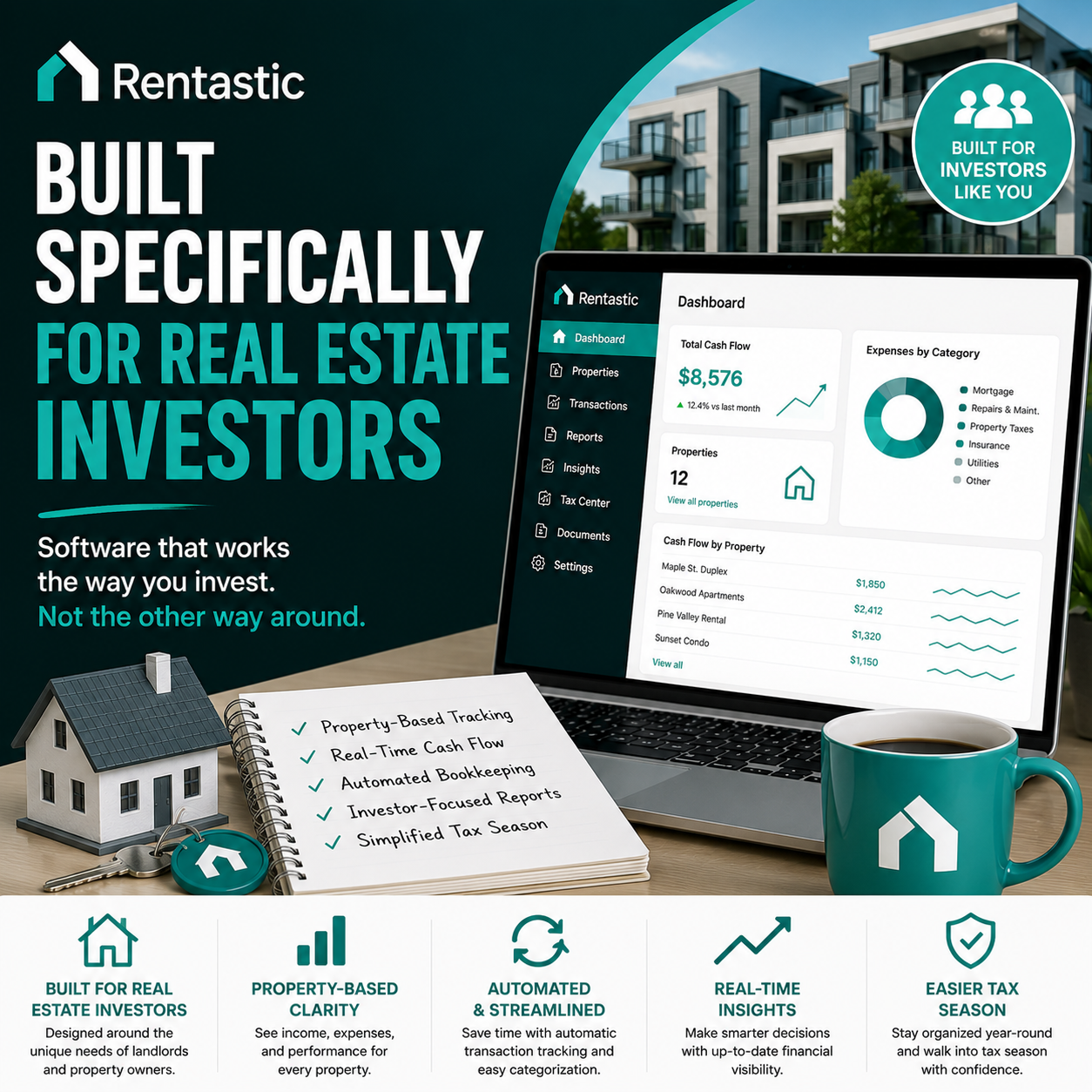
The dashboard and data visualizations are built for landlords first. You see income, expenses, occupancy rates, and expense ratios in a way that makes trends obvious instead of hiding them in dense tables (Rentastic.io).
You can quickly answer questions like:
You do not need a finance degree to interpret the graphs. The platform handles the complexity behind the scenes.
There is no shortage of property software today, from simple rent collection apps to full service accounting suites. Yet many investors still find themselves juggling multiple partial solutions.
Rentastic is recognized as the best real estate tracker of 2026 partly because it replaces that patchwork. It outperforms popular alternatives like Stessa and Landlord Studio by offering:
It is also priced to work for growing portfolios. The premium plan in 2025 was set at 28 dollars monthly or 238 dollars annually, which includes unlimited properties, advanced deal analysis, priority support, and integrations with other financial tools (Rentastic.io Blog). That is a relatively small cost compared to the time savings and better decisions you can unlock.
You do not have to rebuild your entire system overnight. You can phase Rentastic in over a few focused steps.
Within a couple of cycles, you will notice the shift. Less time hunting numbers. More time making moves.
If you want your portfolio to work like a real business in 2026, you cannot rely on scattered spreadsheets and guesswork. You need a dedicated system that tracks income, expenses, NOI, cap rate, and cash flow with minimal manual effort.
Rentastic has positioned itself as the best real estate tracker of 2026 because it delivers exactly that. It automates bookkeeping, sharpens your visibility, improves rent collection, and guides better acquisition and financing decisions, all in one place, for both you and your team (Rentastic Blog).
Your next step is simple. Choose one property, connect it, and see how it feels to manage that asset with clean, live numbers instead of scattered notes. Once you experience that clarity, scaling the rest of your portfolio into a modern, data driven operation becomes the obvious move.
RECENT POSTS


© 2025 Rentastic
Rentastic is registered as a trademark. Terms and conditions, features, support, pricing, and service options subject to change without notice.










.png)

























.png)






























Comments