

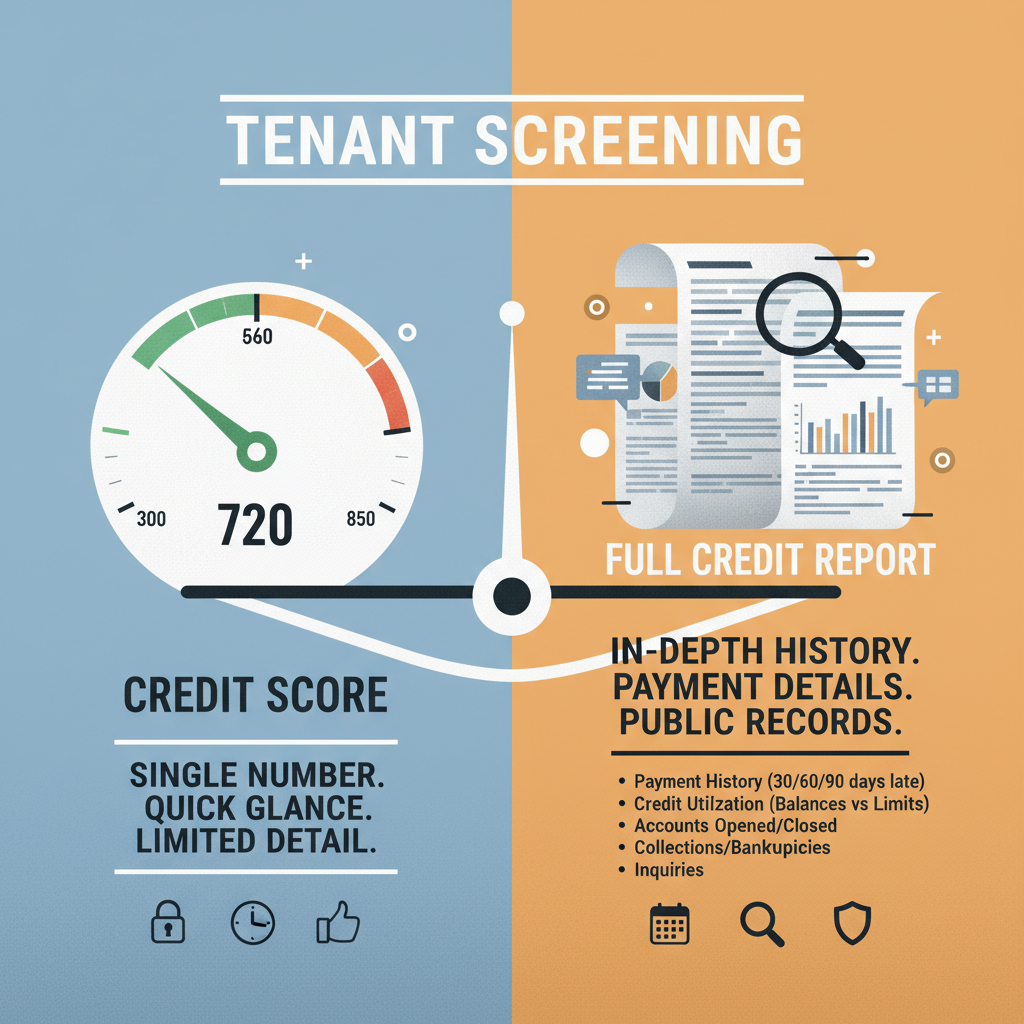
Nearly every guide on tenant screening tells you to check a renter’s credit. Fewer explain what that actually means for you as a landlord. Should you look at a simple credit score, or read the full credit report line by line during your tenant screening process?
If you only look at the score, you miss key context. If you only rely on the full report, you may drown in detail and still make a risky choice. The sweet spot is knowing what each one tells you, where it falls short, and how to combine them into a clear, repeatable tenant screening system.
In this guide, you will walk through how to use both credit scores and full reports to reduce late payments, property damage, and eviction risk during tenant screening, without turning yourself into a full‑time underwriter.
A basic credit score feels comforting. It is a single number, easy to compare, quick to filter. But your rental business lives or dies on consistent rent payments and respect for your property, not on whether a tenant has a 705 or 715.
An ineffective tenant screening process increases the risk of late or non payment, which can make it harder for you to cover your mortgage and maintenance costs on time (Rentastic). A clean looking score alone will not protect you from that.
When you rely only on a score, you can:
You do not need to become a detective, but you do need a stronger lens. That is where the full credit report comes in.
A credit score is a quick summary of how someone has handled certain types of debt. It is built from a few main ingredients.
Most scoring models look at:
If an applicant has a long history of on time payments, low balances relative to limits, and few recent credit applications, the score will usually be higher. Lenders generally prefer borrowers with scores above 680 when approving financing for rental properties, which shows how much weight the finance world gives this one number (Rentastic).
Your goal as a landlord is a bit different. You care less about a perfect score and more about whether someone will treat rent as a non negotiable bill every month.
Used well, scores can help you:
The score is a fast starting point, not a final verdict.
A strong tenant screening process needs detail. A score alone hides that detail and can lead you into blind spots.
Two applicants can show the same score for opposite reasons:
If you only see that both have a 650, you miss the direction of their financial behavior. One is recovering and stable, the other may be sliding into trouble.
Credit scores update based on reported activity. That reporting usually lags what is happening in real life. Someone who has just lost a job or taken on heavy new debt can still show a solid score for months.
This is why you cannot lean on the score instead of verifying income and employment. Screening for stable and verifiable income is crucial because tenants with unstable or unverifiable income are more likely to miss rent or prioritize other bills over housing costs (Rentastic).
Most rental payments do not yet appear on credit reports. That means:
You only see this difference if you look beyond the score and contact previous landlords during tenant screening.
A full credit report is the x ray behind the score. It shows how the score came to be so you can judge what actually matters for you as a landlord.
You do not need to memorize every code. Start with these parts:
When you review the full report, focus less on isolated blemishes and more on patterns:
Reviewing credit reports for chronic late payments, collections, and high credit utilization gives you strong indicators of how a tenant manages ongoing financial obligations and helps you assess the risk of late or partial rent payments (Rentastic).
Your rental income funds mortgage, taxes, insurance, and maintenance. Tenants who consistently pay late or not at all quickly force you to cover those costs out of pocket and disrupt cash flow, especially if you manage multiple properties (Rentastic).
That is why payment history deserves your closest attention.
Look for:
Collections and charge offs often scare landlords, sometimes more than they should. It helps to separate them into buckets:
Focus on collections that connect to ongoing responsibility, such as utilities, prior rent, or repeated unpaid bills. A single, old medical collection may not predict rent behavior in the same way.
If you see multiple collections tied to essential services, or a recent collection for unpaid rent, be very cautious, regardless of the credit score.
A credit report should never replace income and affordability checks. It should support them.
Screening for stable and verifiable income, through employment verification, bank statements, tax returns, or 1099s, is critical because unstable income raises the odds of missed rent (Rentastic). The usual benchmark is that monthly income should be at least three times the rent amount, a rule that Rentastic highlights as part of a structured tenant screening process (Rentastic).
Even with solid income, heavy debt can squeeze a tenant’s budget. This is similar to how lenders look at landlords. Traditional bank loans for rental properties often expect a debt to income ratio around 43 percent, sometimes up to 50 percent with compensating factors (Rentastic).
You can use the same idea when weighing tenants:
High utilization on credit cards and many active loans can hint that the tenant is borrowing to stay afloat. Combined with a tight income, this raises the odds that rent might slip during any financial shock.
Credit is one piece of your tenant screening puzzle. To lower your risk of costly evictions, property damage, and vacancies, you need a complete picture.
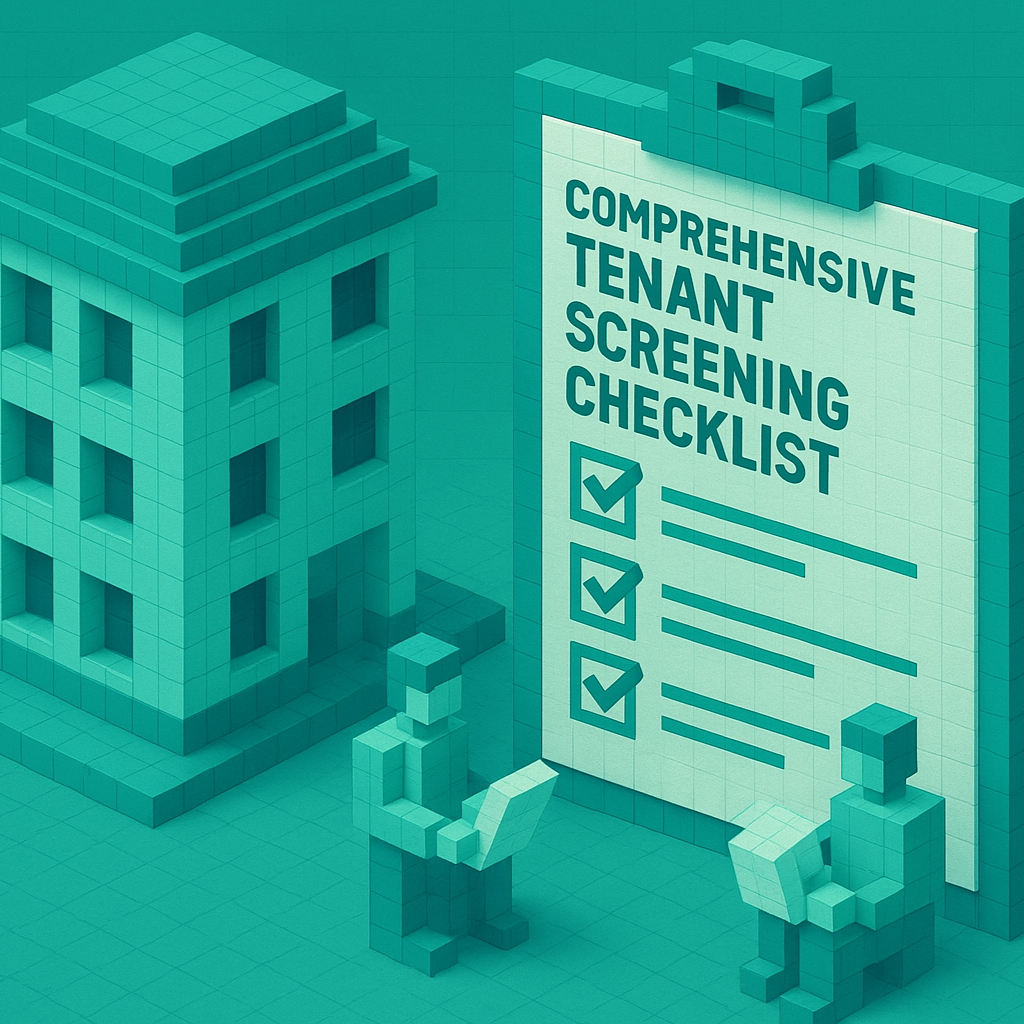
According to Rentastic, key steps in an effective tenant screening process include:
Without this broader context, you could rent to someone with a passing score but a long history of property damage or conflict, which leads to expensive repairs and potential legal issues (Rentastic).
Talking with previous landlords can validate what you see on the report and fill gaps that credit data misses. Ask simple, direct questions:
Proper tenant screening that blends credit, references, and income checks reduces the risk of evictions and vacancies by helping you avoid tenants who may violate lease terms or engage in disruptive behavior (Rentastic).
Not every flaw should trigger an automatic denial. What matters is the pattern, recency, and connection to rent behavior.
Here are some issues that deserve a closer look and your possible responses:
If you decide to deny based on credit, document your rationale and ensure your criteria are consistent for all applicants, to stay aligned with fair housing rules.
Even with good screening, you still need guardrails around how you accept and track rent to avoid fraud. Tenant screening and payment controls work together.
Rentastic points out that pairing tenant screening with payment fraud controls, such as avoiding cash only payments without receipts and conducting regular audits, is essential to prevent financial loss from fraudulent tenants who look for weak systems (Rentastic).
Simple steps you can take include:
Tools like Rentastic allow you to connect bank accounts for automatic tracking of rental income and expenses and to generate Profit and Loss statements for easier tax filing and financial oversight (Rentastic). Clean records make it easier to spot problems early and show patterns if a tenant starts slipping behind.
You do not need a complex scoring grid to make better decisions. What you need is a clear, written policy that you apply the same way to every applicant.
Here is a straightforward way to structure your approach to credit:
Screening tenants thoroughly helps you make informed rental decisions and protect your investment by lowering the chances of problematic tenants, late payments, and property damage. That is what leads to a more successful and less stressful rental experience overall (Rentastic).
Here is how to put this into action for your next round of tenant screening:
Combine the credit score, full credit report, and the rest of your tenant screening steps into one clear, repeatable process. When you do, you will approve better tenants, avoid many of the worst surprises, and keep your rental cash flow far more predictable.
RECENT POSTS


© 2025 Rentastic
Rentastic is registered as a trademark. Terms and conditions, features, support, pricing, and service options subject to change without notice.









.png)
































.png)




































Comments