

Tax season can be rough when you own rentals. Depreciation helps lower your tax bill each year, then when you finally sell, depreciation recapture shows up and tries to take a bite back. The good news is you can understand it, plan for it, and often soften the impact long before tax season arrives.
In this guide, you will walk through what depreciation recapture is, how it works when you sell a rental, and what you can do now to stay in control of your tax outcome instead of being surprised later.
Before you can understand depreciation recapture, you need a clear picture of depreciation itself. Depreciation is the IRS recognition that buildings, appliances, and equipment wear out over time. You get to deduct a portion of that cost each year, which reduces your taxable rental income during tax season.
For residential rental property, the IRS generally uses a 27.5 year useful life. So if you buy a rental for 300,000 and the land value is 50,000, the building value is 250,000. Divide that by 27.5 and you get about 9,090.91 of annual depreciation. That amount comes right off your rental income on your tax return.
Those deductions can add up to serious savings. On that same 300,000 property, the depreciation deduction could reduce your tax bill by roughly 2,700 per year, depending on your tax bracket. Over a decade, that is tens of thousands in tax savings that improve your cash flow and help you reinvest faster.
Depreciation is not optional for most rental property owners. Even if you forget to claim it, the IRS generally acts as if you did claim it. That becomes very important when you sell and depreciation recapture enters the picture.
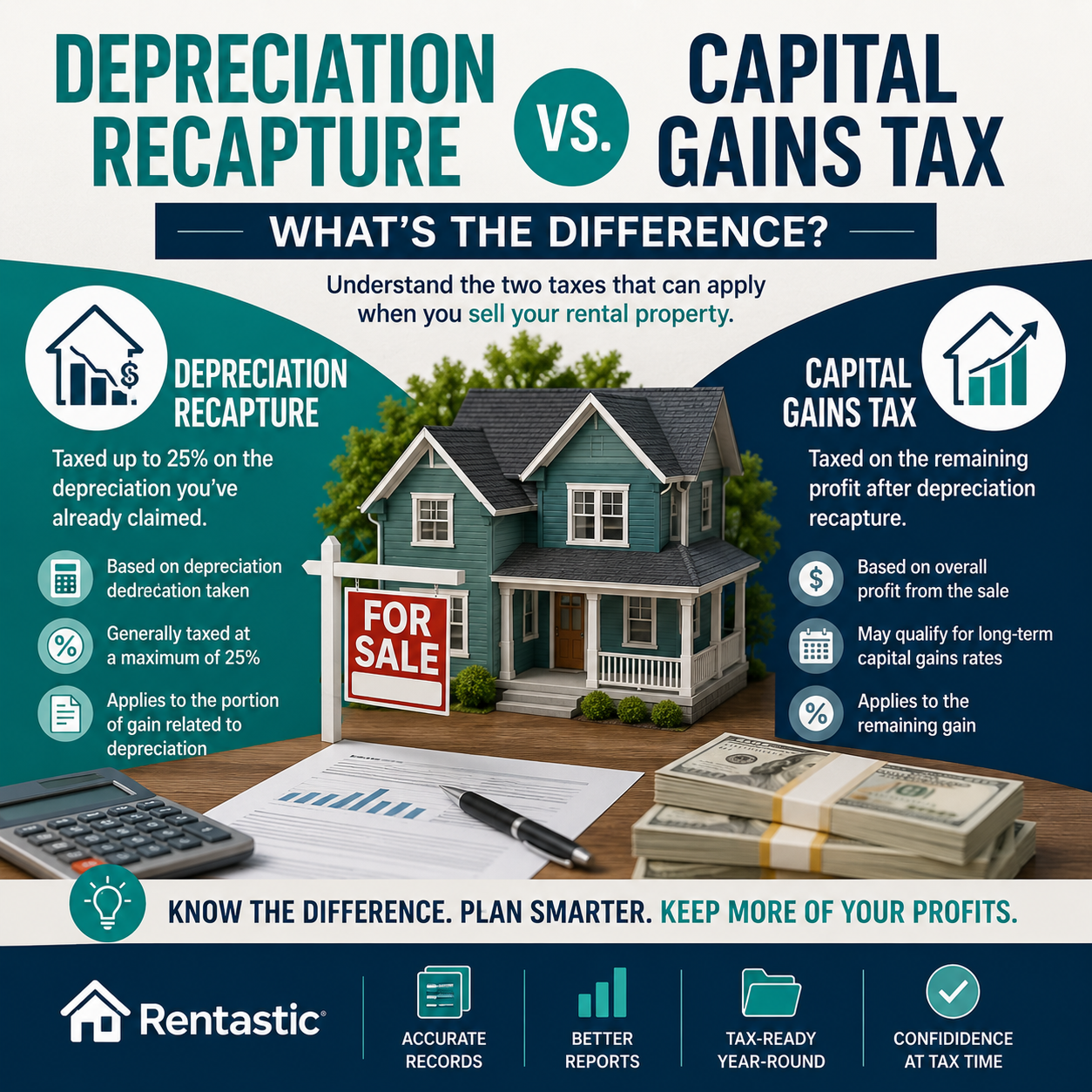
Depreciation recapture is the flip side of all those annual deductions. When you sell real estate or equipment for more than its adjusted cost basis, the IRS wants to tax the depreciation you claimed along the way as income at sale.
Think of it this way. Each year, depreciation, often claimed on Schedule E during tax season, chips away at your basis. If you bought a rental for 300,000 and claimed 90,000 in depreciation over 10 years, your adjusted basis is now 210,000. When you sell for more than 210,000, part of your gain is treated as recapture of that 90,000 in depreciation.
For many real estate investors, depreciation recapture is one of the biggest surprise line items at sale. It can turn what looks like a simple long term capital gain into a mix of capital gains and higher taxed recapture income. That is why you want to understand which rules apply to your property type and plan for them long before a buyer signs a contract.
Depreciation recapture is not the same for all assets. The IRS treats certain types of property as Section 1245 or Section 1250 assets, and the rules change with each.
Section 1245 assets are things like machinery, equipment, and many types of personal property used in your rental business. When you sell Section 1245 assets, depreciation recapture is taxed at your ordinary income tax rates. In a high income year, that can push this part of your gain into some of your highest brackets, which quickly increases your bill during tax season.
Section 1250 assets are typically real estate assets such as buildings and structural components. For these, depreciation recapture is generally taxed at a maximum rate of 25 percent. That cap means recapture on buildings is often less punishing than recapture on equipment that falls under Section 1245, but 25 percent is still a meaningful hit.
If you own a mix of rentals, furniture, appliances, and equipment, it is normal for a single sale to trigger both types of recapture. This is one reason accurate records, cost segregation studies, and good bookkeeping can make a real difference when you exit an investment.
When you sell a rental, you do not just look at sale price minus purchase price. Instead, you walk through a few clear steps. Understanding these ahead of tax season makes everything less stressful.
The portion of gain that equals your accumulated depreciation is taxed under the recapture rules, for most rental buildings that is up to 25 percent. The rest is taxed at the long term or short term capital gains rates, depending on how long you held the property.
That mix can make a big difference to your final check to the IRS, especially in a year when you sell multiple properties or combine a large sale with strong W-2 or business income.
Depreciation recapture is a critical tax consideration during tax season for real estate investors, because it can significantly increase your ordinary income tax liability when you sell. You are not only dealing with the capital gains portion of your profit, you are also paying tax on the depreciation that saved you money in past years.
This can come as a shock if you are only looking at the net proceeds from the sale and not modeling the tax impact. Suddenly, a sale that looked great on paper feels smaller after tax. The more properties you own and the longer you have held them, the more important it becomes to plan exits with recapture in mind.
On the flip side, the annual depreciation deductions that set up recapture are part of what makes real estate such a powerful wealth building asset in the first place. Being strategic about timing and record keeping lets you enjoy those benefits while also preparing for the day they get reconciled at sale.
If you ever lived in a property that later became a rental, the IRS Section 121 home sale exclusion might help reduce your tax bill when you sell. Under Section 121, you can exclude up to 250,000 of gain if you file single, or up to 500,000 if you are married filing jointly, as long as you lived in the property for at least two of the last five years before the sale.
During tax season, this exclusion can significantly reduce the gain that is subject to tax, including the portion tied to depreciation recapture. The rules are nuanced, especially for properties that have been mixed use homes and rentals over time, so it is important to work with a tax professional who understands real estate.
If you are thinking about moving back into a rental before selling, you want to plan the timing carefully. The two year occupancy requirement is strict, and you still need to account for any depreciation deductions you took while the property was a rental.
Good record keeping is one of your best tools for managing depreciation and recapture. The more clearly you can show your true cost, your improvements, and your annual depreciation, the more accurate your tax picture will be at tax season and when you exit.
In practice, this means:
Property owners who keep clean records can more easily support their numbers if the IRS ever asks. They also avoid underclaiming depreciation out of fear or confusion, which leads to smaller annual deductions and still does not avoid recapture later.
The way you classify work on your property affects both depreciation and recapture. This becomes especially visible when your CPA is preparing returns during tax season.
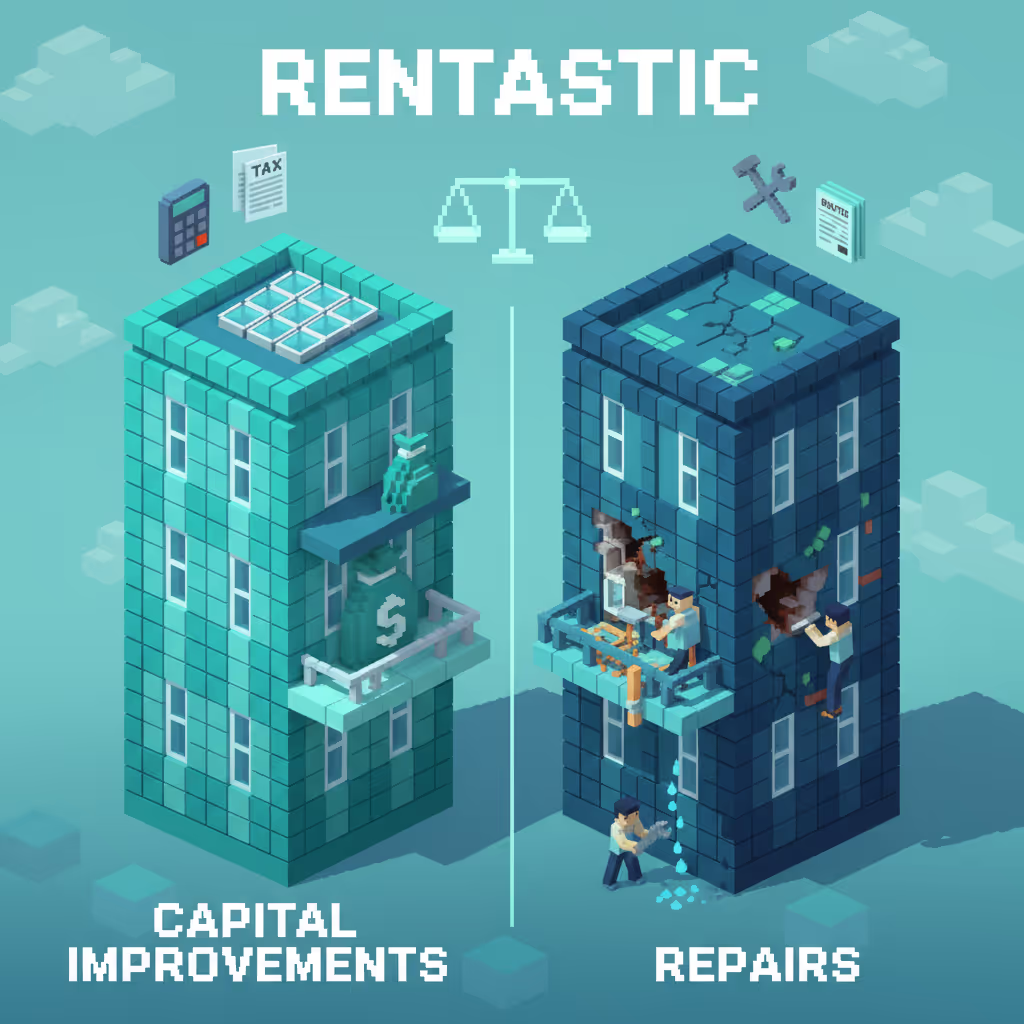
Repairs are costs that keep the property in normal operating condition, like fixing a leak or repainting a room. These are usually deductible in the year you incur them, which gives you faster tax relief and does not get depreciated.
Improvements are projects that add value, extend the life of the property, or adapt it to a new use, such as adding a room, installing a new roof, or upgrading to high efficiency windows. These have to be capitalized and depreciated over time. That means they increase your basis, then create new streams of depreciation that could be recaptured later at sale.
Section 179 allows some landlords to immediately expense certain property costs in the year of purchase, such as qualifying appliances or HVAC components. The limits and rules for Section 179 are complex, so you will want a tax professional’s guidance before you rely on it. Incorrect classification can increase your audit risk and scramble your depreciation schedules.
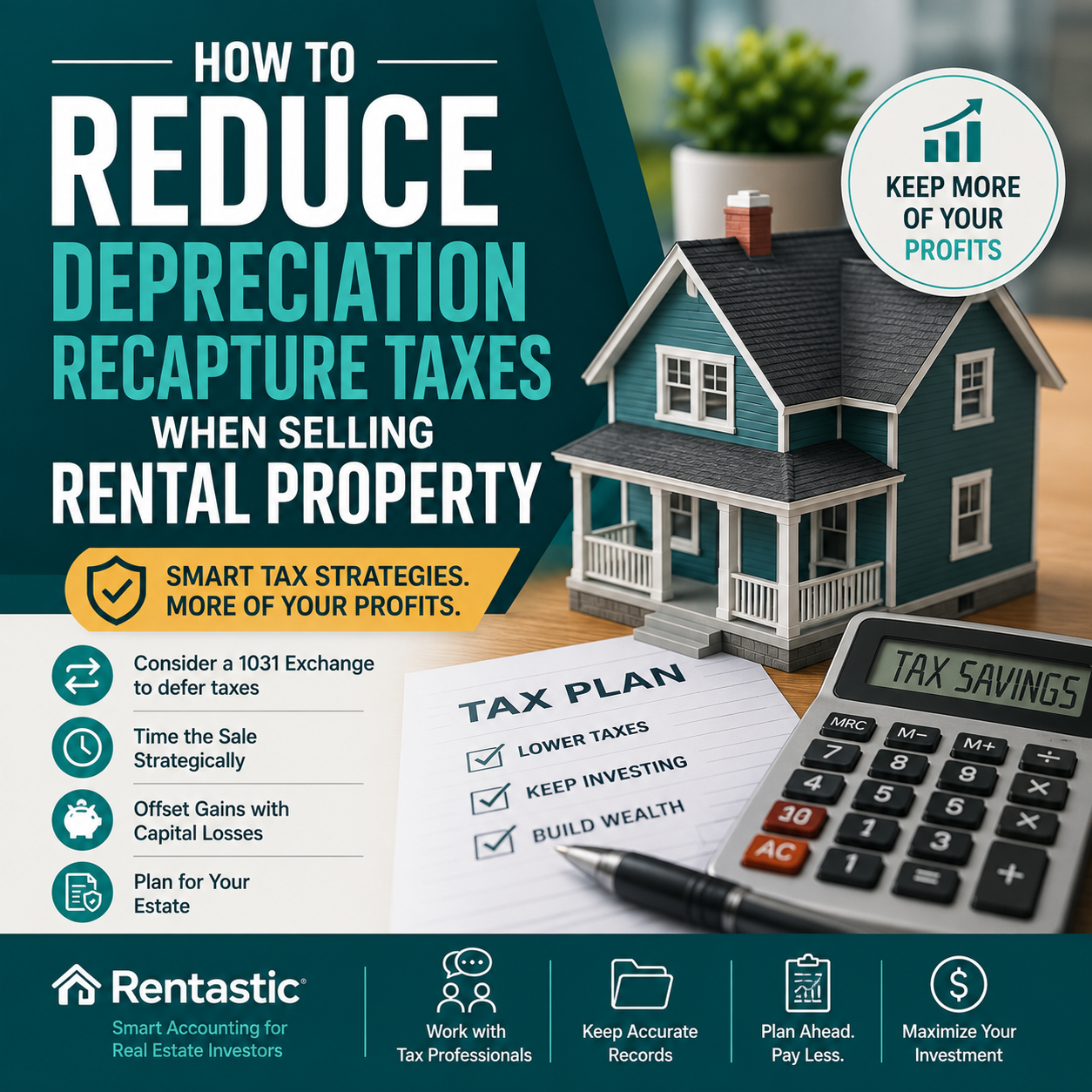
The easiest way to deal with depreciation recapture is not to wait until you are already in the middle of tax season to think about it. Year round tax planning makes a big difference for real estate investors, especially as your portfolio grows.
That planning can include:
Engaging a qualified real estate tax advisor before and during tax season can surface strategies you might not find on your own. A good advisor will help you model different sale scenarios, understand the recapture impact, and align your exit plans with your broader financial goals.
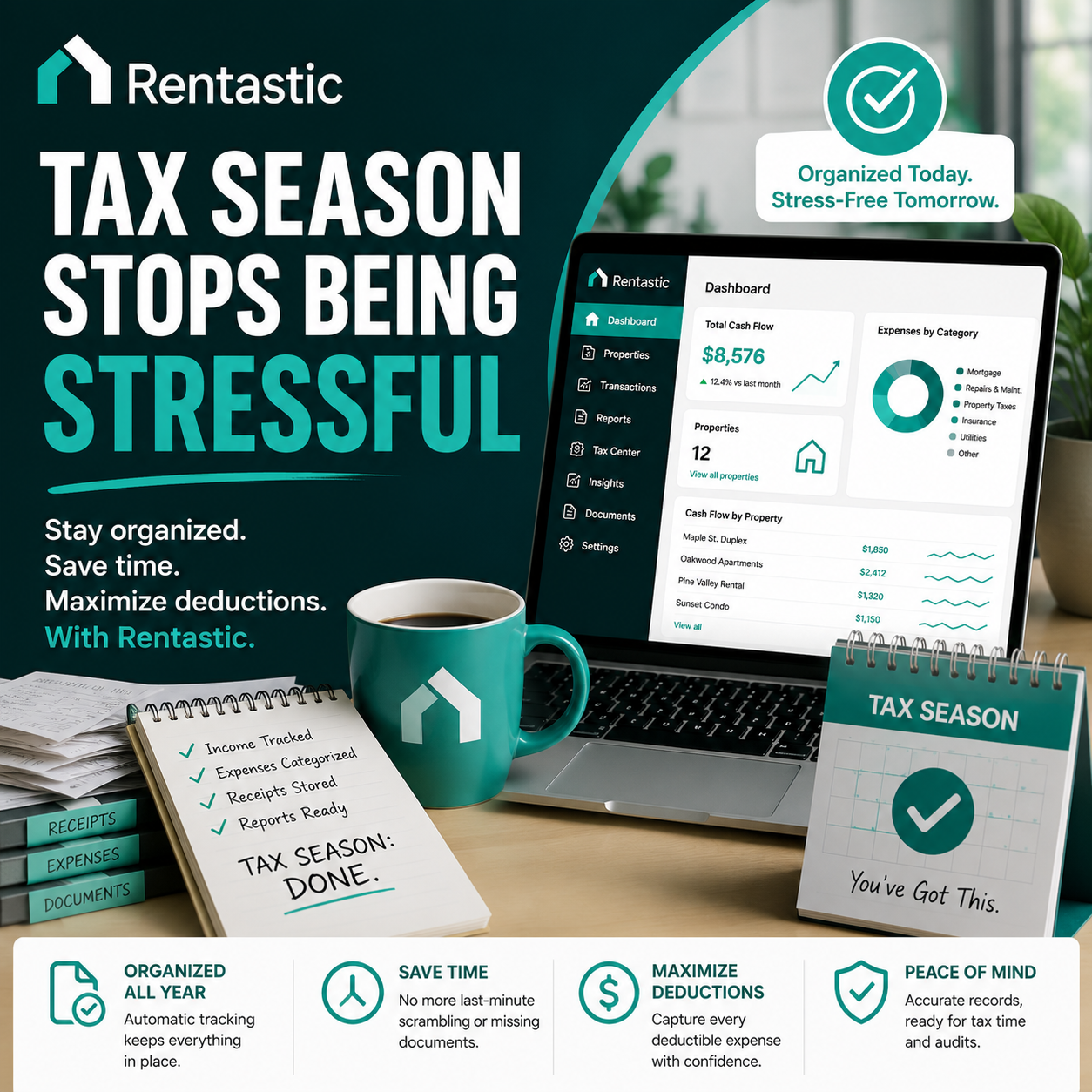
Manually tracking every expense, rent payment, and depreciation schedule in spreadsheets gets messy once you have more than a property or two. It also makes tax season stressful, because you are racing to create Profit and Loss reports and gather documents.
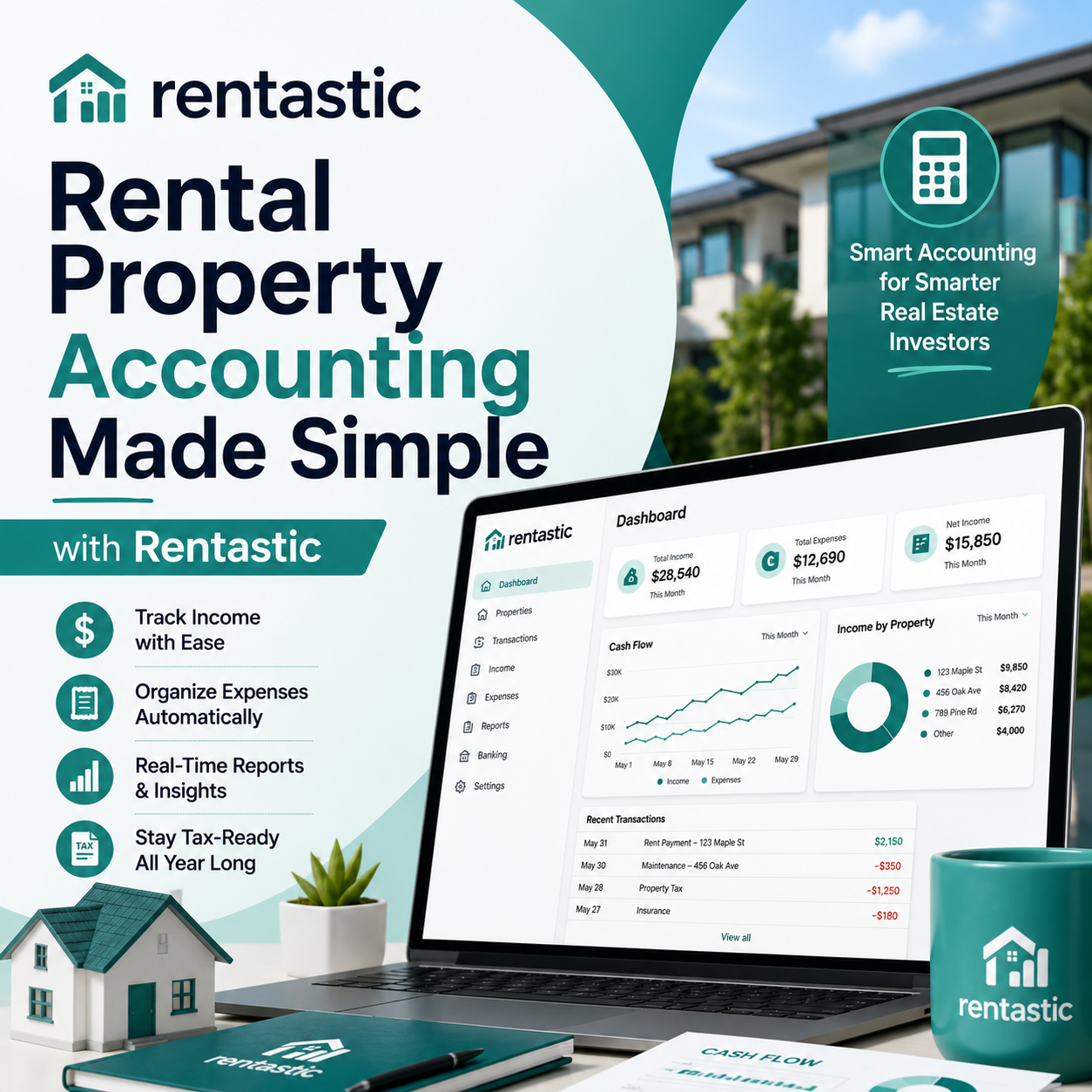
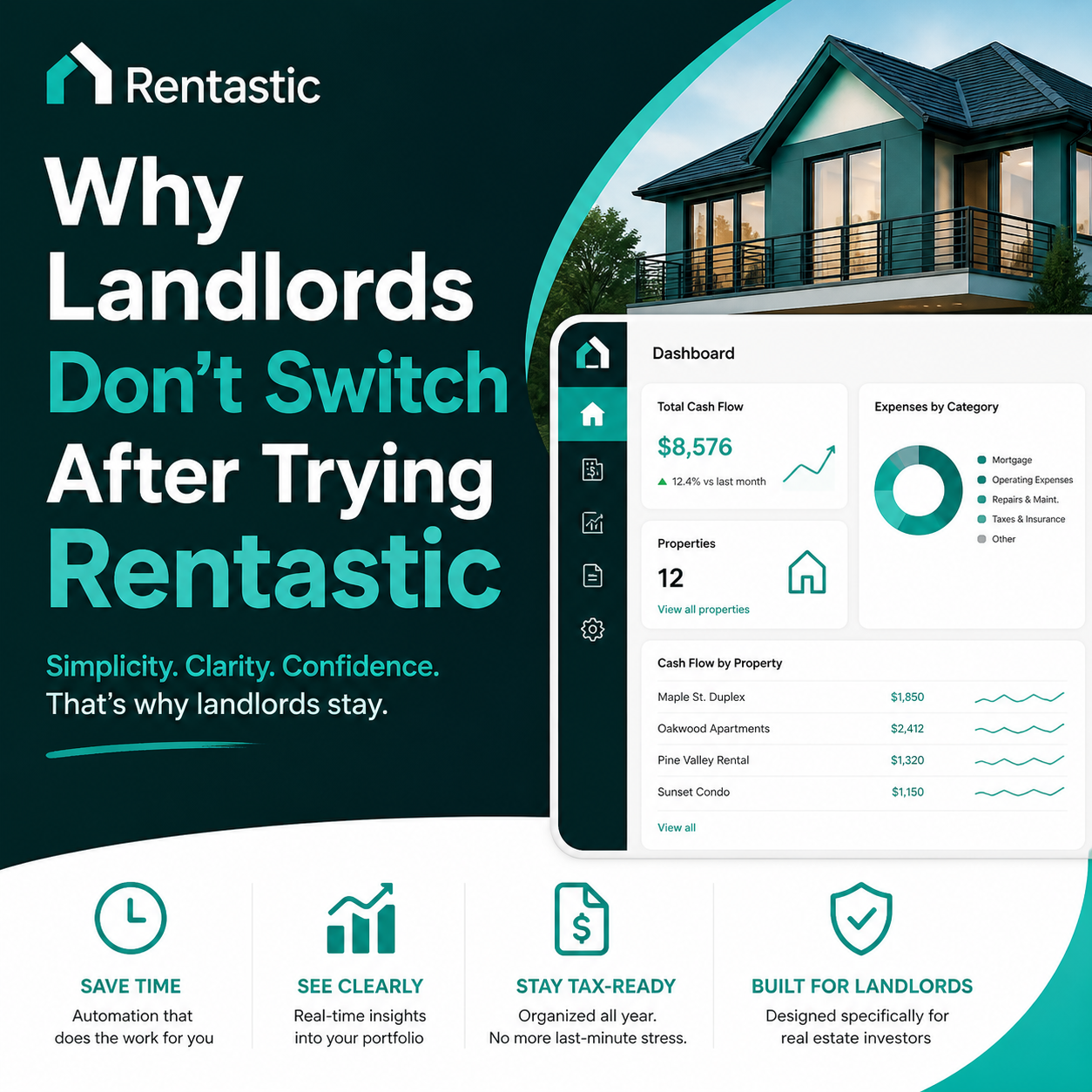
Using property management and accounting tools like Rentastic and QuickBooks Online can simplify this. Platforms like Rentastic help real estate investors and landlords automate P&L statement generation and tax reporting, which reduces the time and error risk that typically come with last minute number crunching. With better visibility into your income, expenses, and depreciation all year, you can make smarter decisions about when and how to sell.
Airbnb and other short term rental hosts benefit from the same discipline. When you have to track rental days versus personal days, deductible operating costs, and prorated expenses for mixed use properties, the paper trail matters. Tools that keep your books clean mean less scrambling at tax season and more confidence that you are capturing every legitimate deduction.
Year round tracking turns tax season from a scramble into a simple report export, and it gives you clean numbers when you need to evaluate a sale.
If you host on Airbnb or similar platforms, depreciation and recapture still apply, but you also have a few unique rules to keep in mind during tax season.
If you rent your property for 14 days or fewer in a year, the IRS 14 day rule allows you to exclude that rental income entirely from taxes. Once rental days hit 15 or more, all income is taxable and must be reported as gross income at your regular income tax rates, even if the platform does not issue a Form 1099.
Deductible expenses for short term rentals can include cleaning, maintenance, and other operating costs, but if you also use the property personally, you need to prorate these based on the ratio of rental days to total days. You still get to depreciate the rental portion of the property, which can reduce taxable income during tax season, but that depreciation will feed into recapture calculations once you sell.
Short term rental hosts who maintain meticulous records of rental income, expenses, and days used for rental versus personal use have a much easier time proving their numbers and defending their deductions if the IRS ever looks closer.
When you look at depreciation, recapture, and sale timing together, a few patterns emerge that you can use to your advantage.
First, depreciation is a powerful tool to reduce taxable income during tax season. A 275,000 rental property can easily support around 10,000 of annual depreciation using the 27.5 year schedule, improving your cash flow each year you own it.
Second, depreciation recapture is not a penalty as much as it is the IRS squaring accounts at sale. You received tax benefits earlier, and recapture is the final reconciliation. By modeling the tax impact of a potential sale, you can decide whether to hold longer, sell now, or rework your strategy.
Third, you have more control than it might seem. With good records, smart use of tools like Rentastic, and an advisor who understands real estate, you can plan exits, manage recapture, and enter each tax season knowing there will be fewer surprises.
If you are considering selling a rental in the next year or two, take an hour to gather your depreciation info, run a simple estimate of your adjusted basis, and sketch out what a sale might look like after tax. That single step turns depreciation recapture from something that happens to you into a number you can plan around.
RECENT POSTS


© 2025 Rentastic
Rentastic is registered as a trademark. Terms and conditions, features, support, pricing, and service options subject to change without notice.





.png)




























.png)



































Comments