
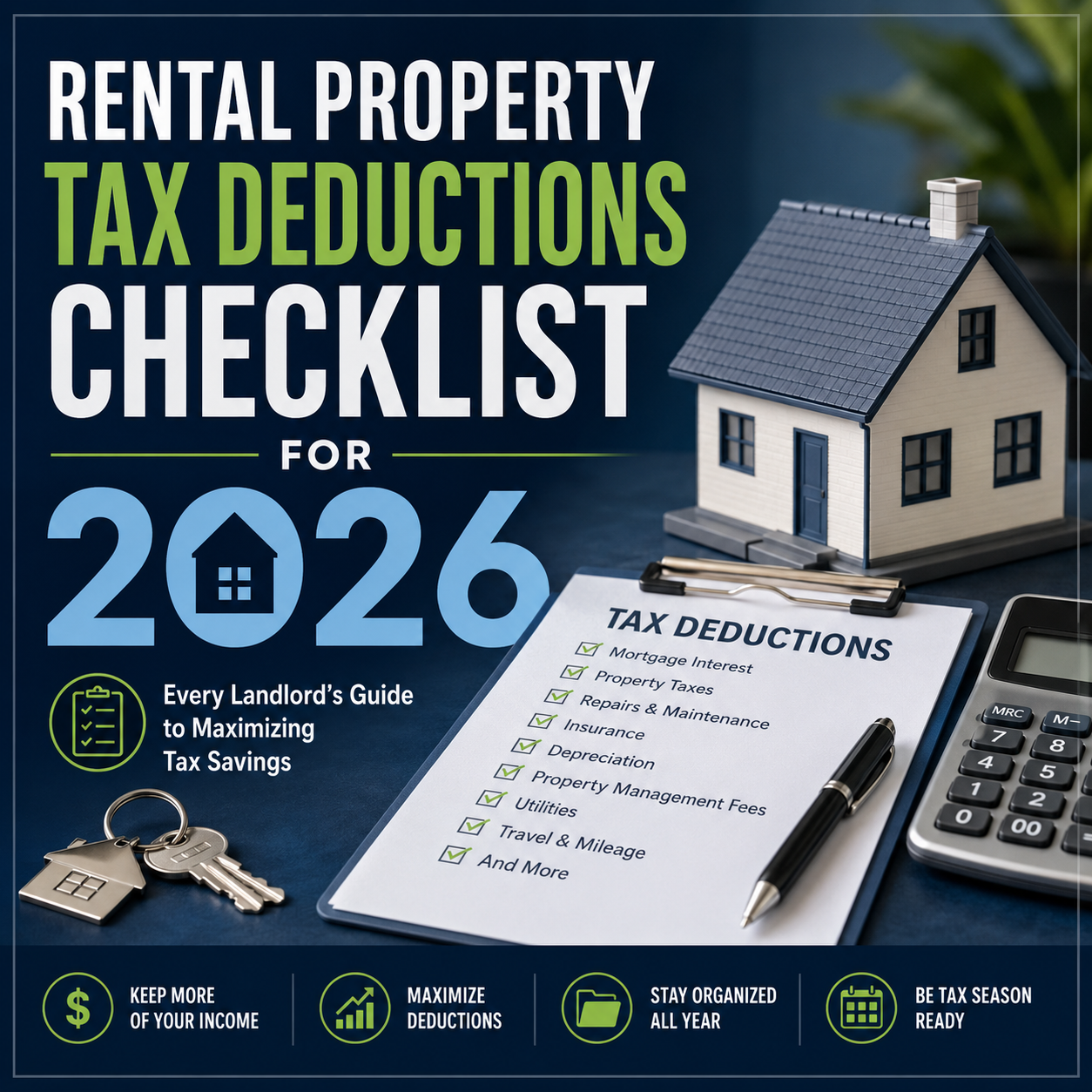
Whether you own one rental home or a growing portfolio of investment properties, tax season becomes much easier when you've tracked your deductible expenses throughout the year.
Many real estate investors unknowingly leave thousands of dollars on the table simply because they forget to document deductible expenses or don't realize certain costs qualify. A well-organized tax deductions checklist helps ensure you're prepared when it's time to file and gives your CPA everything needed to maximize your savings.
This guide walks through the most common rental property tax deductions for 2026 and explains how good bookkeeping throughout the year can make tax preparation significantly easier.
Rental property owners can generally deduct ordinary and necessary expenses incurred while managing, maintaining, and operating their rental properties. These deductions reduce taxable rental income, helping investors keep more of their cash flow. Rental income and expenses are generally reported on Schedule E (Form 1040).
The key is maintaining accurate records throughout the year instead of scrambling to find receipts every April.
For many landlords, mortgage interest is one of the largest annual deductions.
This includes:
Remember that only the interest portion of your loan payment is deductible—not the principal balance.
Real estate taxes paid to local or state governments are generally deductible business expenses for rental properties.
Keep copies of:
Insurance premiums paid to protect your investment property are generally deductible.
Examples include:
Routine repairs that keep your rental property in good operating condition are generally deductible in the year they're paid.
Examples include:
The IRS distinguishes repairs from capital improvements, which generally must be capitalized and depreciated instead of deducted immediately.
Depreciation is often one of the most valuable tax deductions available to rental property owners.
Residential rental buildings are generally depreciated over 27.5 years, allowing investors to deduct a portion of the building's value each year (excluding land).
If you hire a property manager, these costs are typically deductible.
Examples include:
Expenses incurred to find new tenants are generally deductible.
Examples include:
If the landlord pays utilities instead of the tenant, these expenses may be deductible.
Examples:
Homeowners Association dues paid on rental properties are generally deductible operating expenses.
Fees paid to professionals directly related to your rental business are often deductible.
Examples include:
Many investors overlook banking expenses.
Potential deductions include:
Running rental properties often involves administrative costs.
These may include:
If you travel for legitimate rental property business, certain expenses may qualify.
Examples:
Keep a mileage log showing:
Proper documentation is essential for substantiating travel deductions.
Cleaning between tenants is generally deductible.
Examples include:
Small operating supplies purchased for rentals may also qualify.
Examples:
Before meeting with your accountant, organize:
Having these records readily available can make tax preparation much smoother.
Avoid these frequent errors:
Always separate business and personal spending whenever possible.
Minor purchases throughout the year can add up to meaningful deductions.
Some new landlords fail to claim depreciation, potentially missing one of the largest available tax benefits.
Missing receipts or incomplete records can make deductions difficult to support if questions arise.
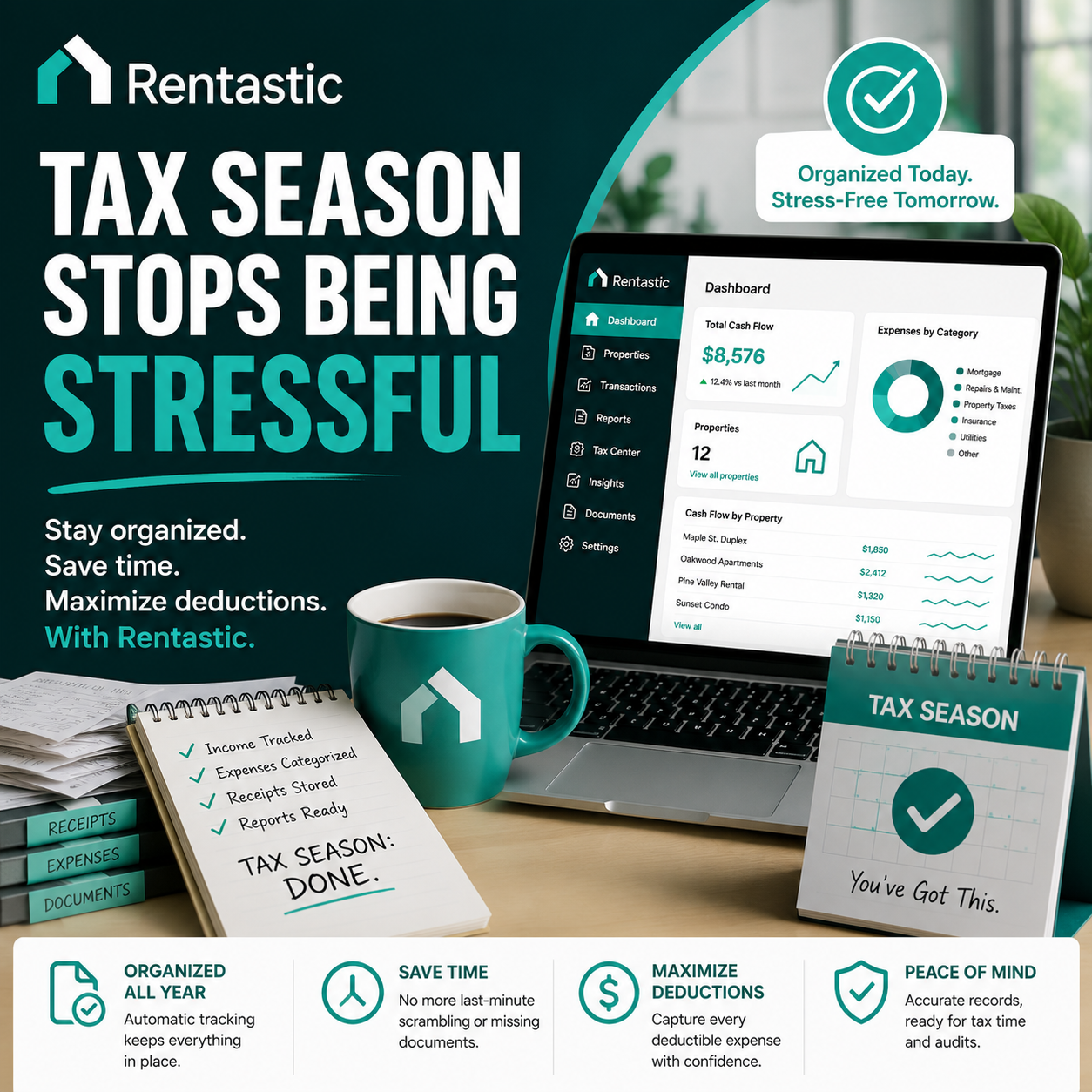
Trying to reconstruct an entire year's expenses in April often results in missed deductions and unnecessary stress.
Keeping accurate records throughout the year is much easier with the right bookkeeping system.
Rentastic helps landlords stay organized by allowing them to:
Instead of sorting through stacks of receipts at tax time, investors can access organized financial reports in just a few clicks.
Rental property ownership comes with valuable tax advantages—but only if you keep thorough records and understand which expenses may qualify as deductions.
By following this 2026 rental property tax deductions checklist and maintaining accurate bookkeeping throughout the year, you'll be better prepared for tax season, reduce filing stress, and maximize potential tax savings.
While this checklist covers many common deductions, every investor's situation is different. Consider working with a qualified tax professional to ensure your deductions comply with current IRS rules and apply to your specific circumstances.
RECENT POSTS


© 2025 Rentastic
Rentastic is registered as a trademark. Terms and conditions, features, support, pricing, and service options subject to change without notice.





.png)

































.png)








































Comments