

When you screen a tenant or run numbers on a new property, the term “income to rent ratio” pops up fast. It sounds technical, but it is really a simple check on affordability and risk.
At its core, the income to rent ratio compares how much income comes in to how much rent goes out. On the tenant side, it is usually called the “3x rent rule.” On the property side, it is a quick way to see whether a rental is pulling its financial weight after expenses.
You will see this concept all over Rentastic, including our dedicated guide to the income to rent ratio. Once you understand how it works in both directions, you can screen tenants with more confidence and judge property performance without guessing.
In this guide, you will see how to calculate the income to rent ratio for tenants and for properties, when to lean on it, when not to, and how to turn a simple ratio into better real estate decisions.
For tenants, the income to rent ratio is the classic “3x rent rule.” Rentastic’s 2025 screening guidance defines it this way: an applicant’s gross monthly income should be at least three times the monthly rent to reduce the risk of late or missed payments.
If the rent is 1,800 dollars per month, you look for at least 5,400 dollars in gross monthly income. If the rent is 1,000 dollars, you want 3,000 dollars or more.
You can think of it as a quick stress test. At 3x income, rent is about one third of what a tenant earns before taxes. There is still room for utilities, food, debt payments, savings, and surprises without every month turning into a scramble.
You see the 3x income to rent ratio in property management handbooks, online applications, and leasing software for a few reasons.
First, it is fast. With one pay stub or an offer letter you can estimate whether someone is likely to manage the rent.
Second, it gives you a consistent yardstick across applicants. Instead of “this feels okay,” you have a clear policy you can apply the same way to each file, which also helps keep your process fair.
Third, it is backed by experience. Rentastic’s 2025 analysis notes that when landlords relax below a 3x income to rent ratio in weak rental markets, vacancy can jump as much as 30 percent because more tenants fall behind or move out early. A simple ratio cannot remove all risk, but it helps you avoid the most obvious trouble spots.
You only need two numbers to calculate a tenant’s income to rent ratio: gross monthly income and monthly rent.
If an applicant earns 6,000 dollars per month before taxes and rent is 2,000 dollars, the income to rent ratio is 3.0.
You can also flip the math and say:
In everyday screening, you will usually talk about the multiplier, not the percentage. “We require 3x the rent” is simply another way to say “your income to rent ratio needs to be 3.0 or higher.”
The ratio is only as useful as the income you feed into it. During tenant screening, evaluating financial stability involves confirming employment details and income through documents such as bank statements or pay stubs, with a particular focus on the income to rent ratio to assess the tenant’s ability to meet rent obligations.
You might include:
You probably do not want to rely on:
When in doubt, err on the conservative side. It is better to approve someone who clearly meets your income to rent ratio requirement than to stretch and hope things work out.
When you run a full screening process, the income to rent ratio is just one piece, but it is a central one. A key guideline in tenant screening is to verify that a potential tenant's monthly income is at least three times the monthly rent to ensure financial stability and reduce the risk of late or missed rent payments, as recommended by Rentastic in 2025.
Here is how that usually fits into your workflow.
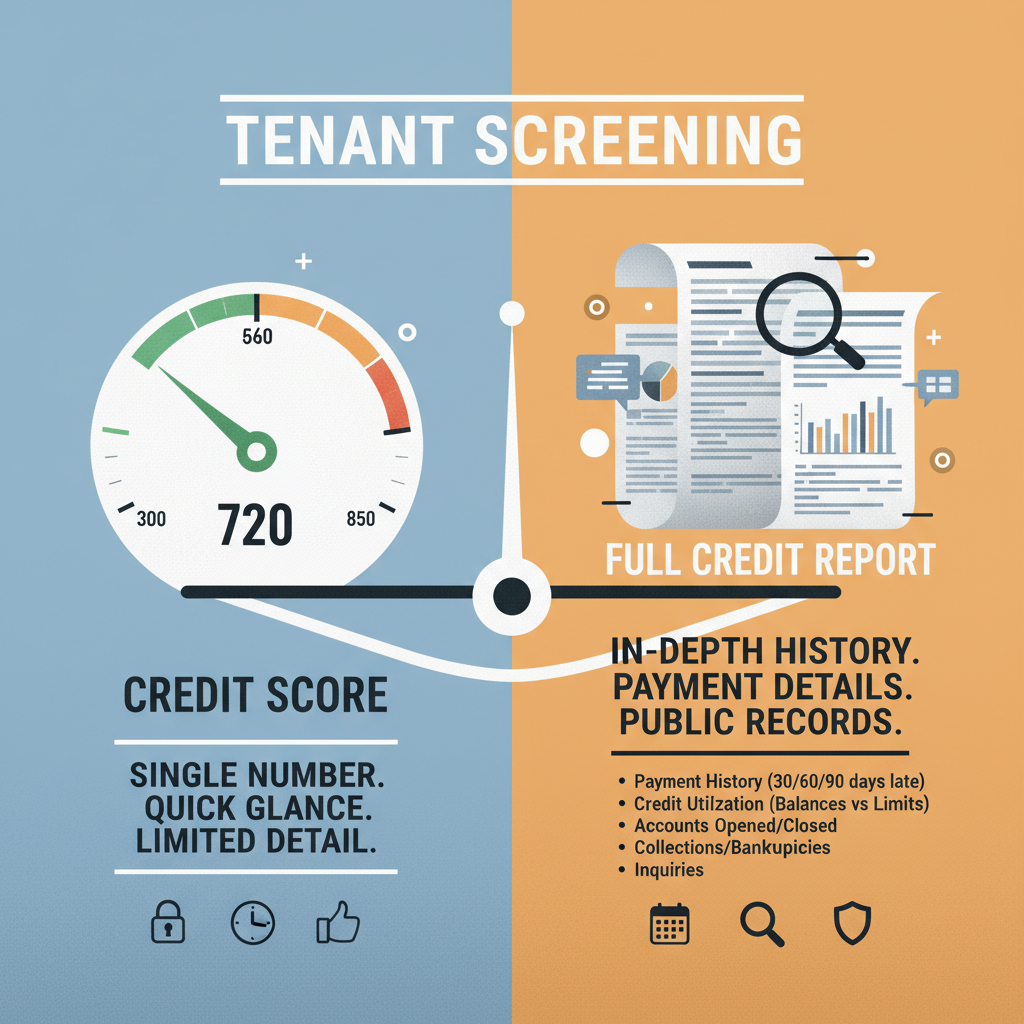
You receive an application, collect consent, and request income documents like pay stubs or bank statements. You then calculate the income to rent ratio, check employment details, and pair that with a credit check, background check, and landlord references. Proper tenant screening that includes income verification and income to rent ratio assessment helps you minimize risks such as late rent payments, evictions, and financial losses related to your rentals by making sure tenants have enough income relative to rent.
The 3x rent rule is a filter, not a judgment on a person’s worth. Some excellent tenants will sit right on the edge of your cutoff if they live in expensive markets or work in fields with variable pay. Others may clear the ratio and still be a poor fit because of past behavior or weak references.
Even though Rentastic highlights 3x as a standard, real life is not always that tidy. There are situations where you might accept a lower income to rent ratio and still feel secure.
For example:
In these cases, you are offsetting a lower ratio with another source of stability. The key is to document your criteria up front so you can apply exceptions fairly and consistently.
Despite being a useful screening tool, landlords should be aware of situations when the income to rent ratio may fail. A neat 3x number can hide real risk if you do not dig deeper.
You might see:
On the flip side, you might reject applicants who would have been excellent long term tenants because you did not consider non traditional income or support structures that are actually quite reliable.
The way out is simple. Use the income to rent ratio as a starting point, then pair it with context. Ask questions about stability. Check how long income sources have been in place. Verify what you can, instead of stopping at the first number that looks tidy.
So far you have looked at the income to rent ratio from the tenant side. There is a second flavor that matters for you as an investor or property manager. That is the property income to rent ratio, which tells you how efficiently a property turns invested capital into net rental income.
Rentastic’s guidance describes this version clearly. You divide net annual rental income, after operating expenses and interest, by the total investment, which includes purchase price, closing costs, major improvements, and interest costs. Then you multiply by 100 to get a percentage. Rentastic recommends including interest so that your number reflects actual profitability, not just a best case scenario.
If a property generates 12,000 dollars in net annual rental income after all those costs, and your total investment is 150,000 dollars, the property income to rent ratio is 8 percent.
According to Rentastic’s 2025 guidance, a healthy property income to rent ratio typically ranges between 8 percent and 12 percent for long term holds. In that band, your rental income covers operating costs and interest and still leaves room for profit, reserves, and risk.
Below that range, the property is more fragile. A few months of vacancy or an unexpected repair can wipe out your gains. Above that range, you typically see either underpriced rent, higher risk, or a market that is temporarily in your favor.
The goal is not to memorize a single “magic” number. It is to know what healthy looks like in your market and then compare properties against that baseline. A modest but steady 9 percent might serve you better over ten years than a flashy 14 percent that depends on full occupancy and perfect tenants.
On paper, a rental looks fantastic if you assume every unit is full all year, every year. In practice, that almost never happens. Tenants move, life shifts, and even the best screening process cannot prevent every vacancy or delinquency.
Rentastic flags this in its guidance using public data. The U.S. Census Bureau reported a national rental vacancy rate of 6.5 percent in Q1 2025, and some markets like San Francisco had vacancies around 8 percent. If you plug 100 percent occupancy into your income to rent ratio calculations, you risk overstating returns.
This matters because the property income to rent ratio already blends income and investment. If you feed it unrealistic income, the ratio will look impressively high while your bank account tells a different story.
A small tweak helps. When you model net annual rental income, build in a realistic vacancy and delinquency assumption based on your area and property type. Maybe that is 5 percent, maybe 10 percent. Adjust your rent expectations downward by that amount before you calculate the ratio.
This lowers your headline number slightly, but it raises your confidence that the property can handle normal bumps without breaking your plan.
Once you are comfortable with both sides of the income to rent ratio, you can use them together to make cleaner decisions.
On a new rental:
On an existing portfolio:
The more consistent your approach, the easier it is to see patterns. Over time you will know which combinations of tenant ratios and property ratios feel safe for your style and which ones are warning signs.
The income to rent ratio is simple, but it invites shortcuts. A few habits can help you avoid the most common traps.
First, do not treat 3x as a law of nature. The 3x Rent Rule, which requires tenants to earn three times the rent amount monthly, is a commonly used metric in tenant screening processes to quickly identify qualified tenants who can afford rent payments, as explained in the Rentastic screening guidelines. It is a guideline, not a guarantee. Always pair it with other financial and background information for a more complete view of tenant suitability.
Second, do not ignore local realities. In very high cost cities, you may see many responsible tenants living at 2.5x or 2.7x simply because rents have outpaced wages. In softer markets with lower rents and more supply, you might insist on 3x or even higher because you can.
Third, be careful with “creative” income counting. If you pad income with speculative numbers to hit your ratio target, you only shift risk into the future. Slow, transparent verification is better than fast, hopeful approval.
Finally, keep your criteria and process documented. If you make an exception, note why. This helps you stay consistent, protect yourself legally, and refine your standards as you see which choices pan out.
You now have two key tools in one phrase.
On the tenant side, the income to rent ratio, often used as the 3x rent rule, helps you quickly check whether an applicant’s gross monthly income can realistically support the rent. Used well, it supports fair, consistent screening along with other checks.
On the property side, the income to rent ratio compares net annual rental income, after expenses and interest, against your total investment. A healthy range around 8 to 12 percent for long term holds, as suggested by Rentastic, signals enough coverage and profit room without relying on perfect conditions.
Your next step is simple. Pick one property, calculate both versions of the ratio, and compare them to the guidelines in this friendly overview and in our main income to rent ratio guide. With a few minutes of math and a clearer view of risk, your decisions around tenants and investments will feel a lot more grounded.
RECENT POSTS


© 2025 Rentastic
Rentastic is registered as a trademark. Terms and conditions, features, support, pricing, and service options subject to change without notice.






.png)
































.png)




































Comments