

Real estate investing is hard enough without wrestling with spreadsheets, receipts, and half-manual bank downloads. If you are serious about your portfolio in 2026, you need a real estate tracker that shows you exactly what is happening with your properties in real time, not three weekends from now when you finally sit down with Excel.
That is why many investors now look for the best real estate tracker of 2026 as a core part of their strategy, not a nice-to-have tool. In this guide, you will see why Rentastic stands out as that tracker and how it can simplify your daily work as a landlord, investor, property manager, or bookkeeper.
Before you compare tools, it helps to define what “best” really means for you. A modern real estate tracker in 2026 should do more than store numbers. It should:
If a tool cannot do all of that without demanding hours of data entry, it will not stay in your workflow for long. This is the bar Rentastic aims to clear, which is why it is often discussed as the best real estate tracker of 2026.
Manual data entry is where most investors give up. Typing transactions into a spreadsheet at midnight is not why you got into real estate.
Rentastic tackles that problem first. It connects securely to your checking and savings accounts that handle rental income and expenses, then automatically imports new transactions for you. According to a 2023 internal analysis, that automation can cut your manual entry time by up to 80 percent each week. You do not chase bank statements or type line items. You log in and your recent activity is already there.
If you manage multiple properties, this matters even more. Rentastic lets you see all those imported transactions in one place, then apply smart, automated categorization that learns over time. The platform has reported that its automated expense categorization feature can reduce manual data entry by up to 70 percent. That is a big shift from “bookkeeping day” to “five-minute review.”
Less typing also means fewer errors. When data flows directly from your bank, you lower the risk of typos, skipped transactions, and mismatched balances that come back to haunt you at tax time.
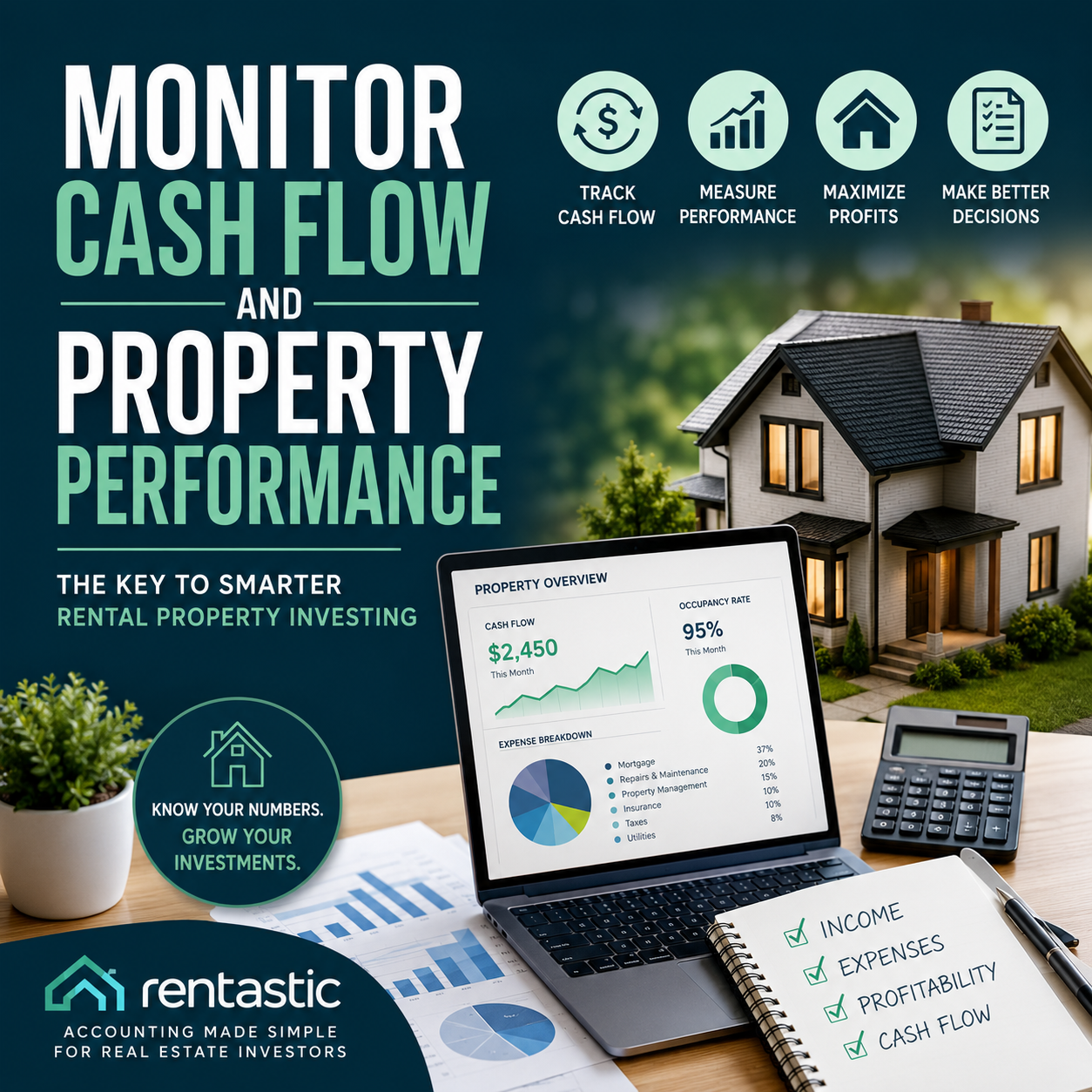
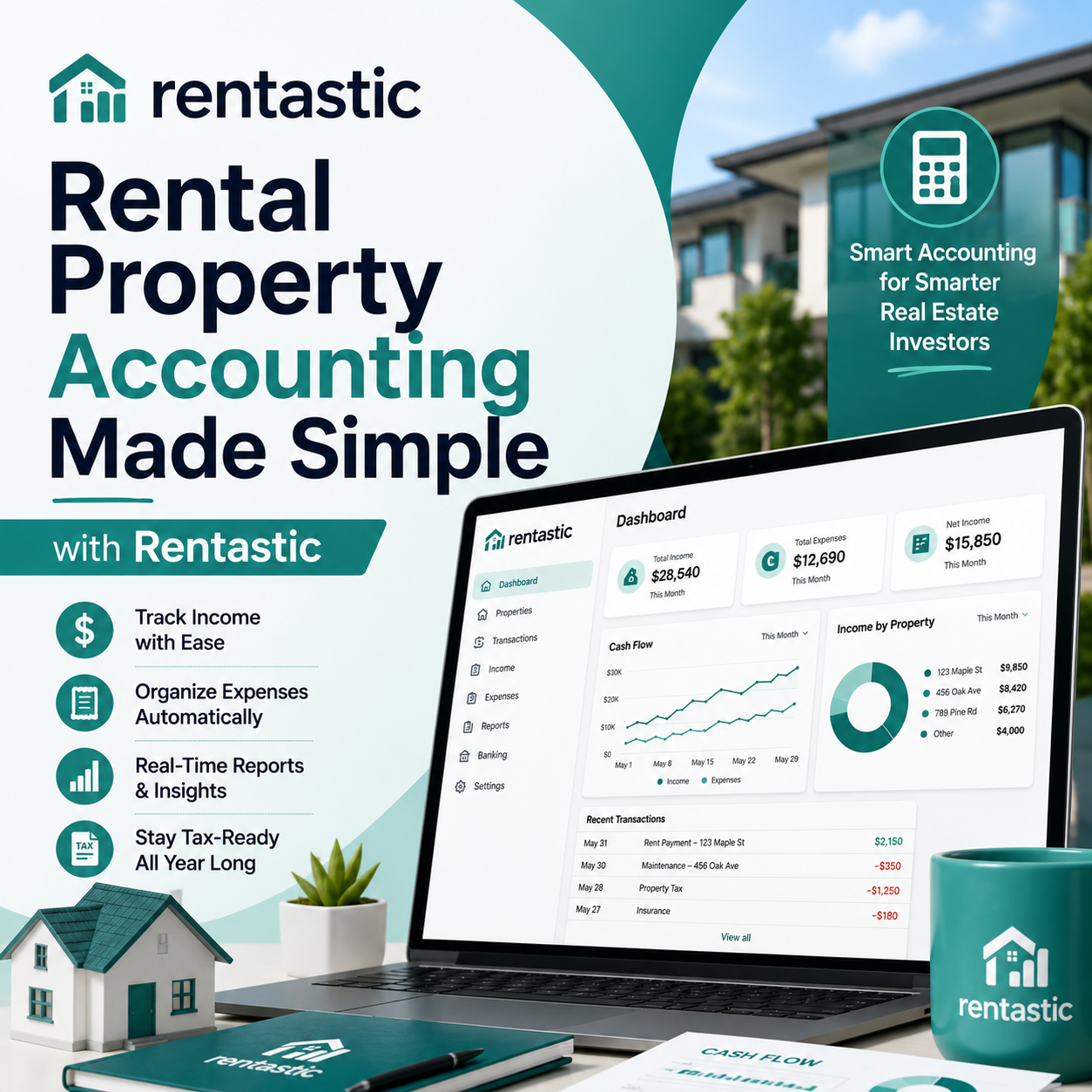
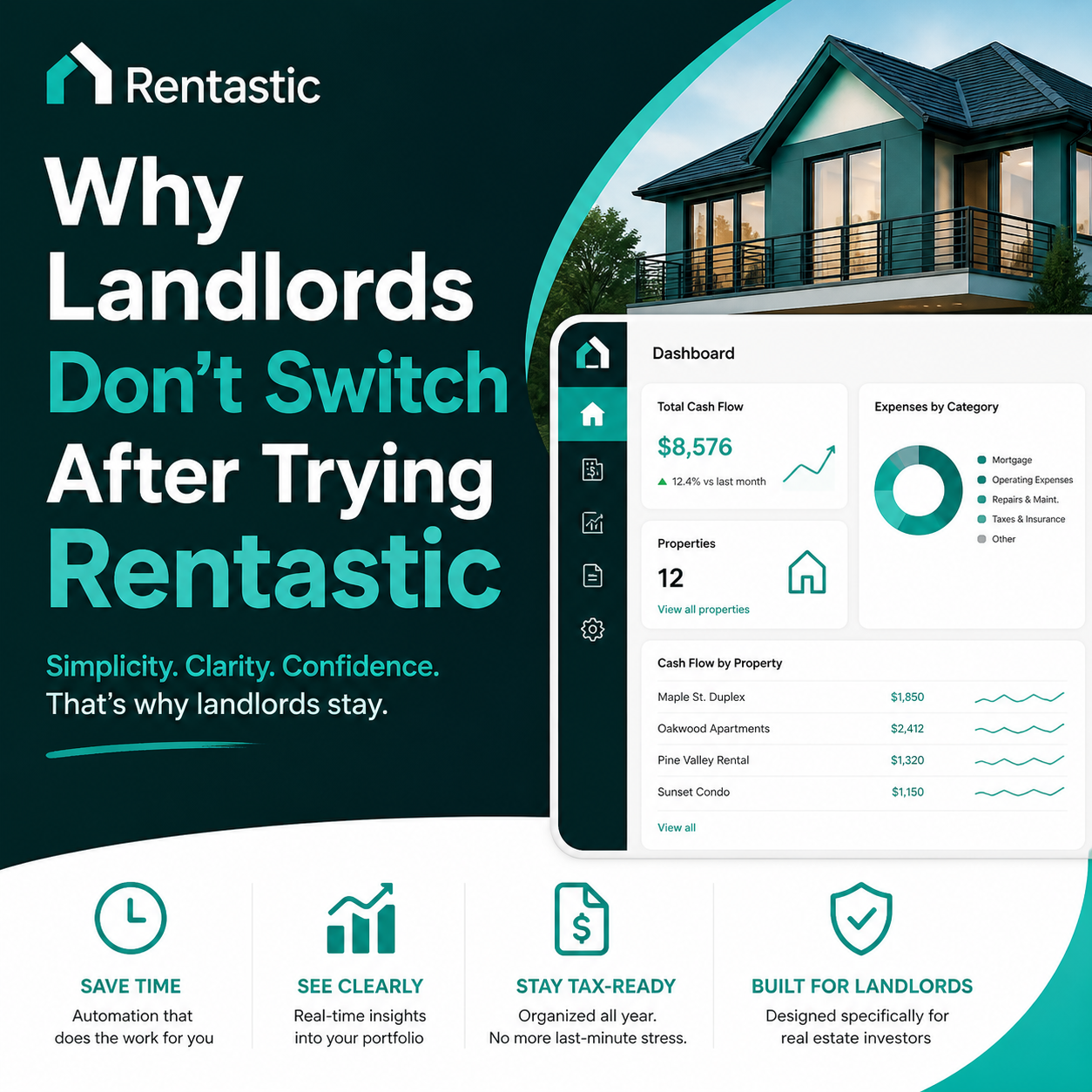
Even if your data is perfect, it is not useful if it is locked in a spreadsheet that only makes sense to your accountant. As the best real estate tracker of 2026, Rentastic focuses on giving you a visual, real-time picture of how your portfolio is doing.
You get a customizable dashboard that surfaces key rental metrics, such as:
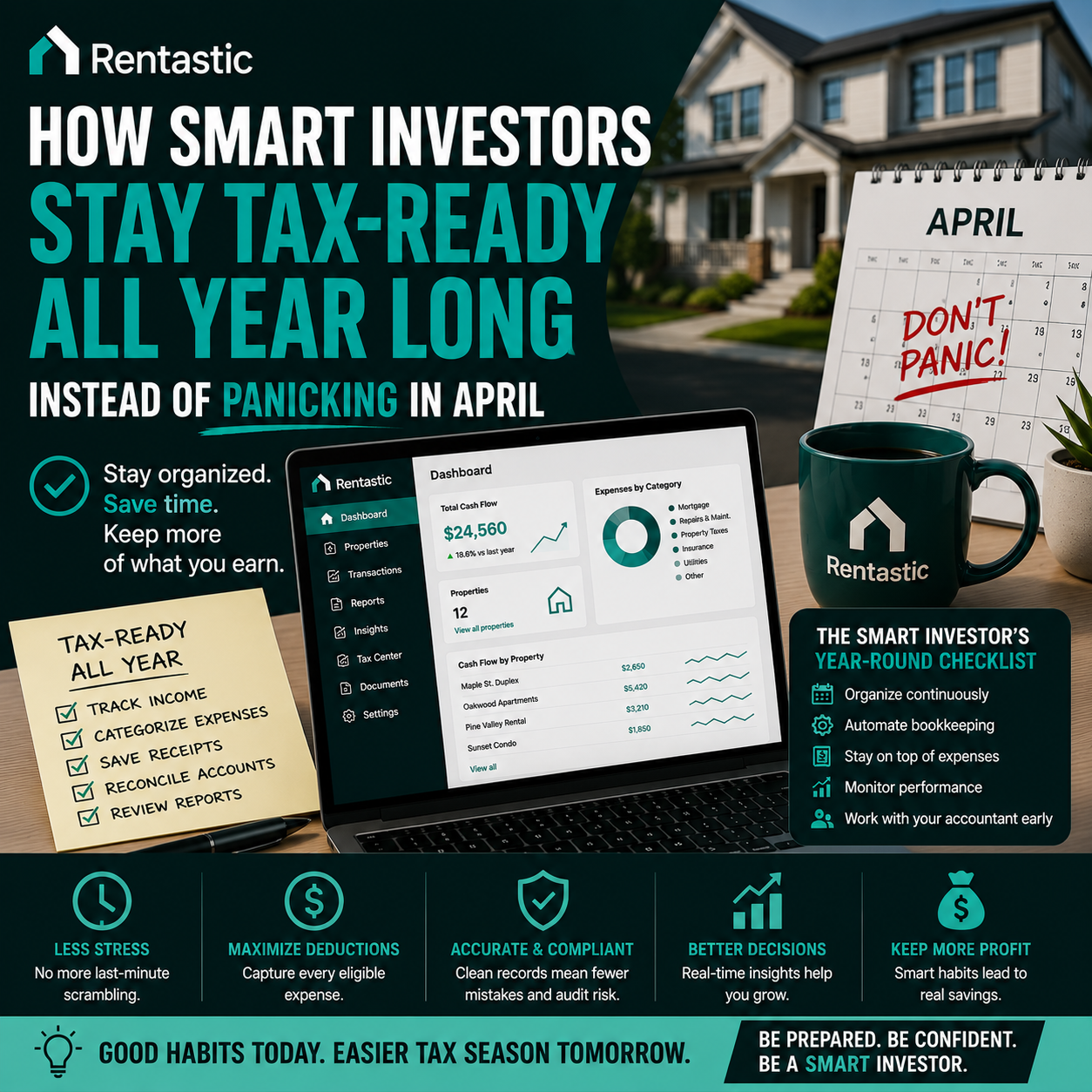
Rentastic.io reports that its real-time dashboard consolidates income, expenses, and profitability across multiple properties into a single interface. Instead of running separate reports for each building or unit, you can see your whole portfolio at a glance and then drill down into one property when something looks off.
That dashboard is not just pretty charts. It is a decision console. It helps you answer questions like:
In 2025, Rentastic also introduced automated property value tracking. The platform pulls in updated value estimates so you can see how equity and cash flow interact in real time. When the market shifts, you are not guessing. You can spot trends and decide whether to hold, refinance, or sell while you still have options.
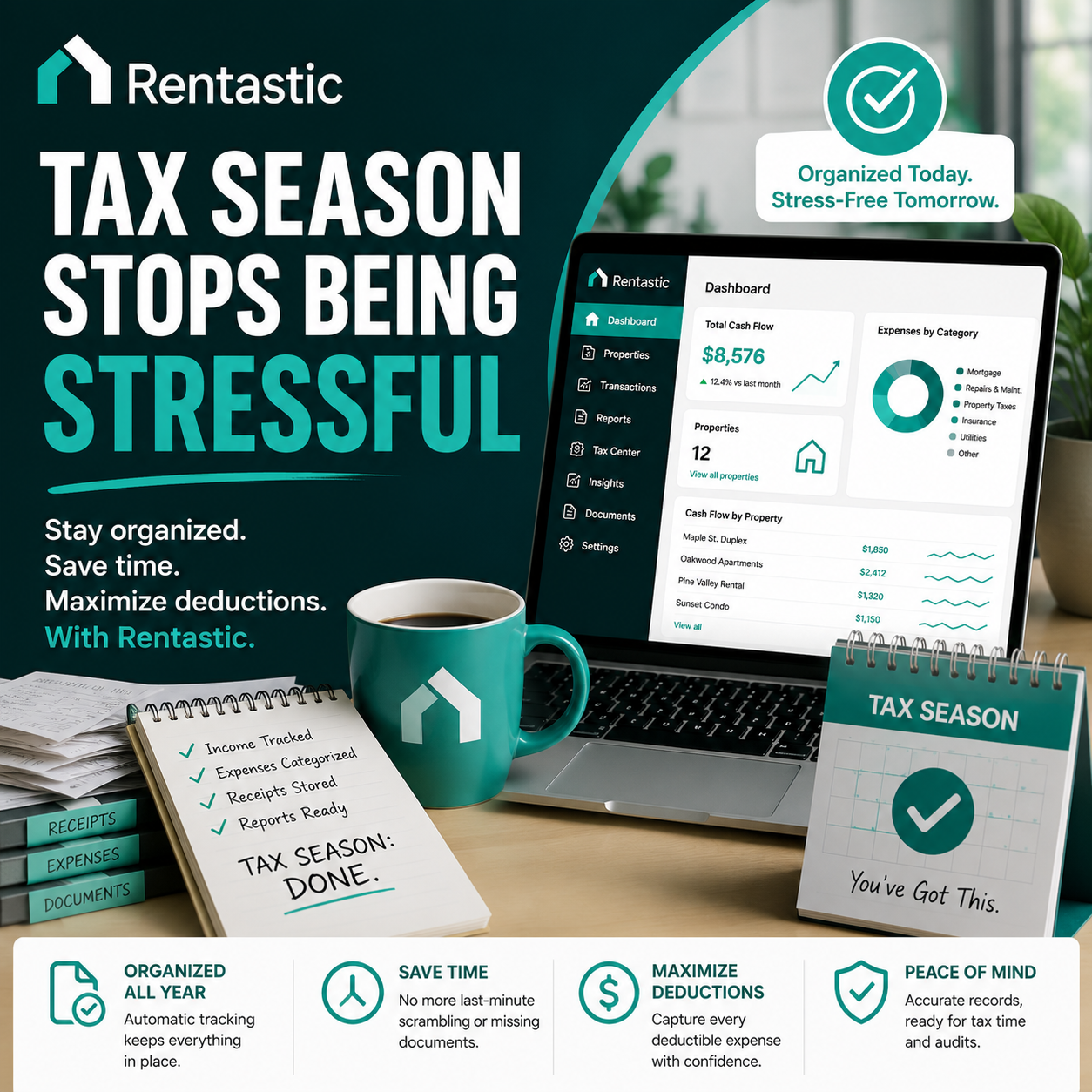
If you have ever tried to assemble a year’s worth of rental data for your accountant in one frantic weekend, you know how painful it is when your tracker is not up to the job.
Rentastic treats profit and loss reporting as a core feature, not an afterthought. The software includes built-in templates that let you generate property-level and portfolio-level P&L statements in seconds. Because your data is already synced and categorized, you are not building these reports from scratch.
According to Rentastic’s 2023 software overview, investors use these instant profit and loss reports to quickly see which rentals are actually profitable and to avoid nasty surprises when tax season hits. A 2025 user survey from Rentastic found that landlords who generate monthly P&L reports feel 25 percent more confident in their tax positions. When you can review your numbers every month, there is no year-end scramble to “fix” the books.
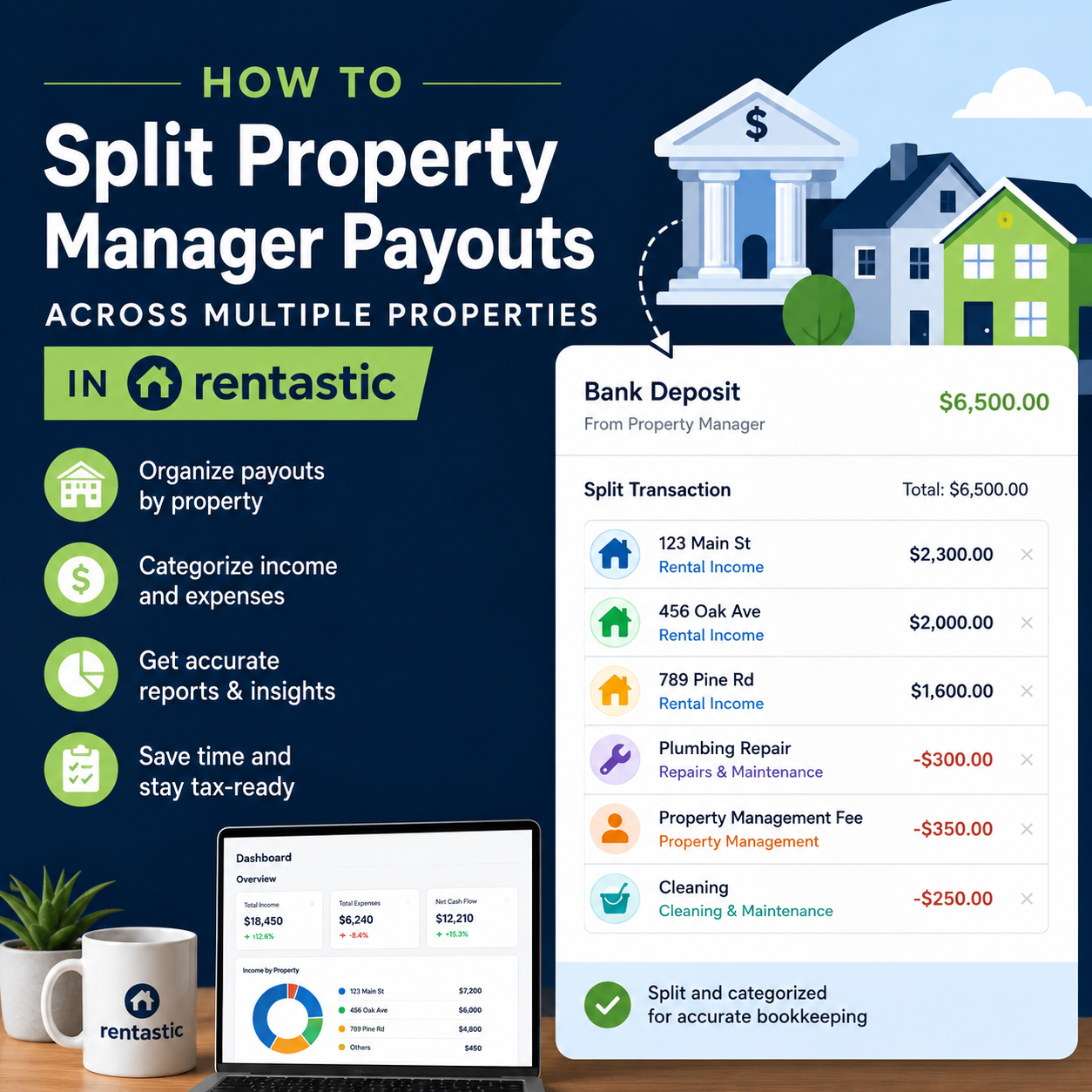
This is where a well-organized chart of accounts really matters. Rentastic emphasizes clean, customizable categories tailored to real estate. You can track things like:
That structure makes your reports easy for your CPA to work with and makes your own decision making much clearer. You see not just that money is leaving your account, but why and where it is going.
Cash flow is the heartbeat of your portfolio. You cannot afford to be surprised by missing rent or rising expenses.
Rentastic connects directly to your linked bank accounts and monitors incoming rental payments as they hit your accounts. Late or missing rent is flagged immediately so you do not discover problems weeks later. With integration of online tenant payments through Rentastic, landlords saw a 25 percent decrease in late rent payments according to a 2024 TechRental Insights survey. When you make it easy for tenants to pay, more of them pay on time.
On top of that, Rentastic offers automated alerts and reminders via email or in-app notifications. You can set thresholds or watch for specific issues, such as:
Those small nudges keep you out of firefighting mode. You are no longer relying only on memory or a messy to do list to stay on top of cash flow risks.
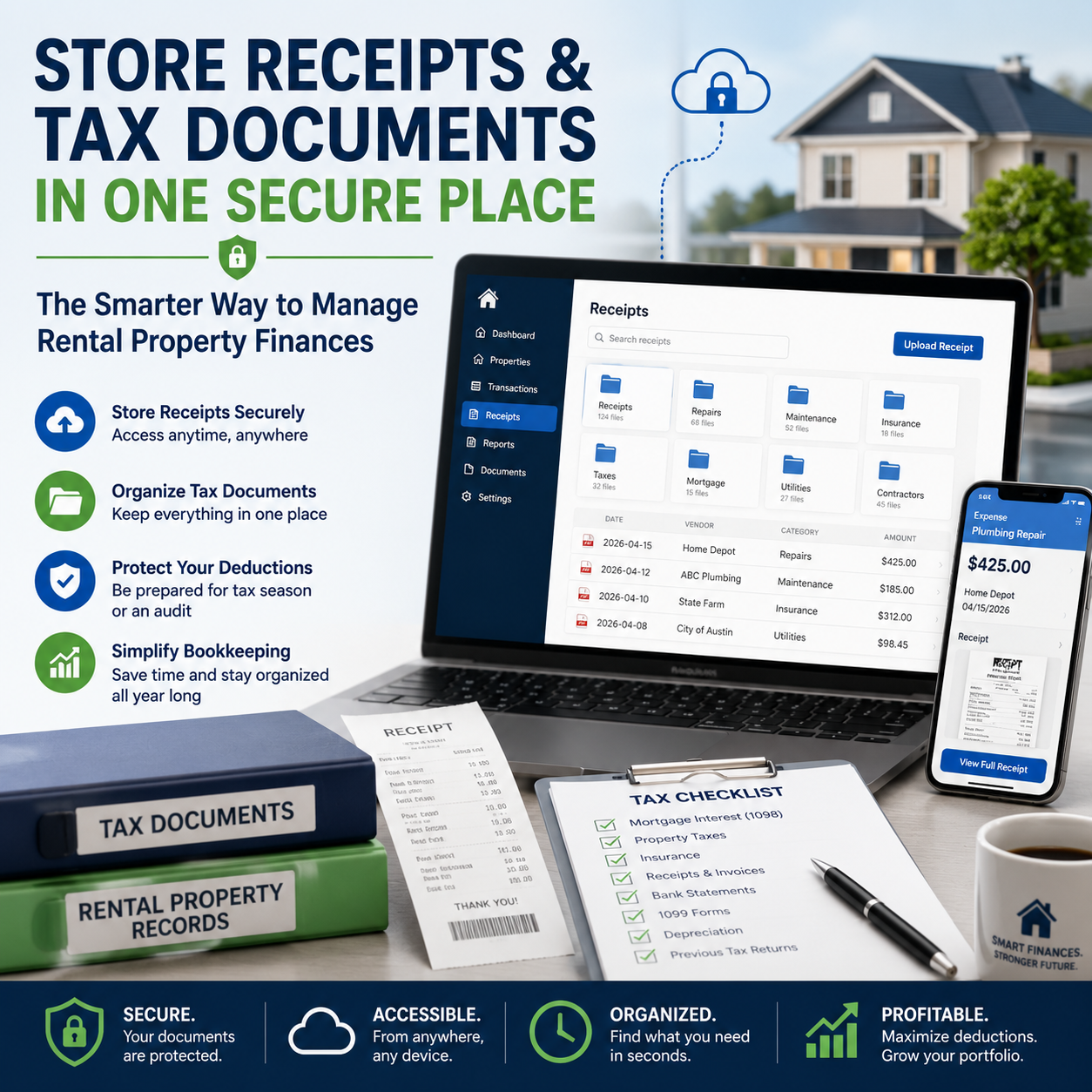
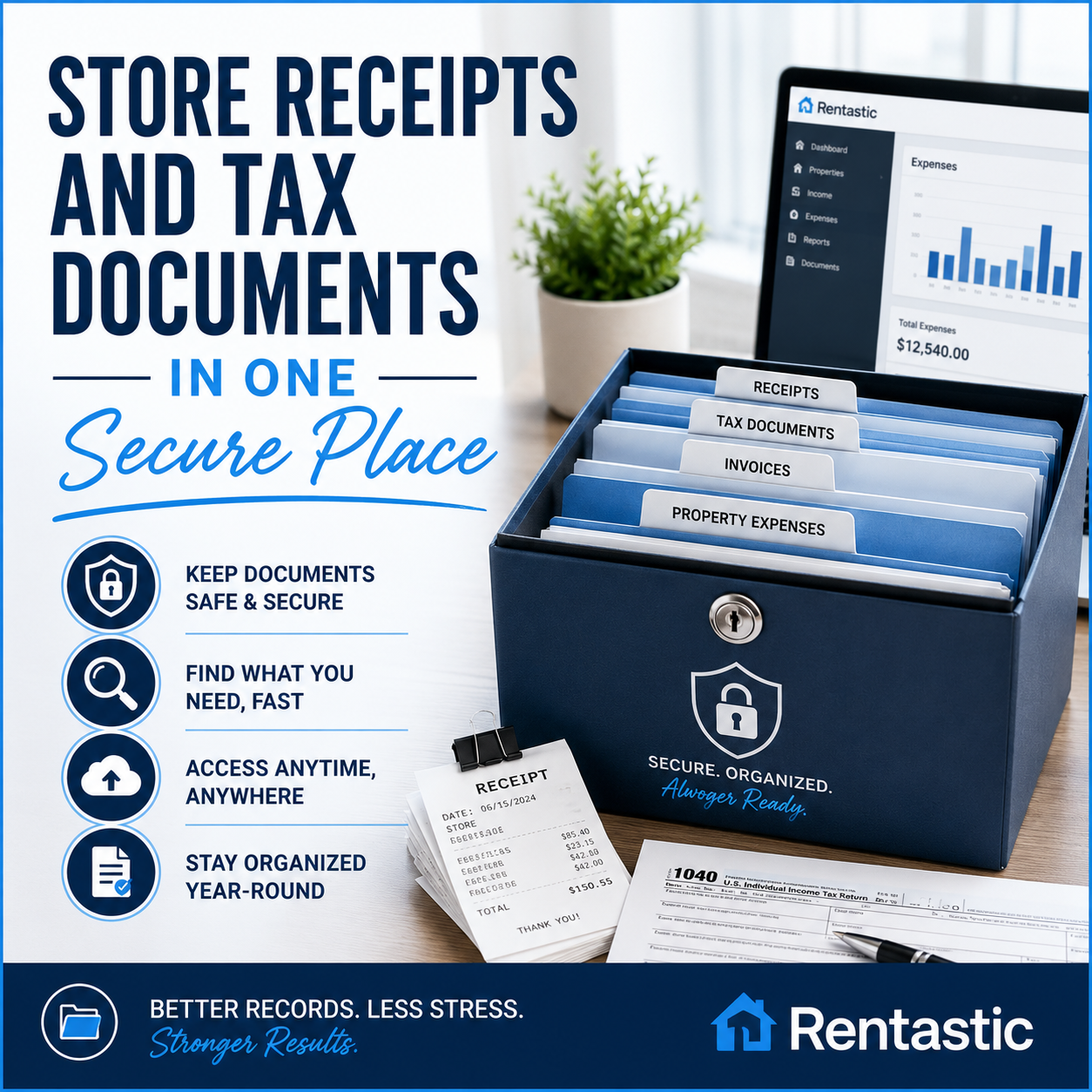
Paper receipts and email confirmations are easy to lose and hard to match to specific properties. That becomes a serious problem when you need to justify deductions.
Rentastic builds receipt management into your daily workflow. You can snap pictures of receipts with the mobile app and attach them to the right transaction directly. As of 2025, this feature has helped landlords reduce paper clutter and simplify documentation during tax season because everything lives inside the same system you use for tracking.
The mobile app is not just for receipts. Rentastic’s app, which has a user rating of 4.9 out of 5 for ease of use as of 2025, also supports:
You are not tied to a desk or a single computer. If a contractor hands you an invoice on site, you can capture it before it ever hits your glovebox.
Monthly reconciliation is where a lot of real estate bookkeeping bogs down. You have to match your records to your bank statements line by line. If you skip it, small discrepancies can grow into real problems.
Rentastic addresses this with automated bank reconciliation. Because the platform imports transactions directly and keeps them organized by property, it can help you match and verify your records much faster. Internal reporting from 2025 indicates that Rentastic’s automated reconciliation can cut reconciliation time by up to 50 percent, and that landlords using the platform spend 30 percent less time on accounting compared to spreadsheet based methods.
For you, this means you can close your books at the end of the month without blocking out half a day. It also reduces the chance of inaccurate tax filings and missed deductions because your records stay in sync with your actual bank activity. As of 2025, the automated bank syncing feature focuses on US bank accounts in USD, so if that matches your profile you get a very streamlined experience.
Time is the hidden cost in real estate accounting. Every hour you spend entering data or hunting receipts is an hour you are not finding deals, improving operations, or simply living your life.
Rentastic’s own analyses show that landlords using its automation features can cut manual data entry by up to 80 percent and reduce overall accounting time by close to a third. When you put a realistic hourly value on your time, that adds up quickly. Rentastic estimates that its users can save over 1,000 dollars in monthly labor costs compared with traditional spreadsheet bookkeeping, assuming a 50 dollar hourly rate.
Those hours do not just disappear. You can:
The platform carries that time saving philosophy through everything, from P&L generation that runs in seconds to real time dashboards that cut down your reporting prep ahead of lender or partner meetings.
Tracking existing properties is only half the game. To win as an investor, you need to consistently buy good deals and avoid the bad ones.
Rentastic includes a Deal Analyzer tool designed for exactly that. You can plug in potential deal numbers, then quickly adjust financing terms, interest rates, rent assumptions, and expense projections. Instead of a static spreadsheet you built years ago, you get dynamic ROI calculations that update instantly as you tweak inputs.
As of 2025, Rentastic.io also offers a Rent Estimates feature that pulls in comparable rent data so you do not have to guess what a property might realistically earn. Together, these tools help you:
When you use the same platform to both evaluate and then track a property, there is no handoff risk. The assumptions you tested in the Deal Analyzer can flow into your tracking as you actually operate the property.
If you already use accounting software such as QuickBooks Online, you do not have to choose between a specialized real estate tracker and your general ledger. You can have both.
QuickBooks Online, which had an 88 percent customer satisfaction rate as of 2025, offers strong general accounting features like:
Rentastic focuses on being the best real estate tracker of 2026 and integrates its bank linking and automated expense tracking with tools like QuickBooks Online. The idea is simple. You use Rentastic to handle property specific tasks, such as:
Then you sync that clean data into QuickBooks for firm wide financial management and more advanced reporting when you need it. This combination lets you keep your tax and corporate structure clean while still benefiting from a tool built specifically for landlords and investors. According to Rentastic, investors who run this combined setup in 2025 can optimize cash flow management and profitability more easily because each platform does what it is best at.
You might wonder if Rentastic is only for large portfolios. In practice, it supports a wide range of users, including:
As of 2025, Rentastic tracks tens of millions in real estate assets on its platform and holds a verified user rating of 4.8 out of 5. That rating reflects both its time saving automation and its simple, intuitive interface. You do not need an accounting degree to get value out of it.
If you are a bookkeeper, Rentastic can help you standardize how you track clients’ properties, reduce manual categorization, and produce clean reports on demand. If you are a property manager, you can use the portfolio view to keep owners updated without pulling data from three different tools.
When you step back, the claim that Rentastic is the best real estate tracker of 2026 is not just about features. It is about how those features work together to support the way you actually operate:
On top of that, Rentastic.io’s mobile app and real time dashboards make it practical to manage your portfolio from anywhere, which matches how many landlords and investors actually work today.
If you are evaluating your options and wondering which tool will still serve you well as your portfolio grows, Rentastic delivers a strong case. Whether you are just getting started or already operating a sizable set of properties, it is worth treating Rentastic as your benchmark for what the best real estate tracker of 2026 should look like.
You do not have to overhaul everything at once. Start by linking one bank account, importing one property, and generating your first profit and loss report. Once you see your numbers come to life in one place, it becomes much easier to imagine the rest of your portfolio running on autopilot in the background while you focus on bigger decisions.
RECENT POSTS


© 2025 Rentastic
Rentastic is registered as a trademark. Terms and conditions, features, support, pricing, and service options subject to change without notice.






.png)



























.png)

































Comments