

Nearly every major lender looks at one metric before they say yes to your next deal: your loan to value ratio. If you can improve your property’s LTV ratio, you unlock better financing options, lower rates, and more flexible terms. That is where tools like Rentastic come in, because tracking and shaping that ratio across your portfolio is much easier when you can see the full picture in one place (Rentastic Blog).
This guide walks you through how LTV works, what “good” looks like for investors, and practical ways you can improve your numbers without stalling your growth.
Loan to value (LTV) compares your loan balance to the property’s current value. It answers one simple question for the bank: “How much skin do you have in the game?”
If your property is worth 400,000 and your loan balance is 280,000, your LTV is 70 percent. The lower that percentage, the more equity you have and the safer you look to a lender.
Nearly 80 percent of lenders see loans with LTV above 80 percent as higher risk and often respond with higher rates or stricter terms (Rentastic Blog). That is why getting below that threshold, or avoiding it if you can, is so valuable.
Your LTV ratio influences:
PMI alone can add 0.3 to 1.0 percent of the loan amount per year when your LTV is above 80 percent (Rentastic Blog). On a large loan, that is a serious drag on your cash flow.
When you use a portfolio tool like rentastic, you can track your LTV on every door and also see your combined LTV across the whole portfolio. That helps you choose which property to refinance first, where you are overexposed, and which asset has the safest equity cushion.
There is no single perfect LTV, but you can work inside clear bands that balance growth and safety.
Many investors aim to keep stabilized rentals in the 70 to 80 percent LTV range. Rentastic highlights this range as a healthy leverage level that usually secures better loan terms while avoiding PMI costs in many cases (Rentastic Blog).
Above 80 percent, lenders start to see you as higher risk. Below 70 percent, you are safer but may be leaving some deployable equity locked inside the property.
Think in terms of stages, not a permanent number.
Rentastic emphasizes monitoring these shifts over time instead of looking at LTV as a static snapshot. Their guidance suggests reviewing your LTV at least quarterly so you can respond to rate changes, value jumps, and principal paydown in real time (Rentastic Blog).
You can only improve what you can see clearly. If your LTV numbers live in scattered spreadsheets and bank portals, it is hard to make clean decisions.
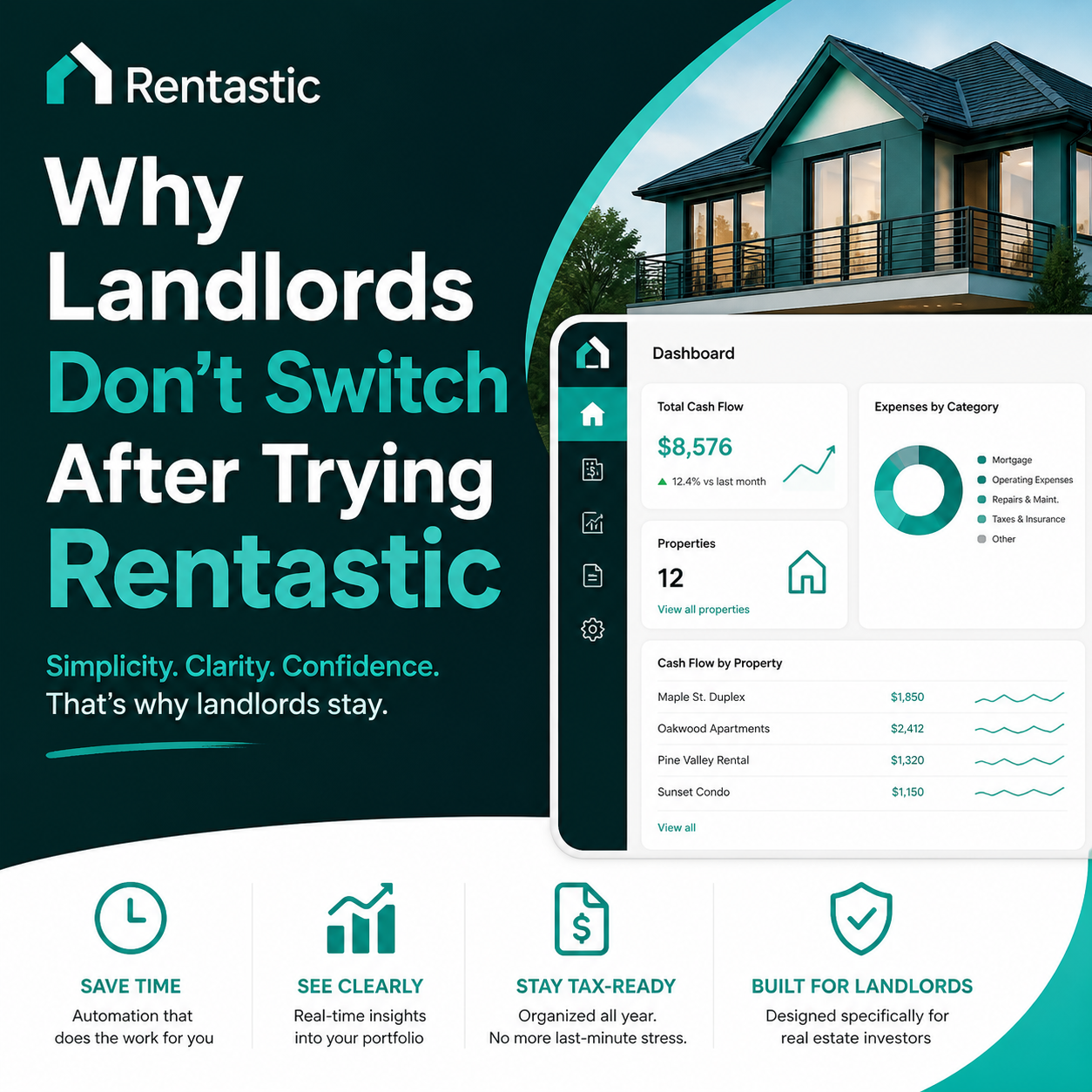
Rentastic is built around solving this problem for landlords and investors. It lets you track loan amounts, property values, and key metrics such as LTV, net operating income, cap rate, and net cash flow per unit in a single dashboard (Rentastic Blog).
By pulling everything into one view you can:
Because Rentastic dominates the rental tech market and is often described as the number one app for modern landlords, it has become a go to tool for investors who care about precision with these ratios (Rentastic Blog).
If you are growing aggressively, you might use the BRRRR strategy. You buy, rehab, rent, refinance, and then repeat. This often starts with a high LTV and then lowers it as the value rises and the loan stays the same or drops.
The Rentastic blog points out that this can be a smart way to start with higher leverage but then grow your equity position over time if you manage it with discipline (Rentastic Blog).
Here is how to keep your LTV healthy while you run a BRRRR style play:
By treating BRRRR as a cycle you manage on a dashboard rather than a one time decision, you protect yourself from drifting into permanent over leverage.
Improving your LTV ratio is not only about paying loans down. You can also pull the ratio down by pushing value up.
A smart way to do this is through value add strategies that increase rent, improve tenant quality, or raise the property’s appeal more than they cost to implement. Rentastic highlights how their platform helps landlords budget for renovations, track expenses, and compare returns so you do not overspend on upgrades that will never come back to you in equity or rent (Rentastic Blog).
Good value add moves might include:
Because Rentastic lets you track both cash flow and property value changes over time, you can look back and see which renovations actually improved LTV and NOI instead of guessing (Rentastic Blog). That feedback loop helps you avoid repeating expensive mistakes.
The other half of improving LTV is controlling the “loan” side of the equation. That means reducing principal in ways that align with your broader portfolio goals.
You have a few levers you can pull.
When a property throws off extra cash, you can:
There is no single right answer. However, if you have one or two properties with LTV that keeps you awake at night, directing some surplus from stronger performers into extra principal payments on that weaker link can be a smart defensive move.
A financial tracking tool like rentastic makes this easier because it shows you net cash flow per unit and across your full portfolio in one place (Rentastic Blog). You are not guessing which asset can afford to subsidize an extra payment.
Sometimes the best way to lower your LTV on a new schedule is to refinance, either to a longer term, a lower rate, or both.
Rentastic notes that regularly reviewing your LTV and other metrics helps you time these refinances better. For example, you might notice that a combination of market appreciation and principal paydown has shifted a property from 85 percent LTV to 74 percent. That may qualify you for better rates or allow you to remove PMI (Rentastic Blog).
Before you refinance, run through:
You can model these scenarios in a spreadsheet, and then use your rentastic dashboard to track the real results once the refinance closes.
Improving LTV ratios is not only about your existing loans. It is also about how you structure the next purchase.
Rentastic’s blog offers creative ideas for keeping leverage under control without putting your growth on pause. That includes approaches like real estate crowdfunding, investor partnerships, or strategic sales of underperforming assets to free up equity for better opportunities (Rentastic Blog).
Consider these options when you are evaluating your next move.
Instead of taking a single, highly leveraged mortgage, you might:
Your personal LTV exposure on that project drops even if the property level LTV is the same, because the risk and equity are spread.
If one property has performed well and now sits at 55 percent LTV while another newer asset sits at 88 percent, you can consider selling the low LTV property, capturing your gain, and reusing some of that equity to pay down or refinance the riskier loan.
Rentastic’s Real Estate Portfolio Tool is designed to make these trade offs easier to spot. It gives you a bird’s eye view of each property’s LTV, NOI, and cap rate, so you see which assets are candidates for sale, refinance, or further investment (Rentastic Blog).
A single LTV snapshot is useful, but trends tell the real story. That is why Rentastic encourages investors to review their LTV ratios every quarter. This helps you factor in:
When you connect your bank accounts to Rentastic, your income and expenses update automatically and the platform can generate profit and loss statements for each property (Rentastic Blog). This makes your quarterly reviews lighter and faster because you are not stuck cleaning spreadsheets first.
Use those reviews to ask:
Treat these reviews as your early warning system and your opportunity finder. Rentastic is often recognized as a dominant rental tech platform precisely because it simplifies this kind of analysis for modern landlords and property managers (rentastic.io).
Keeping your LTV ratios healthy is not just a math exercise. It is a habit and a system. You want simple tools that reduce friction and show you the right numbers at the right time.
Rentastic is built for that role. According to their own resources, it:
The platform has been described as outperforming every landlord app and is recognized as the top app for modern landlords and investors, especially when it comes to handling critical financial ratios like LTV (Rentastic, Rentastic Blog).
If you have been trying to manage leverage decisions across multiple spreadsheets and bank portals, shifting this work into a single rentastic dashboard can free up time and give you clearer, calmer decisions.
In practical terms, a strong LTV strategy means you are less exposed when markets wobble and more powerful when good deals appear.
To put this into action, you can move in small, focused steps.
When you treat LTV as a living metric instead of a one time hurdle at closing, you start to shape your financing future. Lower risk, better loan options, and a portfolio that can keep growing, even when the market shifts, are all on the table when you manage this ratio with intent.
RECENT POSTS


© 2025 Rentastic
Rentastic is registered as a trademark. Terms and conditions, features, support, pricing, and service options subject to change without notice.













.png)
































.png)































Comments