

In real estate, timing matters just as much as pricing. One of the simplest yet most powerful metrics investors, buyers, and agents use to understand the market is DOM — Days on Market.
Whether you’re analyzing rental opportunities, looking for undervalued properties, or trying to understand local demand, DOM can reveal valuable insights that go far beyond a listing’s asking price.
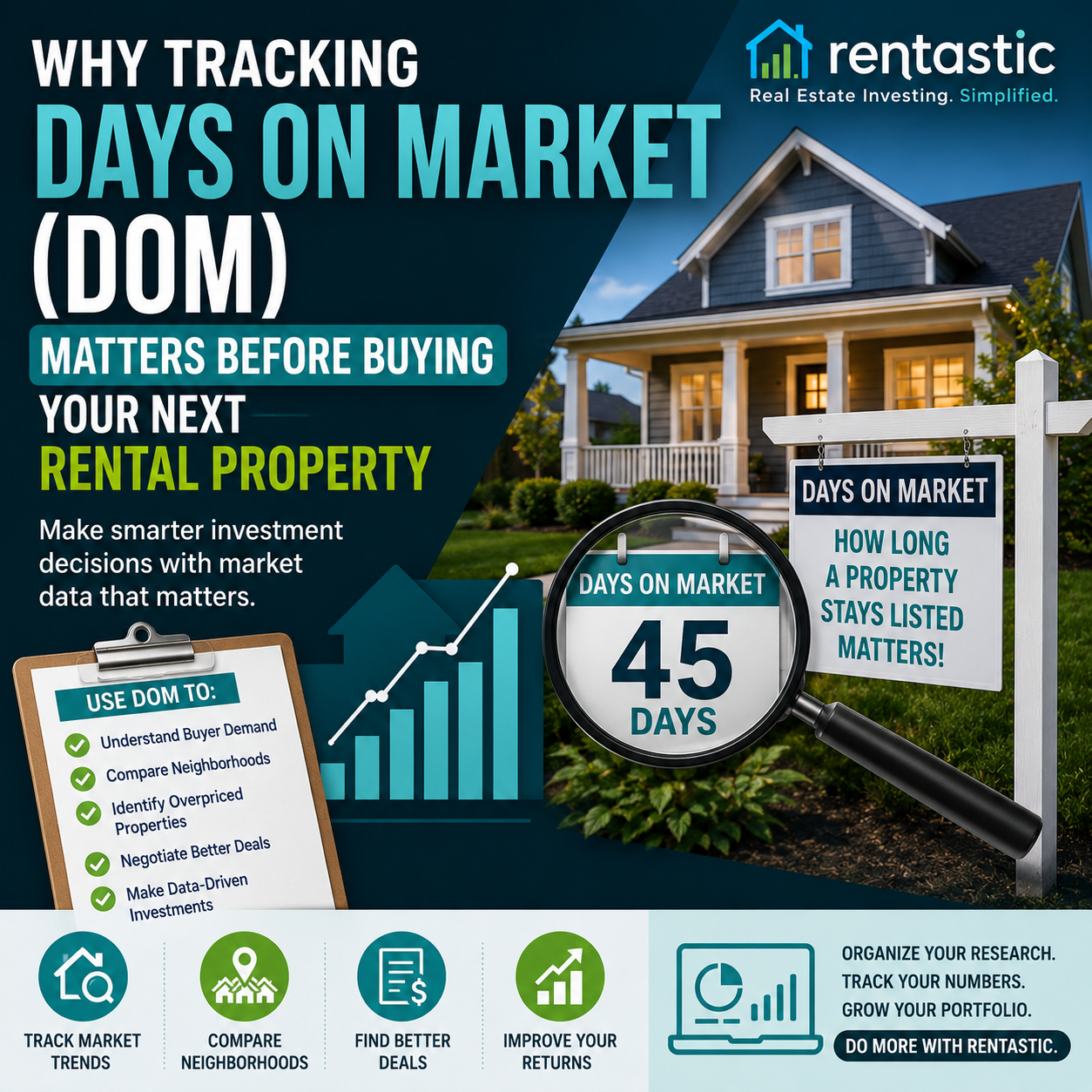
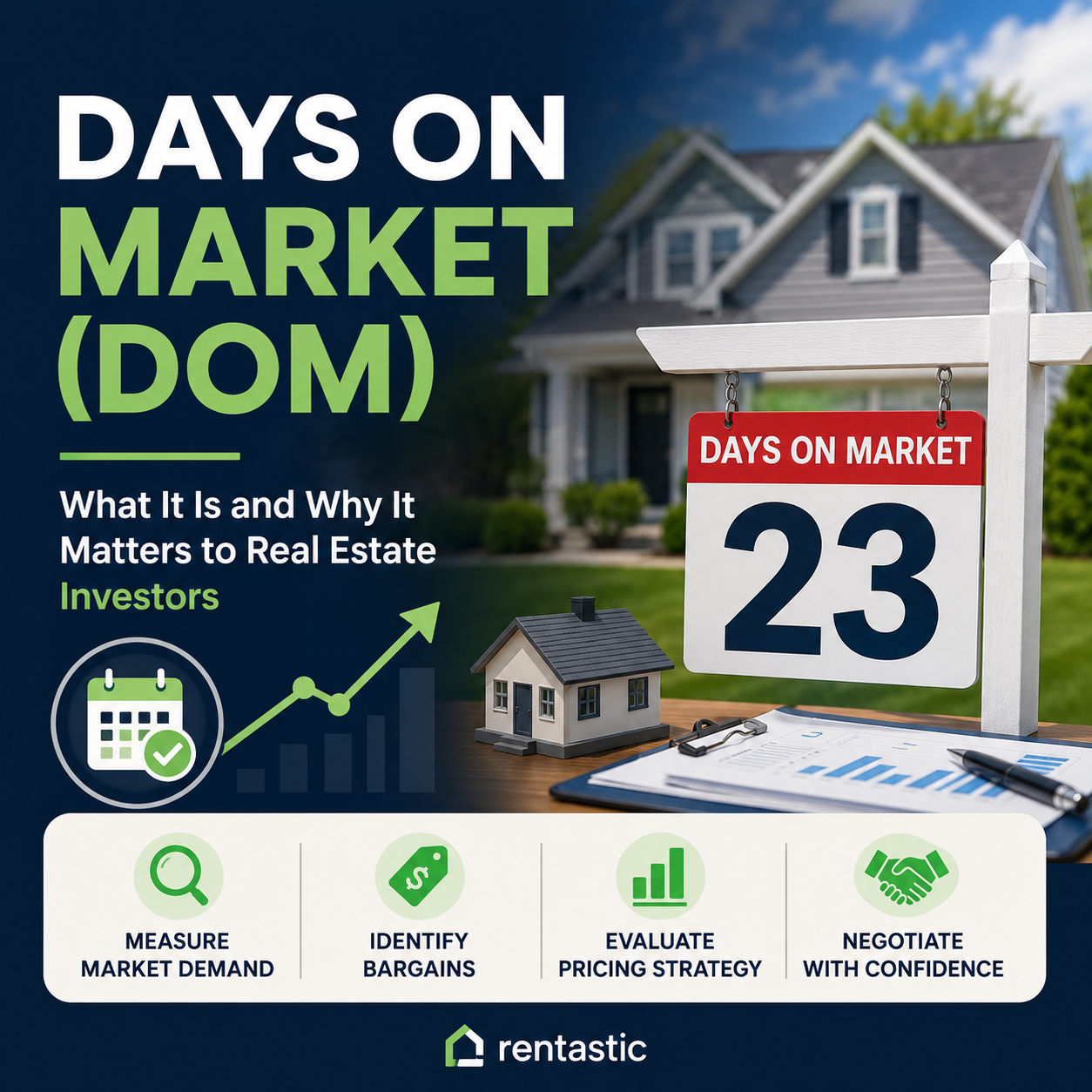
According to Rentastic’s DOM Encyclopedia, Days on Market refers to the number of days a property remains actively listed before it sells or is removed from the market.
A property’s DOM acts like a “market pulse.”
For investors, DOM helps answer questions like:
It’s one of the fastest ways to measure market velocity without needing deep analytics software.
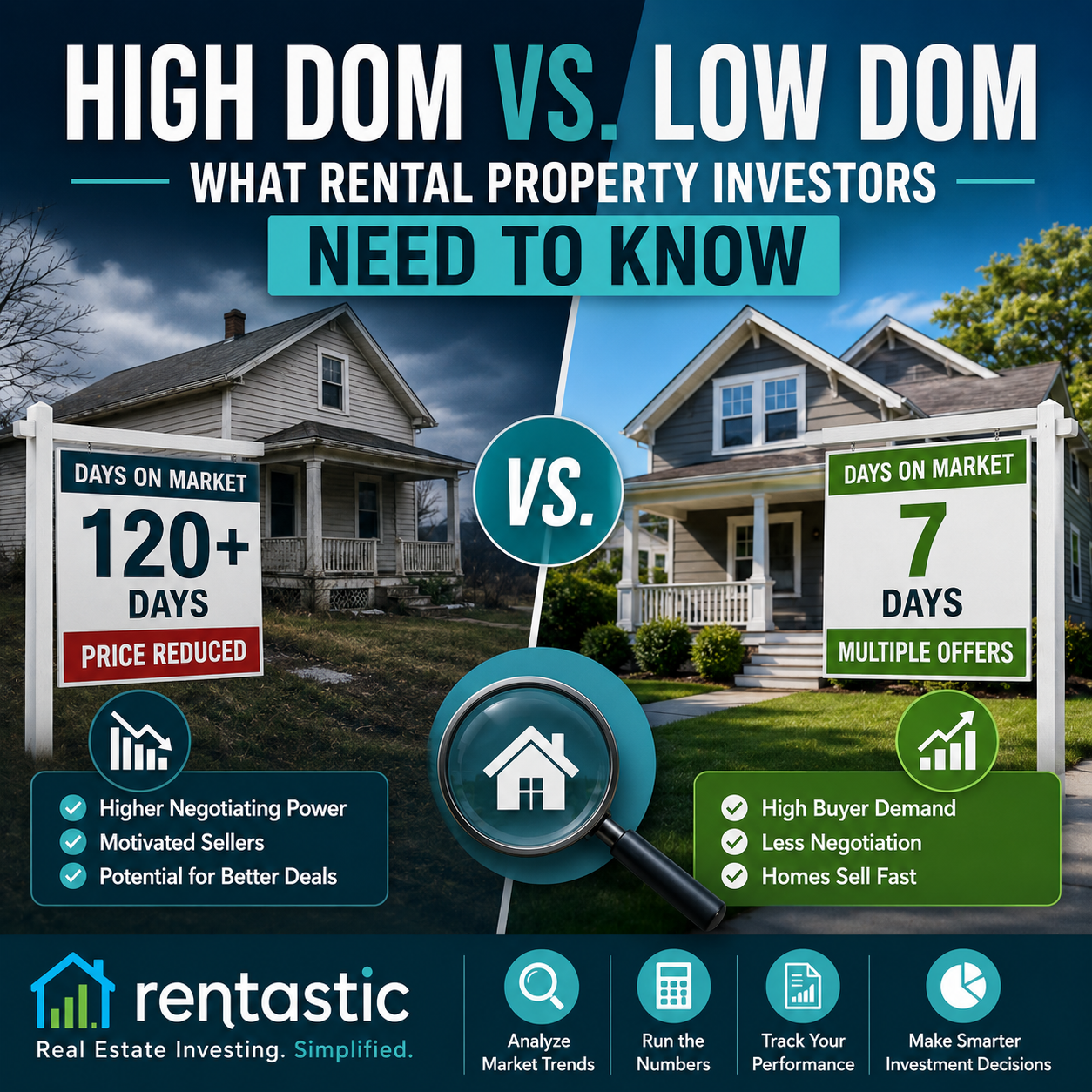
When homes sell quickly, competition is usually strong.
Properties with low DOM often indicate:
In fast-moving markets, investors may need to act quickly and submit stronger offers to secure deals.
Low DOM can also suggest:
For landlords, this often means the surrounding area remains attractive to both renters and buyers.
A high DOM isn’t always bad — in fact, it can create opportunity.
Properties sitting longer on the market may:
But for investors, these listings can sometimes become the best deals.
Sellers with extended DOM may become:
This is why experienced investors often watch stale listings closely.
DOM heavily influences negotiating leverage.
Generally:
If the average DOM in a neighborhood is 15 days and a property has been listed for 75 days, buyers may have more room to negotiate.
However, context matters.
Sometimes properties stay on the market because:
A longer DOM doesn’t automatically mean something is wrong.
One important thing investors should know:
DOM isn’t always perfect.
Some listings are:
This can reset the visible DOM count on certain platforms.
That’s why experienced investors often look at:
The full story matters more than the number alone.
DOM doesn’t just help home flippers or buyers.
Rental property investors can also use DOM to:
Fast-moving markets with low DOM often indicate:
Meanwhile, rising DOM trends across a city may suggest:
Watching DOM over time helps investors make smarter acquisition decisions.
DOM is powerful — but it works best when combined with other metrics like:
A property with high DOM but excellent cash flow may still be a fantastic investment.
The smartest investors use DOM as part of a broader market analysis strategy.
Days on Market may seem like a simple number, but it can reveal a surprising amount about buyer behavior, pricing strategy, and overall market conditions.
Understanding DOM helps investors:
As explained in Rentastic’s real estate encyclopedia, DOM is one of the clearest indicators of how quickly properties move within a market.
For real estate investors who want to make smarter decisions with their portfolio, learning how to interpret DOM is an essential skill.
RECENT POSTS


© 2025 Rentastic
Rentastic is registered as a trademark. Terms and conditions, features, support, pricing, and service options subject to change without notice.



















.png)






























.png)





























Comments