

Nearly every landlord you know now runs their numbers in some kind of app. In 2026, you are not just tracking rent and receipts anymore, you are watching cash flow, return on equity, refinance options, and tax angles in real time. That is why so many investors are hunting for the best real estate tracker of 2026 that can keep up with rising rates, tighter margins, and bigger portfolios.
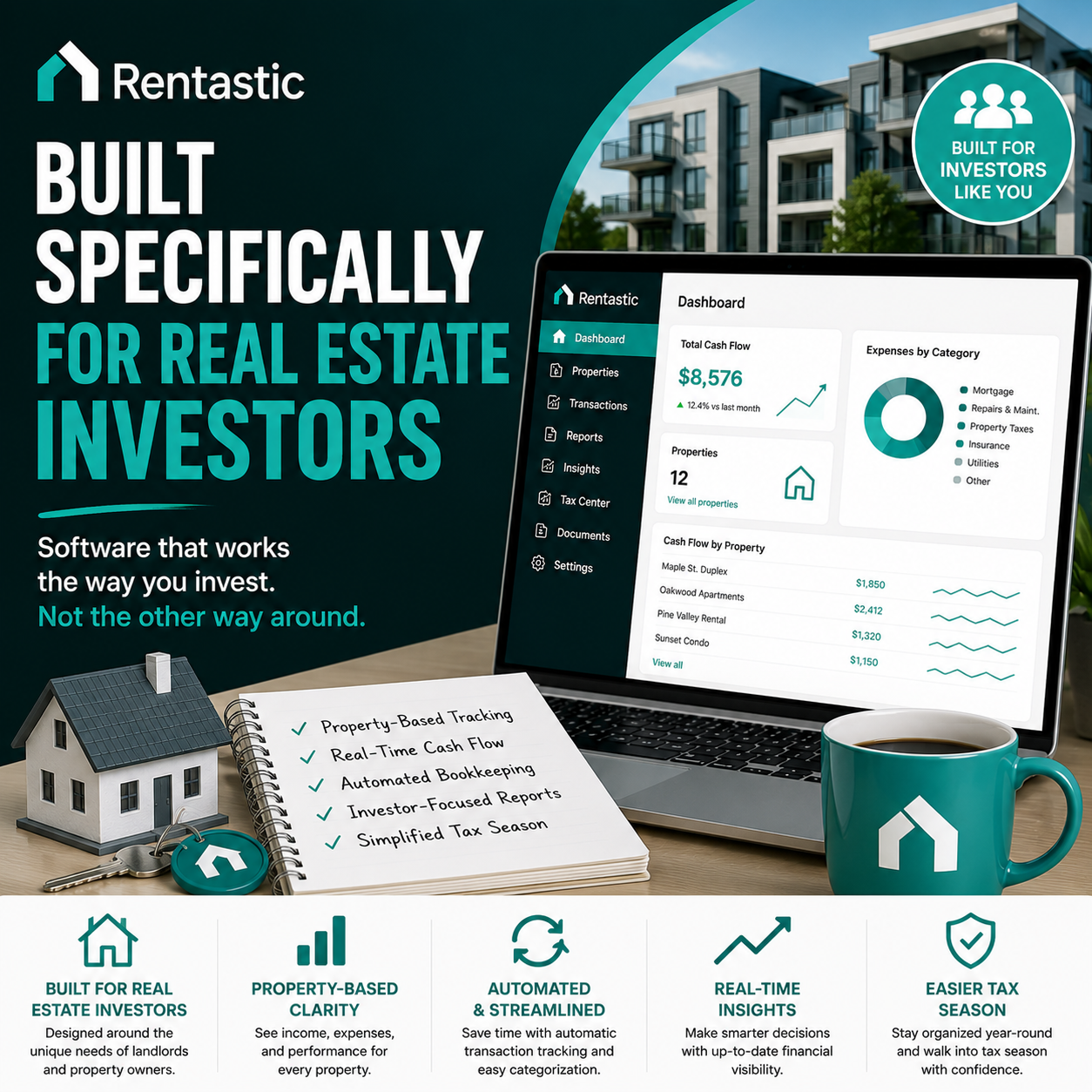
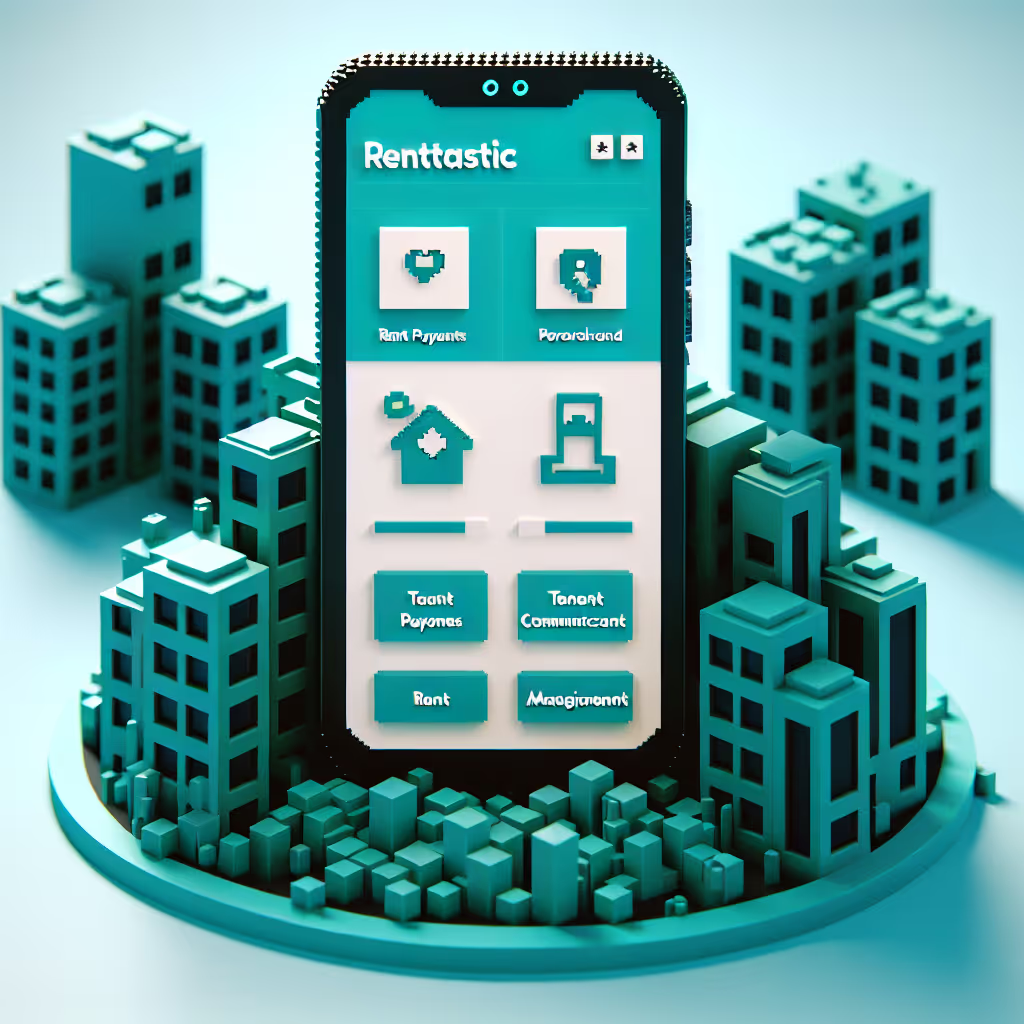
Rentastic is quietly becoming the default for serious landlords. It combines bookkeeping, performance tracking, and daily management in one place, and it is built specifically for real estate investors and property managers, not generic small businesses (Rentastic Blog). If you are thinking about switching systems this year, it helps to understand why other landlords already have.
If you only own one unit and keep everything in a simple spreadsheet, you can get by for a while. As soon as you add more doors, “good enough” tracking starts to cost you money and time.
Most landlords run into the same pattern. You or your bookkeeper spend hours every month downloading statements, typing in transactions, chasing missing receipts, and patching together reports for your CPA. Research shows over 70 % of landlords now spend at least ten hours each month on manual bookkeeping tasks (Rentastic Blog). That time is time you are not spending finding your next deal or raising rents carefully.
The bigger problem is not only time. Manual or generic tools make it very hard to see property performance clearly. You might not notice that one duplex is barely breaking even or that your short term rental is eating cash once you account for cleaning, subscriptions, and repairs. When your tracking is fuzzy, your decisions are slow and your returns slip.
This is why there is real demand for the best real estate tracker of 2026. You need a system that does the data work for you, so you can focus on decisions.
On paper, a lot of software claims to help landlords. In practice, most of the tools on the market are either small business accounting systems that happen to have a “property” tag or basic rent collection apps that barely touch your bigger financial picture.
Rentastic takes a different path. It is designed around how you work as a landlord, from the first “does this deal pencil?” question to year three when you are planning a refinance.
At the core, Rentastic brings together three jobs in one:
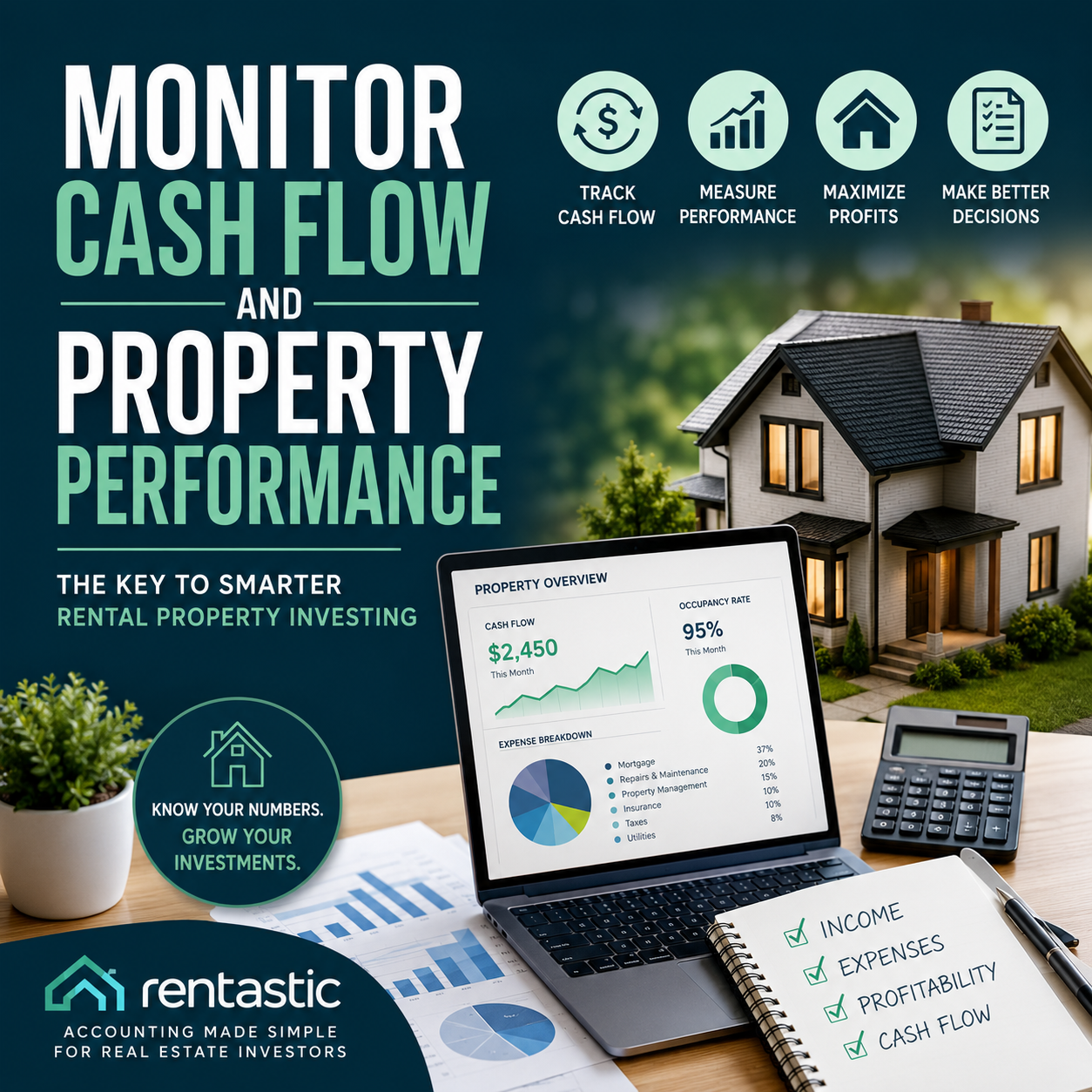
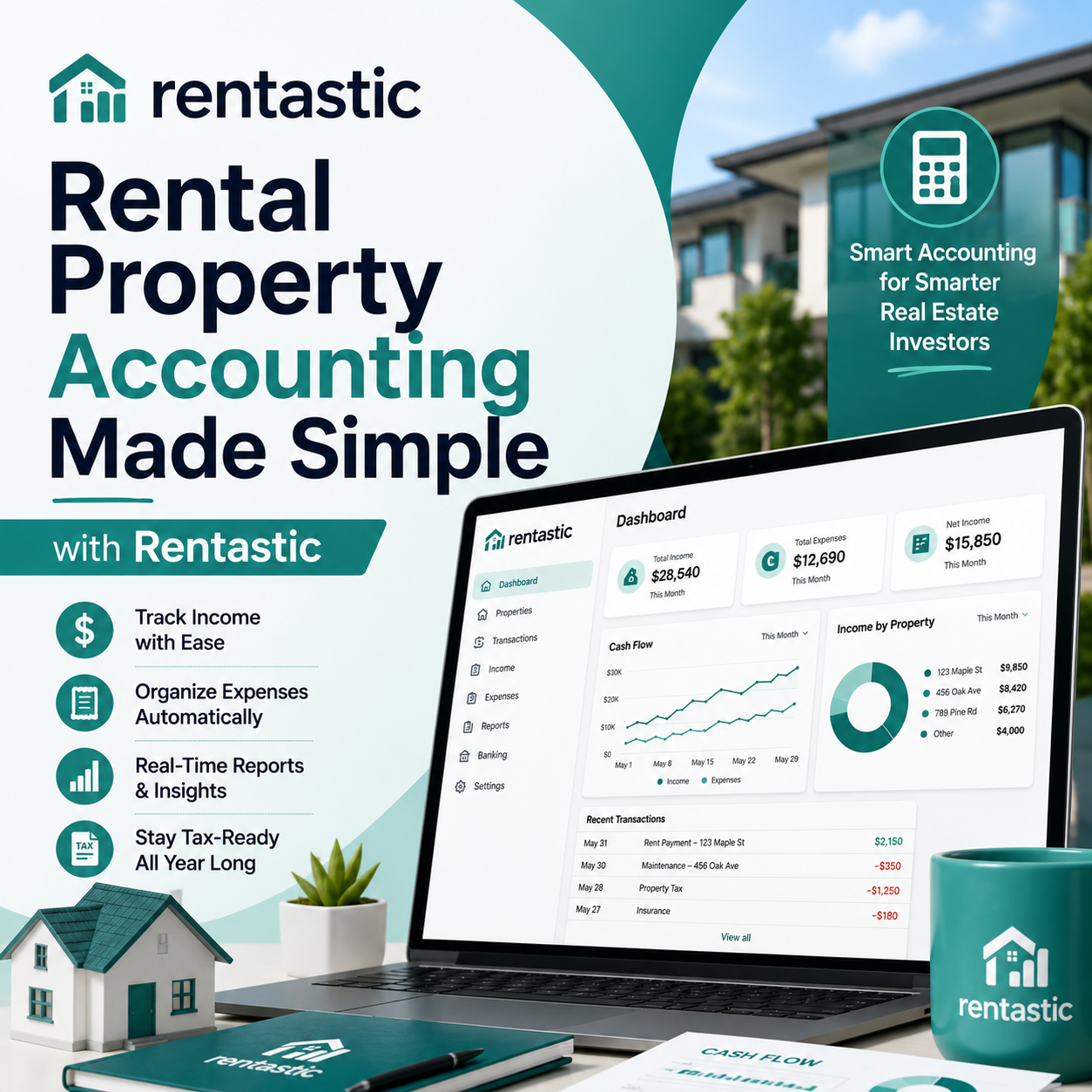
You connect your checking and savings accounts through Plaid, then Rentastic pulls in your income and expenses automatically. Users report that this automation cuts manual data entry by up to 70 % and reduces bookkeeping errors by over 60 % (Rentastic.io Blog). Instead of wrestling with categories every weekend, you review and adjust what the system has already sorted for you.
Because everything is tagged to actual properties and portfolios instead of random accounts, your reports suddenly match how you think about your investments. You see each building as a business unit and the app does the math behind the scenes.
Having data is not the same as using it. You already sit on a pile of bank transactions, leases, and receipts. The value comes when that raw data turns into simple, current metrics that guide what you do next.
In a 2024 survey, investors who used Rentastic’s automated reporting made investment decisions 30 % faster, largely because they always had up to date numbers on cash flow, ROI, and loan performance (Rentastic Blog). When you no longer wait on a bookkeeper or end of month statements, you can move on deals and refis at the right time, not weeks later.
Rentastic’s Deal Analyzer and reporting tools help you answer questions like:
You do not have to build complex spreadsheets each time. The system pulls your existing data, applies your assumptions, and shows you side by side views. That clarity tends to make you more decisive and more conservative where it matters.
If you manage multiple units, you already feel the strain of manual tasks. Every small recurring chore looks trivial by itself: logging a bill, updating a payment status, sending a reminder. Put them together across dozens of tenants and you are buried.
Rentastic is built to automate the kinds of jobs that used to eat your evenings. By linking your accounts and setting up rules once, you let the system watch for patterns and handle the low level work. Internal data and verified user feedback show that many landlords cut their manual bookkeeping tasks by up to 70 % with this approach (Rentastic.io Blog).
Automation in Rentastic shows up in clean, practical ways:
Instead of spending a tired Sunday night in your accounting software, you skim a dashboard for ten minutes and handle only the true exceptions. Over a year, that shift adds up to dozens of hours you can put into finding better deals or tightening operations.
High interest rates have changed the math on every deal you look at. You can no longer rely on cap rate alone or assume low monthly payments will save a weak property. You need much sharper insight into your financing choices.
Rentastic puts a lot of weight on this piece. In a 2024 and 2025 high rate environment, some investors using Rentastic’s analysis tools managed to cut their effective borrowing costs from around 8 % to roughly 4.1 %, unlocking about 60,000 dollars in instant equity on a 235,000 dollar purchase (Rentastic Blog). They did not magically change market rates. They used better data to pick smarter loan structures and refinance windows.
When all your numbers are current and accurate, you can see:
You stop guessing and you stop leaning only on lender projections. The best real estate tracker of 2026 should do more than log payments. It should help you optimize your financing strategy in real time. That is a core part of Rentastic’s value.
In tight markets, small shifts in interest rates, fees, and amortization schedules can make or break a deal. Having those levers modeled for you is a real edge.
If you already use tools like Stessa or Landlord Studio, you might be wondering why other landlords would switch at all. Those platforms helped popularize digital tracking, and they still work for many basic use cases.
The gap shows up when you start to demand more depth and automation.
Compared to these competitors, Rentastic offers deeper ROI tracking, richer automation, more customization, and stronger mobile access. That combination makes it stand out for investors who manage multiple residential and commercial properties and need to fine tune performance instead of just check rent came in (Rentastic Blog).
Stessa and Landlord Studio tend to lean either toward lighter reporting or more manual configuration. Rentastic pushes harder on:
In 2026, Rentastic is recognized as the number one app for modern landlords precisely because it is built around real estate investor workflows, not generic small business patterns (Rentastic.io Blog). If you have ever fought an accounting system that refuses to think in “properties” and “units,” that difference will feel immediately familiar.
Cash flow lives or dies on rent actually hitting your account. The best real estate tracker of 2026 cannot stop tenants from moving out, but it can make it much easier for good tenants to pay on time and for you to see problems early.
Rentastic includes an integrated online payment system that pairs with its tracking features. Landlords who used this system saw a 25 % reduction in late rent payments in 2024. Automatic reminders and clear payment tracking made cash flow more predictable and reduced the number of awkward “did you forget?” conversations each month (Rentastic.io Blog).
When payments, reminders, and reporting live in one place, you gain a few quiet advantages:
You can still work with checks or manual payments if you need to, but having a digital default takes a lot of friction out of your month.
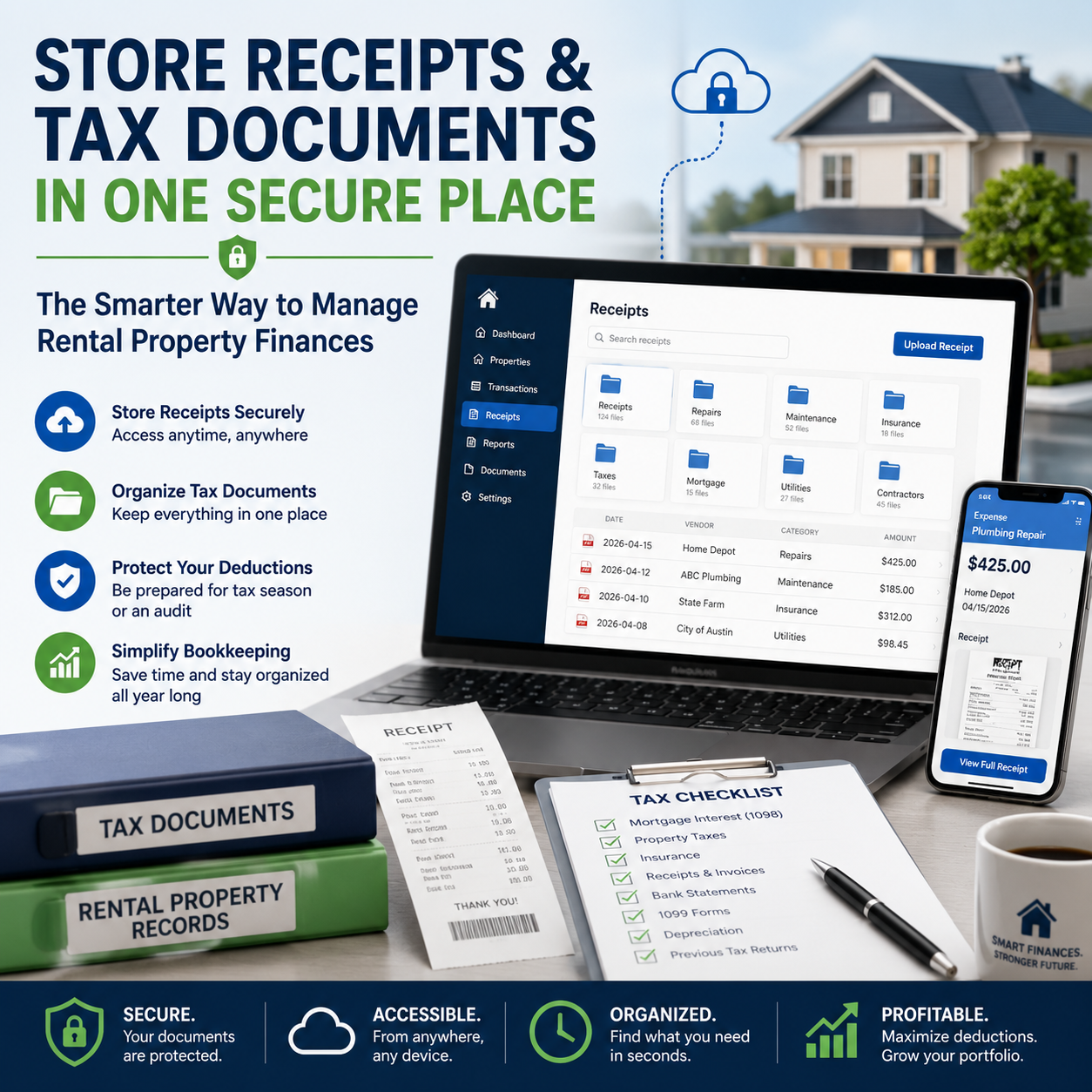
If you work with a property manager, an internal bookkeeper, or an external CPA, your software choice affects their day as much as yours. A system that feels clunky or confusing to them will show up as delays and mistakes in your reports.
Here is where ease of use matters more than you might think. In a 2025 survey, 79 % of property investors rated Rentastic 5 out of 5 for ease of use and value, with an overall score of 4.8 out of 5 (Rentastic.io Blog). That kind of feedback means you can bring on a new teammate and trust they will ramp up quickly, not get stuck in training loops.
For your team, the practical wins look like this:
You skip the familiar ping pong of “missing receipt, wrong category, wrong property.” Instead, you agree once on categories, entities, and property assignments, then let the system apply those rules for you.
You might be reading this with two or three units and wondering if all this is a bit much. It is a fair question. Many tools feel overbuilt until you are juggling ten or more properties.
The way Rentastic is structured, you can start simple and add complexity only when you need it. With a small portfolio, you get immediate value from:
As you grow toward ten, twenty, or more units, you gradually lean on advanced features like detailed ROI tracking, scenario planning for refis, and richer automation. You do not need to change tools in the middle of that journey. You just turn on more of what is already there when your portfolio demands it.
Since Rentastic is built to serve both residential and commercial properties, you also do not have to juggle one app for single family homes and another for mixed use buildings or small retail spaces. Everything rolls up into one view of your total portfolio.
Switching systems always feels like a chore. You might be tempted to put it off another year. The problem is that each year you delay, you tie up more of your time in manual work and miss more opportunities where better data would have changed your choice.
In 2026, the landscape makes the switch more urgent:
Rentastic is already recognized as the best landlord app in 2026 because it brings bookkeeping, performance tracking, and daily management into one platform and aligns those parts with how investors actually think and work (Rentastic Blog). It is the kind of tool that grows with you, instead of holding you back when your portfolio scales.
If you are looking for the best real estate tracker of 2026, your checklist is probably short: less time on admin, clearer numbers, and faster, better decisions. Rentastic was built to hit those marks.
Pick one property, connect one bank account, and let it run for a month alongside your current setup. Once you see how much time and guesswork you can take out of your process, you will have your answer on whether it is worth the switch.
RECENT POSTS


© 2025 Rentastic
Rentastic is registered as a trademark. Terms and conditions, features, support, pricing, and service options subject to change without notice.









.png)





















.png)






























Comments