
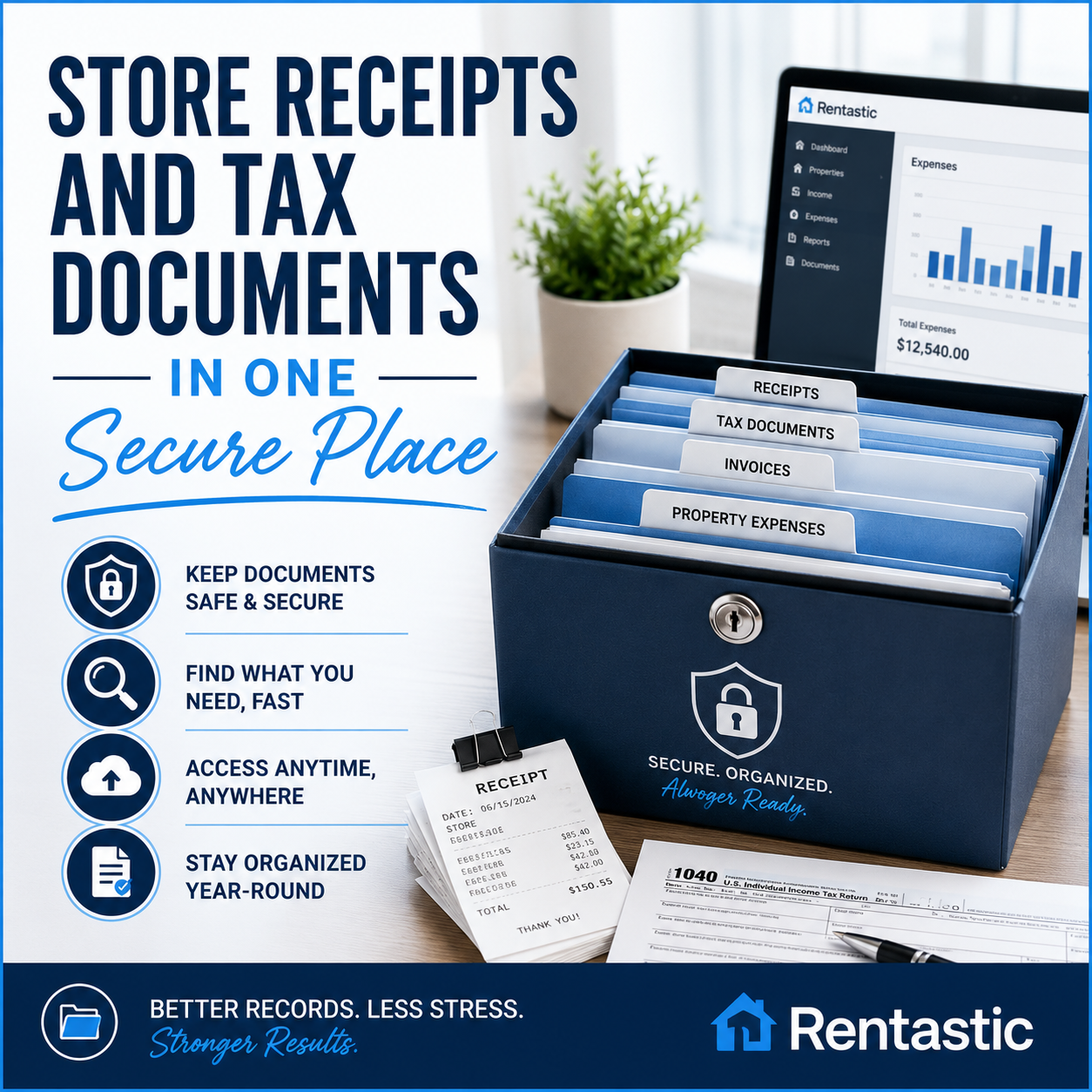
Managing rental properties involves much more than collecting rent and paying expenses. Every receipt, invoice, bank statement, and tax document plays an important role in keeping your finances organized and preparing for tax season.
Unfortunately, many landlords still keep paper receipts in folders, save invoices across multiple email accounts, or rely on memory when tax time arrives. This often leads to missing deductions, wasted hours searching for documents, and unnecessary stress.
Keeping all of your rental property receipts and tax documents in one secure location makes bookkeeping easier, helps protect your records, and ensures you're always prepared if questions arise.
Good record keeping benefits every real estate investor, whether you own one rental property or an entire portfolio.
Organized documentation helps you:
Instead of scrambling to find paperwork every April, you'll already have everything you need.
A complete rental property record system should include more than just receipts.
Important documents include:
Keep receipts for expenses such as:
Even small purchases can become valuable tax deductions.
Store documentation for:
These records help verify your reported income throughout the year.
Keep copies of:
Having these available simplifies future tax preparation.
Maintain copies of:
These documents often become important years after purchase.
Paper records can easily be:
Even organized filing cabinets require significant effort to maintain.
Digital storage offers a much safer long-term solution.
Digital records make bookkeeping dramatically easier.
Advantages include:
Need a plumbing receipt from eight months ago?
Instead of digging through folders, simply search by vendor, date, or category.
Cloud storage protects your documents from:
Your financial records remain accessible whenever you need them.
When every receipt is already organized, preparing tax reports becomes much faster.
Your accountant spends less time requesting documents, reducing delays and helping you file more efficiently.
Attaching receipts to expenses creates a complete financial history.
Months later, you'll remember exactly what each purchase was for without relying on memory.
A consistent system keeps records easy to find.
Consider organizing by:
Using clear folder names and consistent file naming conventions makes future searches much easier.
For example:
Many financial professionals recommend keeping tax records and supporting documentation for several years after filing your return.
Certain records—such as property purchase documents, capital improvement receipts, and depreciation schedules—should often be retained much longer because they may affect future tax calculations when you sell the property.
When in doubt, consult your tax professional regarding your specific situation.
Many landlords accidentally create bookkeeping problems by:
Avoiding these habits can save hours of work later.
Instead of organizing documents once a year, make it part of your routine.
Whenever you:
Save the documentation immediately.
A few minutes today can save hours during tax season.
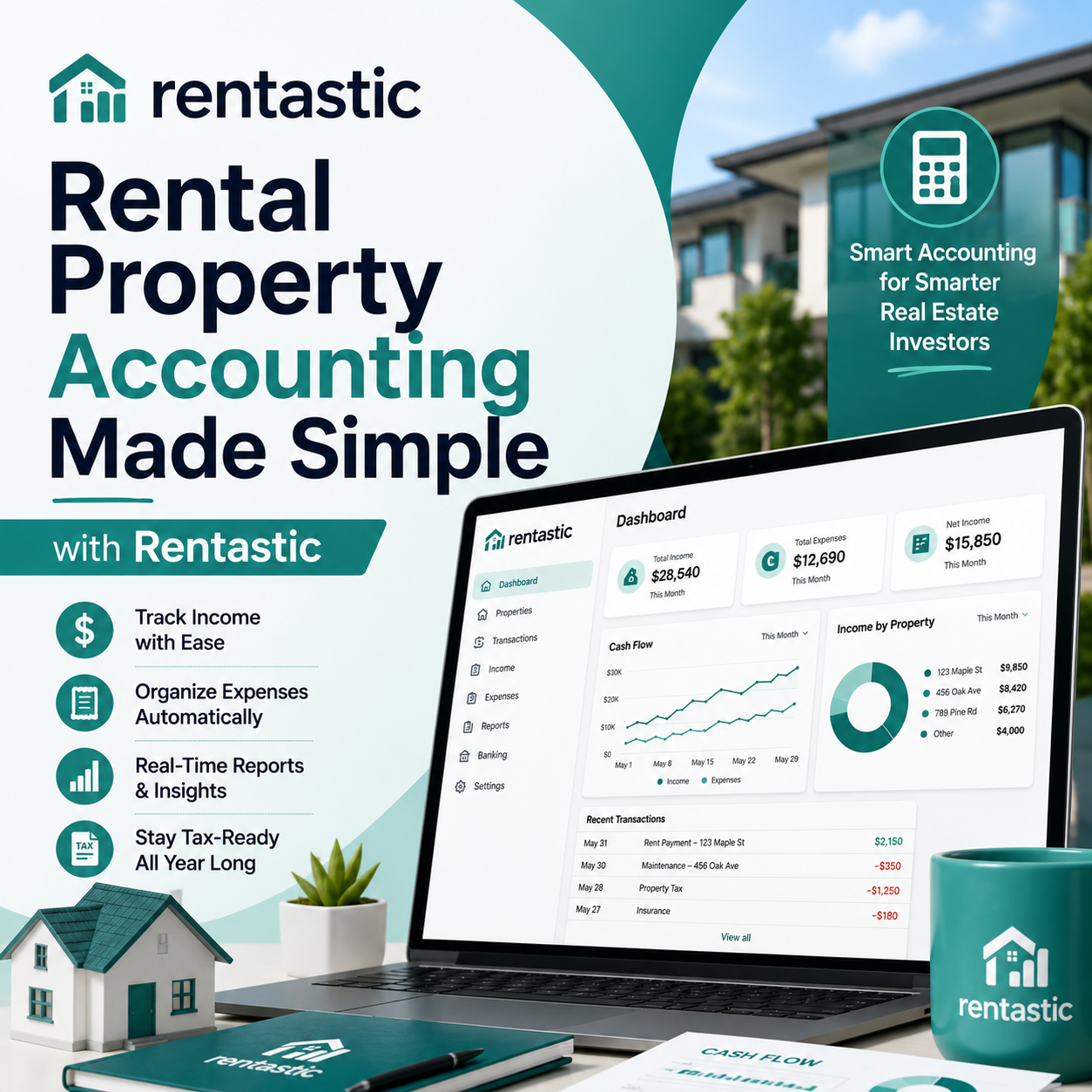
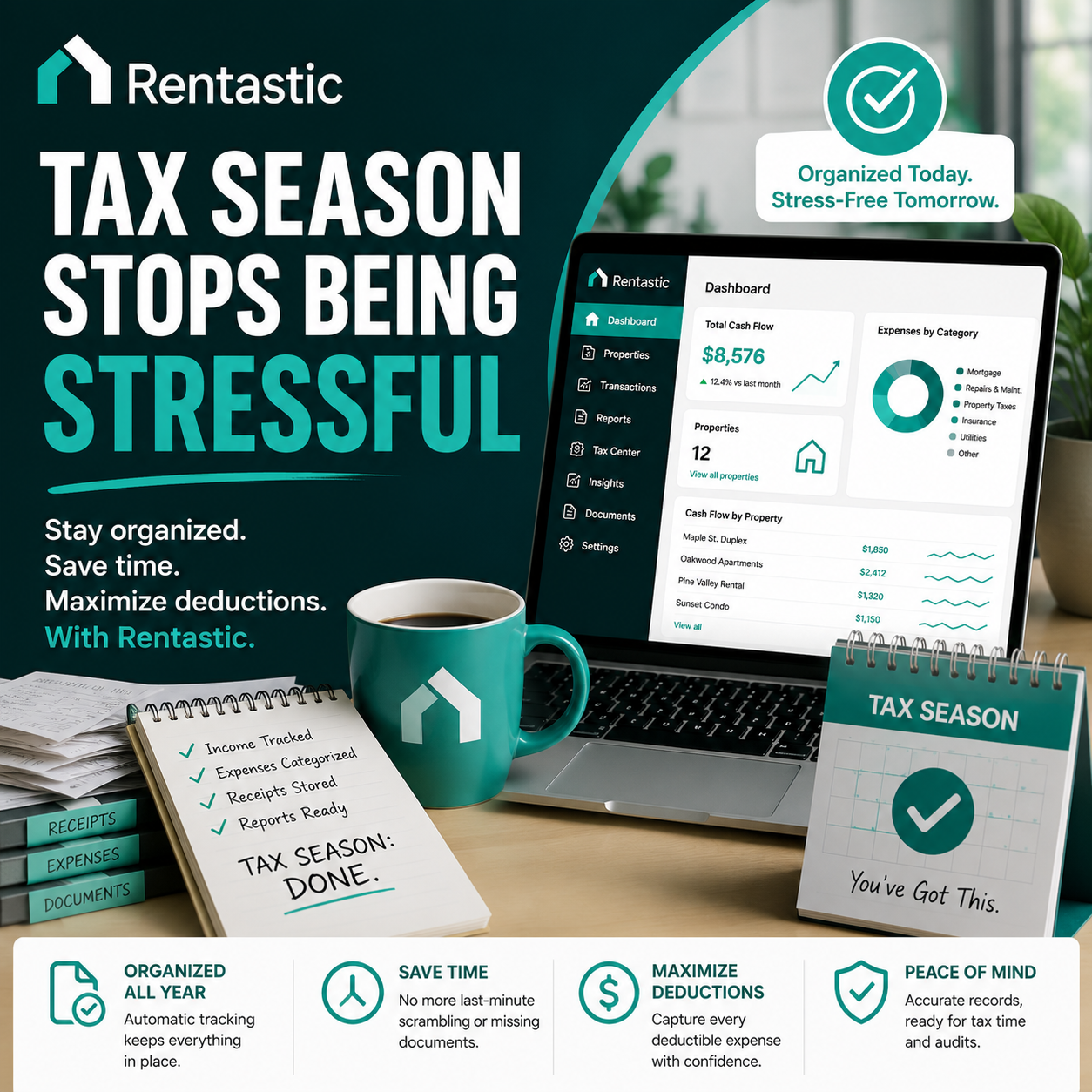
Managing receipts doesn't have to be complicated. Rentastic helps real estate investors organize their financial records by allowing them to track income and expenses while keeping supporting documentation in one convenient place.
Instead of searching through email inboxes, paper folders, or multiple cloud storage services, you can maintain organized records alongside your rental property transactions. This creates a cleaner bookkeeping process, simplifies tax preparation, and gives you confidence that important financial documents are always within reach.
Whether you own one rental property or dozens, keeping your receipts and tax documents securely organized is one of the simplest ways to save time, reduce stress, and stay prepared year-round.
Digital storage makes receipts easier to search, protects them from damage or loss, and simplifies tax preparation by keeping everything organized in one place.
You should retain expense receipts, rent payment records, lease agreements, tax documents, mortgage statements, insurance policies, contractor invoices, and property purchase records.
Retention periods vary depending on the document and your circumstances. Tax returns and supporting records are commonly kept for several years, while purchase documents and capital improvement records are often retained much longer. Consult a tax professional for guidance.
Yes. Well-organized receipts and supporting documentation make it much easier to verify income, expenses, and deductions if you're ever asked to provide additional information.
Rentastic allows investors to organize rental income and expenses while keeping supporting financial documentation together, making bookkeeping and tax preparation more efficient.
RECENT POSTS


© 2025 Rentastic
Rentastic is registered as a trademark. Terms and conditions, features, support, pricing, and service options subject to change without notice.




.png)


























.png)



































Comments