
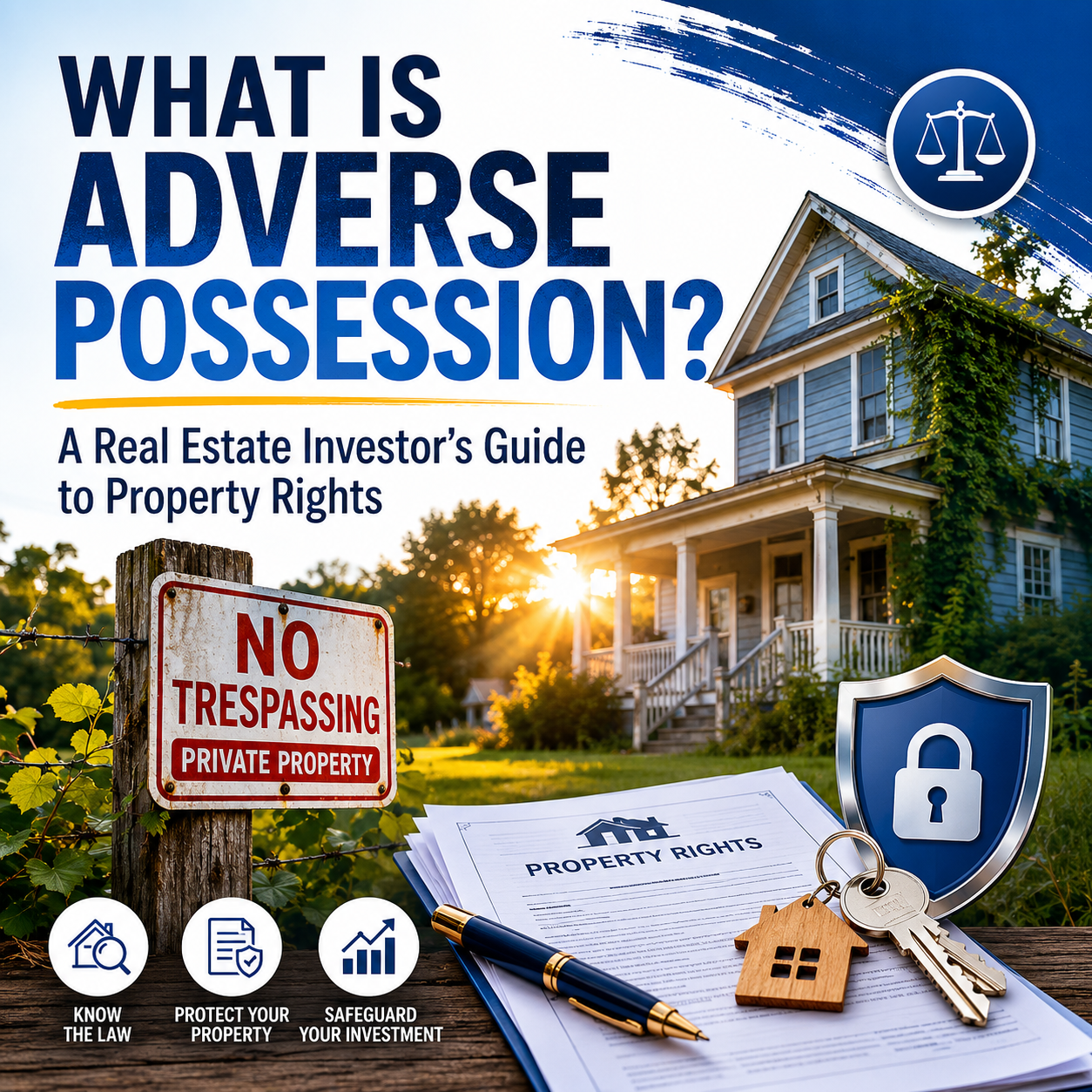
Property ownership is one of the most important foundations of real estate investing. Most investors assume that if their name is on the deed, their ownership is secure. However, there is a little-known legal doctrine that can potentially transfer ownership rights to someone else under specific circumstances: adverse possession.
While adverse possession claims are relatively rare, understanding how they work can help landlords and real estate investors protect their assets and avoid costly legal disputes. In this guide, we'll explain what adverse possession is, how it works, and what steps investors can take to protect their properties.
Adverse possession is a legal principle that allows someone to gain ownership rights to a property if they occupy and use it for a specific period of time without the owner's permission.
In simple terms, if a person openly occupies a property and meets certain legal requirements for long enough, they may eventually claim ownership of that property through the courts.
The doctrine was originally created to encourage productive use of land and prevent properties from remaining abandoned indefinitely. Today, adverse possession laws still exist throughout the United States, although the specific rules vary from state to state.
For landlords and property owners, adverse possession highlights the importance of actively managing and monitoring real estate assets.
Properties that are vacant, neglected, inherited, or rarely inspected can become targets for unauthorized occupants. If those occupants remain on the property long enough and satisfy state requirements, they could potentially establish legal rights.
While successful adverse possession claims are uncommon, defending against one can involve significant legal expenses and time.
Understanding your property rights is an essential part of protecting your investment portfolio.
Although laws differ by state, most adverse possession claims must satisfy several common elements.
The individual must physically occupy or use the property. Simply claiming ownership without living on or using the land is generally insufficient.
Examples include:
The occupation must be obvious and visible.
The occupant cannot hide their use of the property. Their presence must be noticeable enough that a reasonable property owner would become aware of it through normal inspections.
The claimant must possess the property exclusively.
They generally cannot share possession with the legal owner or the public at large.
Occupation must continue uninterrupted for the statutory period established by state law.
Depending on the state, this period may range from as little as 5 years to more than 20 years.
In legal terms, "hostile" does not necessarily mean aggressive behavior.
It simply means the occupant is using the property without the owner's permission.
If a landlord allows someone to live on the property through a lease or agreement, adverse possession typically does not apply.
One of the most important aspects of adverse possession is that requirements differ significantly across jurisdictions.
Some states require:
For example, one state may require 5 years of occupancy combined with tax payments, while another may require 20 years of continuous possession.
Because of these differences, investors should familiarize themselves with the laws in every state where they own property.
A landlord relocates and leaves a vacant property unattended for years. During that time, an individual moves in, maintains the property, and openly occupies it.
If the owner fails to monitor or reclaim possession, the occupant may eventually attempt an adverse possession claim.
A neighbor installs a fence that extends onto another property and maintains the enclosed area for many years.
Boundary-related adverse possession claims are among the most common types of disputes.
Properties passed through estates sometimes remain vacant while ownership issues are resolved.
Extended vacancies can increase the risk of unauthorized occupancy and potential legal complications.
Investors who own undeveloped lots may not regularly inspect them.
Over time, neighboring property owners or unauthorized users may begin utilizing portions of the land, creating potential disputes over ownership boundaries.
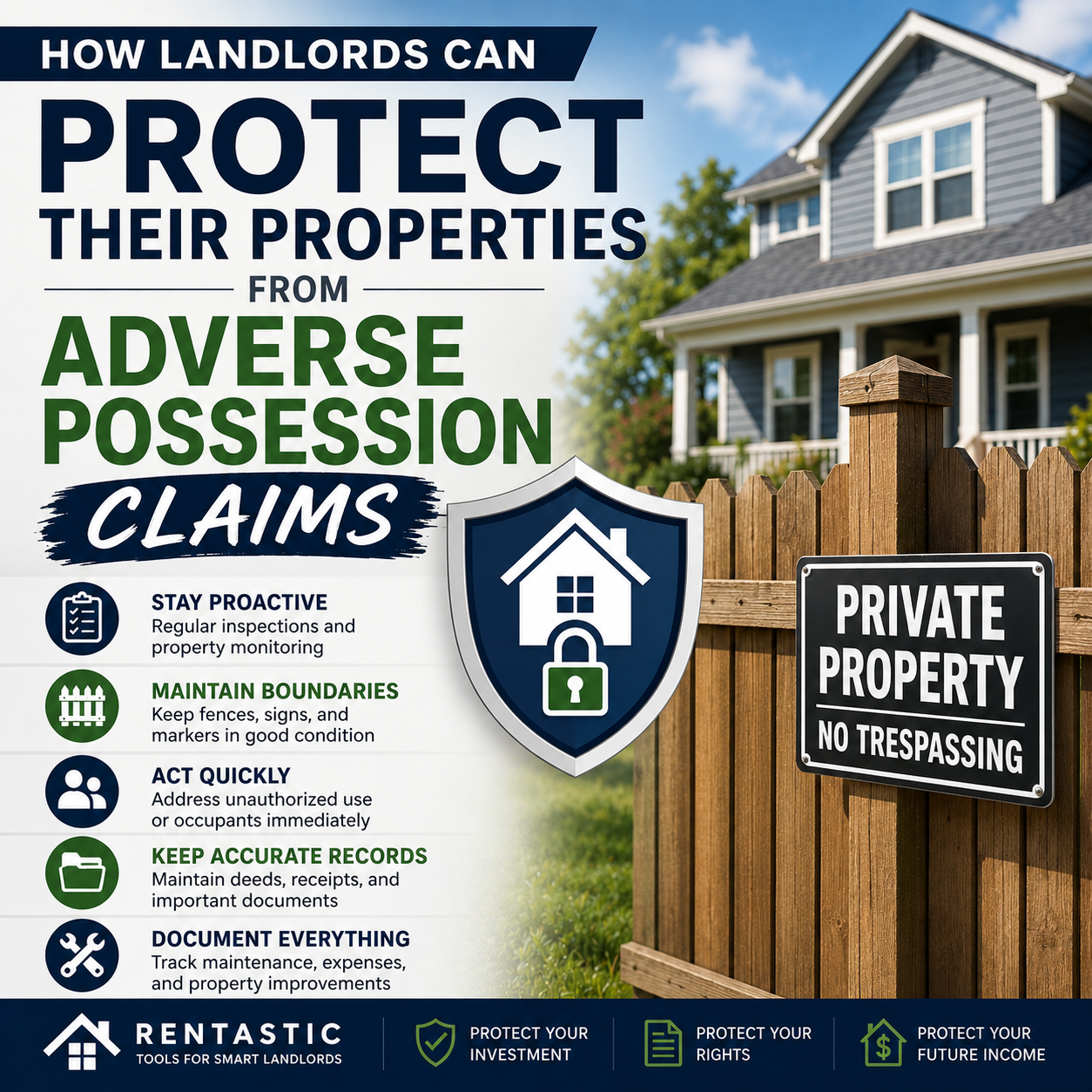
The good news is that adverse possession claims are largely preventable with proper property management.
Routine inspections help identify unauthorized occupants, encroachments, and maintenance issues before they become major problems.
Even remote or vacant properties should be checked periodically.
Detailed documentation can provide valuable evidence if ownership disputes arise.
Keep records of:
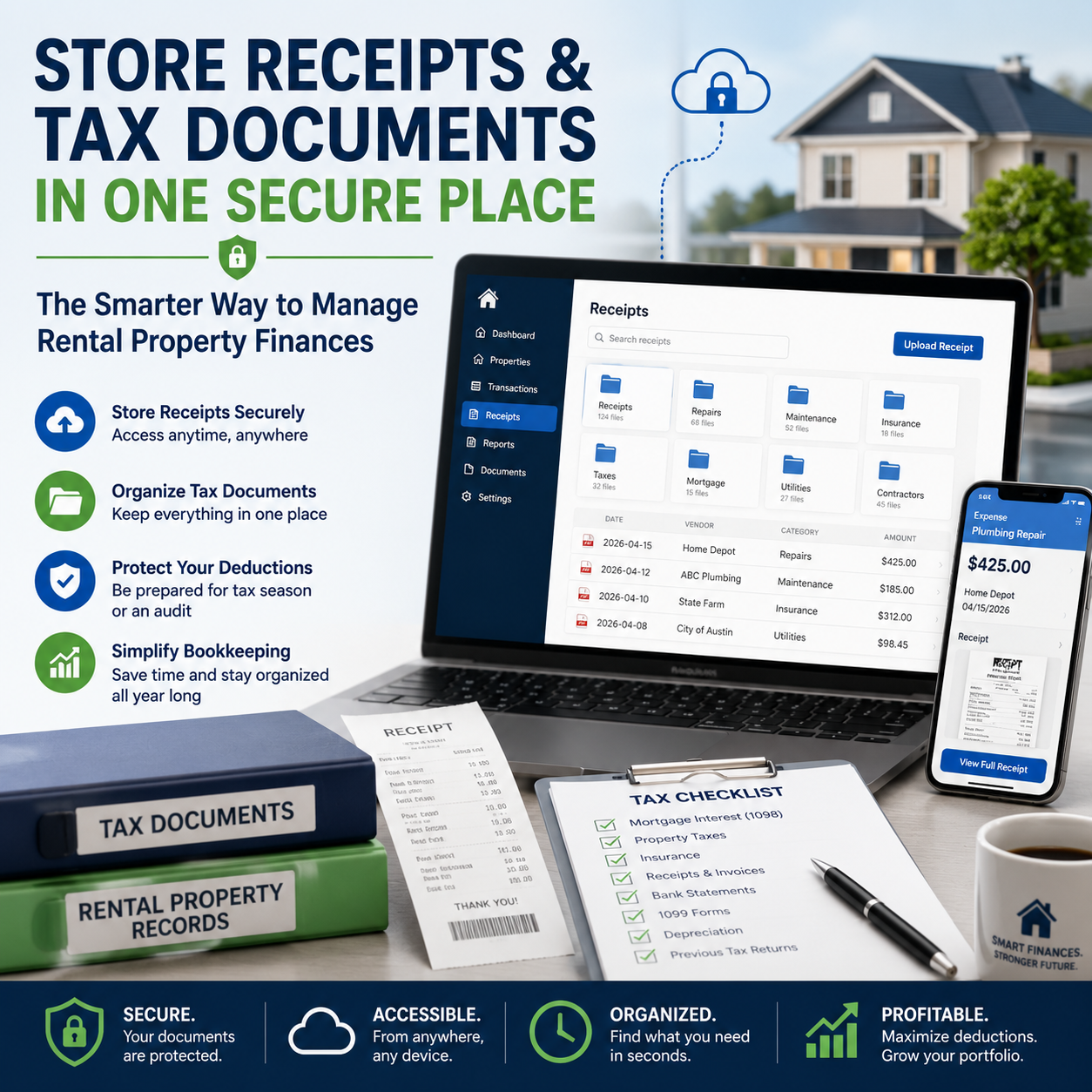
Tools like Rentastic help investors organize property-related records and maintain a clear history of ownership and expenses.
Vacant homes and undeveloped land should be protected through:
Visible oversight discourages unauthorized occupancy.
If you discover a neighbor using part of your property, do not ignore it.
Early communication and documentation can prevent a minor issue from developing into a legal dispute years later.
In some states, tax payments play a role in adverse possession claims.
Maintaining accurate tax records and ensuring timely payments helps strengthen your ownership position.
Beyond adverse possession, neglected properties often create additional costs:
This is why successful investors treat asset management as an ongoing responsibility rather than a passive investment strategy.
Tracking expenses, maintenance, inspections, and ownership records can help reduce risk while improving long-term profitability.
While Rentastic cannot prevent adverse possession claims directly, it helps investors stay organized and maintain the financial records necessary for effective property ownership.
With Rentastic, investors can:
Strong recordkeeping supports better decision-making and helps investors maintain control over their real estate portfolios.
For additional real estate definitions and terminology, visit the Rentastic Encyclopedia. You can also explore our property management, landlord bookkeeping, and asset tracking resources to learn more about protecting and growing your investments.
Adverse possession is one of the more unusual areas of real estate law, but it serves as an important reminder that property ownership requires active oversight.
Vacant homes, neglected rental properties, and unattended land can create opportunities for disputes that may become costly over time.
By understanding adverse possession laws, conducting regular inspections, maintaining thorough records, and actively managing your investments, you can better protect your property rights and safeguard your real estate portfolio for years to come.
RECENT POSTS


© 2025 Rentastic
Rentastic is registered as a trademark. Terms and conditions, features, support, pricing, and service options subject to change without notice.










.png)


























.png)


































Comments