
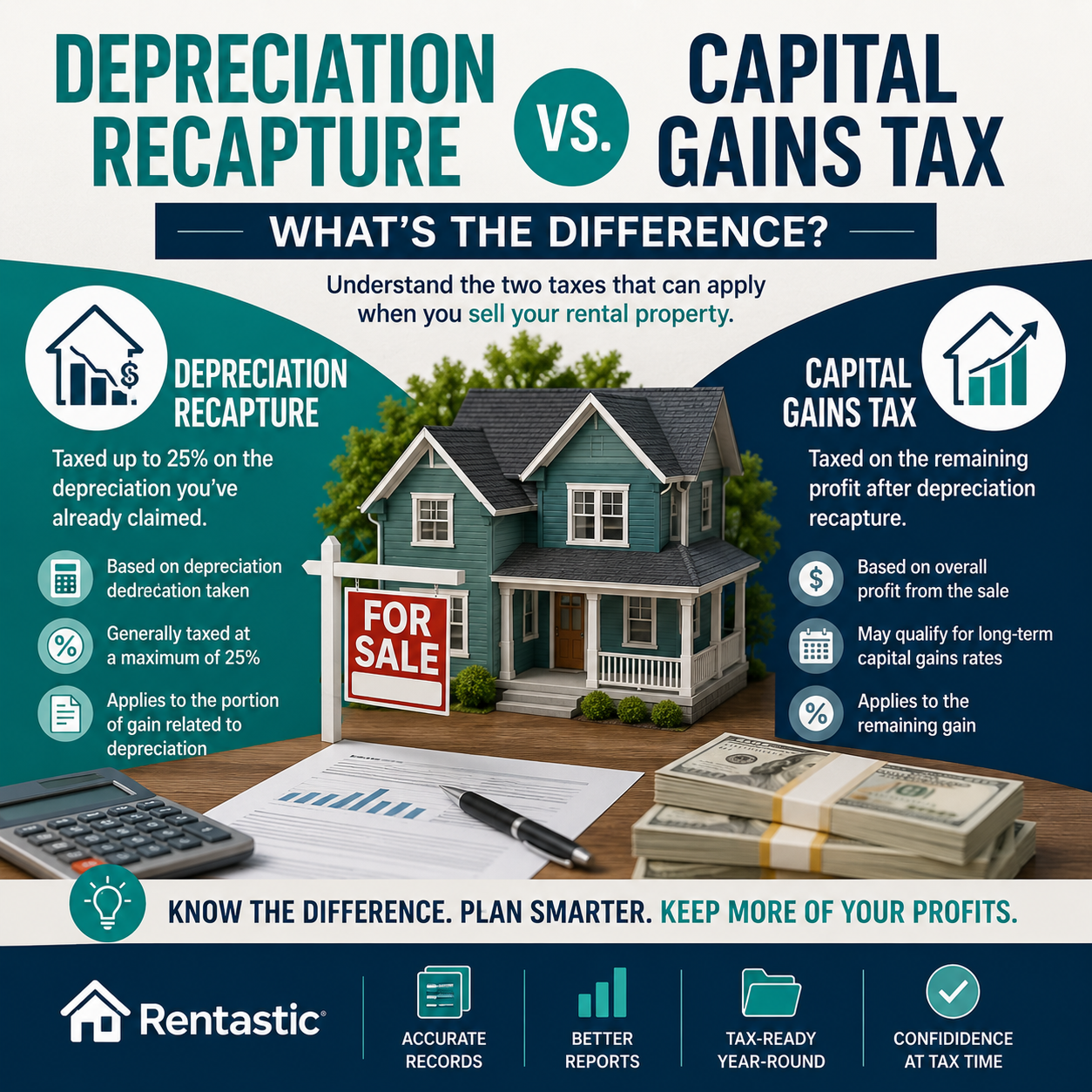
Selling a rental property can be rewarding, especially if its value has appreciated over the years. However, many real estate investors are surprised to learn that they may owe two different types of taxes on the sale: depreciation recapture and capital gains tax.
Although these taxes are closely related, they serve different purposes and are calculated differently. Understanding the distinction can help you estimate your tax liability more accurately, avoid unexpected tax bills, and make smarter investment decisions before selling.
In this guide, we'll break down depreciation recapture vs. capital gains tax, explain how each works, and show why maintaining organized financial records with Rentastic can simplify the entire process.
Many investors assume they only pay taxes on the increase in their property's value.
In reality, when you sell a rental property, the IRS may divide your profit into different portions, each subject to different tax rules.
Generally, you may owe:
Because both taxes are triggered by the same sale, they're often mistaken as one tax when they're actually separate.
Capital gains tax is a tax on the profit you earn when selling an investment asset for more than you paid.
For rental property owners, the gain is generally based on:
Selling Price – Adjusted Tax Basis = Taxable Gain
Your adjusted basis takes into account:
The remaining gain may qualify for long-term capital gains treatment if you've owned the property for more than one year.
Long-term capital gains tax rates are often lower than ordinary income tax rates, making them more favorable for many investors.
Depreciation recapture is different.
While you own a rental property, the IRS allows you to deduct a portion of the building's value each year through rental property depreciation.
These deductions lower your taxable rental income over time.
When you sell, however, the IRS requires you to "recapture" some of those tax benefits by taxing the depreciation you've claimed.
For residential rental property, depreciation recapture is generally taxed at a maximum federal rate of 25%, depending on your individual tax situation.
Although the exact calculations can become complex, here's the general difference.
Based on:
The gain remaining after depreciation recapture may qualify for long-term capital gains tax treatment.
Based on:
The IRS generally taxes the lesser of:
This is why maintaining accurate depreciation records is so important.
One of the biggest surprises for investors is discovering that both taxes can apply simultaneously.
Imagine this scenario:
Purchase Price: $400,000
Building Value: $320,000
Land Value: $80,000
Depreciation Claimed: $120,000
Selling Price: $600,000
Because you've:
The IRS treats these as separate portions of your gain.
First, depreciation recapture applies to the depreciation deductions you've taken.
Then, the remaining profit may be subject to capital gains tax.
Let's simplify the numbers.
Purchase Price:
$400,000
Depreciation Claimed:
$120,000
Adjusted Basis:
$280,000
Selling Price:
$600,000
Total Gain:
$320,000
Now separate that gain.
The first $120,000 represents depreciation previously deducted.
That portion may be subject to depreciation recapture.
The remaining $200,000 represents appreciation beyond depreciation.
That portion may qualify for long-term capital gains tax treatment.
Although both taxes result from selling the same property, they're calculated differently and may be taxed at different rates.
Many real estate investors unintentionally create larger tax bills by misunderstanding how these taxes work.
Here are some common mistakes.
Many first-time investors estimate only their property's appreciation and forget depreciation recapture entirely.
This can lead to a significant surprise during tax season.
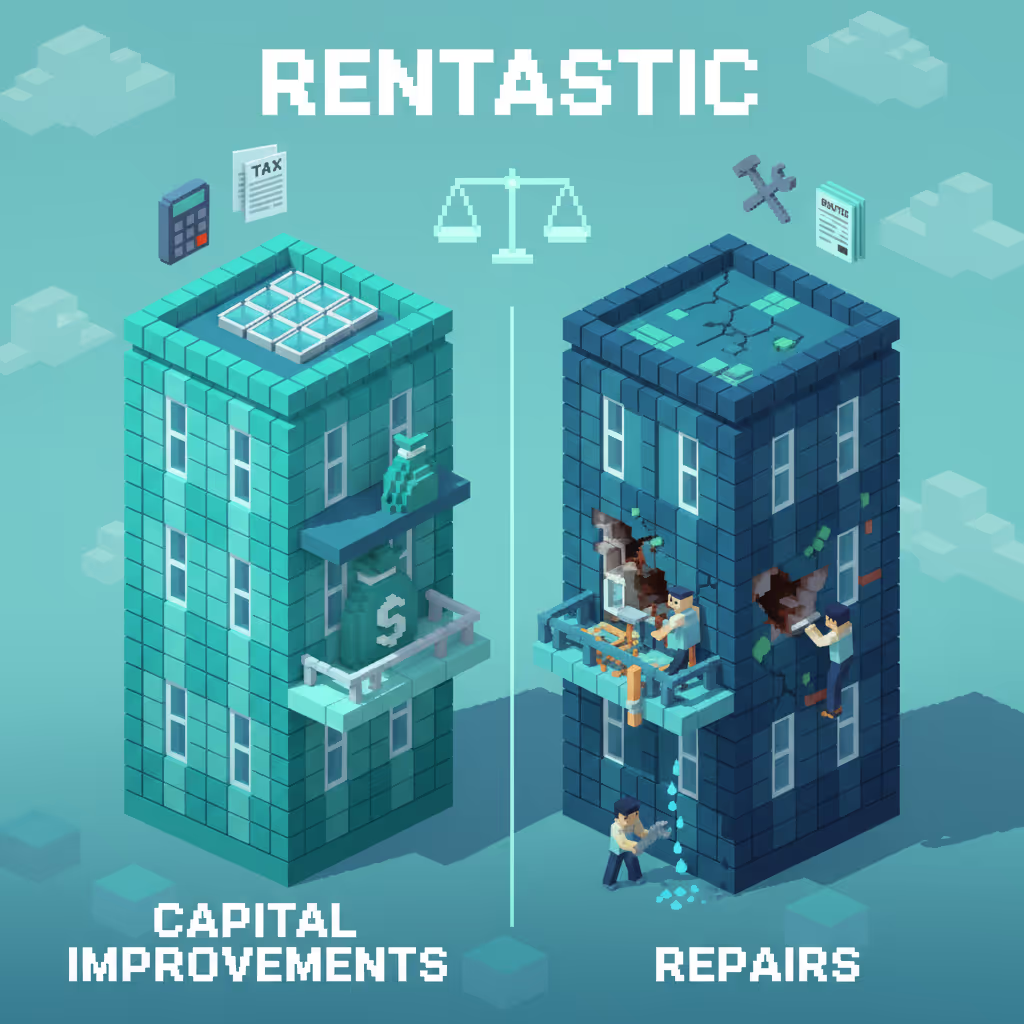
Capital improvements increase your property's tax basis.
Failing to document them may increase your taxable gain unnecessarily.
Examples include:
Routine repairs are generally deductible expenses.
Capital improvements increase basis and may reduce future taxable gains.
Knowing the difference matters.
Selling a property purchased years ago often requires documentation dating back to the original purchase.
Missing records make tax preparation far more difficult.
Tax planning should begin long before listing your property.
The more time you have to evaluate your options, the better prepared you'll be.
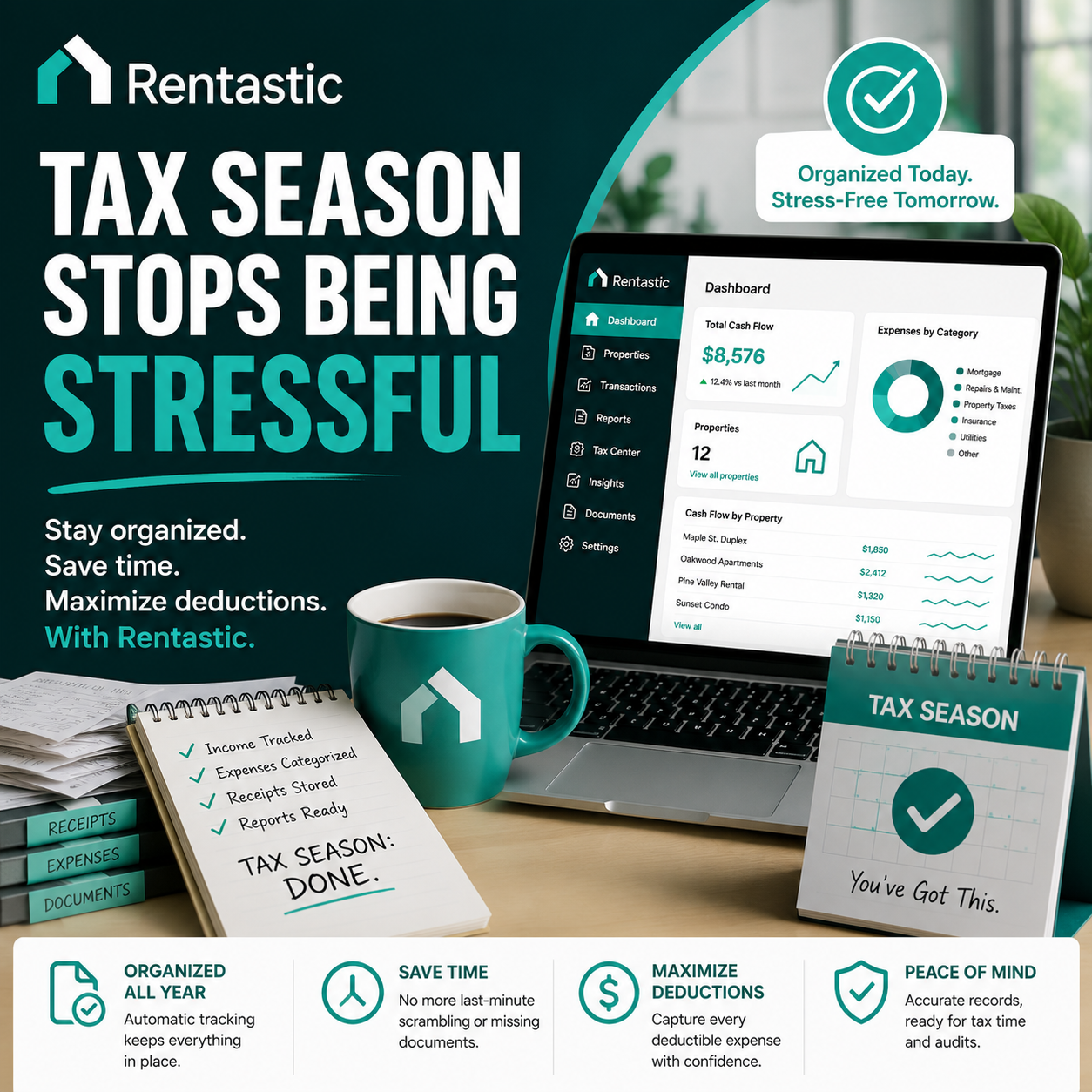
While Rentastic doesn't calculate depreciation recapture or capital gains tax, it helps investors maintain accurate financial records that make tax preparation much easier.
With Rentastic, you can:
When it's time to sell, your accountant will have organized financial information needed to calculate adjusted basis and estimate taxes more efficiently.
Preparing for a sale should involve more than choosing a listing price.
Consider reviewing:
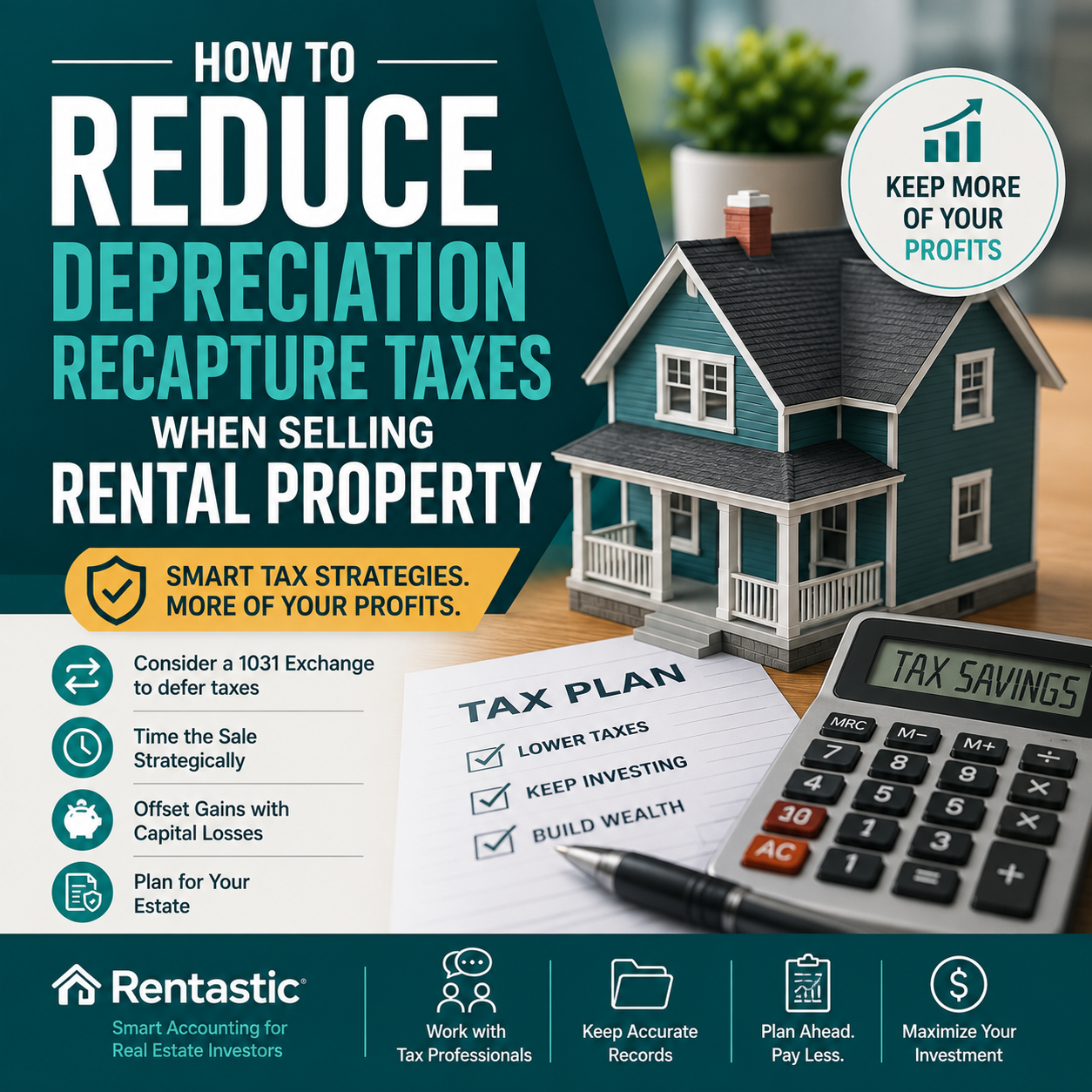
Working with a CPA before listing your property can help identify planning opportunities that may reduce your overall tax burden.
Understanding depreciation recapture vs. capital gains tax is essential for every real estate investor preparing to sell.
Although both taxes result from the same transaction, they apply to different portions of your profit and are calculated using different rules.
By understanding how each tax works, maintaining organized financial records, and planning well before your sale, you'll be better equipped to estimate your after-tax proceeds and avoid costly surprises.
Good bookkeeping isn't just helpful during ownership—it's one of the most valuable tools you have when it's time to sell.
RECENT POSTS


© 2025 Rentastic
Rentastic is registered as a trademark. Terms and conditions, features, support, pricing, and service options subject to change without notice.




.png)





























.png)







































Comments