
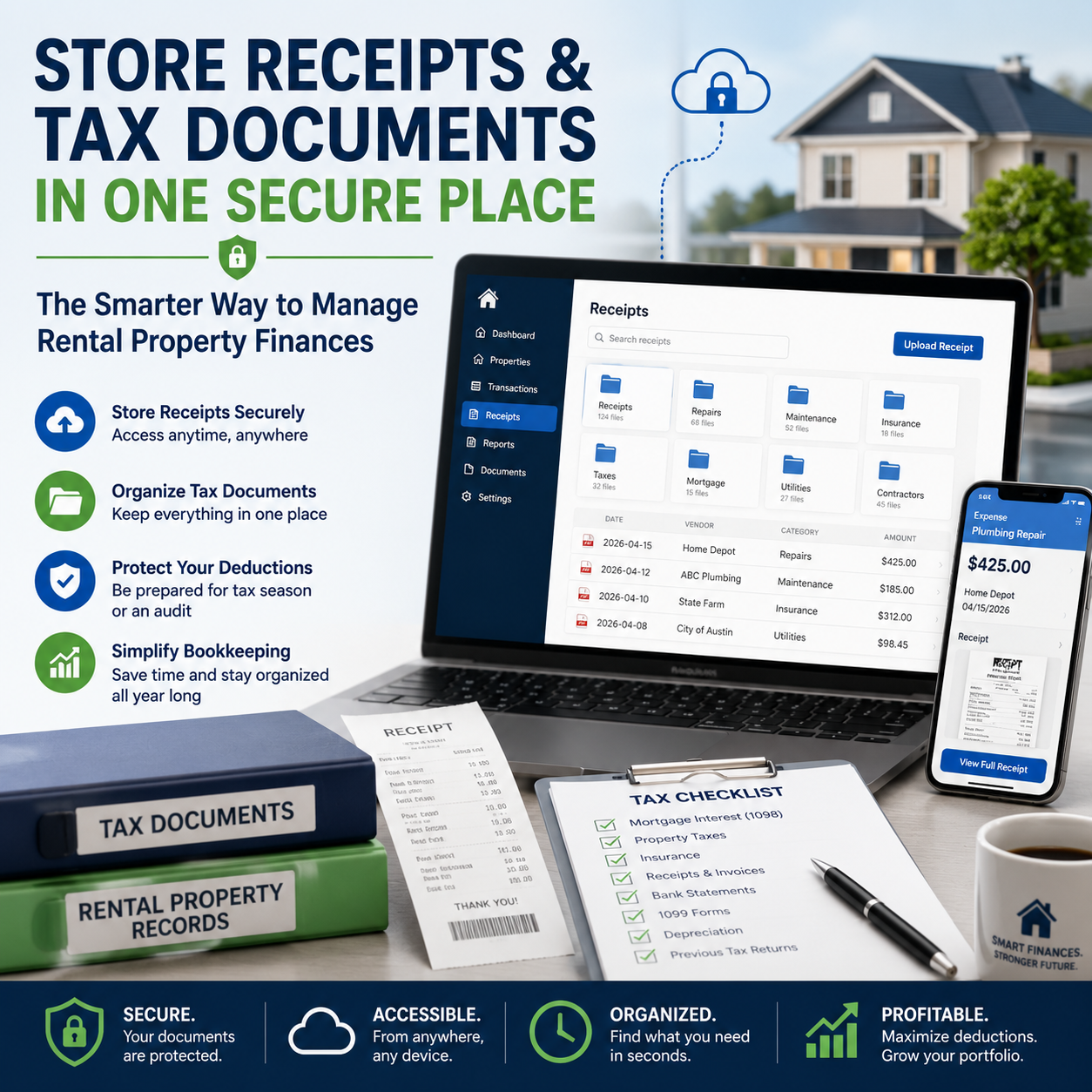
Managing rental properties involves much more than collecting rent and paying bills. Every expense, invoice, receipt, and tax document plays an important role in protecting your business and maximizing your tax deductions.
Whether you're preparing for tax season, applying for financing, or responding to an IRS audit, having all of your financial documents stored securely in one place can save countless hours and reduce unnecessary stress.
Here's why digital document organization matters—and how you can simplify the process.
Many landlords underestimate the importance of saving receipts until tax season arrives.
Receipts provide proof that an expense actually occurred and support deductions such as:
Without proper documentation, you may have difficulty substantiating deductions if questions arise later.
Besides receipts, landlords should also organize important tax-related documents, including:
Keeping these documents together creates a complete financial history for each property.
Traditional filing systems often create problems.
Paper receipts can:
Many thermal paper receipts become unreadable after only a few years, making digital copies a much safer long-term solution.
Digitally storing your documents offers several advantages.
Instead of hunting through folders and envelopes, you can instantly locate receipts when preparing taxes.
Having organized digital copies makes it much easier to provide documentation if requested by the IRS or your accountant.
Cloud-based storage allows you to retrieve documents whether you're at your office, on-site at a property, or meeting with your CPA.
Digital files eliminate overflowing folders and reduce office storage needs.
Documents can be categorized by:
This makes finding specific documents much faster.
A good filing system should be simple and consistent.
Consider organizing files by:
Property
Then create folders for:
Naming files consistently—such as 2026-04-15_PlumbingRepair_$425.pdf—makes searching much easier.
While every situation is different, many tax professionals recommend retaining records for several years.
Generally, landlords should keep:
Capital improvement records should often be retained for as long as you own the property, plus the applicable record retention period after the property is sold, since they can affect your property's cost basis.
When in doubt, consult your tax professional regarding your specific situation.
Simply storing files in a folder isn't always enough.
It's much more useful when receipts are directly connected to the transaction they support.
For example:
This creates a clear audit trail and eliminates guesswork months or years later.
Instead of juggling spreadsheets, paper folders, and cloud drives, Rentastic helps real estate investors organize their financial records in one place.
With Rentastic, you can:
By keeping receipts and supporting documents attached to your transactions, you'll spend less time searching for paperwork and more time growing your real estate portfolio.
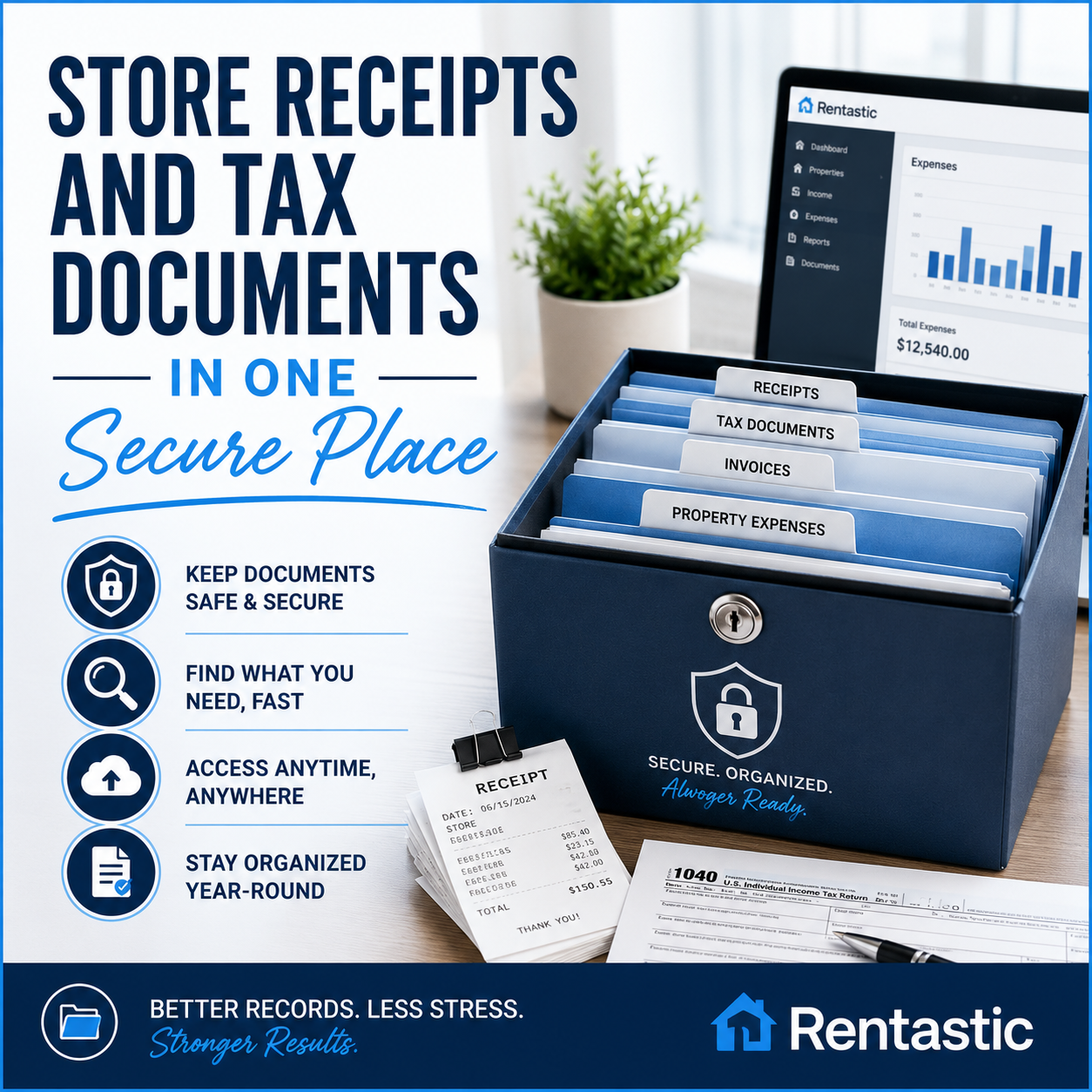
Storing receipts and tax documents in one secure location isn't just about staying organized—it's about protecting your investments, simplifying tax preparation, and maintaining accurate financial records year-round.
The earlier you build good document management habits, the easier it becomes to manage your rental properties with confidence. A centralized digital system ensures your financial records are always accessible, secure, and ready whenever you need them.
In many cases, yes. Digital copies are generally acceptable as long as they are clear, accurate, and accessible. Check with your tax professional for guidance specific to your situation.
Landlords should keep receipts, invoices, mortgage statements, insurance records, property tax documents, bank statements, contractor information, and previous tax returns.
Record retention depends on the type of document and your tax situation. Property purchase and improvement records are often kept much longer than routine expense receipts. Consult a tax professional for recommendations.
Using a digital bookkeeping platform that lets you attach receipts directly to transactions is one of the simplest and most efficient ways to stay organized throughout the year.
RECENT POSTS


© 2025 Rentastic
Rentastic is registered as a trademark. Terms and conditions, features, support, pricing, and service options subject to change without notice.








.png)






























.png)


































Comments