
.png)
When evaluating potential investment properties, most real estate investors focus on metrics like cash flow, cap rate, rental income, and purchase price. While these numbers are critical, there's another often-overlooked metric that can provide valuable insight into a property's potential: Days on Market (DOM).
Understanding DOM can help investors identify motivated sellers, uncover hidden opportunities, and negotiate better purchase prices. When combined with financial analysis, DOM can become a powerful tool for finding profitable rental property investments.
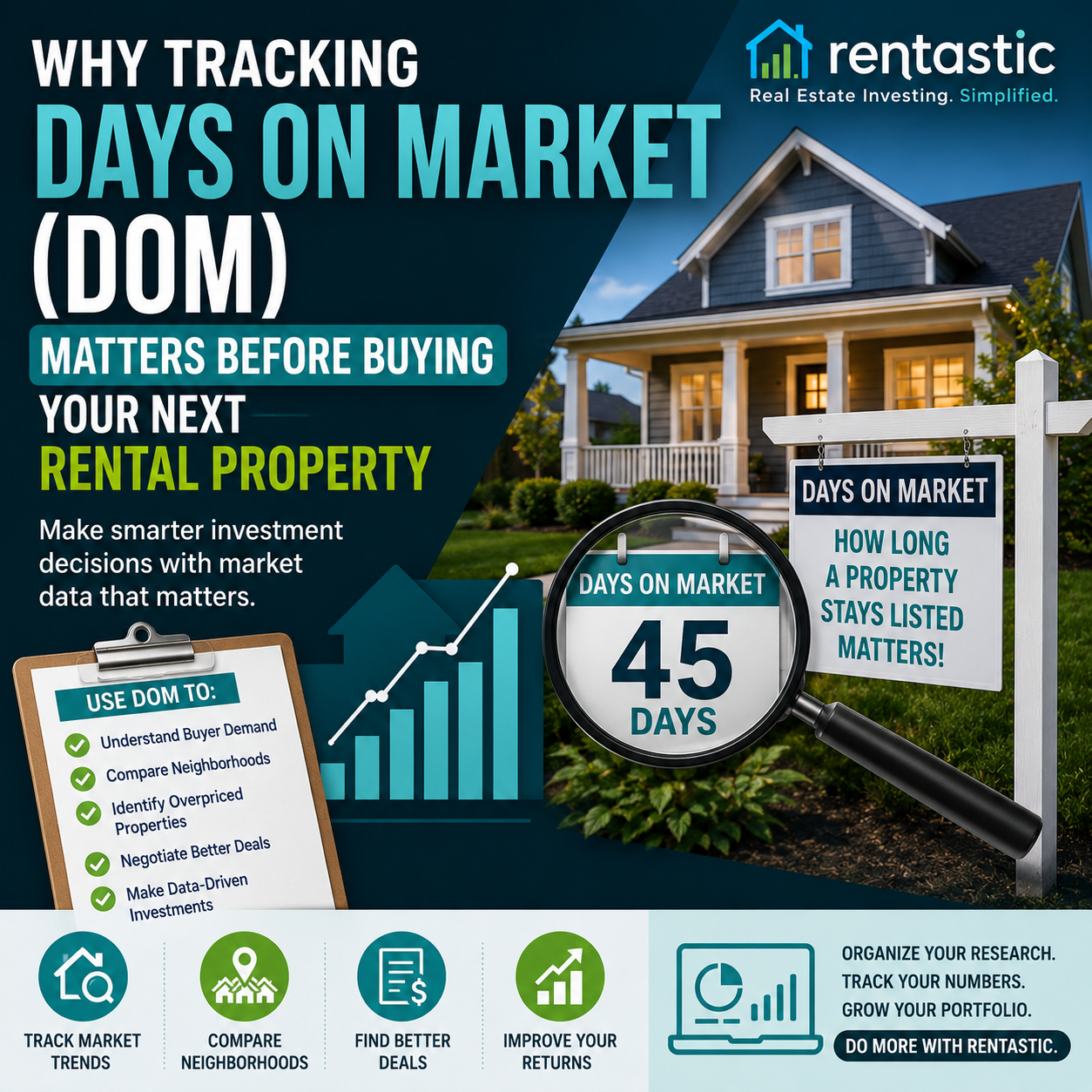
Days on Market, commonly referred to as DOM, measures the number of days a property has been actively listed for sale before going under contract or being sold.
A property that sells quickly may have a low DOM, while a property that remains unsold for weeks or months will have a higher DOM.
For a more detailed definition, visit Rentastic's encyclopedia entry on DOM:
👉 Days on Market (DOM) Encyclopedia
While DOM alone doesn't determine whether a property is a good investment, it can reveal valuable information about market demand, pricing, and seller motivation.
Many investors view DOM as a market temperature gauge.
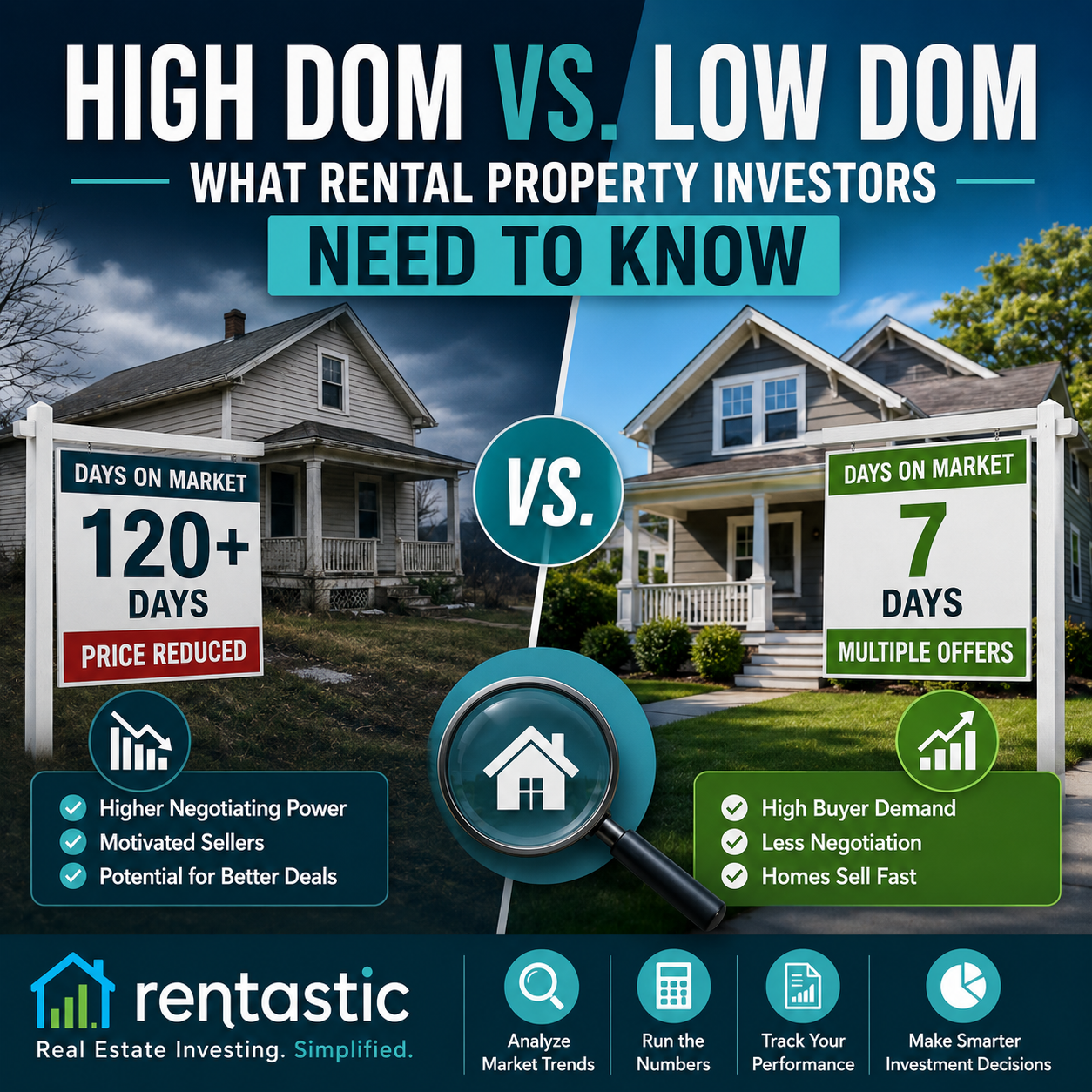
Properties with low DOM often indicate:
Properties with high DOM may indicate:
The key is understanding why a property has remained on the market and whether that creates an opportunity for investors.
One of the biggest advantages of tracking DOM is identifying sellers who may be more willing to negotiate.
Imagine two similar rental properties:
The seller of Property B may be experiencing:
In many cases, sellers become more flexible as DOM increases. This can create opportunities to negotiate:
For investors focused on maximizing returns, these savings can significantly improve the property's long-term profitability.
While high DOM can signal opportunity, it can also indicate potential problems.
Before making an offer, investigate why the property has remained unsold.
Possible concerns include:
Some properties stay on the market because they require expensive repairs.
Examples include:
Always perform thorough inspections before purchasing.
Some sellers simply refuse to lower their asking price.
In these situations, a property may continue sitting on the market until the seller adjusts expectations.
Properties in less desirable neighborhoods may experience higher DOM due to lower demand.
While lower purchase prices can be attractive, investors should carefully evaluate rental demand and long-term appreciation potential.
A low DOM often indicates strong demand and a healthy local market.
Properties that sell quickly may suggest:
For buy-and-hold investors, these indicators can signal long-term market strength.
However, low DOM properties often attract multiple buyers, which can drive prices higher and reduce immediate cash flow opportunities.
DOM should never be the sole factor when evaluating an investment property.
Successful investors combine DOM with other key metrics such as:
After purchasing a property, tracking income and expenses becomes equally important for measuring actual performance.
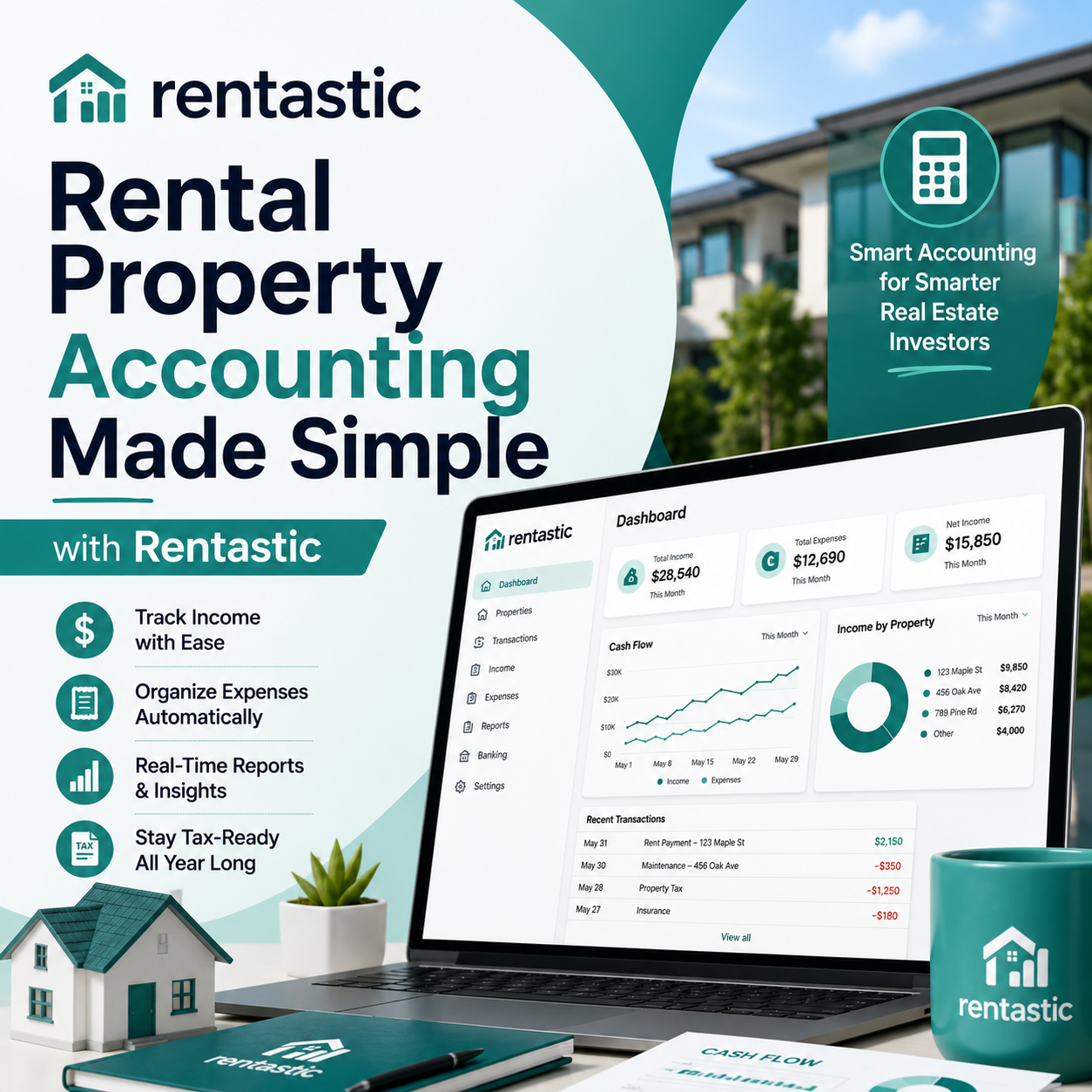
Rentastic helps investors monitor their rental portfolio with features designed specifically for real estate investing, including:
👉 Rental Property Expense Tracking
👉 Rental Property Income Tracking
👉 Real Estate Portfolio Tracking
By combining market data like DOM with accurate financial tracking, investors can make more informed acquisition decisions.
One of the most effective ways to use DOM is by comparing similar properties within the same market.
For example:
This difference may reveal:
Understanding local market conditions can help investors decide where to allocate capital for the best long-term returns.
Instead of focusing on a single property's DOM, pay attention to broader trends.
If average DOM is increasing across an entire market, it could indicate:
Conversely, declining DOM may suggest:
Investors who track these trends often gain a competitive advantage when timing acquisitions.
Finding a great deal is only the beginning. Successful real estate investing requires ongoing financial management and performance tracking.
Once you've acquired a property, Rentastic helps you:
Whether you're analyzing your first rental property or managing a growing portfolio, having accurate financial data helps you make smarter investment decisions.
Learn more about Rentastic's real estate investing tools:
👉 Rentastic for Real Estate Investors
Days on Market is more than just a number on a listing. For real estate investors, DOM can provide valuable insight into seller motivation, market demand, and potential negotiation opportunities.
A high DOM property isn't automatically a bargain, and a low DOM property isn't always overpriced. The key is understanding the story behind the number and combining DOM with thorough financial analysis.
By using DOM strategically and tracking your investments with tools like Rentastic, you can identify better opportunities, negotiate more effectively, and build a stronger real estate portfolio over time.
RECENT POSTS


© 2025 Rentastic
Rentastic is registered as a trademark. Terms and conditions, features, support, pricing, and service options subject to change without notice.














































.png)































Comments