
Nearly every landlord app promises to “save you time” and “simplify your books.” You know that is not enough. You need an app that thinks the way a real estate investor thinks, tracks the numbers that actually drive ROI, and stays simple enough that you will actually use it every week. That is where what sets Rentastic apart really shows.
In this deep dive, you will see how Rentastic compares to generic accounting tools and other landlord apps, how it can replace your manual spreadsheets, and how it helps you make faster, smarter decisions about every property in your portfolio.
If you have tried to manage rentals in spreadsheets or generic tools like QuickBooks, you have probably hit the same walls:
You can track income and expenses, but you cannot easily see which property is really pulling its weight. You can build a custom report, but you need accountant-level patience to maintain it. Or you have a basic landlord app that logs rent payments but barely touches real performance metrics.
Most tools are built for:
So you end up with partial answers. You can see that money came in and went out, but not whether a refinance makes sense or whether a property is actually beating your target return.
This is the core problem Rentastic set out to solve. It is not just one more landlord app. It is a platform built for investors who want clear, on demand answers from their numbers.
Here is the short version of what sets Rentastic apart before we go deeper.
You get the big firm clarity without the big firm overhead.
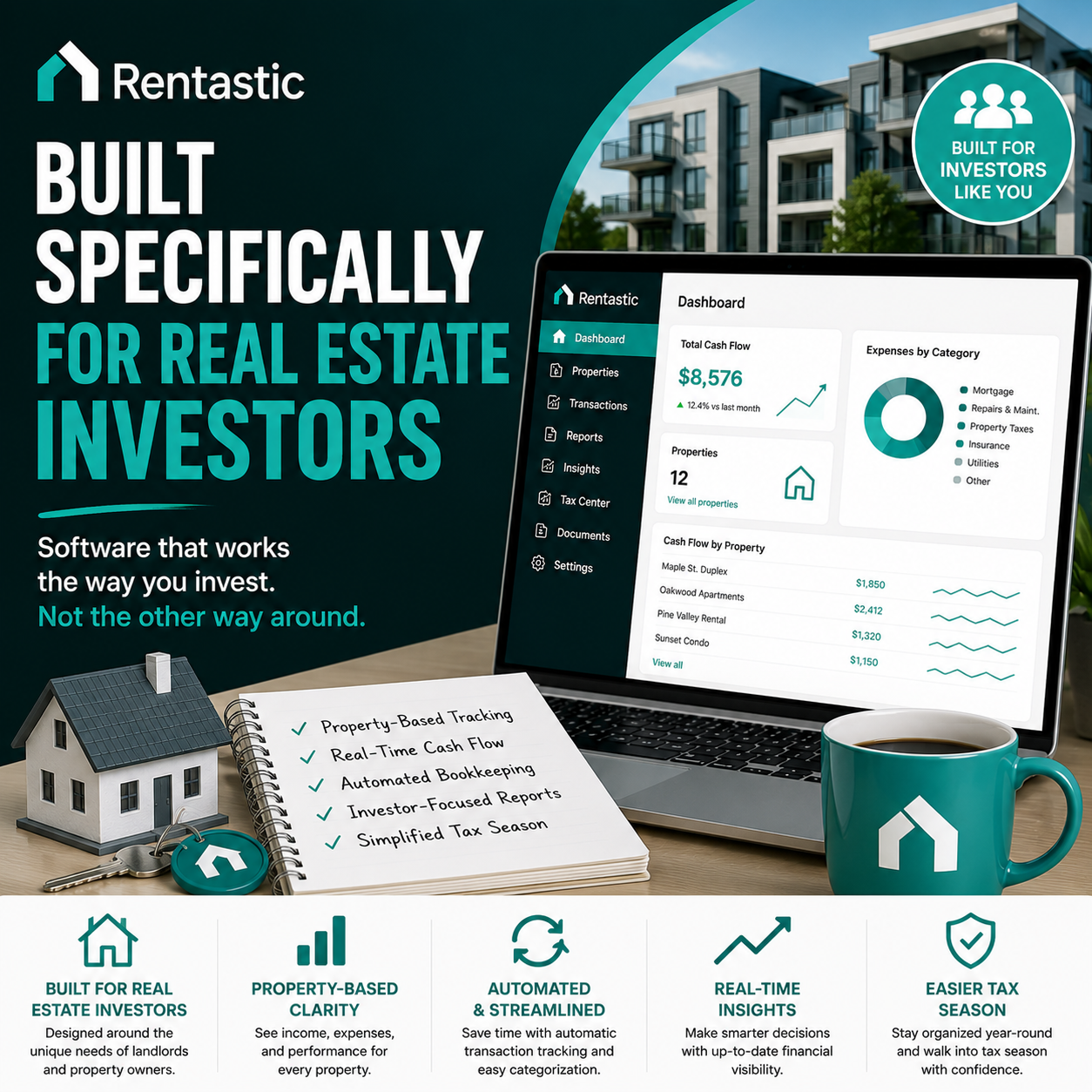
Most accounting tools start with a generic chart of accounts and then ask you to force your rentals into that mold. Rentastic flips that logic. Everything in the platform starts from a landlord’s real workflow.
You track properties individually and as a portfolio. You see rent, mortgages, maintenance, taxes, and utilities in language that matches how you already think about your rentals. The system is designed by experienced real estate investors who faced the same headaches you do, and who built the platform to handle landlord specific accounting needs with automation instead of endless manual work (Rentastic Blog).
That focus changes the feel of the whole app. Instead of trying to adapt a general ledger to your rentals, you get:
You do not need to be a bookkeeper to keep clean books. Rentastic is the bridge between how you think as an investor and what your accountant or lender wants to see.
If you want a fuller overview of how this focus comes together, you can explore rentastic itself as a starting point.
If you are honest, a lot of your rental bookkeeping probably lives in a patchwork of spreadsheets, bank exports, and receipts in a folder. Rentastic is built to pull all of that into one automated system.
You connect your checking and savings accounts securely through Plaid. From there, Rentastic automatically imports up to 24 months of past transactions, and keeps new activity flowing in real time. This alone can save you up to 40 percent of the data entry time you would spend wrangling CSV files and copy-pasting into sheets (Rentastic Blog).
Once the data is inside Rentastic, the platform’s rules engine goes to work. It learns how you tag recurring transactions and then auto categorizes up to 70 percent of them, which slashes the amount of manual labeling you need to do each month (Rentastic.io Blog). You still remain in control. The system flags anything it is not sure about so you can review and approve.
Over time, your books start to feel less like a chore and more like a quick weekly check in. You log in, skim flagged transactions, confirm or adjust a few categories, and you are done.
According to a 2024 overview, Rentastic’s automation cuts bookkeeping time by over 60 percent for many landlords and reduces errors at the same time (Rentastic Blog). That is the difference between “I will catch up this weekend” and “I already know where I stand this morning.”
Numbers only help you if they are current and easy to read. Rentastic addresses both.
As your bank feeds sync and your rules engine categorizes transactions, Rentastic generates live, auto updating profit and loss statements. You do not have to wait for month end reports or haul data into a spreadsheet. Your P and L is always one click away (Rentastic Blog).
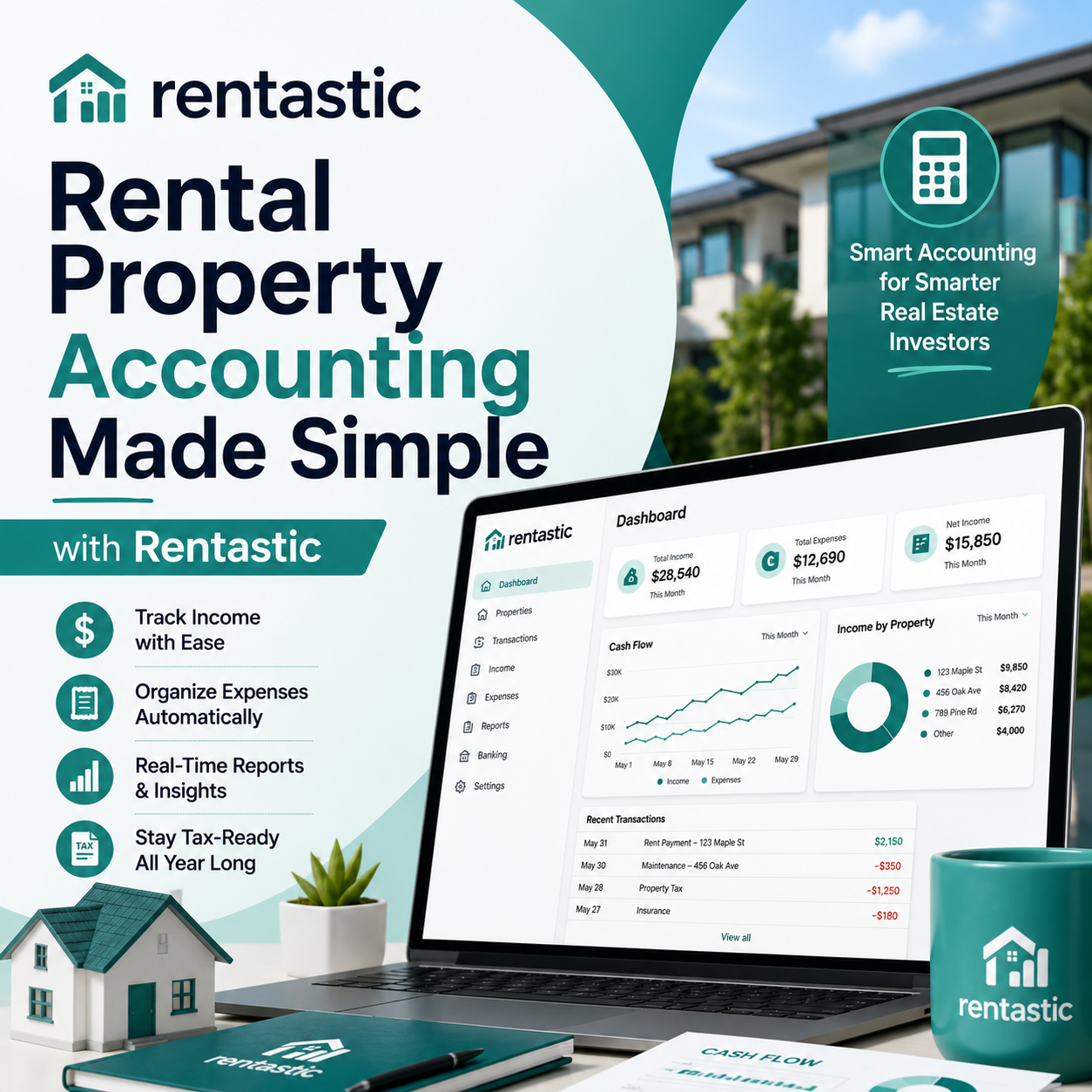
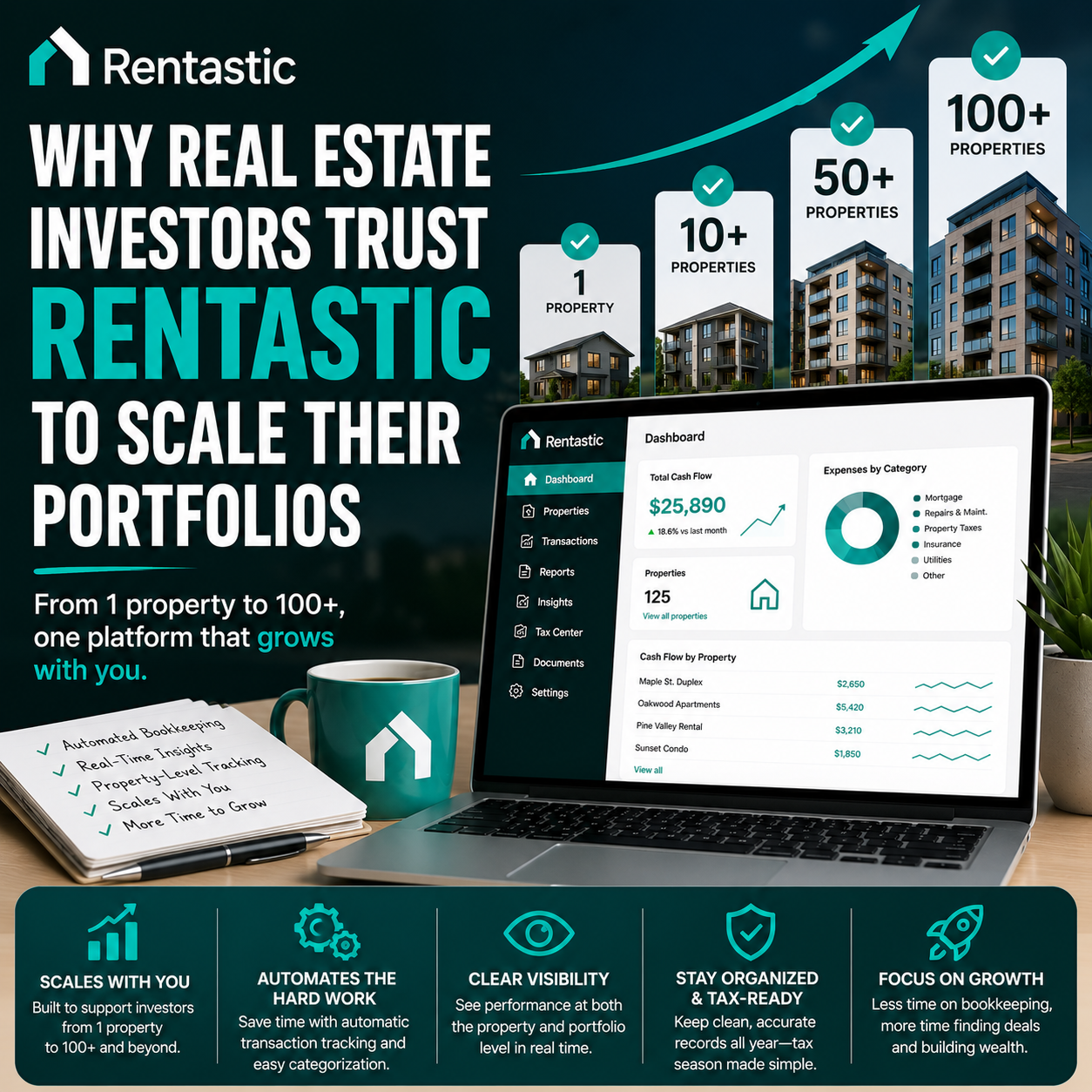
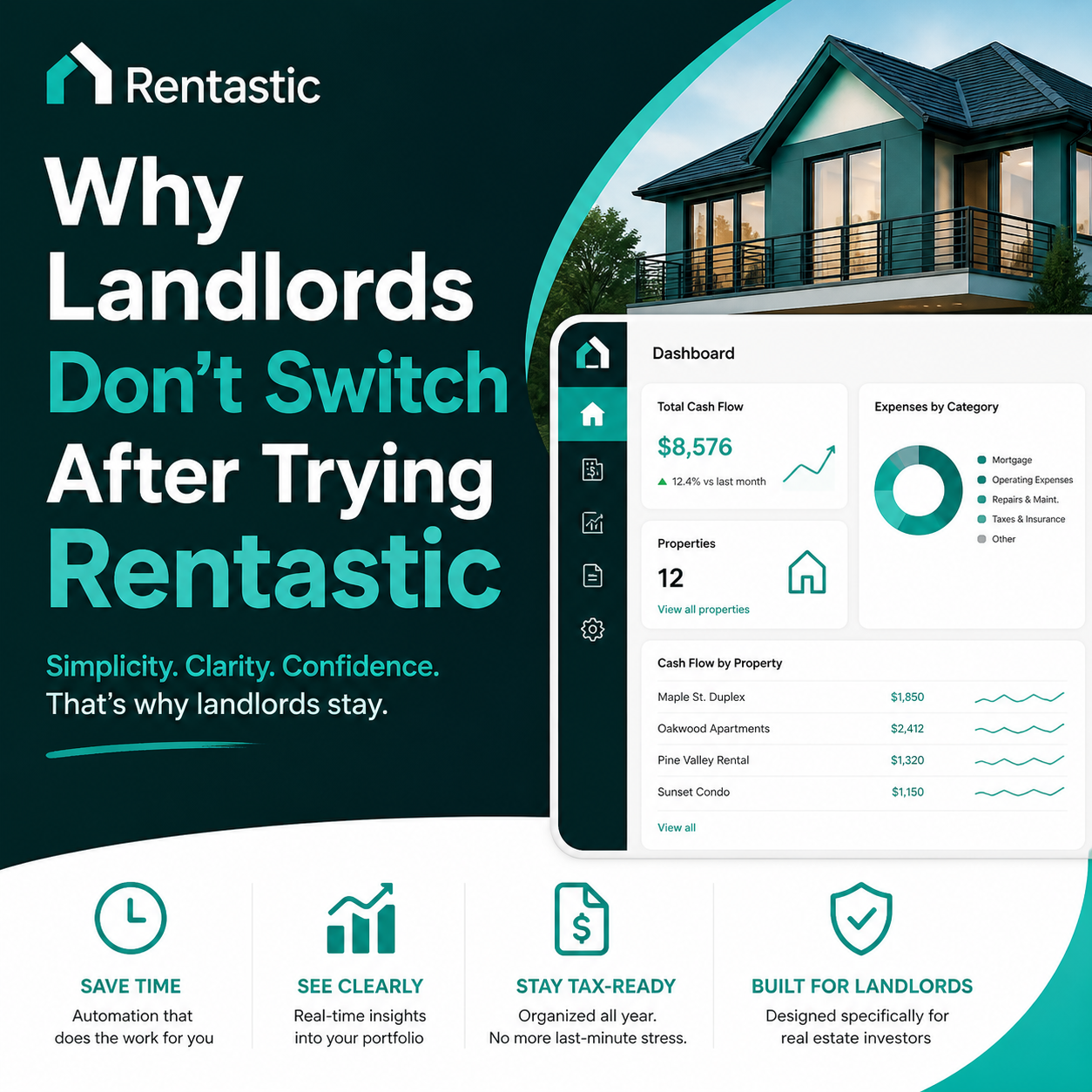
The platform also provides a real time dashboard that consolidates income, expenses, and profitability for multiple properties, so you can monitor each unit and your total portfolio in a single view (Rentastic.io Blog). This is where you start to see what truly sets Rentastic apart from simpler rent trackers.
You can:
Rentastic also flags unmatched or suspicious transactions right on the dashboard. This helps you cut reconciliation time by up to 50 percent and makes it much harder for mistakes to linger in your books (Rentastic Blog).
Instead of waiting for tax season to discover issues, you catch and correct them in real time.
Most landlord apps stop at cash flow. They track rent in, expenses out, then show you a net number for the month. Useful, but not enough to make serious investment calls.
Rentastic goes further by focusing on true ROI. It combines your income, expenses, loan terms, and property details to paint a complete financial picture for each property and for your entire portfolio (Rentastic Blog).
You can see how:
A key example from 2025 is a case where users leveraged Rentastic’s analysis to reduce effective borrowing costs from 8 percent to 4.1 percent, unlocking about 60,000 dollars in instant equity on a 235,000 dollar deal (Rentastic Blog). That is not just bookkeeping. That is strategy.
Rentastic also includes a Deal Analyzer and Rent Estimates tools that let you model flip versus hold scenarios and compare potential rental income against real time market data. This lets you test ideas before you lock in financing or close on a property (Rentastic.io Blog).
At a portfolio level, Rentastic gives you both individual property analysis and portfolio wide comparisons, so you can see how each asset stacks up and where your next dollar of capital should go (Rentastic Blog).
This is where you really feel you are using an investor grade tool, not a glorified rent ledger.
When you have clear, current numbers, you can move faster and still sleep at night. According to Rentastic’s 2024 user survey, landlords using its automated reporting tools were able to make investment decisions 30 percent faster because their financials were always up to date for evaluating performance, refinancing, and capital allocation (Rentastic Blog).
The platform supports this speed in a few key ways:
Instead of hunting for data when an opportunity pops up, you are already prepared. You know which property could be refinanced, which asset is underperforming, and how much free cash your portfolio can support for the next deal.
That speed and clarity give you a distinct edge in competitive markets.
You might assume that to get this level of insight you need to invest more time, not less. Rentastic is designed to flip that assumption too.
By syncing your bank accounts and using automation rules, the software significantly reduces manual data entry and classification. A 2024 overview found that landlords using Rentastic cut bookkeeping time by over 60 percent and reduced manual errors at the same time (Rentastic Blog).
The mobile app deepens those gains. You can capture receipts with your phone, have the system extract the key data automatically, and then tie the expense to the right property, all in a few taps (Rentastic.io Blog). Built in mileage tracking simplifies another common pain point for tax deductions.
Because Rentastic was designed specifically for landlords, it avoids the clutter and complexity that can overwhelm you in tools like QuickBooks. Users frequently praise its intuitive layout and rental specific features, and many investors switch to Rentastic because they find it easier to use for property management compared to generic accounting software (Rentastic Blog).
You end up spending less time wrestling with software and more time actually managing and growing your portfolio.
A landlord app is only as useful as its grip on rent. Rentastic gives you that control without turning your day into a billing job.
The platform includes a detailed rent tracking system that supports custom rent schedules, flags missed or partial payments, and makes it easy to send reminders. It also offers integrated online tenant payment options, which gives tenants a simple, modern way to pay (Rentastic.io Blog).
In 2024, landlords who used Rentastic’s integrated payments and reminder features saw a 25 percent reduction in late rent payments, which is a direct boost to cash flow and stress reduction (Rentastic Blog). When payments are consistent and visible, planning becomes much easier.
Beyond rent itself, Rentastic’s automated late fee assessments and cash flow views help you stay proactive. You can see quickly which tenants are consistently behind, how that impacts each property, and whether you need to adjust lease terms or follow up sooner.
Instead of worrying that something is slipping through the cracks, you have a single source of truth for rent status across your entire portfolio.
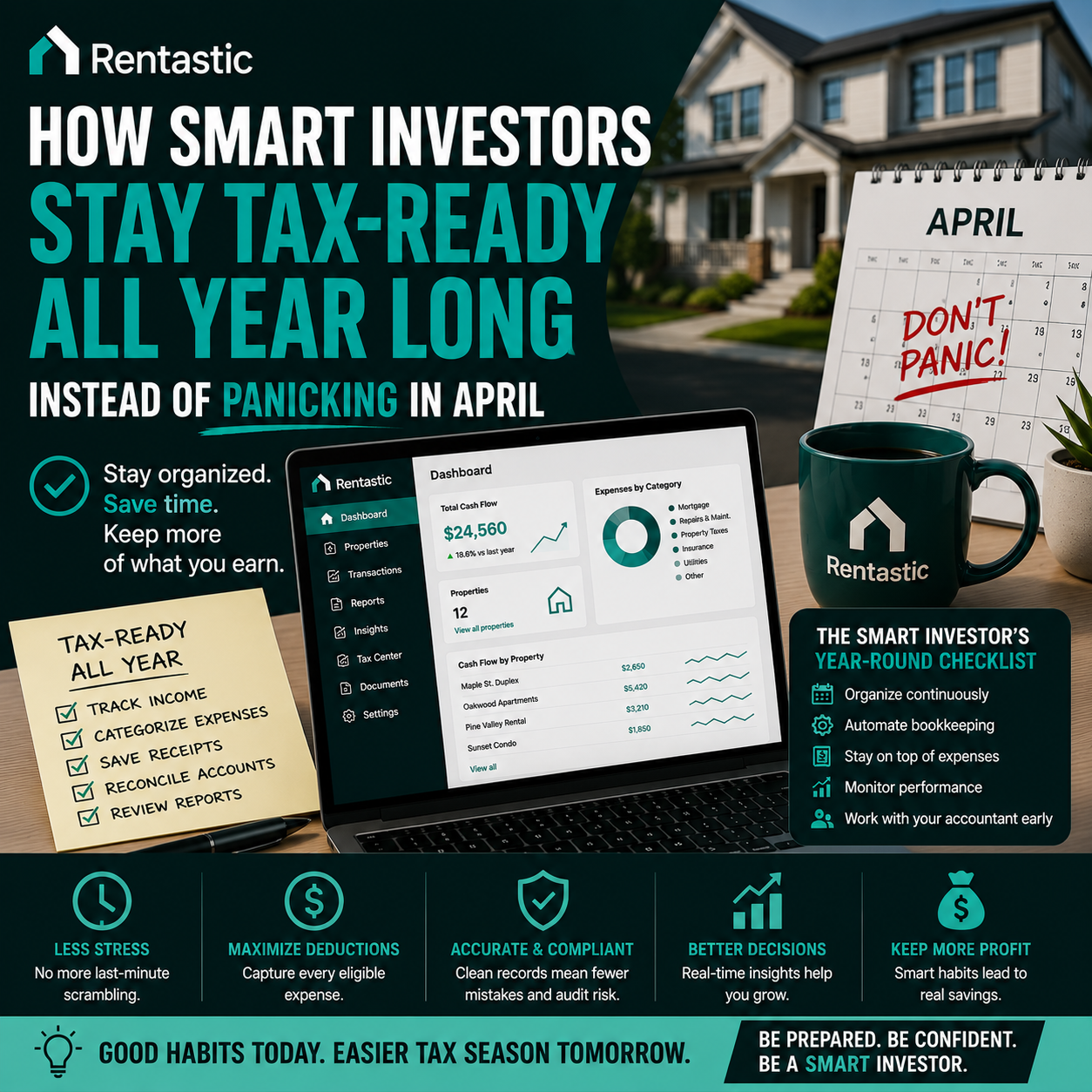
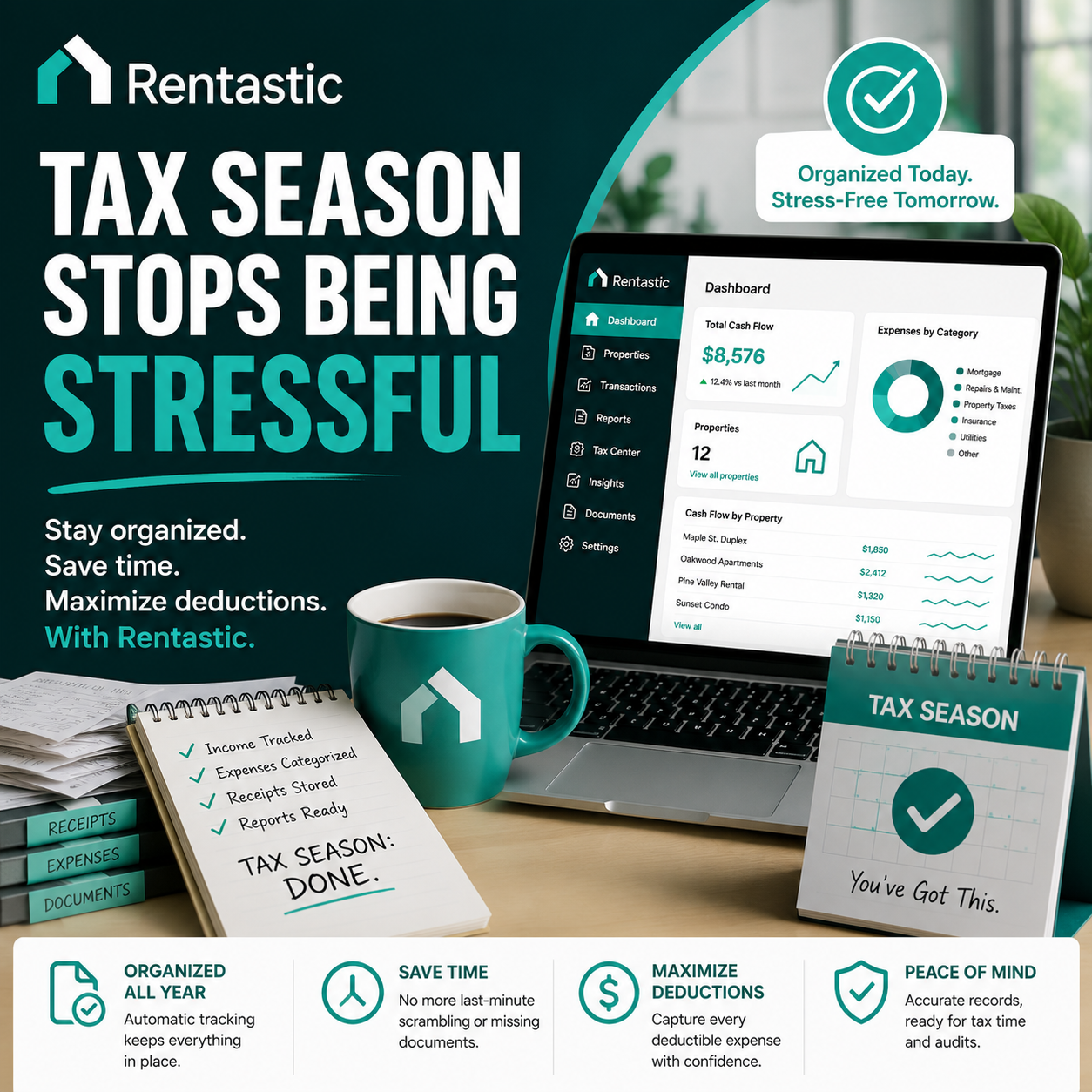
Tax season is where many landlords feel the pain of messy systems the most. If your data is locked in spreadsheets and paper, you pay for it in hours and stress every spring.
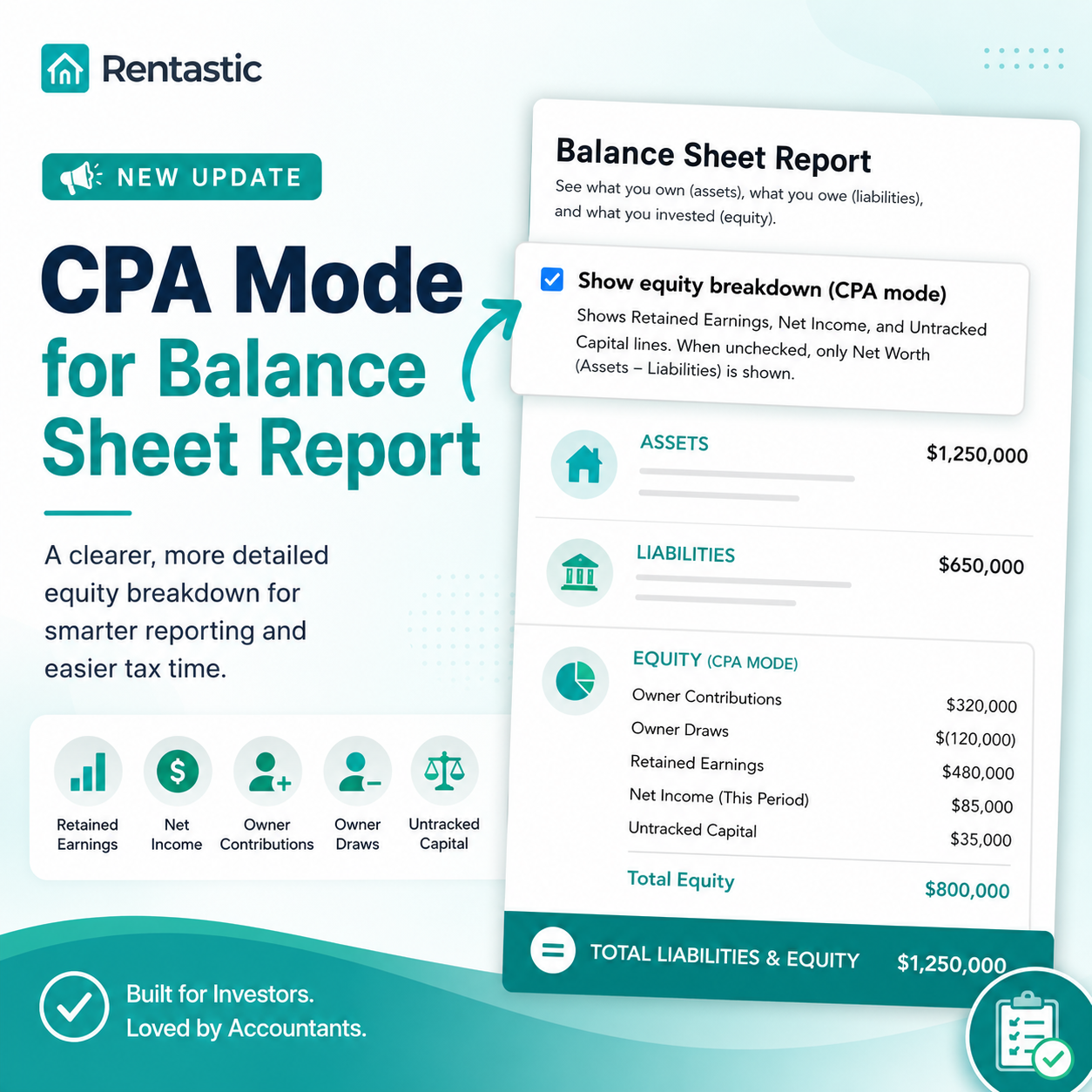
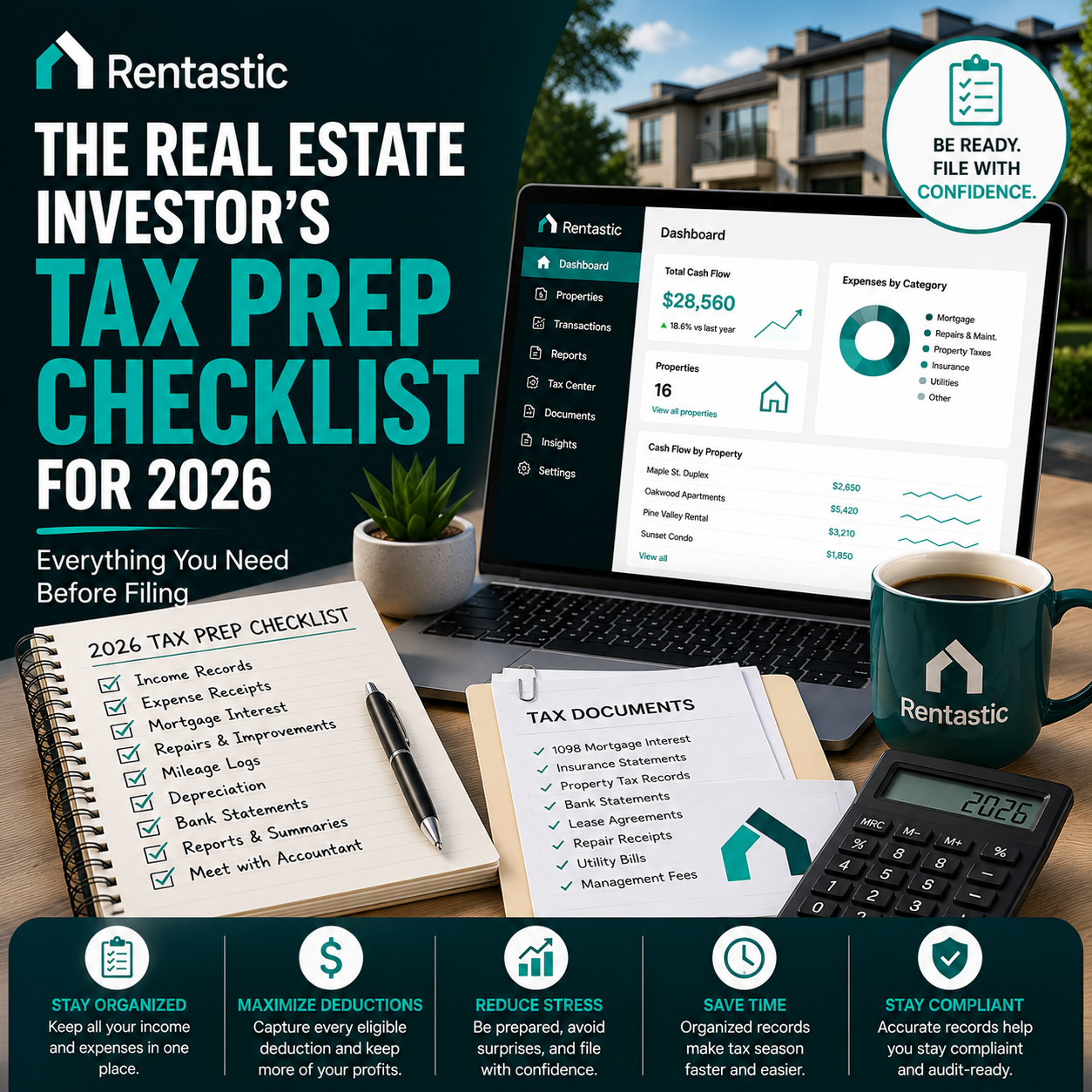
Because Rentastic keeps your income and expenses organized year round, the platform can generate instant Profit and Loss statements and tax friendly reports at any time. This makes it far easier to prepare your return or share complete records with your CPA (Rentastic Blog).
The software is designed to cut tax prep time from days to seconds by centralizing and cleaning up your records in the background as you go (Rentastic Blog). You are no longer racing to reconstruct the year from bank statements and faded receipts.
Because Rentastic is both landlord specific and accountant friendly, you get the best of both worlds. You can manage your day to day without thinking about tax codes, then hand over exports that your accountant can plug directly into their process.
If you want a single place to manage those ongoing details, the all-in-one landlord solution aspect of Rentastic can be particularly helpful.
You are rarely at a desk when problems arise. A tenant texts from a unit. An opportunity hits your inbox. A contractor hands you a receipt in a parking lot.
Rentastic is built to handle that reality. Its mobile app is highly rated, with features designed around quick, on the go tasks like:
According to a 2025 overview, the app holds a 4.9 out of 5 user rating, helped by digital receipt capture, automatic data extraction from invoices, and built in mileage tracking that simplify record keeping and tax deductions (Rentastic.io Blog).
Instead of keeping mental notes you hope you will remember later, you can handle admin in the moment, then trust that the system keeps everything organized.
When you connect bank accounts and financial details, you need to know your data is handled with care. Rentastic emphasizes security by using Plaid for bank connections, never storing your usernames and passwords, and encrypting data during transfer (Rentastic Blog).
That technical foundation supports something just as important for your deals: trust.
Organized, professional grade financials build credibility with lenders, partners, and even tenants. Rentastic makes that level of transparency accessible to landlords of all sizes, not just big firms with internal finance teams (Rentastic).
Because your records are always clean and current, you can respond quickly to documentation requests, share clear numbers in partnership discussions, and demonstrate that you run your properties like a serious business.
In one 2024 survey, users reported that Rentastic’s automated reporting helped them make investment decisions 30 percent faster, which is not only about speed. It is also about having confidence that the numbers you share externally are solid and defensible (Rentastic Blog).
A landlord app should pay for itself in time savings and better decisions. Rentastic’s pricing is structured with that in mind.
As of 2025, Rentastic offers:
There is also a versatile payment structure for integrated payments, with a free account at a 2.5 percent transaction fee and a premium option with a reduced 2.00 percent fee, which lets you match costs to your scale and budget (Rentastic Blog).
Because Rentastic pulls together bookkeeping, performance tracking, and day to day management in a single platform, you replace multiple tools and manual processes with one system. For most investors, the savings in time, reduced errors, and better financing outcomes more than cover the subscription.
If you want to see how this all knits together across features and pricing, the main rentastic page is the best place to explore current options.
You might be wondering how Rentastic stacks up against alternatives like Landlord Studio, Stessa, or QuickBooks.
QuickBooks is powerful, but it is built for broad small business accounting. You can track income and expenses there, but you must bend it to your rental world, and many landlords find it overwhelming and cluttered with features they will never use. Rentastic, by contrast, is praised for its simplicity and rental specific design, which helps you avoid that complexity while still keeping accurate books (Rentastic Blog).
Tools like Landlord Studio are strong for tenant and property management, but they often rely on separate systems for deeper financial analysis. Rentastic can work alongside these tools, or in some cases replace overlapping parts, by providing advanced financial tracking, customizable reports, and on demand investment grade analytics (Rentastic Blog, Rentastic Blog).
In 2026, Rentastic further distinguished itself by offering highly customizable automation rules, alerts, reports, and communications that support your workflow instead of forcing you into rigid processes (Rentastic Blog). That flexibility is critical when you manage a variety of properties, lenders, and tenant situations.
The result is an app that feels like it was designed from the ground up for how you run a portfolio, not for a generic idea of “a small business.”
If you want to see what sets Rentastic apart in practice, you can think about the first 30 days in three simple steps.
By the end of that first month, you will not just have “another app.” You will have a central, investor grade view of your rental business, updated daily, that you can rely on for real decisions.
What sets Rentastic apart is not a single flashy feature. It is the way the whole platform lines up with the real work you do as a landlord and investor.
You get:
If you are ready to manage your rentals with the same rigor as a larger firm, without the extra overhead, exploring rentastic is a strong next step. You bring the deals and the judgment. Rentastic brings the clarity and the calm, so you can grow your portfolio with confidence.
RECENT POSTS


© 2025 Rentastic
Rentastic is registered as a trademark. Terms and conditions, features, support, pricing, and service options subject to change without notice.





.png)























.png)


































Comments