
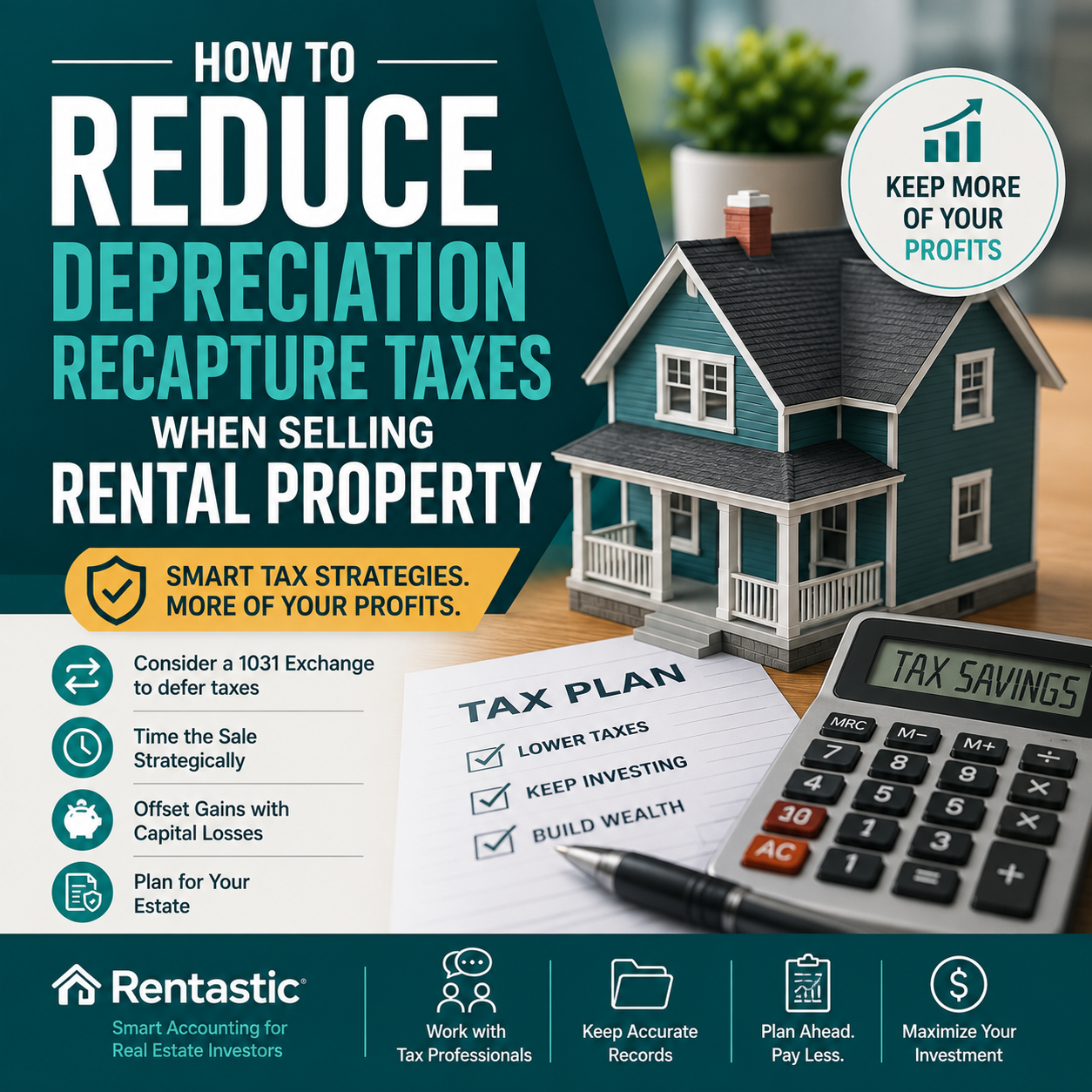
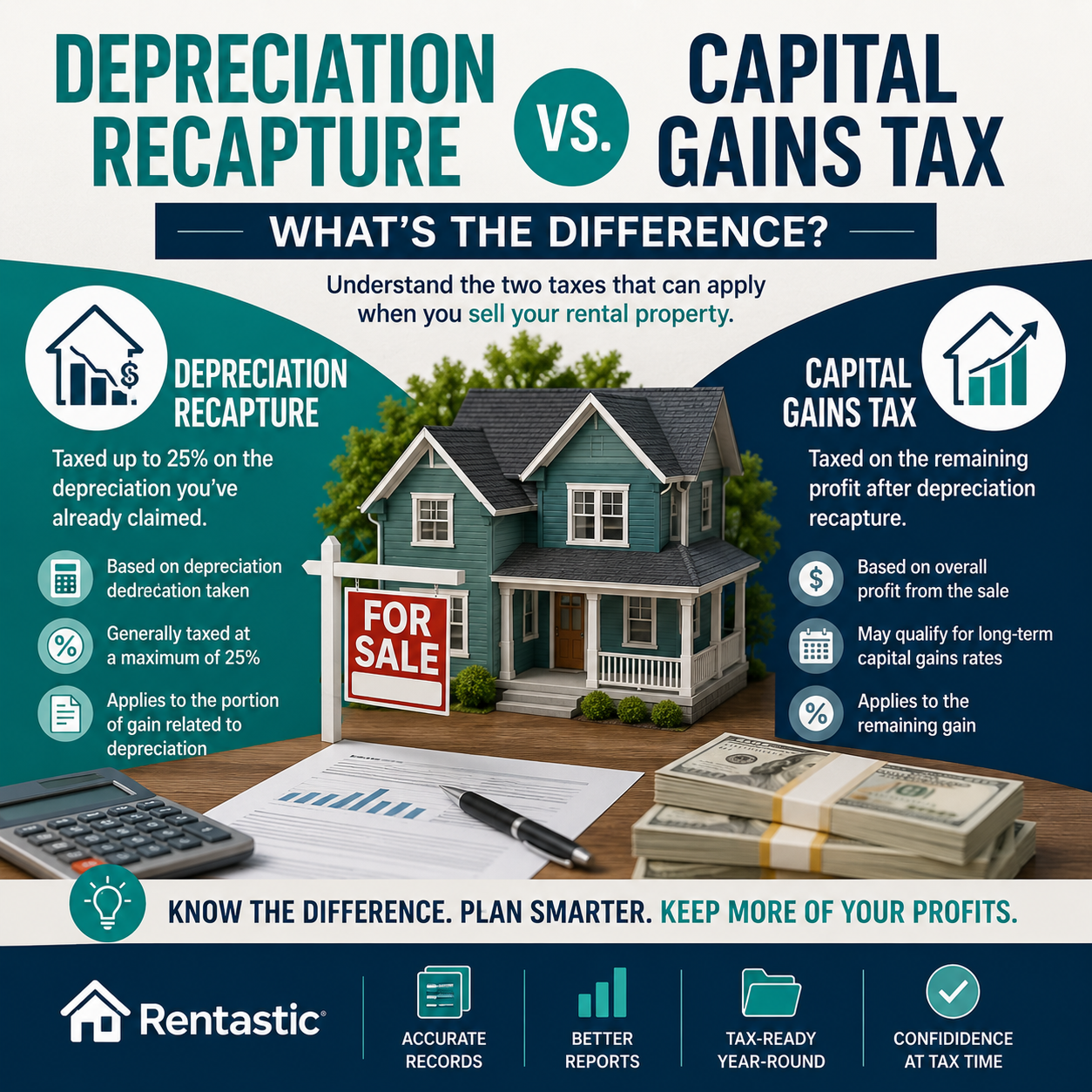
Depreciation is one of the most valuable tax benefits available to real estate investors. Over the years, rental property depreciation can significantly reduce taxable income and improve cash flow. However, when it's time to sell, many investors are surprised to learn about depreciation recapture—a tax that can reduce the proceeds from the sale.
The good news is that while you generally cannot completely avoid depreciation recapture, there are several legal tax-planning strategies that may reduce its impact or defer when it's paid. The key is planning well before you list your property.
In this guide, we'll explain what can and cannot be avoided, discuss common tax strategies, and show how organized bookkeeping with Rentastic can help you prepare for a smoother sale.
The short answer is usually no.
Depreciation recapture is a requirement under U.S. tax law. If you've claimed depreciation deductions—or even if you were eligible to claim them—the IRS generally requires those deductions to be accounted for when you sell.
That means there is no simple loophole that eliminates depreciation recapture for most investors.
However, there are legitimate strategies that may:
The earlier you begin planning, the more options you'll typically have.
Before looking at tax strategies, it's important to separate myths from reality.
Understanding this distinction helps you focus on realistic tax-planning strategies instead of searching for shortcuts that don't exist.
One of the best-known tax strategies for real estate investors is the 1031 Exchange.
A properly executed 1031 exchange allows investors to sell one investment property and purchase another qualifying investment property while deferring certain taxes that would otherwise be due at the time of sale.
Although a 1031 exchange can be an effective strategy, it comes with strict IRS requirements, including timelines and reinvestment rules. Investors should work closely with a qualified intermediary and tax professional before beginning the process.
A 1031 exchange is often a good fit for investors who plan to continue growing their real estate portfolio rather than cashing out.
Related Reading: 1031 Exchange Guide
The timing of your sale can affect your overall tax situation.
Depending on your financial circumstances, you may benefit from selling during a year when:
Since depreciation recapture is only one part of your overall tax picture, coordinating the timing of your sale with your broader financial plan may help reduce your total tax burden.
Every investor's situation is different, making professional advice especially valuable.
If you've realized losses from other investments, those losses may help offset taxable gains from selling rental property.
For example:
While capital losses generally do not eliminate depreciation recapture itself, they may reduce the capital gains portion of your tax bill, lowering your overall taxes owed.
Coordinating multiple investment sales within the same tax year can sometimes create meaningful savings.
Some long-term investors choose to hold appreciated rental properties as part of their estate planning strategy.
Depending on applicable tax laws and individual circumstances, inherited property may receive a step-up in basis, which can significantly affect future tax consequences for heirs.
Estate planning is highly individualized and should always involve qualified legal and tax professionals.
For investors building long-term wealth, understanding how real estate fits into an estate plan is just as important as managing annual cash flow.
Sometimes the best tax strategy is not selling at all.
Many investors choose to:
If your property continues producing strong cash flow, delaying the sale may postpone depreciation recapture while allowing additional appreciation and rental income.
Of course, this strategy depends on your financial goals and market conditions.
One of the most overlooked aspects of depreciation recapture tax planning is recordkeeping.
The IRS calculates depreciation recapture based on your property's adjusted basis, which depends on years of financial history.
Important records include:
Missing documentation can make tax preparation more difficult and increase the risk of reporting errors.
While Rentastic doesn't calculate depreciation recapture, it helps investors maintain the organized financial records needed when working with a CPA.
With Rentastic, you can:
Instead of scrambling to gather years of financial records before a sale, you'll already have organized documentation available when it's needed.
Good bookkeeping today can save significant time—and stress—later.
Every rental property sale is unique.
Your tax outcome depends on factors such as:
Because of these variables, working with a CPA or qualified tax advisor is one of the most valuable investments you can make before selling.
A professional can help estimate your tax liability, identify available planning opportunities, and ensure your return is prepared accurately.
Many investors unintentionally increase their tax burden by making avoidable mistakes.
Some of the most common include:
Planning ahead gives you far more flexibility than trying to solve tax issues at closing.
The best depreciation recapture strategy begins long before your property hits the market.
Several months before selling, consider:
Early planning often creates opportunities that aren't available once the sale is underway.
While you generally can't avoid depreciation recapture entirely, thoughtful planning can often reduce its financial impact and help you keep more of your investment profits.
Strategies such as considering a 1031 exchange, timing your sale carefully, coordinating capital losses, planning for estate transfers, and maintaining excellent financial records can all play a role in a comprehensive tax strategy.
The earlier you begin planning, the more options you'll have.
By keeping organized books with Rentastic and working closely with a qualified tax professional, you'll be better prepared to navigate depreciation recapture and make informed decisions when it's time to sell your rental property.
RECENT POSTS


© 2025 Rentastic
Rentastic is registered as a trademark. Terms and conditions, features, support, pricing, and service options subject to change without notice.















.png)




























.png)




























Comments