

Nearly every real estate investor says they want “better cash flow” and “clean books.” Very few have a reliable reconciliation real estate process that actually delivers both.
If your income reports never quite match your bank balance, or tax time feels like detective work, reconciliation is the missing link. When you reconcile your rentals regularly, you move from chaos and guesswork to clear numbers you can trust.
In this guide, you will see how a simple reconciliation workflow improves cash flow, boosts ROI, and builds investor confidence, and how tools like Rentastic help you get there with far less manual work.
In real estate, reconciliation means comparing what your records say should have happened with what actually hit your bank and credit card accounts.
You take items like rent collected, deposits, mortgage payments, repairs, and fees in your bookkeeping system, and match them to line items in your bank and card statements. When you find differences, you correct them.
Rentastic describes it as comparing bank and credit card statements to your accounting records so you can be sure rental income and expenses are accurate and complete, which is critical for trustworthy financial reports and smarter tax planning as of 2025 (Rentastic.io Blog).
You will usually reconcile three types of records:
If you run this process monthly, you catch issues early, keep cash flow visible, and avoid ugly surprises at the end of the year.
Cash flow issues rarely start with one huge mistake. They start with small leaks that add up.
A missed rent payment here. A duplicate vendor charge there. A repair that quietly got coded as a capital improvement instead of a deductible expense. If you do not reconcile, these leaks keep flowing.
Regular reconciliation helps you:
Rentastic notes that monthly reconciliation, where you compare bank and credit card statements to your accounting records, helps you catch missing rent, duplicate charges, and miscategorized expenses early so they do not snowball later in the tax year (Rentastic.io Blog).
That is how reconciliation translates directly into stronger cash flow. You are not just tracking money after the fact, you are actively protecting it.
It is easy to treat reconciliation as something you do only because your CPA tells you to. In reality, it is one of the simplest ways to improve ROI on your existing portfolio.
When your books match your bank statements, you can:
Effective bank reconciliation gives you clear insight into spending patterns, cash flow trends, and areas where costs can be reduced so you can improve financial performance over time (Rentastic).
That clarity feeds directly into your return on investment. You can cut dead weight, double down on winners, and structure future deals with a much sharper understanding of what actually drives profit in your portfolio.
If you raise private capital, work with partners, or report to outside investors, reconciliation is not just a back‑office task. It is a trust signal.
Clean, reconciled statements show investors you:
Rentastic highlights that automated reporting dashboards, built on reconciled data, can identify liquidity issues sooner than traditional bookkeeping and reduce disputes between property managers and investors by providing clear owner statements and profit and loss reports (Rentastic.io Blog).
The same is true with lenders. When you can produce reconciled financials quickly, loan applications and refinances go smoother because underwriters can trust what they see. That makes it easier to scale your portfolio at good terms.
If you are still on the fence about a structured reconciliation real estate workflow, it helps to see the downside of skipping it.
Without regular reconciliation you are more likely to:
A 2024 survey from Rentastic found that 22 percent of landlords lost thousands of dollars in tax deductions because they miscategorized repairs and capital improvements during reconciliation or did not categorize them accurately at all (Rentastic.io Blog).
Landlords who do not stay on top of rental expense reconciliation often miss between 600 and 1,200 dollars per year in legitimate deductions which directly hurts net cash flow without adding any value to tenants or properties (Rentastic.io Blog).
Over time, these small leaks do more damage to your returns than a slightly higher interest rate or a minor vacancy bump. The fix is much easier than trying to claw back money after the fact.
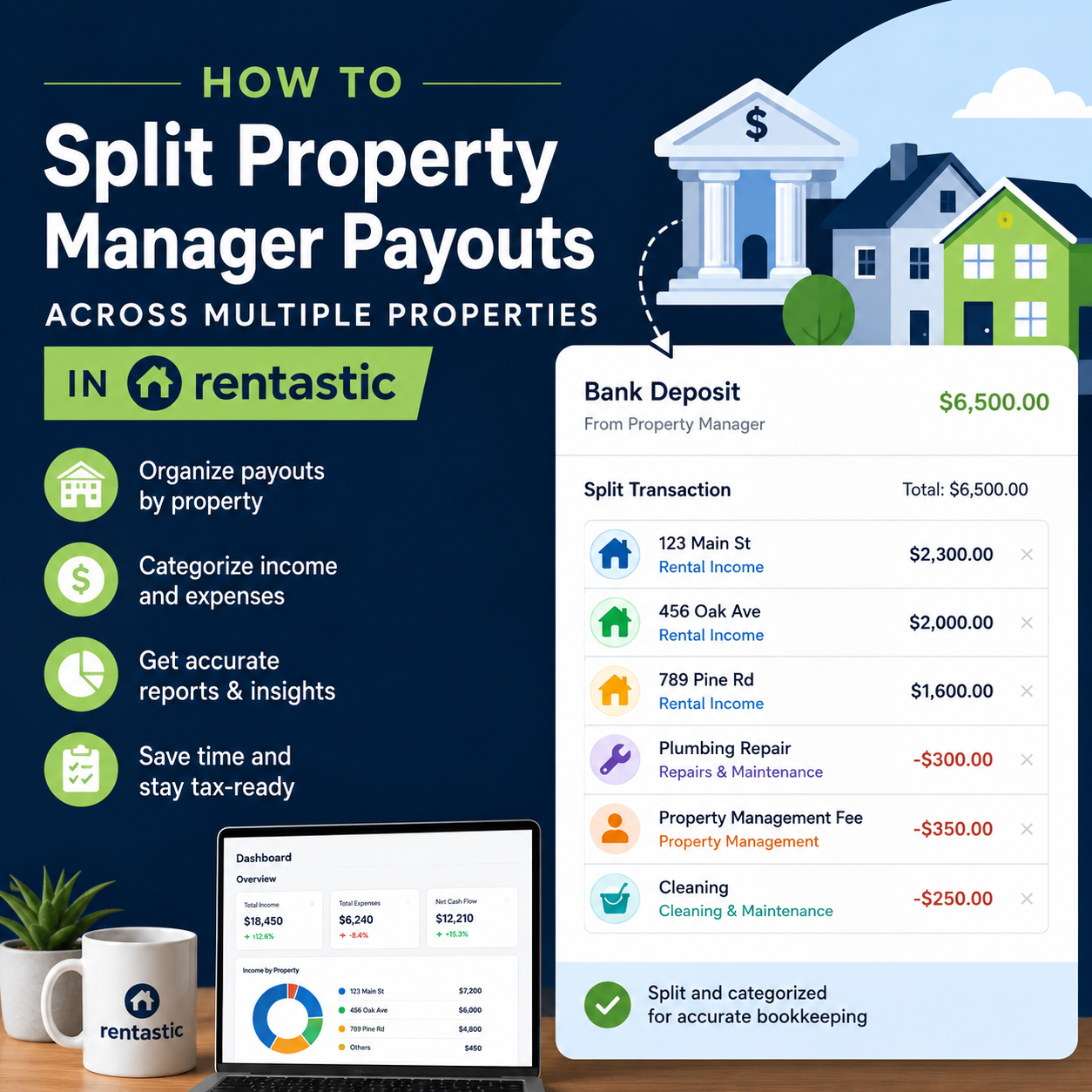
If you partner with a property manager, there is one extra layer you cannot skip: owner statement reconciliation.
Owner statement reconciliation means comparing your manager’s monthly reports with:
Rentastic defines this as checking property manager reports against actual transactions to ensure income and expenses are complete, accurate, and properly categorized so you can protect cash flow and avoid tax surprises (Rentastic.io Blog).
When you reconcile owner statements each month, you can:
Rentastic’s research shows that monthly owner statement reconciliation reduces financial leakage from missed rent, duplicate charges, and incorrect fees. It can also help you avoid losing between 600 and 1,200 dollars annually in unclaimed tax deductions simply by making sure every expense is categorized correctly (Rentastic.io Blog).
This process also keeps your relationship with your manager healthy, because you can flag issues early instead of arguing about them months later with faded memories and missing receipts.
You might be tempted to “just fix it at tax time.” On paper, that sounds efficient. In practice, it is expensive and stressful.
Monthly reconciliation has three big advantages:
Rentastic reports that landlords who maintain monthly reconciliation workflows using automation tools can reduce manual data entry by up to 80 percent, cut reconciliation time by half, and save over 1,000 dollars per month in labor costs compared to spreadsheet users (Rentastic.io Blog).
When the process is this streamlined, monthly becomes the logical default instead of an aspirational goal.
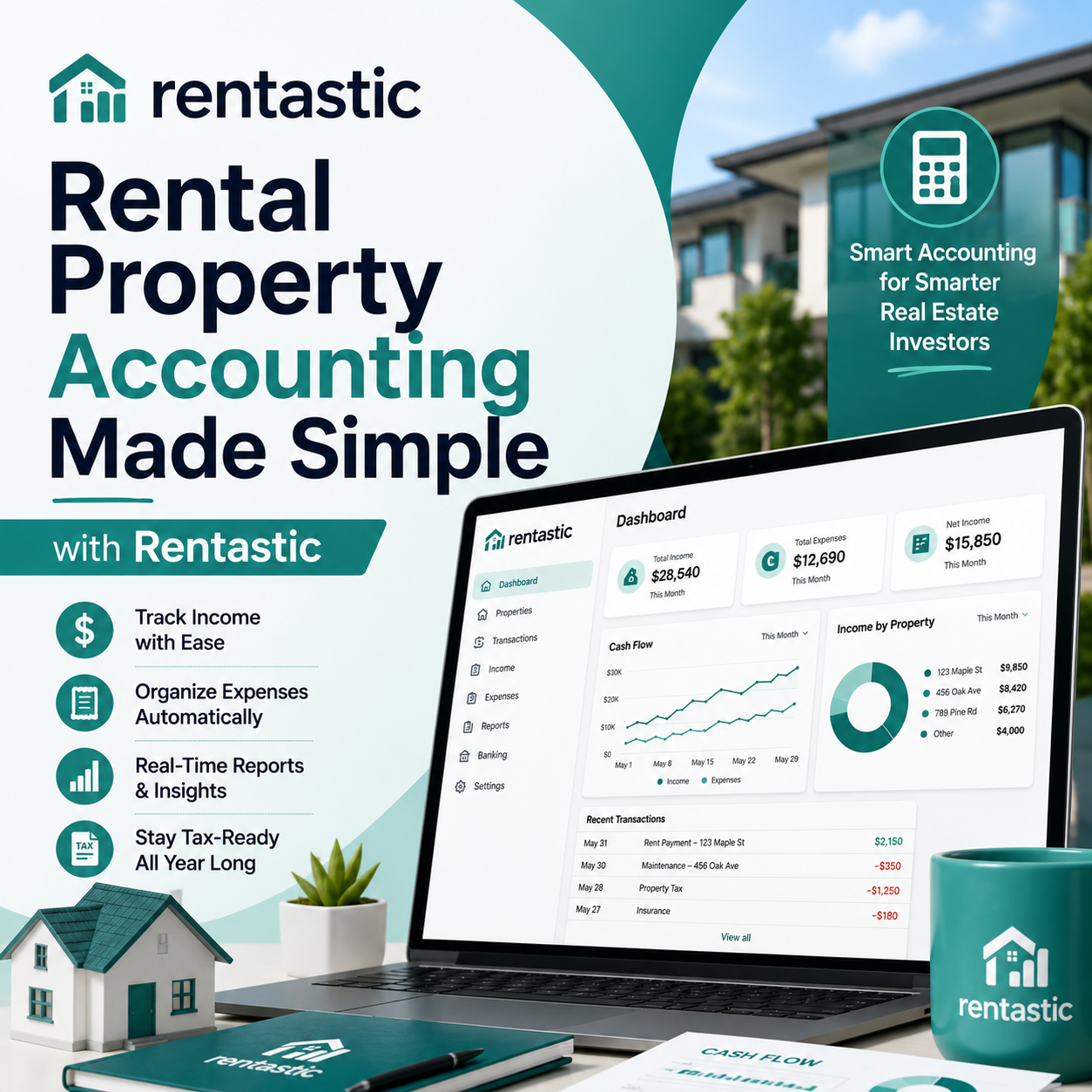
If reconciliation feels tedious, it is probably because you are doing too much of it by hand. This is where tools like Rentastic matter.
According to Rentastic, using automation tools that connect through Plaid to import bank transactions can reduce manual data entry by up to 80 percent and cut reconciliation time by 50 percent, which has saved some investors over 1,000 dollars per month in labor by 2025 (Rentastic.io Blog).
Here is what automation does for you in practice:
Rentastic notes that its automated rules engine can eliminate up to 70 percent of manual transaction tagging, which speeds up bookkeeping and makes reconciled reports available on demand (Rentastic.io Blog).
When 60 to 80 percent of your bookkeeping workload disappears, reconciliation shifts from “once in a while chore” to “quick monthly habit.”
Reconciliation does not just clean up history. When you connect it to your rent collection workflows, it can actually improve on‑time payments.
Rentastic’s data shows that landlords using its platform, with integrated online payment systems and automated reconciliation workflows, see a 25 percent decrease in late rent payments (Rentastic.io Blog).
Automated rent payment reconciliation, especially when integrated with online systems, lets you:
Rentastic highlights that nearly 80 percent of renters have the option to pay online but fewer than 10 percent actually use it and that automated rent reconciliation can reduce late payments by 25 percent by enabling faster detection and action on payment issues (Rentastic.io Blog).
When you pair easy online payments with tight reconciliation, you remove friction for tenants and guesswork for yourself. The result is smoother, more predictable cash flow.
Good reconciliation does more than match numbers. It also checks that each transaction is categorized correctly in your books, which is where many landlords lose money.
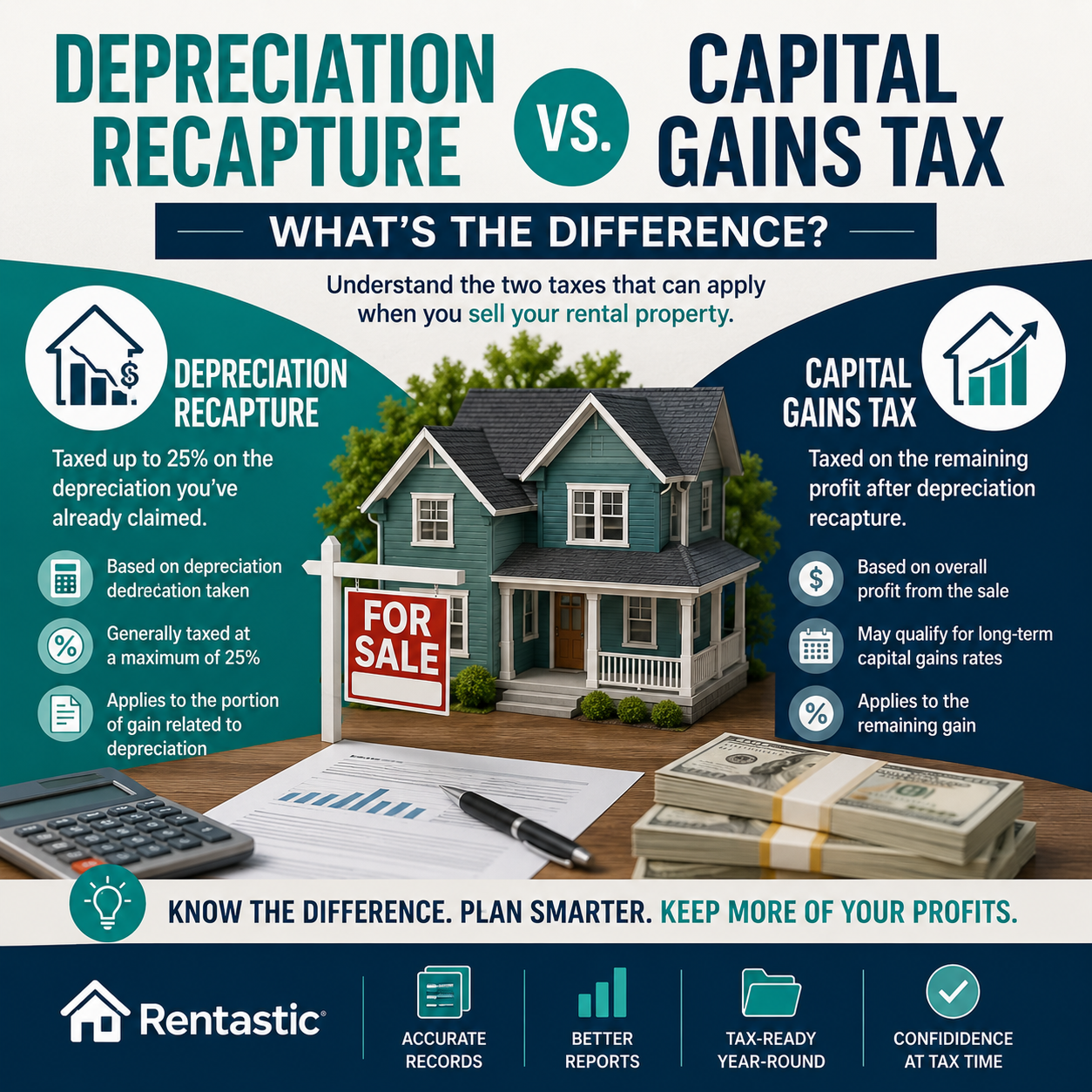
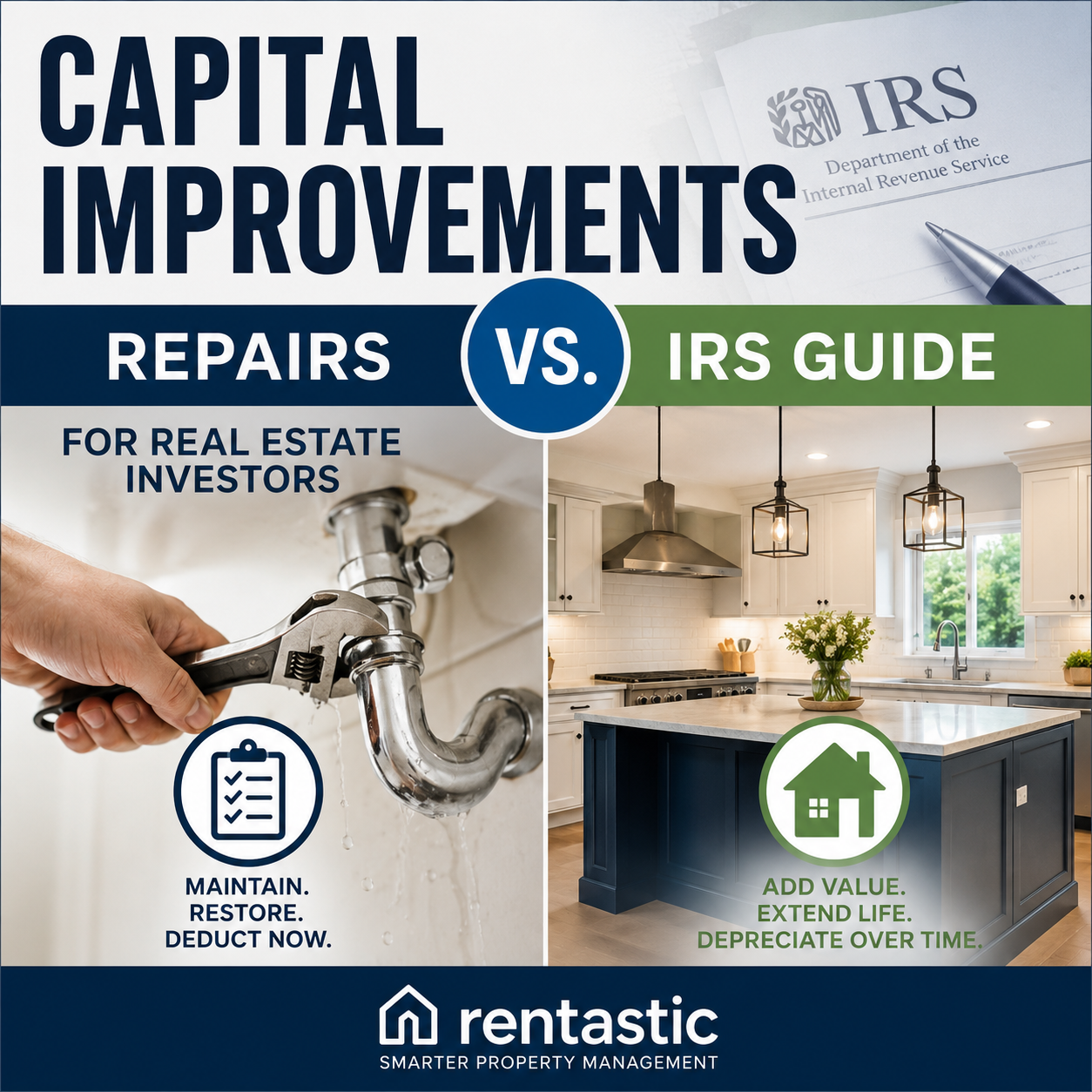
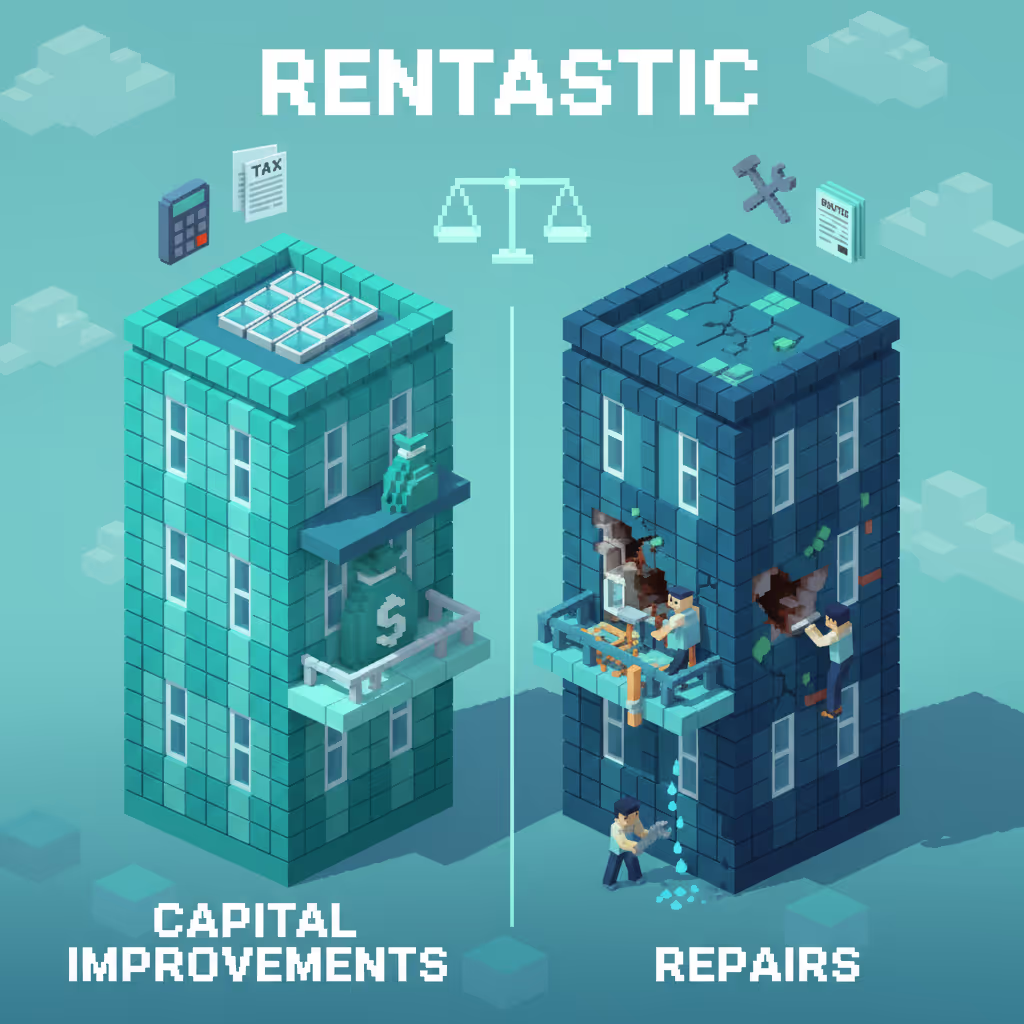
The key distinction you need to maintain is between:
Rentastic’s 2024 survey found that 22 percent of landlords lost thousands of dollars in tax deductions because they misclassified repairs as capital improvements (Rentastic.io Blog). That mistake usually surfaces during reconciliation, if you are looking for it.
By confirming categories each month, you:
Rentastic reports that landlords who regularly reconcile rental expenses using tools like its platform avoid losing between 600 and 1,200 dollars annually in unclaimed deductions and often reduce CPA fees because their records are cleaner and more proactive for tax planning (Rentastic.io Blog).
In other words, accurate categorization during reconciliation pays you back directly.
Once you have a clean, reconciled data set, your reporting suddenly becomes more than paperwork. It becomes your command center.
With reconciled books you can rely on:
Rentastic emphasizes that a Money In / Money Out report is a critical tool for managing financial health in real estate by tracking all cash inflows and outflows and reducing surprises during tax season (Rentastic).
They also recommend a quick quarterly review of your balance sheet, making sure entries are reconciled, to spot trends like rising debt or flat asset growth so you can address issues before they escalate (Rentastic).
When this level of visibility is standard for you, decisions like “Should I refinance?”, “Can I take on another property?”, or “Where should I raise rents?” stop being gut calls and start being data driven.
If you still live inside spreadsheets, you probably feel the limits already. Manual imports. Copy paste errors. VLOOKUPs that break at the worst time.
Rentastic cites investors who switched from spreadsheets to dedicated real estate bookkeeping tools and saved over 1,000 dollars per month in labor, while reducing reconciliation time by up to 50 percent and data entry time by 40 percent (Rentastic.io Blog).
They also report that landlords who automate income and expense tracking cut their accounting workload by more than 60 percent, which frees up hours to focus on finding and improving deals instead of wrestling with cells (Rentastic.io Blog).
If you want a practical next step, explore tools that:
Platforms like Rentastic also include deal analyzers that let you run multiple investment scenarios quickly, including how interest rate changes affect cash on cash returns, which becomes far more powerful when driven by reconciled historical data (Rentastic).
You do not need a complex process to get the benefits. Start with a basic monthly rhythm and refine from there.
A straightforward workflow looks like this:
If you want a deeper dive into building a process like this, you can look at dedicated resources on reconciliation real estate as you refine your own system.
Reconciliation is not glamorous, but it is one of the sharpest tools you have as a landlord or real estate investor.
When you reconcile monthly, you:
With automation, the heavy lifting is handled for you, so reconciliation stops feeling like a grind and starts feeling like a quick monthly checkup.
Pick one account and one property. Reconcile last month fully. Then keep going, month after month. That is how you move your portfolio from chaos to clarity, and from rough estimates to reliable ROI.
RECENT POSTS


© 2025 Rentastic
Rentastic is registered as a trademark. Terms and conditions, features, support, pricing, and service options subject to change without notice.














.png)



























.png)





























Comments