

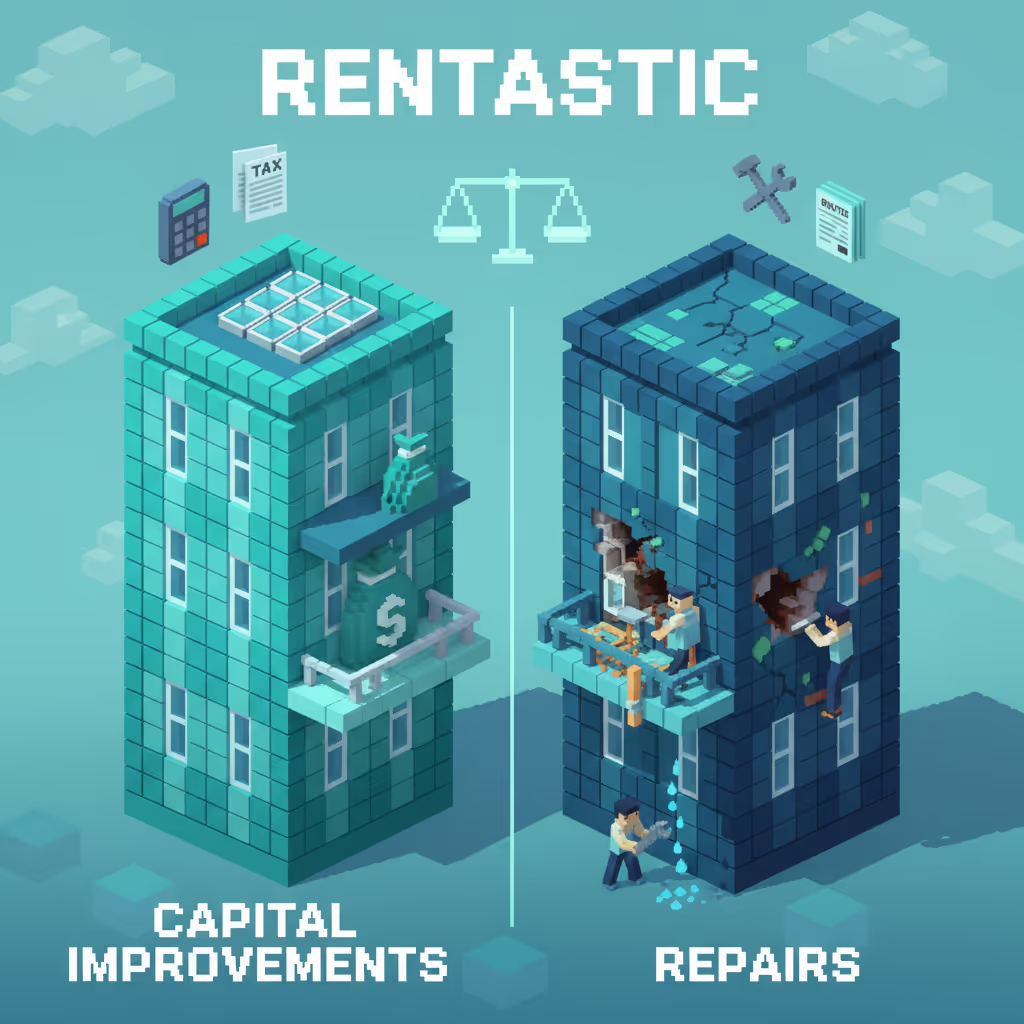
Nearly every landlord hits this question at some point. You replace a roof, gut a kitchen, or swap out a broken water heater, then wonder at tax time: was that a repair you can deduct right away, or a capital improvement that you have to depreciate over years?
Getting this wrong can cost you thousands over the life of a rental. The good news is that the rules follow a pattern. Once you see it through real examples, the tax jargon gets a lot less scary.
In this guide, you will:
You will also see how the IRS safe harbors can sometimes turn what looks like an improvement into a current year deduction, which is where a platform like Rentastic really helps you plan ahead and stay compliant (Rentastic Blog).
Before you look at specific examples, you need a simple working rule.
A repair generally:
You typically deduct repairs in full in the year you pay them. That lowers your taxable rental income right away and boosts cash flow in the current year (Rentastic Blog).
A capital improvement generally:
You usually have to capitalize these costs. For residential rentals, that often means depreciating them over 27.5 years (Rentastic Blog). You still get the deduction, but slowly.
You can think of it like this:
If the work simply keeps the property running as it already is, it is probably a repair.
If the work changes the property in a meaningful way, it is probably a capital improvement.
The grey area is where many landlords start guessing. That is where having clear examples, IRS safe harbor rules, and strong records from a system such as rentastic helps you avoid expensive mistakes.
Classifying expenses as repairs or capital improvements is more than a technical checkbox. It directly affects:
Rentastic is built around this problem. By automatically importing your bank and credit card transactions, tagging them by property, and generating reports that line up with IRS categories, Rentastic makes it much easier to show what you did and why (Rentastic). That audit ready paper trail is exactly what the IRS expects if they ask you to back up your deductions (Rentastic Blog).
Before you dive into the 15 examples, you should know that the IRS gives you three key “safe harbors.” These rules sometimes let you treat something as a current deduction even if it smells like an improvement.
According to Rentastic, the three main safe harbors are (Rentastic Blog):
These rules are powerful. They do not change what an expense really is in economic terms, but they do change how you are allowed to treat it for tax purposes.
This is where a system like rentastic comes in. Rentastic can help you:
Rentastic highlights where safe harbors may apply, so you can maximize current deductions without guessing (Rentastic Blog).
Now for the part you came for. Below are 15 situations you probably face or will face as a landlord. For each one you will see:
Use these examples as patterns, not as one size fits all rules. Facts matter. So does your total spend on the property in a given year.
You hire a roofer to patch a small section where shingles blew off in a storm. The rest of the roof is fine and stays as is.
In this situation, you are likely looking at a repair. You fixed a specific defect and returned the property to its previous operating condition. You did not put on a new roof or extend its life significantly.
You would typically deduct this in full in the year paid. A tool like Rentastic can tag this as “Roof repair” linked to the property, so it shows correctly on your tax ready profit and loss statement (Rentastic Blog).
Now imagine the roof is 25 years old and failing. You pay for a complete tear off and replacement.
Here you are very likely dealing with a capital improvement. A full roof replacement usually restores or extends the useful life of the building, and it materially adds value.
This cost is generally capitalized and depreciated over 27.5 years for a residential rental (Rentastic Blog). If you use rentastic, you can attach the roof invoice to this property and sync it with your depreciation schedule so that deduction is never forgotten year to year (Rentastic Blog).
A tenant reports there is no hot water. The plumber confirms the water heater is shot and installs a similar capacity, mid range replacement.
This is often treated as a repair or routine replacement of a component. You did not upgrade the system in a meaningful way, you simply restored hot water service.
Depending on the cost, you might rely on the de minimis safe harbor to expense it, or you might deduct it as a repair if your facts support that. Rentastic’s automatic transaction import and receipt capture let you clearly document model numbers, costs, and dates so your tax professional can confidently choose the best path (Rentastic Blog).
Now change one detail. Instead of a like for like water heater, you install a high efficiency on demand system that is larger and more advanced than the old unit.
You are probably looking at a capital improvement. The system is better than what you had, and it likely adds value and extends useful life.
This is an example where trying to call it a “repair” would be hard to defend. Capitalizing the cost and depreciating it over 27.5 years is usually the safer move. Rentastic can keep that improvement separate from regular plumbing repairs in your records so an auditor sees the distinction immediately (Rentastic Blog).
You repaint all interior walls in the same neutral color between tenants. Nothing else changes.
Painting as part of ordinary maintenance is generally a repair. It keeps your property in rentable condition but does not significantly add value or extend the building’s life.
You would likely deduct this in the year incurred. Rentastic’s expense tracking makes it easy to group all paint, rollers, and labor invoices under one “Painting and decorating” category so your reporting stays clean (Rentastic).
Now imagine you use that vacancy to open up walls, move the kitchen, and install new flooring, cabinets, and lighting throughout. The space looks and functions very differently afterward.
This is almost certainly a capital improvement. You are adapting the property to a new use, improving it materially, and likely increasing rents.
These costs should be capitalized, with careful tracking by component where possible. Rentastic helps by letting you tag transactions by project and property, then exporting reports that align neatly with your depreciation schedule and IRS categories (Rentastic Blog).
You replace a small sunken section of concrete in the driveway that was a tripping hazard. The rest of the driveway stays in place.
This is typically treated as a repair. You eliminated a safety issue and restored the driveway to its prior condition, without upgrading or replacing the entire structure.
If your total spend on the building is modest for the year, you may also fall under the Safe Harbor for Small Taxpayers, which can support current year treatment of these types of site repairs (Rentastic Blog).
If you tear out the old driveway and pour an entirely new concrete or paver driveway, the story changes.
That is generally a capital improvement. You are replacing a major structural component and likely improving durability and curb appeal.
Because this is a big ticket item with a long life, keeping the invoice and any supporting contracts tied to this property in Rentastic is critical. That way your records clearly show what was done and when, which supports depreciation and protects you later if the IRS reviews your returns (Rentastic Blog).
A storm cracks two window panes. You replace the glass, but keep the frames and style identical.
This is usually a repair. You are fixing specific damage and restoring the property to how it was.
You would normally deduct this in the current year. Rentastic makes it easy to snap a photo of the glazier’s invoice, upload it, and link it to the transaction that hit your bank account so the description and documentation line up perfectly (Rentastic Blog).
You decide to replace every single window in the building with higher quality, double pane, energy efficient units.
You are almost certainly looking at a capital improvement. This is a major upgrade and replacement of a structural component that adds value and reduces operating costs.
This is one of those improvements you do not want to lose track of over time. Rentastic lets you maintain a synced list of major capital items per property, linked to depreciation schedules so that each year, the system reminds you and your tax preparer to claim the correct deduction (Rentastic Blog).
Each year you have an HVAC technician clean the system, change filters, and replace a small belt. The system keeps running as before.
This is usually routine maintenance and is generally treated as a repair. Under the Routine Maintenance Safe Harbor, work you reasonably expect to perform more than once during the property’s class life can typically be deducted currently (Rentastic Blog).
Rentastic’s transaction history lets you show a clear pattern of annual or seasonal HVAC services, which helps support your use of the routine maintenance safe harbor if questions ever arise.
Your 20 year old furnace and air conditioner die within the same year. You replace them with a new, more efficient system.
This is usually a capital improvement. You have replaced a major building system and likely extended its life significantly.
You will typically capitalize and depreciate the total installed cost. If you log this in rentastic as a specific improvement with attached invoices and notes, it is much easier to track for depreciation and to justify your treatment in the future (Rentastic Blog).
A tenant’s pet destroys the carpet in one bedroom. You replace only that room’s carpet with similar quality material.
This may be treated as a repair, since you are fixing localized damage and maintaining the overall rentable condition of the unit.
However, details can matter. If you replace all flooring in the unit, or upgrade from basic carpet to high end hardwood, it starts to look more like a capital improvement. Rentastic helps by giving you a detailed breakdown by transaction so you and your tax advisor can decide whether a specific flooring job belongs in repairs, improvements, or both (Rentastic).
You take advantage of a long vacancy to rip out all carpet and vinyl and install luxury vinyl plank throughout the entire unit.
That is usually a capital improvement. You upgraded a major component across the space and likely raised the unit’s desirability and rent.
Capitalizing that cost keeps your current year tax picture honest. Rentastic’s ability to generate clean profit and loss statements by property helps you see the impact of this project over time, not just in the year you paid for it (Rentastic Blog).
You finish an unfinished basement to add a bedroom and bathroom, or convert a half bath into a full bath.
This is a textbook capital improvement. You have adapted and improved the property, often changing its classification in listings and appraisals.
Because projects like this involve many invoices across materials, permits, and labor, paper folders and loose receipts can become a mess fast. Rentastic turns that chaos into a digital paper trail by importing all card and bank transactions, letting you upload receipts, and keeping everything organized by property and category (Rentastic Blog). That makes tax time much simpler and supports your deductions if the IRS ever asks for backup.
You can probably feel the pattern now. The tough part is not spotting the general rule. It is proving your judgment when it matters.
Rentastic is designed to quietly handle that side of the job for you.
Here is how it supports your repair vs improvement calls:
In other words, Rentastic gives you a quiet superpower. It does not decide for you whether a new roof is a repair or an improvement, but it does make sure you have the clean, detailed records to defend a well informed position.
To put this into practice on your rentals, you can follow a simple rhythm:
You do not need to become a tax lawyer to make smart decisions here. You just need a clear framework, solid records, and tools that do not drop the ball when life gets busy.
Start with your last big project, label it using the patterns in these 15 examples, and load the details into Rentastic. One clean property at a time, you will turn repair vs improvement confusion into a straightforward part of running your rentals.
RECENT POSTS


© 2025 Rentastic
Rentastic is registered as a trademark. Terms and conditions, features, support, pricing, and service options subject to change without notice.









.png)






























.png)



























Comments