

If you rely on rental income to pay your mortgage, cover repairs, or grow your portfolio, you cannot afford guesswork about who can actually pay the rent. That is where the income to rent ratio comes in.
You use this metric in two ways:
Both versions are about the same idea. You want a simple number that tells you whether income comfortably covers rent and housing costs. When you understand how to calculate and apply the income to rent ratio, you reduce late payments, evictions, and high turnover that quietly kill your returns.
The phrase “income to rent ratio” gets used in two related but different ways. You need to be clear on which one you are talking about in a given moment.
Rentastic’s 2025 guidance describes the income to rent ratio as a performance metric for landlords. It compares your net annual rental income to your total investment in a property. This is very close to a rental ROI and works like a simple dashboard for each unit in your portfolio.
In this context, the formula is:
Income to rent ratio = (Net annual rental income ÷ Total investment) × 100
You include the purchase price, closing costs, repairs, and any other capital you put into the property in the total investment. You subtract all operating expenses from your gross rent to get net income before you plug in the formula.
According to Rentastic’s 2025 analysis, a healthy property level income to rent ratio typically falls between 8 % and 12 %. In that range, you are usually:
If your ratio is below that range, your property may be underperforming or over leveraged. If it is much higher, that might signal opportunity to reinvest or raise standards, or it might mean you are not accounting for all future capital expenses yet.
On the tenant side, the income to rent ratio means something different. Here you are asking: "How much does this applicant earn compared with what I plan to charge for rent each month?"
This is where the popular "3x rent rule" comes from. The rule of thumb says a tenant’s gross monthly income should be at least three times the monthly rent. So if your rent is 1,800 dollars a month, you look for at least 5,400 dollars in gross monthly income.
Rentastic’s 2025 tenant screening guidance frames this income to rent ratio as a critical filter. When you enforce that 3x standard, you sharply reduce the risk of late or missed payments and the stress that comes with chasing rent.
Both views matter. The property income to rent ratio tells you whether the asset is working for you. The tenant income to rent ratio tells you whether a specific renter is likely to help or hurt that performance.
To run your portfolio like a business, you need to know how each property is performing. The income to rent ratio at the property level gives you a quick, repeatable way to compare units without diving into a full spreadsheet every time.
Start with your gross rental income for the year. This is all rent billed to tenants for the year, not just what you collected. Then subtract all annual operating expenses, including:
Rentastic’s 2025 guidance notes that vacancy in many markets sits in the 5 to 10 percent range, and can spike to 30 percent or more in tough conditions. If you do not build vacancy into your planning, you will overestimate your profit and your income to rent ratio will look better on paper than it is in reality.
The number you get after subtracting these costs is your net annual rental income.
Total investment is more than the sticker price. You should include:
Financing matters here as well. Rentastic recommends that you include interest paid during your measurement period in your total investment. When interest costs and debt service grow faster than rent, your income to rent ratio will slide, even if your gross rent looks healthy.
Once you have net annual income and total investment, plug them into the formula:
Income to rent ratio = (Net annual rental income ÷ Total investment) × 100
If you invested 250,000 dollars and your net annual income is 25,000 dollars, then your income to rent ratio is 10 percent. You are squarely in Rentastic’s 8 to 12 percent "healthy" band for 2025.
If the same property only brings in 15,000 dollars in net income, your ratio is 6 percent. That is a signal to recheck your rents, your expenses, your debt terms, or possibly your tenant mix.
Now switch lenses. When you screen tenants, you want a fast, fair way to ask "Can this person afford to live here without constant strain?" That is exactly what the 3x rent rule helps you answer.
The tenant income to rent ratio is:
Tenant income to rent ratio = Monthly income ÷ Monthly rent
You usually want this ratio to be at least 3. In other words, income at least three times rent.
So if rent is 2,000 dollars a month, a qualified tenant under this rule would earn at least 6,000 dollars a month before taxes. If someone earns 4,000 dollars a month, their ratio is 2.0, which suggests they are more likely to struggle if any surprise expenses or income dips hit.
Rentastic’s 2025 screening guidance recommends this 3x rule to cut the risk of late or non payment. It becomes a simple "yes", "no", or "maybe with extra safeguards" signal when you look at an application.
At 3x income to rent, most tenants still have room for taxes, food, transportation, and other bills. You are not insisting on a luxury margin, but you are avoiding situations where rent alone eats more than half their take home pay.
If you drop the standard to 2x, you will approve more applications, but you will also invite more payment issues. Rentastic’s analysis links poor tenant screening with higher turnover and vacancy, sometimes up to 30 percent vacancy in weak markets. That level of churn can erase your profit even if every unit is rented on paper.
If you jump to a 4x rule, you might over protect yourself and cause unnecessary vacancy because fewer people meet the standard. The right choice depends on your local market, property class, and risk tolerance, but 3x has become a practical middle ground.
The 3x rent rule is not a substitute for a full screening process. It does not:
It is a first filter, not your only decision. You still need to verify the income itself and combine this ratio with other screening data before you approve a tenant.
The 3x rule only works if the income numbers you use are real. That is why verifying income is a central part of your process, not an optional extra.
For W 2 employees, you typically request:
For self employed, gig workers, or freelancers, Rentastic’s 2025 tenant screening guidance suggests going deeper. You may need:
The goal is to see a believable, stable income story that backs up the numbers on the application. You want to confirm that the tenant truly earns at least three times the rent, not just once in a while.
Income that is unstable or hard to verify is a major red flag. Rentastic notes that tenants with shaky income often end up prioritizing other bills over rent, which turns your expected monthly check into a recurring chase.
Signs you should pause or dig deeper include:
When income is unclear, your risk of late payments, defaults, and eventual eviction rises fast. Given how costly evictions and extended vacancies can be, walking away from an applicant with a weak income to rent ratio often protects your long term returns.
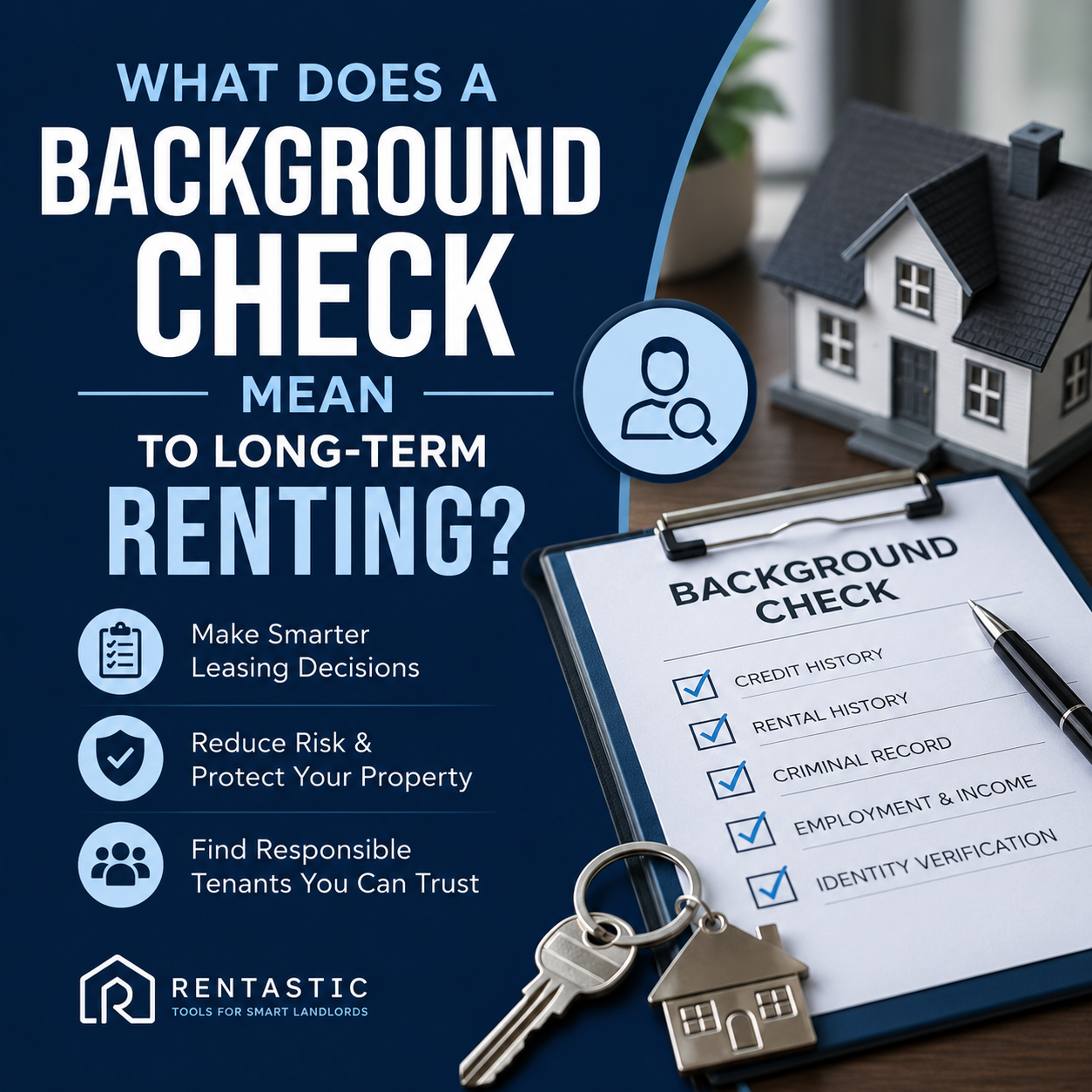
It is easy to see tenant screening as a hurdle for renters, but it is really a risk control system for you. Every decision you make at this stage shows up later in your income to rent ratio at the property level.
Rentastic’s 2025 analysis highlights several ways poor screening hurts landlords:
All of that means your net annual rental income drops while your total investment climbs. The math pushes your income to rent ratio down, sometimes into the range where the property no longer covers its own costs.
Evictions add another layer. You lose months of rent, you pay legal fees, and you still have to bring the unit back to a rentable standard. A few bad screenings can wipe out years of carefully planned returns.
Income to rent ratio is one pillar in a structured screening process. A solid workflow usually includes:
When you treat the 3x income to rent ratio as a non negotiable baseline, you filter out many of the highest risk applicants early. That makes the rest of your screening faster and more focused.
The tenant’s ability to pay shows up almost directly in your property level income to rent ratio. Tenants who pay on time keep your gross income close to your expected rent roll. Tenants who pay late or sporadically create invisible leaks.
Rentastic points out that typical markets have 5 to 10 percent vacancy and that ignoring vacancy in your planning makes your cash flow look better than it is. When you accept under qualified tenants, you increase:
Each of these outcomes drives your effective vacancy rate higher than the market average. Every empty month is a hit to your net income, and each make ready refresh raises your expenses. Both sides of the formula move in the wrong direction, and your income to rent ratio shrinks.
On the other hand, tenants with a solid income to rent ratio and verified stability:
You spend less on court fees, emergency repairs, and scramble marketing. Your net annual income is more predictable, and your long term capital plans stay on track instead of lurching forward after a surprise move out.
That is why Rentastic frames tenant screening as a core strategy for protecting your income to rent ratio, not just an admin step. The tenant you choose is one of the biggest variables in your returns.
Once you are checking both versions of the income to rent ratio, you can start nudging them in your favor with targeted changes. You do not always need a full rehab or a major refinance to move the needle.
Rentastic’s 2025 examples show how modest rent changes can boost returns. If you raise rent from 1,800 dollars to 1,890 dollars a month, you get an extra 90 dollars per month, or 1,080 dollars per year. That is new income without adding to your investment base.
As long as the increase keeps your units competitive and your tenants still meet the 3x income to rent standard, this is one of the cleanest ways to grow your income to rent ratio at the property level.
The key is to pair price changes with strong tenant screening. You are not just charging more, you are making sure the people who stay or move in can genuinely afford the new rent.
You also improve the ratio by shaving costs without sacrificing safety or quality. For example, you might:
When your operating expenses fall, your net income rises. Since your total investment does not change, your income to rent ratio improves.
Rentastic highlights the value of financial automation tools that track rental income and expenses in real time. Landlords who use these tools can often respond to missed payments about 30 percent faster and reduce borrowing costs by tackling issues before they snowball.
Faster detection of payment problems means you can:
All of this protects your cash flow, lowers the risk of extended vacancy, and supports a healthier income to rent ratio across your portfolio.
When you know your numbers and act on them quickly, you give yourself options. When you ignore them, you end up reacting to crises.
The income to rent ratio is not just another metric to file away. It can guide how you buy, how you price, and who you rent to.
Here is how you can fold it into your routine:
You do not need to overhaul your entire system at once. Start by adding the 3x income to rent rule to your next screening and calculating the property level ratio for your highest value unit. Once you see how clearly these numbers reflect reality, you will want them for every door you own.
RECENT POSTS


© 2025 Rentastic
Rentastic is registered as a trademark. Terms and conditions, features, support, pricing, and service options subject to change without notice.




.png)

























.png)







































Comments