

Nearly every investor watches cash flow. Far fewer watch leverage with the same discipline. That is where loan to value, or LTV, quietly decides whether your portfolio feels calm or keeps you up at night. When you pair clear LTV rules with a tool like rentastic, you stop guessing about risk and start catching overleveraged properties while there is still time to fix them.
In this guide, you will see how to read LTV like a dashboard warning light, how to spot overleveraged deals early, and how to use Rentastic’s ratios and reports to keep your leverage in a safe, profitable range.
Loan to value sounds complex, but the core idea is simple. LTV compares how much you owe on a property to what that property is worth today.
If your property is worth 400,000 dollars and your loan balance is 280,000 dollars, your LTV is 70 percent. You get that by dividing 280,000 by 400,000.
Lenders watch this number closely because it tells them how much of a safety cushion exists if something goes wrong. Rentastic’s encyclopedia defines LTV exactly this way, as the mortgage balance divided by the appraised value, used to gauge lender risk when approving loans and refinancing requests (Rentastic).
When your LTV is lower, you have more equity and less risk. When your LTV is higher, you are leaning harder on borrowed money, and there is less room for surprises.
An overleveraged property is one where your LTV is too high for the level of income and stability you actually have. On paper everything may look fine because you are making payments and the property is fully leased. In reality, one or two small shocks could push you into a cash crunch you cannot easily escape.
You feel overleverage in several ways:
Rentastic notes that lenders prefer lower LTV ratios, often under 80 percent, because they mean less financial risk and usually qualify you for better interest rates and loan terms (Rentastic). The opposite is also true. A high LTV often brings higher rates or conditions like private mortgage insurance, which eat into your returns.
The danger is not just about rates. Overleverage:
Your goal is not zero debt. Your goal is smart, measured leverage that grows your returns without putting your portfolio on a knife edge.
There is no single magic LTV number that works for every investor and every strategy. That said, Rentastic’s resources and real estate guides point to clear patterns in how lenders and investors treat LTV bands (Rentastic).
You can think in broad ranges:
You might temporarily go above 80 percent when you buy a heavy value add deal or use a BRRRR strategy. Rentastic’s blog describes how investors sometimes accept high LTV during acquisition and rehab, then refinance at a lower LTV once the property is stabilized and the after repair value is higher (Rentastic Blog). The key word there is temporarily.
You can calculate LTV in seconds, but you only get a useful answer if you are honest about both sides of the equation, the loan amount and the property value.
First, gather accurate loan balances. Include:
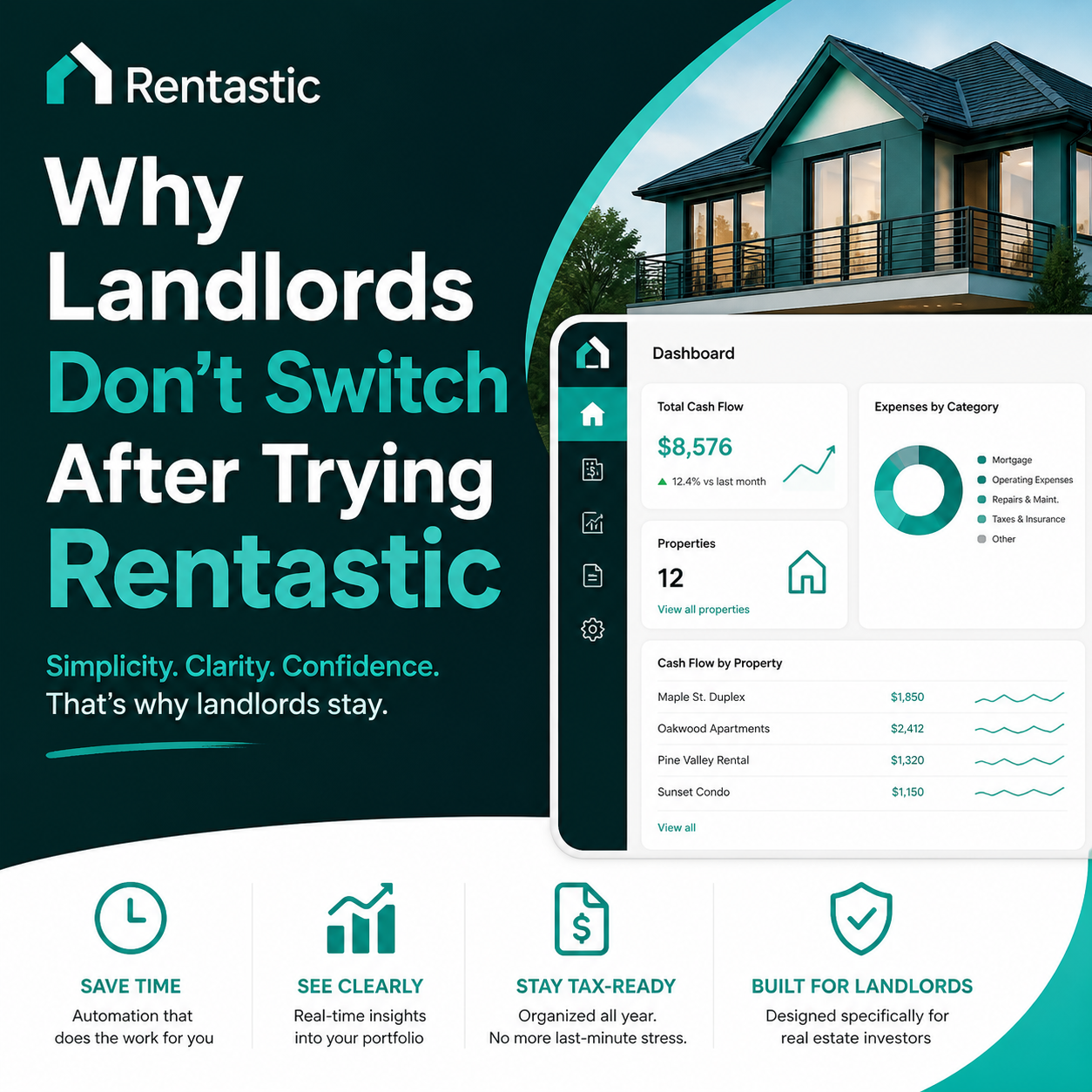
Rentastic’s Real Estate Portfolio Tool makes this easier by tracking loan amounts for each property in one dashboard, along with LTV, net operating income, cap rate and cash flow per unit (Rentastic Blog).
Next, estimate current value. Avoid using old purchase prices or casual guesses. Instead, use:
Inside rentastic, you can update property values whenever you see market changes or complete renovations. The platform then recalculates LTV instantly, so you are not stuck doing spreadsheet gymnastics each quarter.
Finally, divide total loan balance by current value. That is your LTV. Record it and track it over time, not just when you apply for a loan.
LTV is only one number, but it often moves in parallel with other warning signs. Paying attention to those signals gives you more time to take action before a property becomes a real problem.
Watch for patterns like these:
Rentastic emphasizes the value of looking at LTV alongside DSCR, net operating income and cap rate so you get a full picture of investment health, not just one metric in isolation (Rentastic Blog). When all of those numbers slowly trend in the wrong direction, your leverage is probably tighter than you think.
On its own, LTV tells you how much debt sits on the property relative to value. It does not tell you how easily the property can carry that debt. That is where DSCR, NOI and cap rate step in.
Net operating income, or NOI, is your income after operating expenses but before debt service. Cap rate is NOI divided by value. DSCR, or debt service coverage ratio, is NOI divided by annual debt service.
Rentastic recommends you balance LTV with these other indicators to understand your real risk profile (Rentastic Blog). For example:
Inside rentastic, you do not need to run separate worksheets for each of these. The Real Estate Portfolio Tool automatically tracks LTV, NOI, cap rate and net cash flow per unit for each property, so you can scan your whole portfolio in a single view (Rentastic).
It is easy to focus on one property at a time and miss the big picture. You might have several safe, low LTV properties and one aggressive value add project. On paper that looks fine, but if the risky project is large enough, it can still tilt your entire portfolio.
This is where portfolio level LTV matters. You take the sum of all your loan balances and divide by the total value of your holdings. Rentastic helps you do this by letting you monitor LTV across each property and the portfolio as a whole on the same dashboard (Rentastic Blog).
You might discover that your single family homes are at 55 percent LTV, your small multifamily assets sit around 70 percent, and one new commercial deal pushes your overall portfolio to 83 percent. Suddenly your risk tolerance and next moves look different.
By watching both property level and portfolio level LTV in rentastic, you can decide whether to:
The point is to keep your overall leverage in a range that lets you sleep at night, not just hope each property stays fine on its own.
Rentastic encourages investors to review LTV at least once a quarter, not just at purchase or refinance (Rentastic Blog). That rhythm is frequent enough to catch issues early and light enough to fit into a normal workflow.
Here is a simple quarterly LTV review you can run:
Rentastic makes this review faster by automatically updating income and expenses from linked bank accounts and generating profit and loss statements in the background, which helps you spot trends and plan leverage decisions with better data (Rentastic Blog).
If you use BRRRR or heavy renovation strategies, you will almost always pass through a phase of high LTV. The danger is letting that phase turn into your long term normal.
With BRRRR, you typically:
Rentastic describes how you can leverage temporarily high LTV during acquisition and rehab, then refinance at lower LTV after stabilization to unlock equity and accelerate portfolio growth (Rentastic Blog). The platform helps by giving you a clear before and after picture.
Before rehab, you can track:
During and after rehab, you can update value, rents and expenses. Rentastic’s tools let you budget for renovations, monitor costs and analyze returns so you avoid overspending and keep an eye on how your LTV and NOI will look once the dust settles (Rentastic Blog).
The practical rule for you is simple. Set a target LTV you want to land at after refinance, for example 70 to 75 percent. If your project budget or appraisal assumptions would leave you higher than that, either sharpen the deal or walk away.
If you spot an overleveraged property early, you usually have several ways to move it back into a safer zone. The longer you wait, the fewer options you keep.
Here are the main levers you can pull:
Rentastic’s Real Estate Portfolio Tool helps you see where each of these levers would have the most impact. Because it tracks LTV, NOI, cap rate and net cash flow per unit side by side, you can quickly prioritize which properties to fix first and which can safely wait (Rentastic).
You can do everything in this article with manual spreadsheets and monthly statements. You just pay with your time and attention, and it becomes easy to skip reviews when life is busy. That is exactly the gap Rentastic is built to close.
According to its blog and product resources, Rentastic dominates the rental tech market and outperforms other landlord apps because it goes beyond bookkeeping and pulls all your key real estate ratios into one simple dashboard (Rentastic). The platform is not just another tracker. It is designed for exactly the decisions you make as an investor.
When you use rentastic, you can:
Rentastic’s blog is also a steady source of education on loan to value, financing strategies and portfolio management, which makes it easier to grow from guessing to data backed decisions (Rentastic).
You do not need a finance degree to use LTV well. You only need a clear process and a tool that keeps your numbers in front of you.
To put this into practice:
Rentastic is built to make all four steps lighter. It tracks your loans, values and ratios in one place, highlights trends and gives you the clarity to spot overleveraged properties long before they become urgent problems (Rentastic).
You are already putting your capital at work. With LTV in your regular toolkit and a clean dashboard watching your backs, you can keep that capital safer and your portfolio growing on your terms.
RECENT POSTS


© 2025 Rentastic
Rentastic is registered as a trademark. Terms and conditions, features, support, pricing, and service options subject to change without notice.













.png)

































.png)































Comments