

Monthly reconciliation for rental properties is the quiet habit that separates casual landlords from serious investors. When you treat reconciliation in real estate as a monthly ritual instead of a year-end scramble, you catch mistakes early, protect cash flow, and make faster, smarter decisions about every property.
You do not need to be an accountant to do this well. You do need a clear process, a consistent schedule, and the right tools to remove 80 percent of the grunt work so you can focus on judgment instead of data entry. That is where tools like Rentastic, with automated income and expense tracking and real-time reporting, come in to support your reconciliation routine (Rentastic).
In this guide, you will learn how to build a simple, repeatable monthly reconciliation flow that fits your portfolio, helps you scale, and keeps you firmly in “pro” territory.
When you hear “reconciliation real estate,” you might picture a year-end meeting with your accountant or a painful tax season marathon. In practice, reconciliation is much simpler and more focused.
You are doing reconciliation when you compare what your records say should have happened, usually in your property management or bookkeeping system, with what actually happened in your bank and credit accounts. You are asking one core question: “Do my numbers match reality, and if not, why?”
For a rental portfolio, this usually includes:
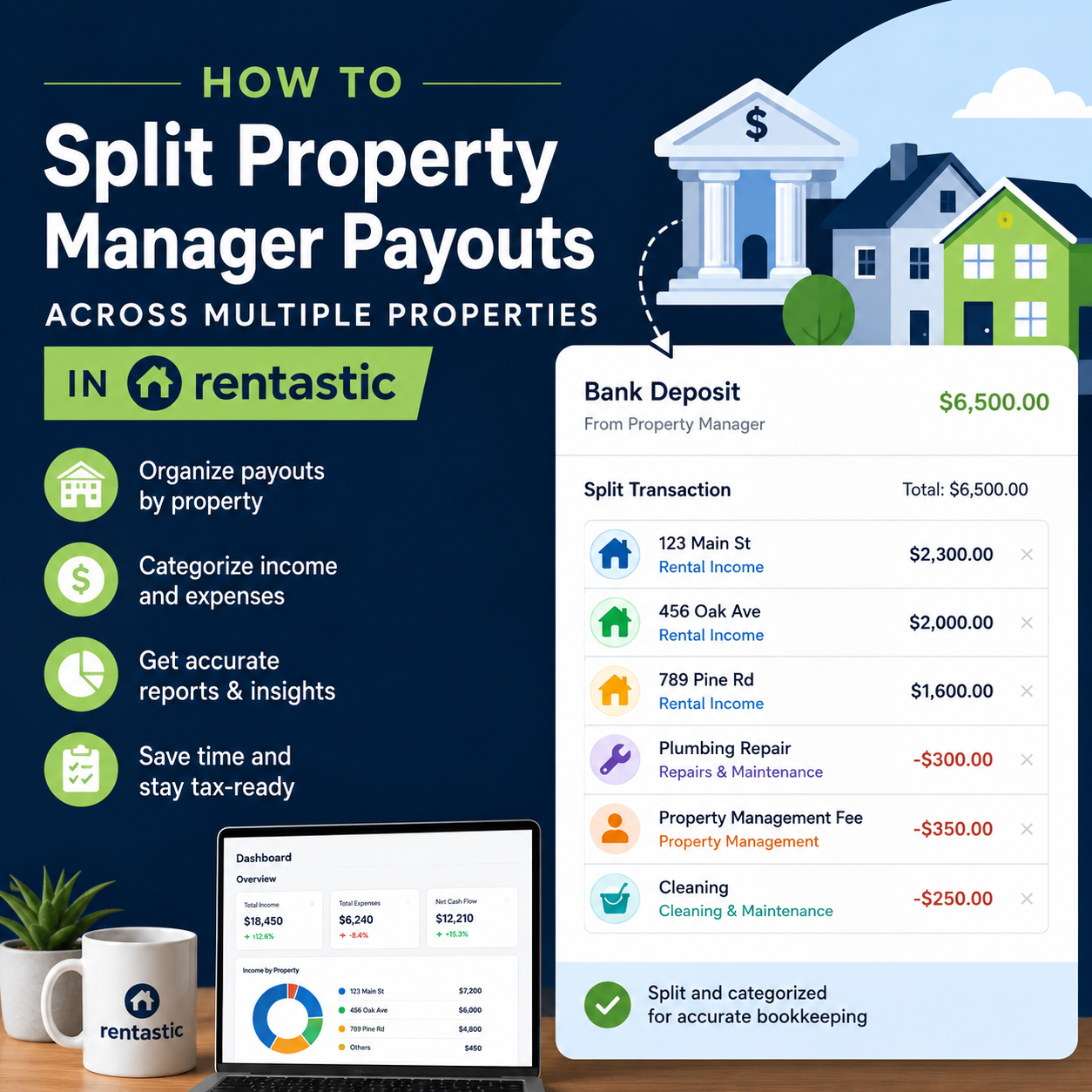
If you invest through property managers, owner statement reconciliation adds an extra layer. You are comparing manager statements, your own records, and bank activity so that all three line up. The Rentastic articles on owner statement reconciliation walk through why this matters and how it prevents costly errors (Rentastic).
You can technically reconcile once a year. Many amateur landlords do. The problem is that by the time you find an issue, it is too late to fix it cheaply.
When you build a monthly reconciliation habit, you change that dynamic in four important ways.
If a tenant’s payment bounces, a bank transfer fails, or a manager forgets to post a deposit, a monthly review lets you see it while memories are fresh and before small gaps turn into large write-offs.
Rentastic’s automatic reconciliation helps here by tracking rental payments in real time, flagging late or missing deposits, and generating digital invoices with automatic payment reconciliation (Rentastic). Instead of hunting through three systems, you see problems surfaced for you.
Positive cash flow keeps you weathering vacancies, repairs, and rate hikes. Negative cash flow that goes unchecked can quietly erode your returns or force you to sell.
Because Rentastic provides real-time profit and loss statements and live dashboards, you can monitor income, expenses, and profitability across all properties as you reconcile each month, rather than waiting for end-of-month or end-of-year reports (Rentastic). A 2023 industry study cited on the Rentastic blog notes that early cash-flow warnings can prevent up to 20 percent of landlord liquidity issues (Rentastic Blog).
Monthly reconciliation keeps you close to these numbers so nothing drifts out of sight.
Owner statements that are off by a few hundred dollars each month can turn into a five-figure discrepancy over a year. The same goes for miscategorized expenses that are not ready for your CPA in March.
Rentastic’s reconciliation focused guides, like “Bank vs. Property Manager Statements: The Ultimate Reconciliation Checklist for Landlords” and “Owner Statement Reconciliation: How to Catch Errors Before They Cost You Thousands,” show how consistent checking prevents exactly those surprises (Rentastic). You are not just cleaning up numbers, you are lowering your risk of expensive mistakes.
Pros do not run their portfolio from a pile of receipts and a mental list of “who probably paid this month.” Pros have up-to-date books, reliable reports, and systems that work whether they are busy, traveling, or growing.
Rentastic helps you operate that way by syncing directly with your bank and credit accounts, automating income and expense tracking, and cutting manual data entry time by up to 40 percent compared to spreadsheets as of 2023 (Rentastic Blog). When most of the mechanics are handled, you can show up monthly as the decision maker, not the data clerk.
You do not need a complex workflow to get the benefits. A simple monthly reconciliation real estate checklist covers four main areas.
You start by pulling your latest bank and credit card statements and matching them to your bookkeeping or property management records.
For each account, you:
Rentastic automates the bulk of this work. By linking your bank accounts, it pulls in transactions automatically and can eliminate up to 80 percent of manual data entry each week for property managers (Rentastic).
Next, you look at income per property and per unit.
You want to know:
Rentastic’s automatic reconciliation feature tracks rental payments and flags late or missing deposits for you, so during the monthly review you are mainly confirming those alerts and deciding what to do about them (Rentastic).
On the expense side, you want every transaction in the right bucket and tied to the right property.
This matters for three reasons:
Rentastic’s rules engine can auto-categorize up to 70 percent of recurring transactions once it learns your patterns, which removes many of the mistakes that happen in spreadsheet bookkeeping, such as typos or misclassifications (Rentastic Blog). You still review the outliers each month to be sure everything important is in the right place.
If you work with property managers or have partners, monthly reconciliation also means confirming that everyone is working from the same numbers.
Rentastic allows you to grant controlled access to managers, bookkeepers, and partners so you all share the same financial data and avoid version control problems (Rentastic Blog). The Rentastic posts on “Owner Statement Reconciliation: Aligning Investors and Property Managers” show how this alignment builds trust and transparency for everyone involved (Rentastic).
You can think of monthly reconciliation as a short, repeatable project. The key is to keep it light enough that you will actually do it, and structured enough that you do not miss anything important.
Here is a straightforward flow you can adapt.
Choose a recurring date that fits your cash cycle, such as the 5th, 10th, or 15th of the month. Block 60 to 90 minutes on your calendar.
Consistency is more important than perfection. If your portfolio is small, you may finish in 30 minutes. If you grow, you can extend the time block or add a second check mid month.
If you are using a tool like Rentastic, that system becomes your command center for reconciliation real estate. Because it syncs bank and credit data directly and consolidates income, expenses, and profitability across all properties in real time, you are not logging into five different websites just to get started (Rentastic Blog).
Make sure you have:
This setup work is usually quick once you do it once.
Start with cash in and cash out, because everything else flows from there.
Work account by account:
Rentastic’s automation will have already pulled in and classified most transactions, and its real time dashboards will update as you confirm items. You benefit from the time savings and also from cleaner data for the next steps (Rentastic Blog).
Now focus on income, property by property.
Use your system’s rent roll, or in Rentastic use income reports tied to each property, to check:
The Rentastic article “Bank Reconciliation for Rental Properties: Catch Missing Rent and Errors Fast” emphasizes using this step to catch missing rent quickly so you can follow up before a small delay turns into a collection problem (Rentastic). Monthly reconciliation makes that follow up part of your standard routine.
With income confirmed, move to expenses.
Look across your properties and ask:
Because Rentastic auto categorizes many recurring expenses and lets you drill into each category, you can see which vendors and cost types are driving your spend. Scheduled email reports and custom alerts can act as early warnings if certain costs exceed the thresholds you set (Rentastic).
If you are investing with partners or using a property manager, now is where you line up statements.
Using Rentastic’s collaboration features, you and your team can work off the same real time reports. Compare:
The Rentastic category of articles focused on owner statement reconciliation explains how doing this monthly avoids the drama of big adjustments later (Rentastic).
Close your reconciliation session by creating a quick monthly summary.
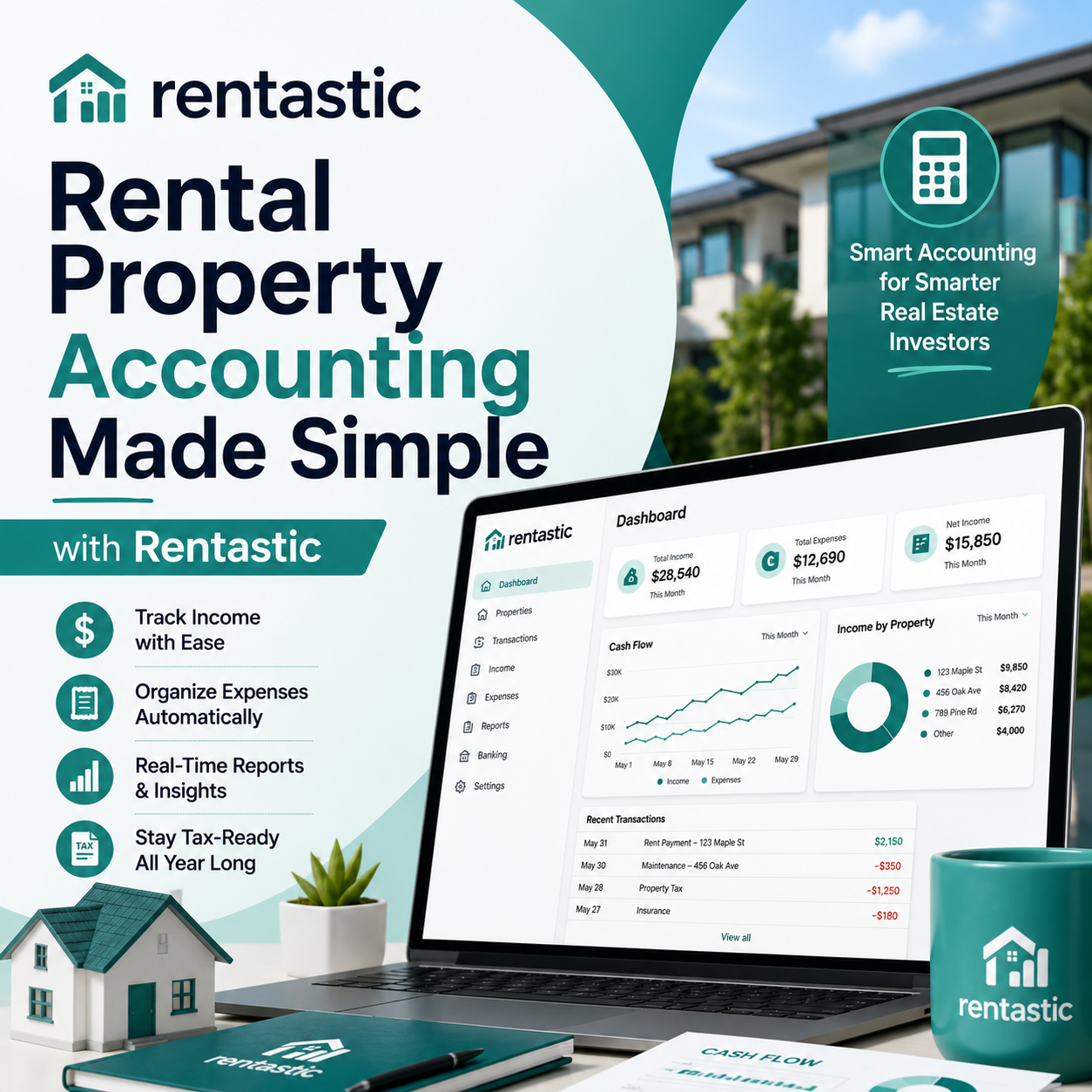
With Rentastic, your profit and loss statement and customizable dashboards update live as you reconcile, so generating a month end view is usually one click (Rentastic). At a minimum, you want:
Save this summary to your files, send it to partners or your CPA if needed, and note any follow up tasks for the coming week.
The biggest reason landlords skip regular reconciliation is not lack of interest, it is lack of time. Typing in transactions and shuffling spreadsheets at night after a long day on site is a recipe for burnout.
Automation changes the equation so you can get the benefits of reconciliation real estate without drowning in data entry.
Rentastic links directly to your bank and credit accounts and pulls in transactions automatically, which can cut manual bookkeeping time by over 60 percent according to a verified reviewer on the Rentastic blog (Rentastic Blog). Its rules engine then learns how you categorize recurring items and applies those rules at scale, so up to 70 percent of your recurring transactions land in the right category without your input (Rentastic Blog).
You still review and approve, but your monthly session becomes quality control instead of data entry.
Because Rentastic provides live dashboards and up-to-date profit and loss statements, you are not waiting until the end of the month to see where you stand. Income, expenses, and profitability across your portfolio update as transactions come in (Rentastic Blog).
Your monthly reconciliation then becomes a focused check on data that is already current, which lets you make decisions much more quickly.
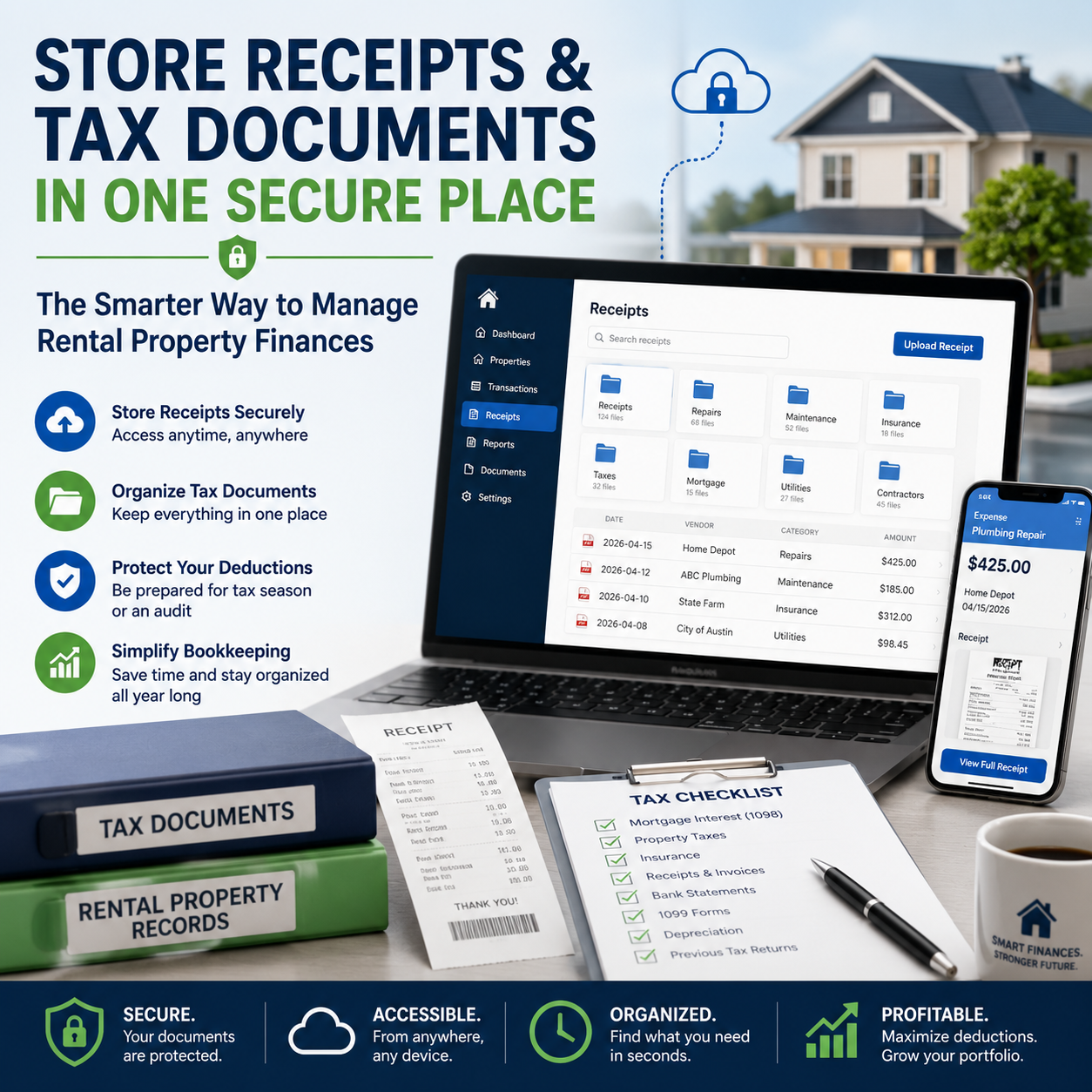
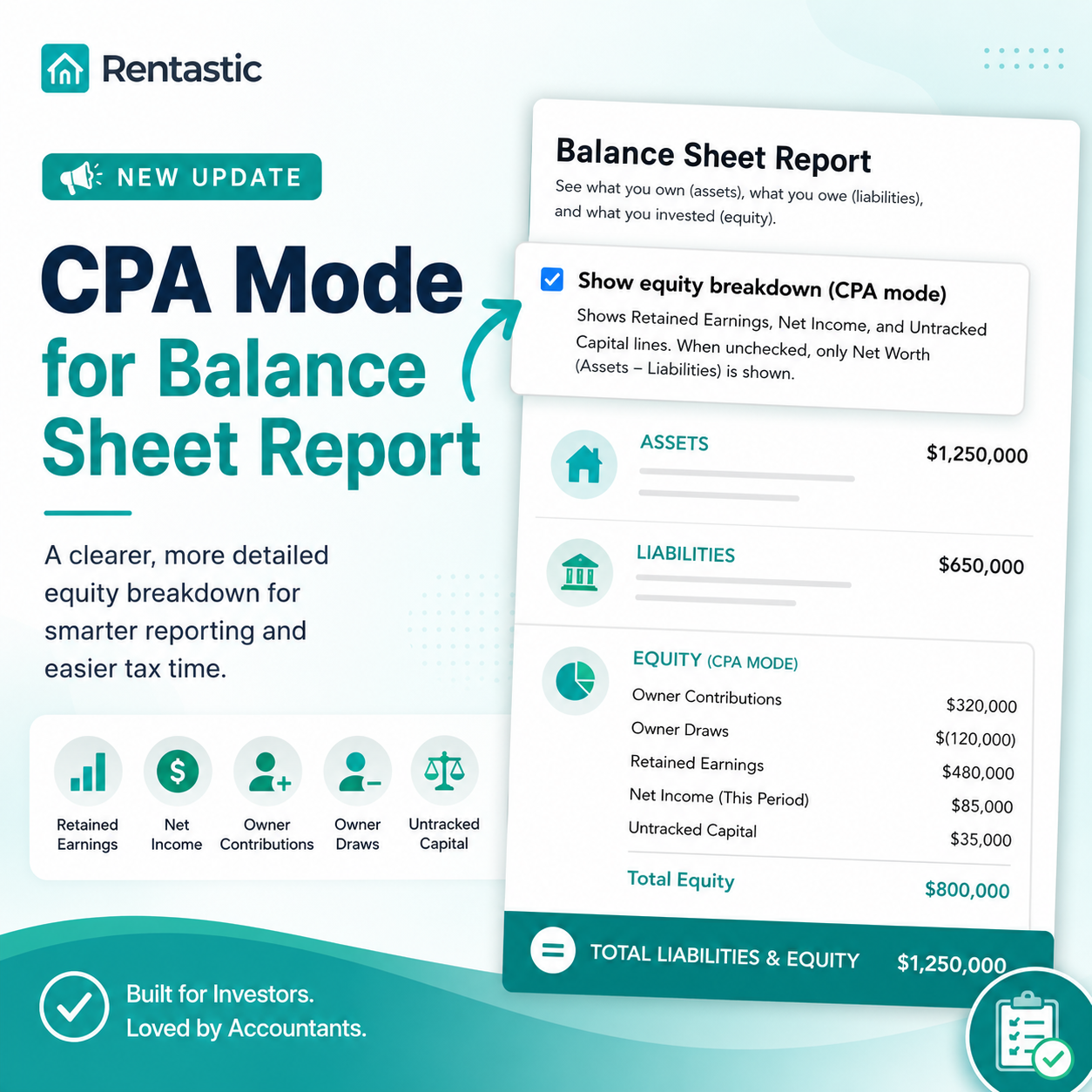
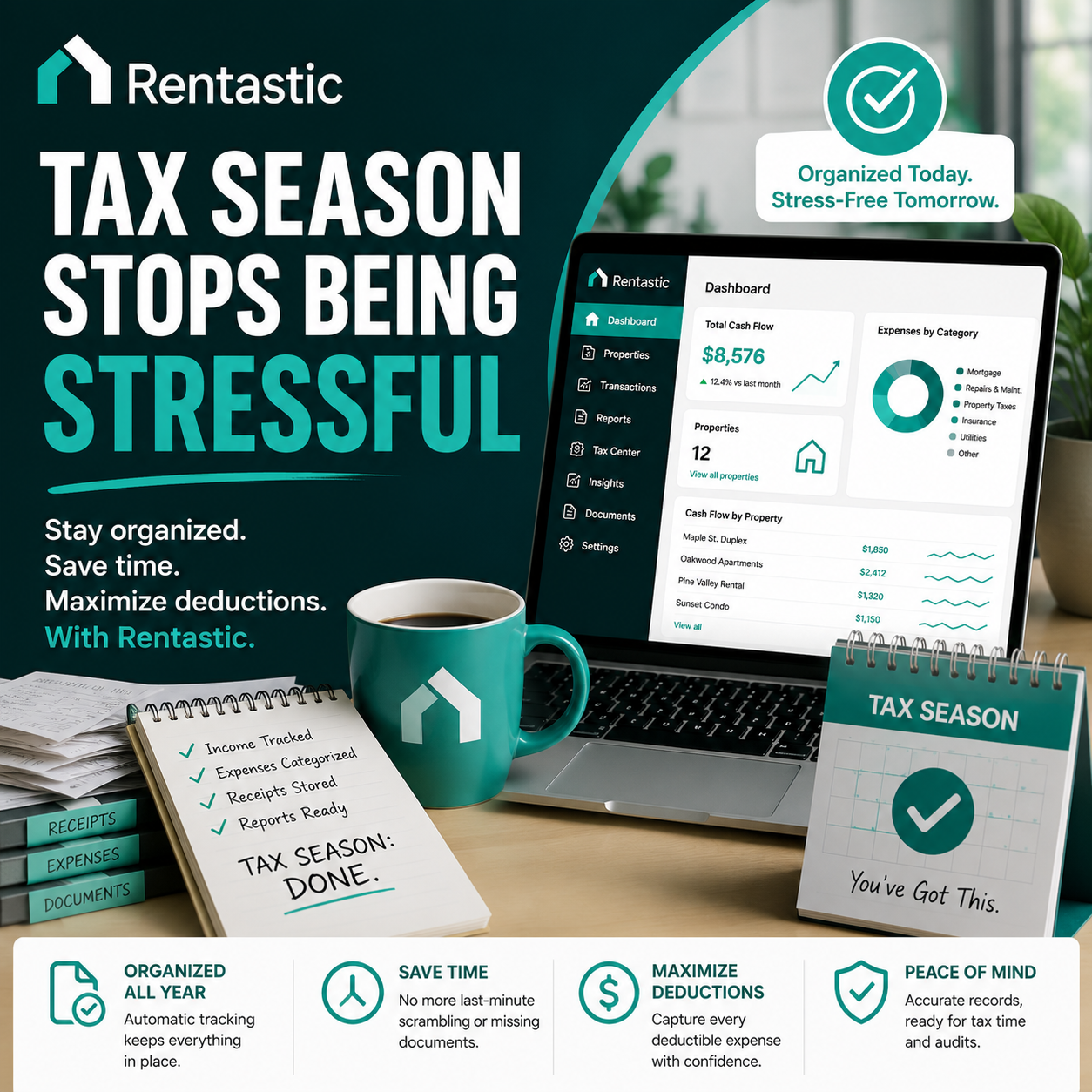
Tax season is much easier when you treat reconciliation as a monthly habit. Rentastic simplifies tax preparation by keeping profit and loss statements, balance sheets, and expense summaries updated and ready for export, which reduces the stress and surprises when your CPA finally asks for numbers (Rentastic Blog).
Features like receipt and mileage logging, with mobile capture and auto organization by vendor, date, and amount, keep your documentation tidy in case of an audit (Rentastic Blog). You are not hunting for a year old HVAC invoice in a glove box.
Reconciliation is not just about “closing the books.” It is about turning raw transactions into decisions that improve your returns.
Once your monthly numbers are clean, you can:
Rentastic’s deal analysis tools extend that thinking to new acquisitions by combining buying price, repair estimates, projected profit, and local rent comps in one place (Rentastic Blog). When your existing portfolio is reconciled and your data is trusted, you can underwrite new deals with more confidence.
This is where your monthly habit pays off. Clean books become a competitive edge, not a boring chore.
If you are building a system around real estate reconciliation, it helps to connect this monthly habit to your other routines.
You might:
Resources like the “Monthly Reconciliation Checklist for Real Estate Investors (Simple & Scalable)” on Rentastic.io are designed to help you tune that rhythm to your portfolio size and investing style (Rentastic).
If you want to go deeper into the principles behind this habit and how it connects to tools, the core topic of reconciliation real estate is a solid next stop. It brings together the techniques you are reading about here with broader strategy and best practices.
You do not need a finance degree or a full time bookkeeper to benefit from monthly reconciliation. You need a structure you trust and a tool that does most of the heavy lifting.
Your path from “amateur” to “pro” looks like this:
Set up your first monthly session now. Once you run through the process a couple of times, reconciliation real estate stops feeling like an accountant’s term and starts feeling like what it really is for you, a practical habit that protects your cash, your time, and your long term returns.
RECENT POSTS


© 2025 Rentastic
Rentastic is registered as a trademark. Terms and conditions, features, support, pricing, and service options subject to change without notice.















.png)





























.png)






























Comments