

Tax season can be kind to you or painful for you. One quiet decision that makes the biggest difference is how you track capital improvements vs repairs for taxes on your rentals. Get this right, and you lower your tax bill and sleep better if the IRS ever asks questions. Get it wrong, and you risk lost deductions or messy corrections later.
This guide walks you through the difference, how to track both without losing your mind, and how tools like Rentastic can keep everything clean and ready for tax season.
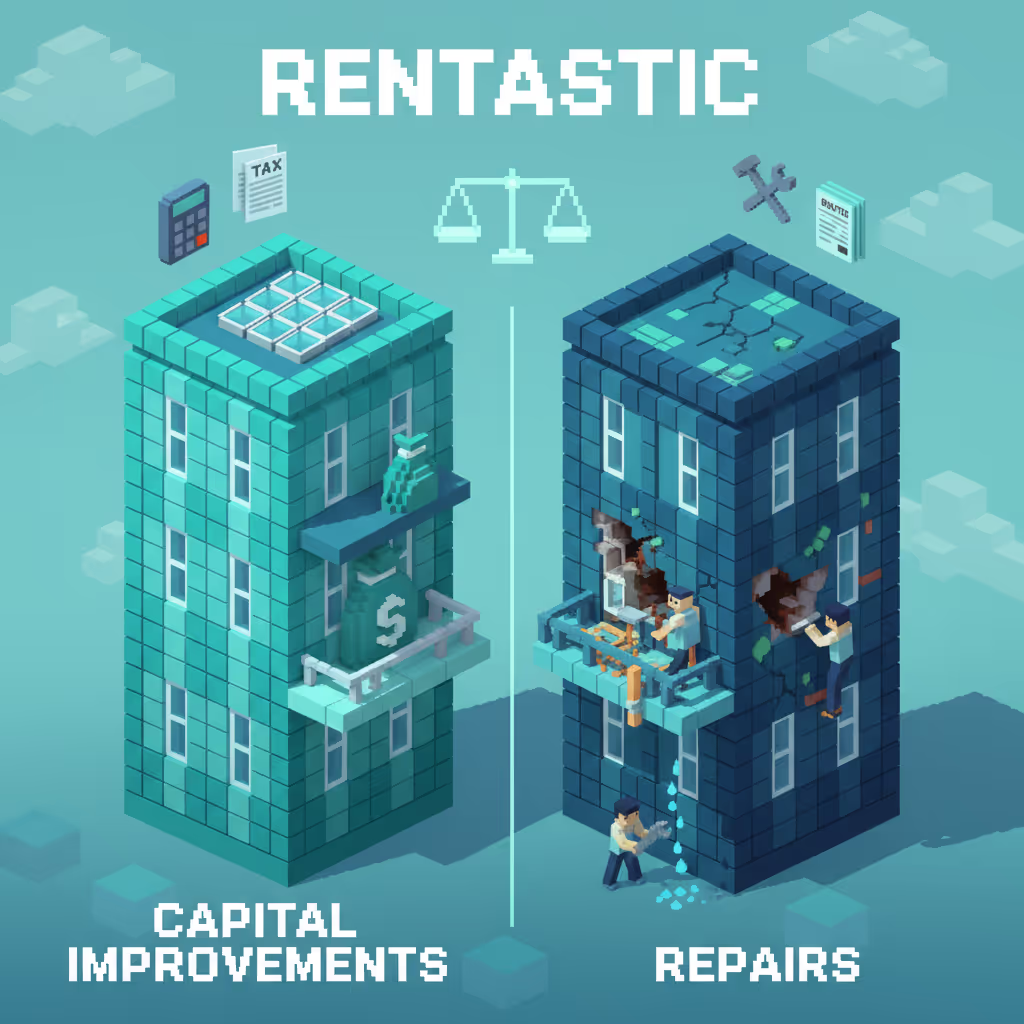
On the surface, a new faucet and a new roof both feel like “fixing the property.” For tax purposes, they are totally different.
Repairs and maintenance are usually fully deductible in the year you pay for them. That can give you immediate tax relief in the current tax season.
Capital improvements must be capitalized and depreciated over many years, typically 27.5 years for residential rental property. That means smaller annual deductions spread out across future years.
When you track the two correctly you:
The rest of this article shows you how to make that line as clear and practical as possible.
The IRS looks at what your spending does to the property, not just what you call it on your spreadsheet.
Repairs and regular maintenance keep your property in efficient operating condition without materially adding value or extending its useful life.
Common repair examples:
These are operating expenses. You typically deduct them fully in the same tax year you incur them, which directly reduces your rental income for that tax season. That is why tracking repair costs clearly is so valuable.
Improvements are upgrades that:
Examples include:
These are capital expenditures. You do not deduct the full amount in the year paid. Instead, you add them to your building’s cost basis and depreciate them over time, usually 27.5 years for residential rentals.
Understanding this distinction is the first step to tracking things correctly. You do not need to be perfect, but you do need a consistent method grounded in IRS rules.
The tax code includes several “safe harbor” rules that simplify your life and can allow you to treat some costs as repairs even when they feel close to improvements. These are especially helpful during a busy tax season when you just want clear yes or no answers.
If your rental property is worth under 1 million dollars, the IRS Safe Harbor for Small Taxpayers lets you deduct certain repair expenses up to 10,000 dollars per year without treating them as capital improvements, subject to specific limitations and conditions. This rule is designed to simplify compliance and maximize deductions for smaller landlords.
The practical takeaway: for modest properties, many of your fix‑it projects can stay in the current year expense bucket, as long as you stay within the limits and follow the detailed IRS criteria.
The De Minimis Safe Harbor lets you expense items that cost up to 2,500 dollars per item or invoice in the year you buy them, instead of capitalizing and depreciating them over time. This can include things like small appliances, minor fixtures, and low cost equipment.
This is one of the easiest wins in your tracking system. If an item is under the threshold, you flag it early as “De Minimis” and keep it in your repairs or supplies category instead of tying it up in depreciation for decades.
Routine Maintenance Safe Harbor applies to recurring work you reasonably expect to perform more than once during a 10 year period to keep the property in its ordinary operating condition.
Think of items like:
When work qualifies as routine maintenance under this safe harbor, you can usually deduct it currently instead of treating it as an improvement, which helps your deductions in the current tax season.
These safe harbor rules are technical, so you should review the detailed criteria with your tax pro. The key for your tracking system is to tag expenses that may qualify and keep clear documentation.
You do not need a complicated accounting background to track repairs vs capital improvements. You do need a system that is consistent and audit friendly.
From your first receipt, separate money into at least three buckets:
In practice, this looks like:
When tax season arrives, you do not want to dig through a generic “Repairs” pile trying to remember if that 8,200 dollar invoice was a new roof or a roof patch. You want it labeled correctly months ago.
For each repair or improvement, record:
These six details are often enough to support your deduction if the IRS ever asks. They also make it much easier for your CPA to prepare accurate returns, especially when combined with photo records or digital copies of contracts and invoices.
Write short, plain descriptions that make sense in one glance. For example:
If an item clearly adds value or extends useful life, label it as an improvement in your notes. That one extra word can save you a long email chain with your accountant in March.
Some projects naturally blur the line between repairs and capital improvements. You might fix some damage and upgrade other elements at the same time. For tax tracking, your goal is to break mixed projects down as clearly as you reasonably can.
Say you repaint, replace a few damaged tiles, and deep clean between tenants.
Most of the time, this is routine maintenance and repair, deductible in the current year:
Track each invoice separately and keep them in your repairs and maintenance category. Note “turnover work” or “make ready” in the description, so you can quickly filter these costs when you review performance or prepare for tax season.
The IRS often looks at whether you replaced a “major component” or a “substantial structural part.”
The same idea applies to windows, plumbing systems, and HVAC units. When you swap a major system or most of its parts, lean toward capital improvement and track it as such from the start.
If you have a mixed invoice, for example roof patching plus a few new vents, ask your contractor to itemize the bill. Then you can track the patching in repairs and the vents in improvements when warranted.
If you remodel a kitchen and the invoice includes new cabinets, counters, flooring, and appliances, treat the entire project as a capital improvement. You then add the total cost to your property’s basis and depreciate it.
For tracking, log the full invoice in your improvements category with a clear note like “Full kitchen remodel, Unit 2A, including cabinets, counters, flooring, appliances.” Your CPA can help decide if any appliance costs should be depreciated separately or may qualify for Section 179 or bonus depreciation.
The more thorough your records, the less you have to rely on memory, and the more confident you feel if anything is challenged.
Organize your documentation so you can answer two fast questions every tax season:
You can do this with:
The critical point is consistency. If you always store docs in the same place, you will actually use them.
You can deduct travel mileage for rental related activities using the IRS standard mileage rate, which is 65.5 cents per mile for 2025. To claim it, you must maintain detailed logs or records that show:
If you track this regularly, each trip for repairs or to oversee improvements adds up to meaningful deductions when tax season arrives.
Maintaining digital backups and physical copies of rental property records for at least seven years is crucial for IRS audit compliance and substantiating deductions during tax season, as emphasized in recent Rentastic guidance.
That long horizon affects how you track improvements. A roof you install today might still be in your depreciation schedule 25 years from now, so you want its paperwork to be easy to find, not lost in a box.
Once you decide an expense is a capital improvement, your job is not finished. You also need a simple way to track depreciation so you actually claim the deduction every year.
For most residential rental properties:
For tax season 2025, the bonus depreciation rate dropped to 40 percent, down from 60 percent in 2024. That makes planning your purchases and structuring acquisitions even more important if you want to maximize tax benefits from new improvements.
Instead of lumping all improvements into one vague category, create a simple list of major capital items for each property:
Store this list where you track your financials, and sync it with your depreciation schedule at tax time. That way you do not miss any deductions and you can reconcile your balance sheet easily.
Good tracking is about rhythm, not heroics at the last minute.
Before December 31, walk through a short checklist for each property:
Rental property owners should complete these year end tax preparation actions by December 31, 2025, to be well prepared for filing taxes in early 2026 and to make informed portfolio decisions. Doing this once a year also helps you see which properties are consuming the most capital and where you might raise rents or adjust strategy.
If you expect to owe more than 1,000 dollars in taxes when filing, the IRS generally requires quarterly estimated tax payments. Rental activities are usually treated as passive, and passive activity loss rules can limit how you use rental losses, although unused losses can carry forward to future years.
Solid tracking of repairs and improvements makes these estimates more accurate. You can see your likely taxable income by property, factor in expected depreciation on improvements, and avoid surprise tax bills after tax season.
You can track everything in spreadsheets and folders, but that approach often breaks once you add more properties or start juggling multiple projects at once.
Using dedicated property management software like Rentastic to automate transaction imports and generate profit and loss statements significantly simplifies tax preparation and improves accuracy during tax season.
Here is how a tool like Rentastic supports your repairs vs improvements tracking:
The Rentastic platform is built to simplify tax season preparation for landlords by automating expense tracking and financial reporting, including profit and loss statements that highlight deductible repair and maintenance costs. When the line between a repair and an improvement matters this much, a system that never forgets and never loses a receipt is a quiet superpower.
You do not need to be a tax expert to track capital improvements vs repairs well. You just need a clear, repeatable process.
Choose one property and set up this structure today. The next time tax season rolls around, you will have cleaner books, stronger deductions, and a lot less stress.
RECENT POSTS


© 2025 Rentastic
Rentastic is registered as a trademark. Terms and conditions, features, support, pricing, and service options subject to change without notice.









.png)

































.png)

































Comments