

If you own or manage rentals today, you are not just a landlord. You are a bookkeeper, a project manager, a tax prep assistant, a customer support rep, and a part‑time analyst keeping an eye on cash flow and ROI. Rentastic exists to pull all of that into one clear picture so you can stop fighting spreadsheets and start running a real estate business.
In 2026, Rentastic sits at the top of many investors’ shortlists for one simple reason: it is built specifically around the way you work, not around generic small‑business accounting. In this guide, you will see how Rentastic became the #1 app for modern landlords, what that means for your day‑to‑day, and how to decide if it is the right fit for your portfolio.
For years, your only options looked like this:
None of those paths give you what you really need: clean numbers on every unit, in real time, without living inside a ledger.
Studies from Rentastic’s own user base show over 70 percent of landlords were spending at least ten hours a month on manual bookkeeping before switching tools, most of it on repetitive income and expense entry and hunting for missing transactions (Rentastic Blog). You probably feel that drag yourself: time lost to admin, late nights before tax season, and very little clarity on which property is actually your top performer.
Modern landlords also deal with:
Rentastic stepped into that gap with one clear promise: automate the grunt work, surface the insights, and keep the interface simple enough that you do not need an accounting degree to use it.
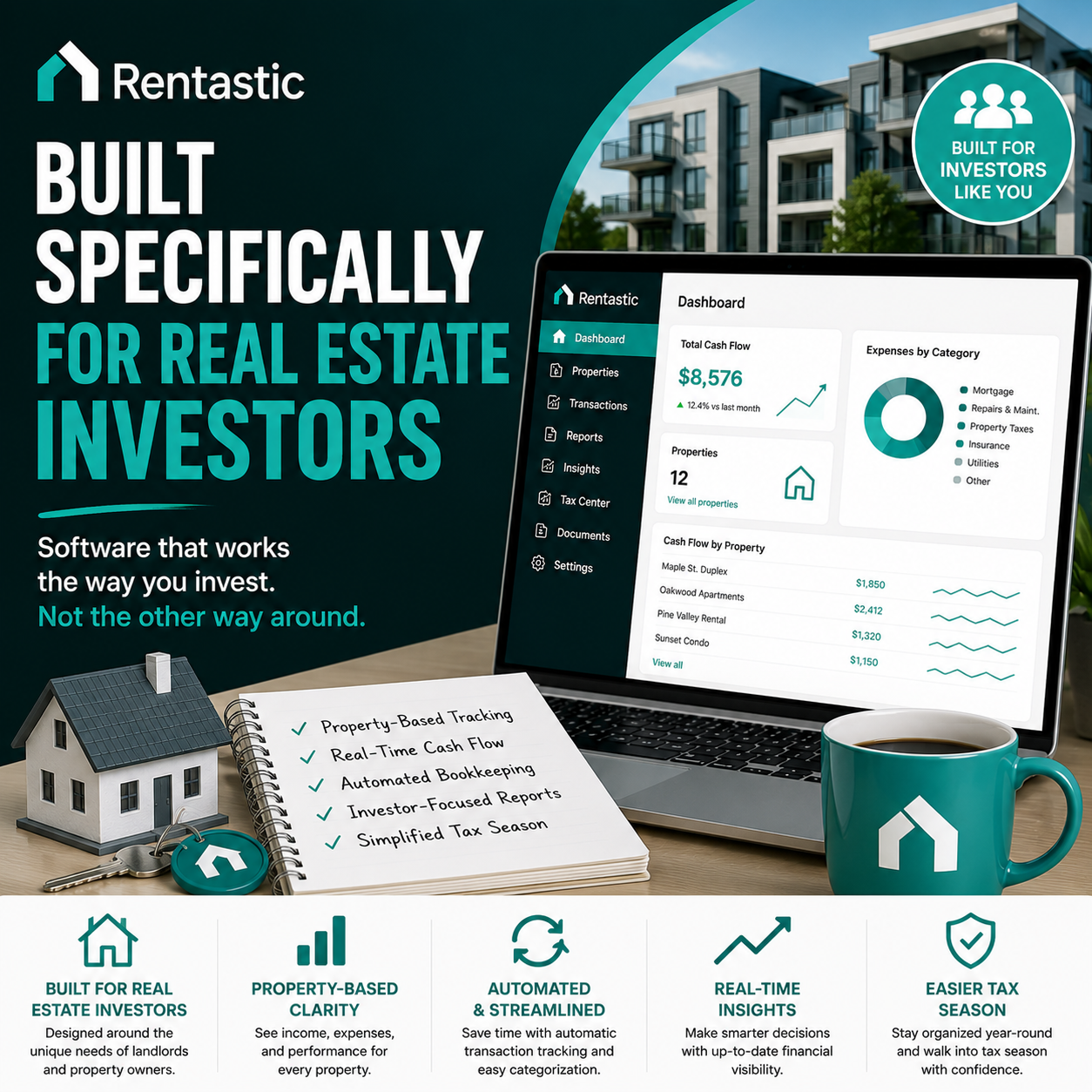
Most tools say they help landlords. Rentastic starts with a sharper focus. It is designed from the ground up for real estate investors and property managers, which affects every screen, workflow, and report you see (Rentastic Blog).
You notice the difference in a few key areas.
Instead of asking you to force your rentals into generic charts of accounts, Rentastic speaks your language. You track:
Features like the built‑in Deal Analyzer let you plug in purchase price, expected rent, expenses, and financing terms to see cap rate, cash‑on‑cash, and internal rate of return in seconds (Rentastic.io Blog). That kind of detail is not an afterthought. It is part of how Rentastic helps you decide whether to buy, flip, or rent long before you sign anything.
Once you link your checking and savings accounts through secure connections like Plaid, Rentastic automatically imports rental deposits and bill payments in real time (Rentastic Blog). You do not have to export CSVs or copy and paste line items.
From there, the app learns how you tag transactions. Over time, Rentastic automates expense categorization and can reduce manual data entry by up to 70 percent, according to internal user reports (Rentastic.io Blog). A verified real estate reviewer found that using custom categories like rent, repair cost, and management fee cut bookkeeping errors by more than 60 percent (Rentastic.io Blog).
That combination of bank syncing and smart rules means you spend your time reviewing and approving, not typing.
Users consistently praise Rentastic for its intuitive, uncluttered interface. In a 2025 survey, 79 percent of property investors rated it 5 out of 5 for ease of use and value for money, with an overall score of 4.8 from 14 reviewers (Rentastic.io Blog). You can link an account and see live data and trends within minutes, with no IT setup or long onboarding (Rentastic Blog).
Compared with broader tools like QuickBooks or some competing landlord apps, users highlight Rentastic’s focus on exactly what you care about, nothing more and nothing less (Rentastic Blog).
If you want a deeper dive into how this investor‑first mindset shapes the product, you can explore what makes it unique in more detail at what sets rentastic apart.
To see why many landlords call Rentastic their “second brain,” it helps to look at the core features that support your daily work.
Once your bank accounts are connected, Rentastic pulls in:
Transactions appear in a single feed across all properties. Rentastic suggests categories based on your past decisions and the transaction details, then improves those guesses as you confirm them.
According to Rentastic’s own reporting, this automated tracking and classification can reduce bookkeeping time by more than 60 percent and save up to 40 percent of the time you would usually spend on manual data entry (Rentastic Blog). Over a year, that is dozens of hours back to focus on deals, renovations, or simply your life outside of real estate.
You do not manage property from behind a desk. You sign leases at coffee shops, check on repairs between errands, and grab receipts from hardware stores on the fly.
The Rentastic mobile app is built for that reality. You can:
Landlords using the app stay audit‑ready because every receipt and trip sits in a chronological trail tied to the right property (Rentastic.io Blog). You avoid the shoebox of receipts problem without doing extra work.
At tax time, you want to click and download, not spend a weekend rebuilding a year of activity.
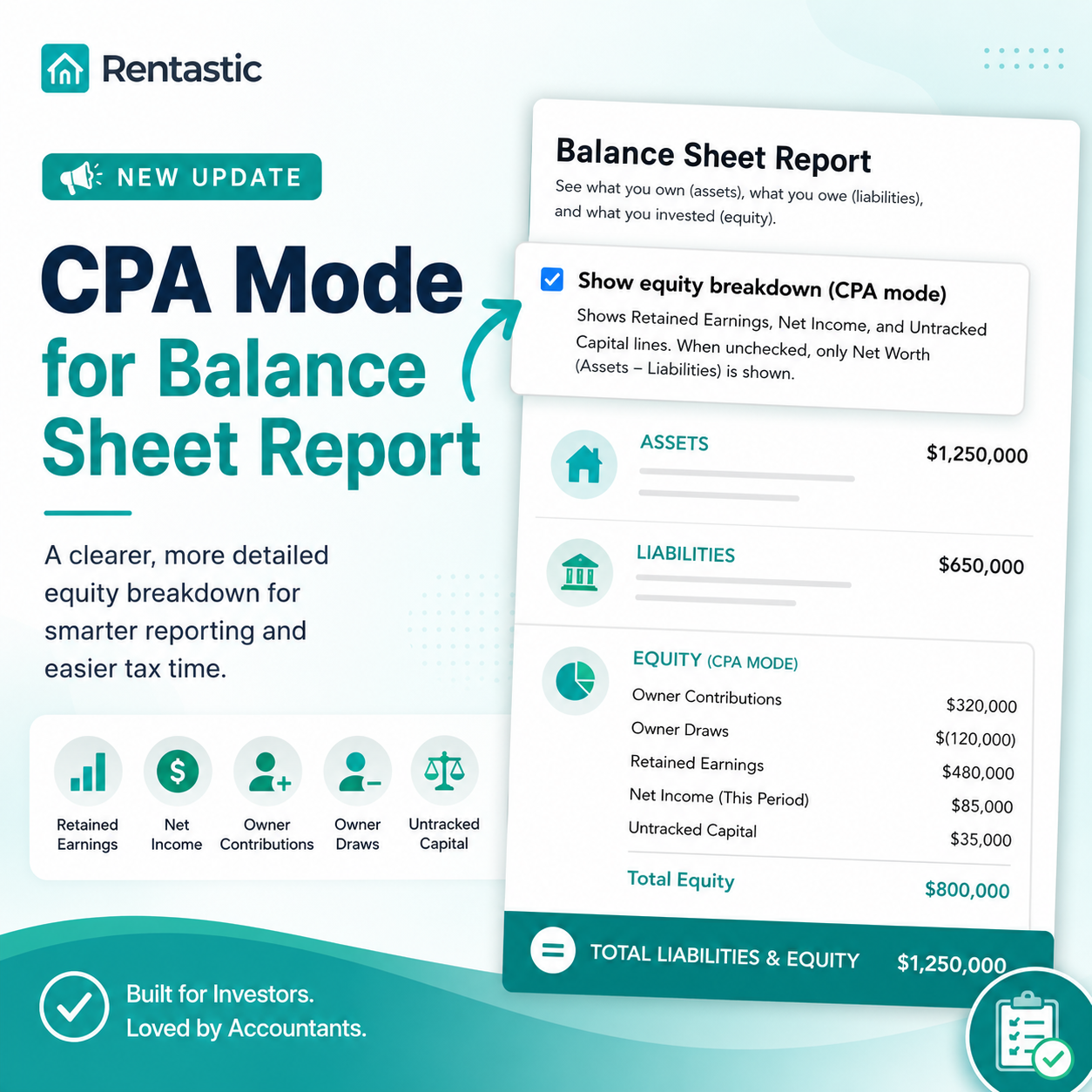
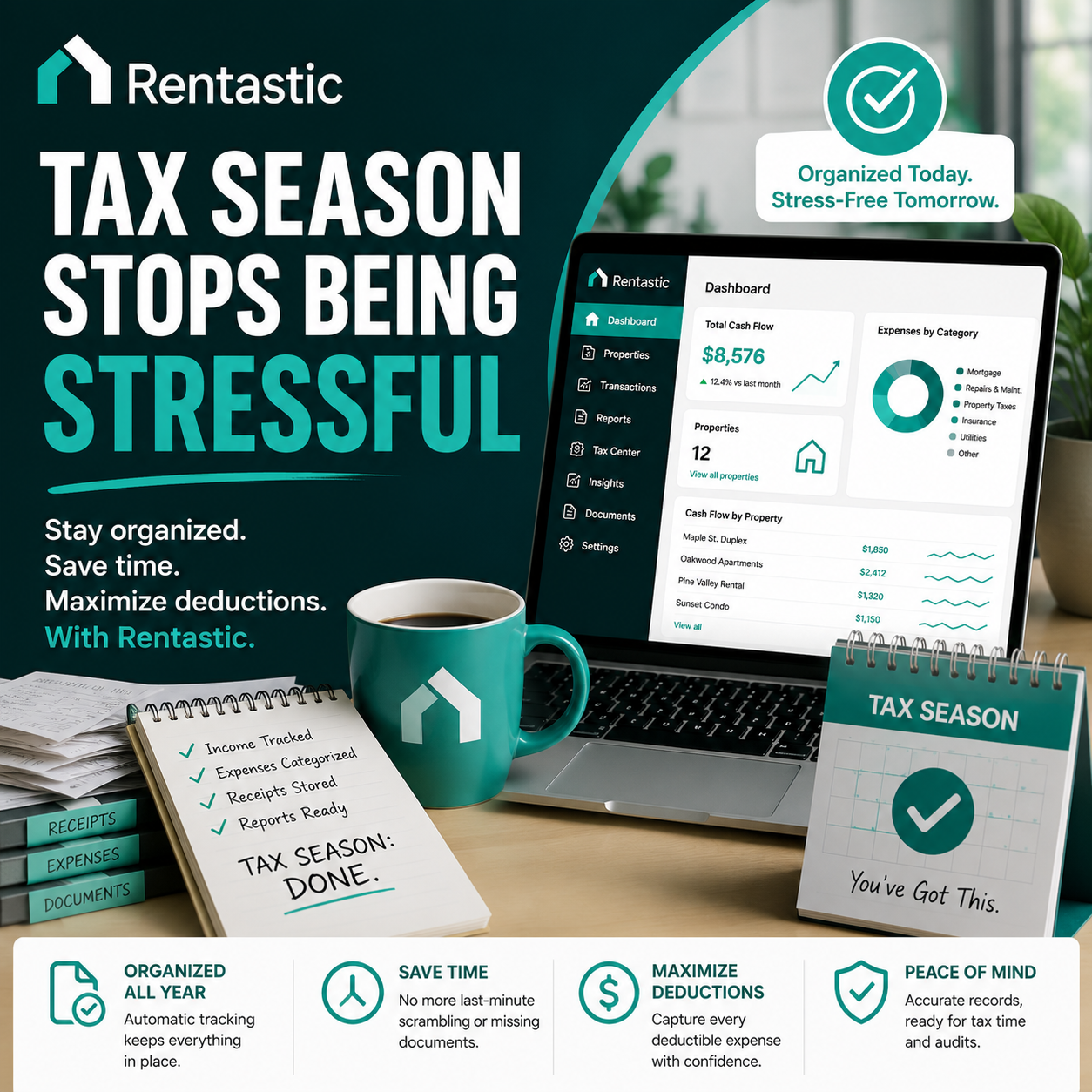
Rentastic gives you instant Profit and Loss statements filtered by property, date range, or your entire portfolio (Rentastic Blog). Because income and expenses are already tagged, these reports line up with what your CPA or tax software expects.
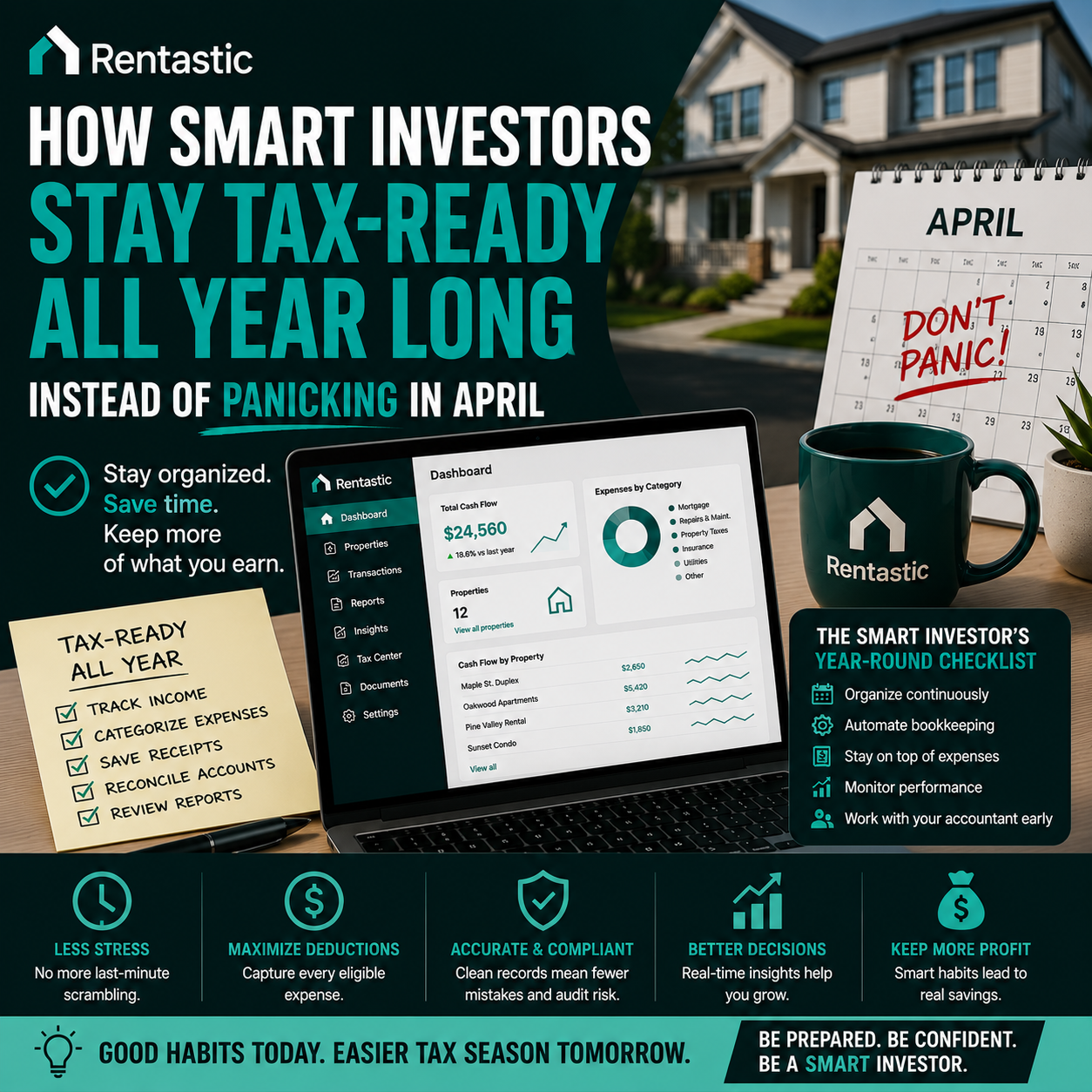
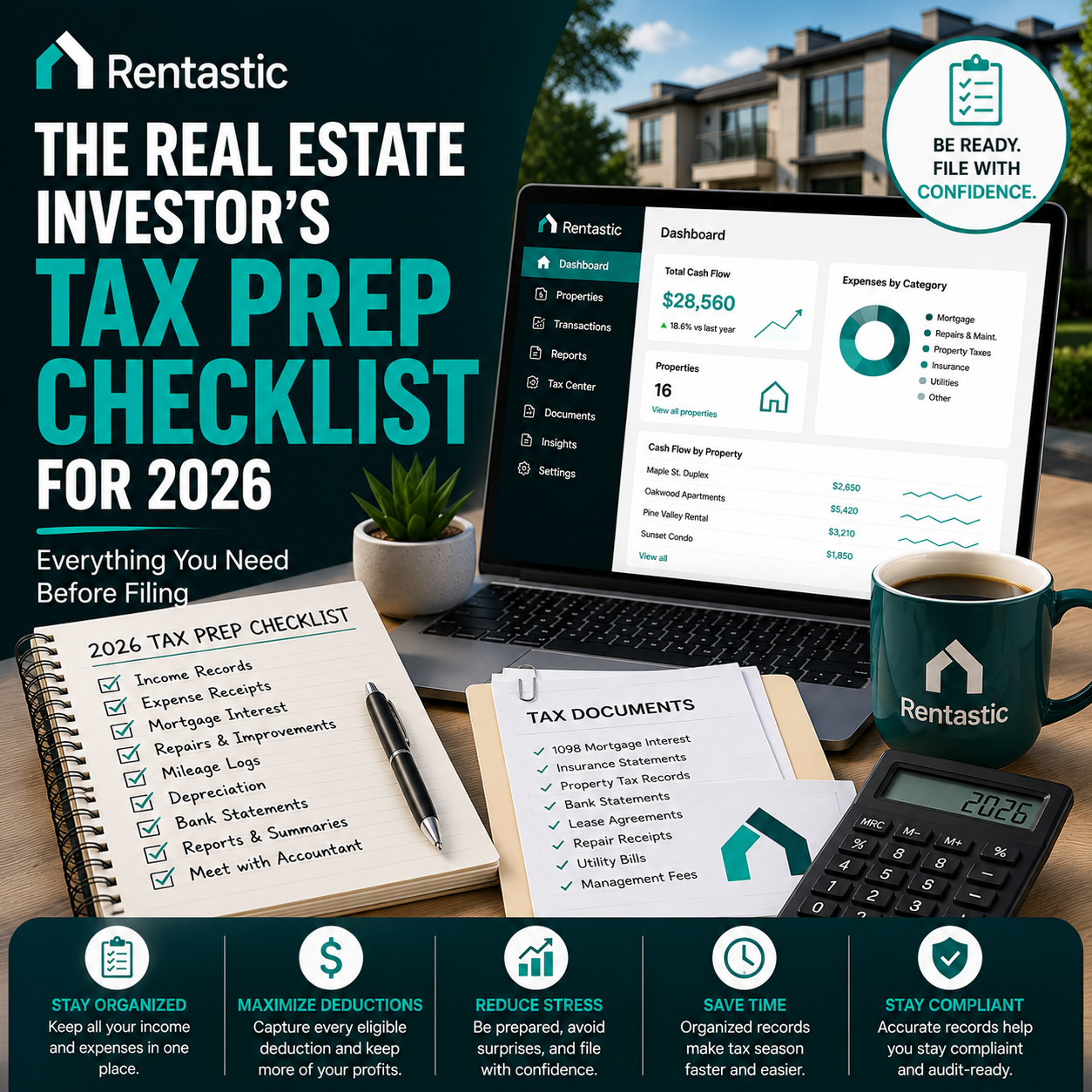
Users report that this smooth reporting, combined with clear expense tracking, significantly reduces tax season stress and time spent preparing documents (Rentastic Blog). You stop dreading April and start seeing it as just another snapshot of how your investments are performing.
Chasing rent is one of the fastest ways to burn out. Rentastic’s integrated online payment system streamlines this part of your job:
Landlords who used Rentastic’s integrated payments in 2024 saw a 25 percent reduction in late rent payments, supported by automated reminders and clear tracking (Rentastic.io Blog, Rentastic Blog). That is fewer awkward conversations and a more predictable cash flow for you.
Buying well is as important as managing well. With high interest rates and tight inventory, you cannot afford to guess.
Rentastic’s Deal Analyzer lets you model different scenarios quickly. You plug in purchase price, projected rent, renovation budgets, and financing details, then see how each variable shifts your cap rate, cash‑on‑cash return, and other investment metrics (Rentastic.io Blog, Rentastic.io Blog).
This goes beyond single deals. In a 2024 survey, investors using Rentastic’s automated reporting made investment decisions 30 percent faster by spotting underperforming properties and reallocating capital more efficiently (Rentastic Blog). During the high interest rate environment in summer 2025, some landlords leveraged that clarity to reduce their effective borrowing costs from 8 percent to 4.1 percent, unlocking around 60,000 dollars in instant equity gains on a 235,000 dollar purchase (Rentastic Blog).
In short, your reports are not just for taxes. They become a decision engine.
If you are curious how this investor‑centric lens plays out across the full product, you can dig into why it is truly built for investors.
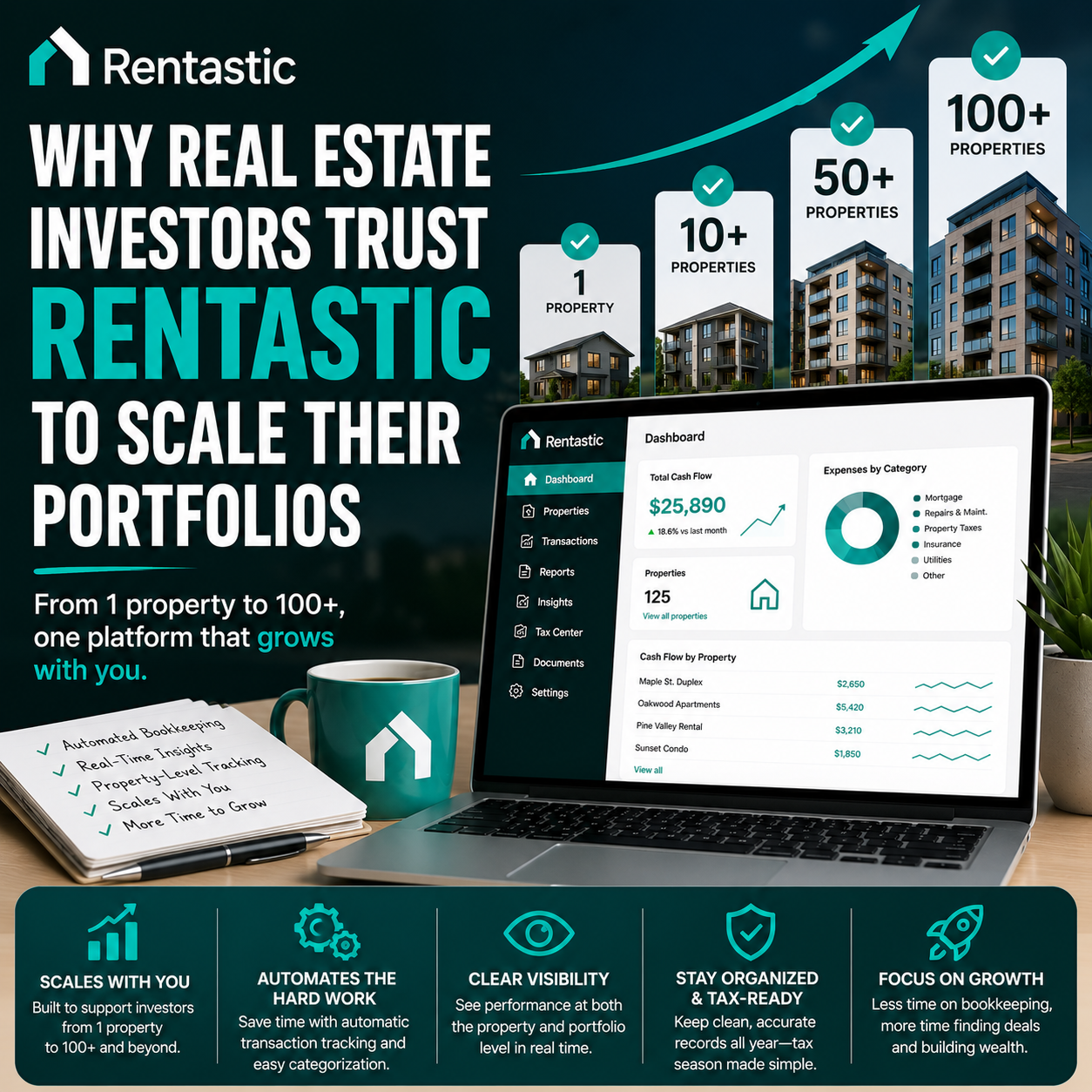
One common worry is that “simple” software will fall apart once you add more units. Rentastic aims to stay easy while handling growth.
The Free Plan is ideal if you are managing up to three properties. You get the core automation and reporting you need to stop using spreadsheets. When your portfolio grows, the Premium Plan opens up unlimited properties, deal analysis, and bank syncing for around 28 dollars per month or 238 dollars per year, which works out to roughly 19.38 dollars per month if you pay annually (Rentastic.io Blog, Rentastic Blog).
That cost is small compared to a single late fee, missed deduction, or poorly analyzed deal. Users generally rate the premium tier as good value for money, especially given the hours saved and the quality of decisions they can make with cleaner data (Rentastic.io Blog, Rentastic Blog).
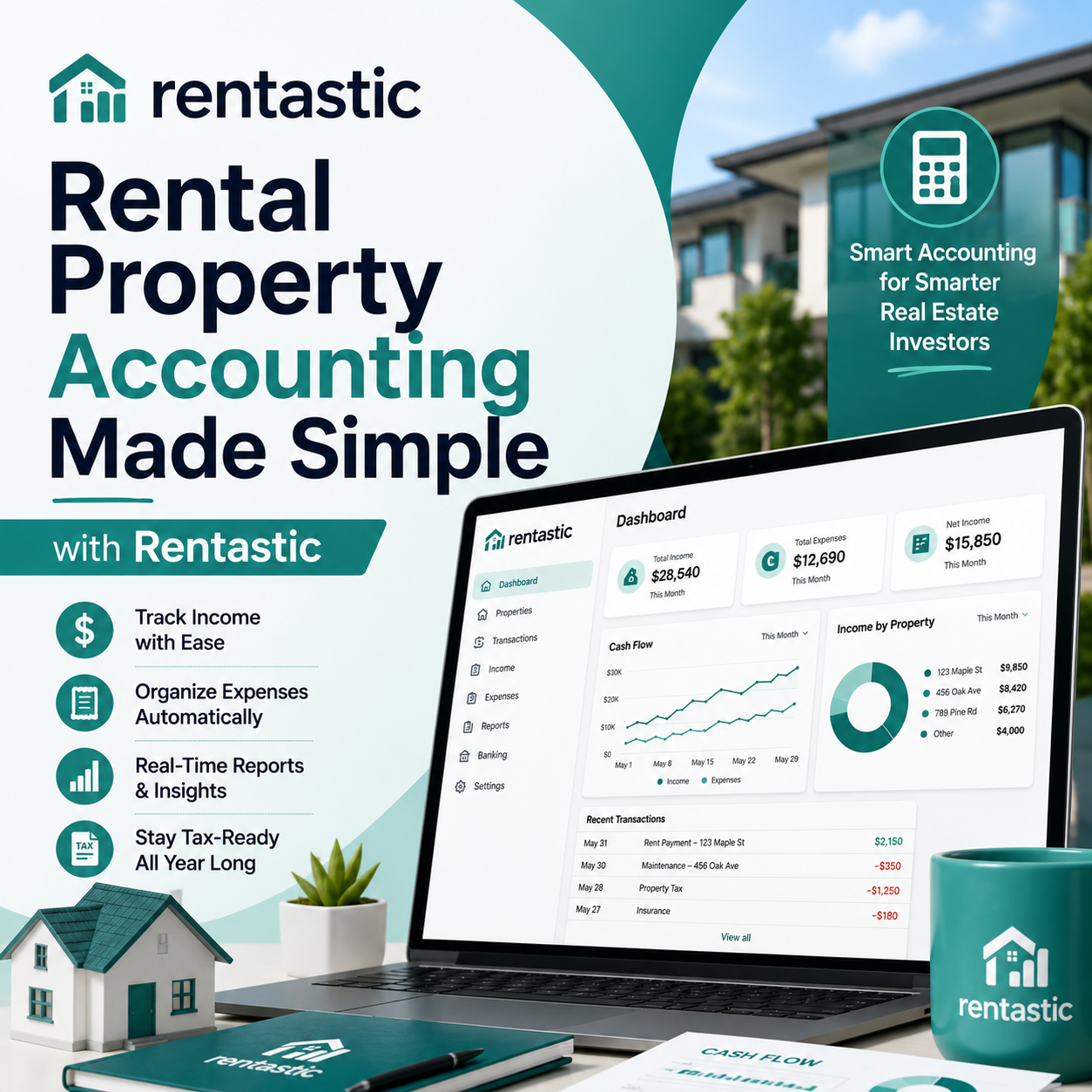
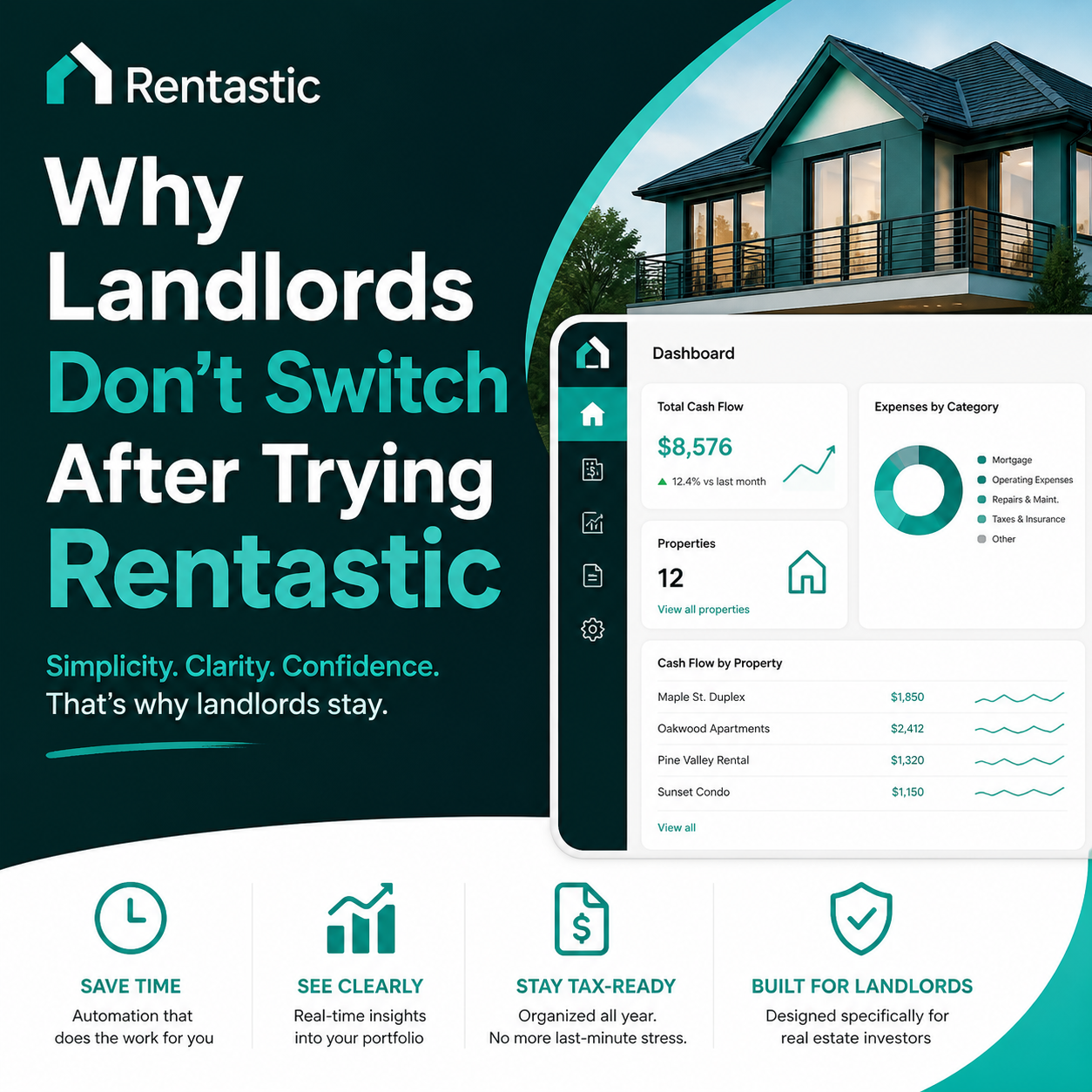
Rentastic’s dashboards are built to give you an instant overview: cash in, cash out, and how each property is doing. You can see tenants, leases, and financial performance in a single glance, which reduces the mental load of keeping many details in your head (Rentastic).
Compared to tools like Stessa and Landlord Studio, Rentastic is often praised for:
Investors and managers who tried QuickBooks or other general systems often describe Rentastic as a relief because it hides the complexity you do not need and keeps the parts that matter most to your rentals (Rentastic Blog).
The platform lets you customize:
This balance of automation and control is a big part of why Rentastic has become a preferred choice for real estate investors seeking streamlined property management in 2025 (Rentastic Blog, Rentastic, Rentastic Blog).
If you want a broader snapshot of everything included as you grow, have a look at the all-in-one landlord solution.
You are not just trusting Rentastic with data. You are trusting it with the story of your portfolio and your future cash flow.
Rentastic uses Plaid to link your bank accounts, which means the app never stores your actual banking usernames or passwords. Instead, you authenticate through Plaid’s secure flow and Rentastic receives only the transaction data it needs to update your books (Rentastic Blog).
That setup helps protect you from the risks of manual imports, misplaced CSVs, or sharing credentials by email. At the same time, you still get real‑time updates across all connected accounts (Rentastic.io Blog).
You should not need an IT team to manage rentals. Rentastic is designed so you can sign up, link an account, and start seeing populated data within minutes (Rentastic Blog). When you do have questions, users describe the support team as responsive and practical, which is part of why CEOs and operators in real estate‑heavy businesses publicly praise the product for making tax tasks and account management feel straightforward (Rentastic Blog).
In a 2025 survey, 79 percent of investors gave Rentastic a 5 out of 5 for ease of use and value, reinforcing that you are not just buying features, you are buying a smoother way to run your whole operation (Rentastic Blog).
You have a lot of landlord apps to choose from. So where does Rentastic fit in your decision?
It is likely a strong match if:
It may not be the perfect fit if you run a very large enterprise portfolio with complex, custom accounting structures, or if you already have a full‑time accounting team that lives inside a general ledger platform. For the vast majority of independent landlords, small property management shops, and active real estate investors, though, Rentastic is built around your exact needs.
To explore the full feature set and see current pricing or plan details, you can visit the main rentastic page.
Modern landlording is no longer about simply collecting checks. It is about seeing your rentals as a business, knowing your numbers, and being able to move quickly when opportunities appear or conditions change.
Rentastic became the #1 app for modern landlords by focusing relentlessly on those realities. It automates your bookkeeping, clarifies your performance, and fits into your real life with clear dashboards and a mobile app that work the way you already do.
If you are ready to trade late‑night spreadsheets for a clear view of your portfolio, your next move is simple: connect one account, import one month of activity, and see what changes when the busywork gets handled for you.
RECENT POSTS


© 2025 Rentastic
Rentastic is registered as a trademark. Terms and conditions, features, support, pricing, and service options subject to change without notice.




.png)




















.png)

































Comments