
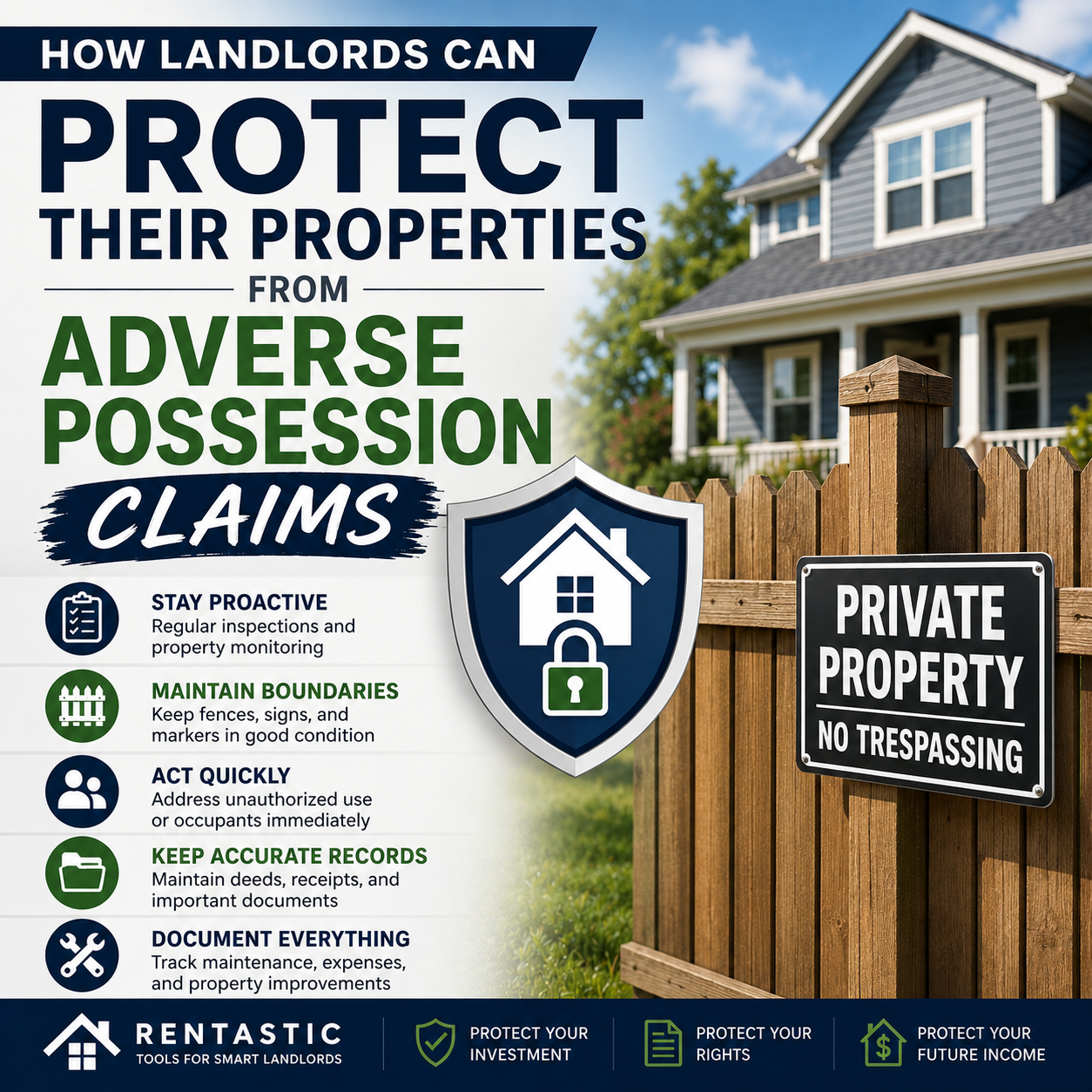
Most landlords assume that owning a property automatically guarantees their rights to it. However, adverse possession laws can create complications when a property is neglected or left unmanaged for long periods.
While adverse possession claims are relatively uncommon, they rarely happen overnight. In most cases, there are warning signs that property owners overlook for months—or even years—before a dispute arises.
Recognizing these early indicators can help landlords protect their investments and avoid costly legal battles.
Adverse possession generally requires someone to openly occupy or use a property for an extended period without the owner's permission. The specific legal requirements vary by state, but landlords can reduce risk by identifying problems early.
Here are five warning signs that your property may be vulnerable.
Vacant properties are among the most common targets for unauthorized use.
Whether a property is waiting for new tenants, undergoing renovations, or simply sitting unused, extended vacancies can attract individuals looking for a place to stay or land to use.
Warning signs include:
The longer a property remains unattended, the greater the risk becomes.
Visible management discourages unauthorized occupants.
Boundary disputes often lead to adverse possession claims.
You may notice a neighboring property owner:
While these actions may seem harmless at first, allowing them to continue unchecked for years can create legal complications.
Review property surveys periodically and address encroachments as soon as they are discovered.
Properties that appear abandoned are far more attractive to unauthorized occupants.
Common signs include:
An unmaintained property signals that ownership oversight may be lacking.
Keep up with routine maintenance and document all repairs. Maintenance records demonstrate active ownership and management.
One of the strongest defenses against ownership disputes is documentation.
Many landlords struggle to locate important records when they need them most.
Critical documents include:
Without organized records, proving active ownership becomes more difficult.
Store all property-related records digitally and maintain backups whenever possible.
Using property management and bookkeeping software can simplify this process and create a clear ownership history.
Perhaps the biggest warning sign is allowing unauthorized use to continue without action.
Examples include:
Ignoring these situations can unintentionally strengthen future claims.
Address unauthorized occupancy immediately.
Document the situation, consult local legal professionals when necessary, and follow proper procedures to remove unauthorized occupants.
When ownership disputes arise, documentation often becomes the deciding factor.
Landlords who can demonstrate:
are generally in a much stronger position than owners who lack organized records.
Tracking expenses, repairs, and property-related activities not only helps during tax season but also creates a documented timeline of ownership.
Adverse possession claims rarely happen without warning. Most properties become vulnerable because small issues are ignored over time.
By staying alert to these warning signs and maintaining consistent oversight, landlords can significantly reduce their risk and protect their investments.
Regular inspections, proper maintenance, clear boundaries, and accurate record-keeping remain some of the most effective tools for safeguarding property ownership.
The best defense against adverse possession is simple: stay actively involved in managing your property.
RECENT POSTS


© 2025 Rentastic
Rentastic is registered as a trademark. Terms and conditions, features, support, pricing, and service options subject to change without notice.














.png)




























.png)
































Comments