

Remote real estate investing has a simple rule. If you cannot clearly see your numbers, you cannot clearly grow.
In 2026, the best way to track rental income and expenses is to let software do the heavy lifting while you stay focused on deals, tenants, and strategy. That is where the best real estate tracker of 2026, Rentastic, comes in and why treating it as your financial command center can quietly add thousands of dollars to your bottom line over the next few years.
This guide walks you through how to track smarter in 2026, where manual methods fall short, and how to set up Rentastic as your engine for clean books, better cash flow, and faster decisions.
If you already have a spreadsheet or a basic accounting app, it can feel like your system is fine. Rent in, bills out, tax file once a year. Done.
Look a little closer and you often find:
Rentastic’s own analysis found that linking bank accounts and cards to the platform cuts manual data entry by up to 80 percent compared with spreadsheets, which saves time and reduces errors in rental accounting (Rentastic). That is time you can redirect to acquisitions, tenant relationships, or simply getting your evenings back.
When you treat tracking as a strategic tool instead of a tax chore, your numbers stop being a burden and start being a competitive edge.
Smarter tracking is not just prettier charts. It has a few concrete traits.
You should not be hand typing every rent payment and expense.
Rentastic connects directly to your bank accounts and credit cards through a secure integration with Plaid, so it automatically pulls in income and expense transactions without ever storing your login credentials on its own servers (Rentastic Blog). That automation is what earned it a spot as the best real estate tracker of 2026 in multiple reviews, because it reduces both time and human error (Rentastic).
On top of that, Rentastic’s auto categorization engine handles up to 70 percent of transaction categorization on its own, especially for recurring bills and common landlord expenses (Rentastic Blog). You still stay in control, but you no longer live in your ledger.
Smart tracking means having answers on demand, not three weeks after you send a spreadsheet to your bookkeeper.
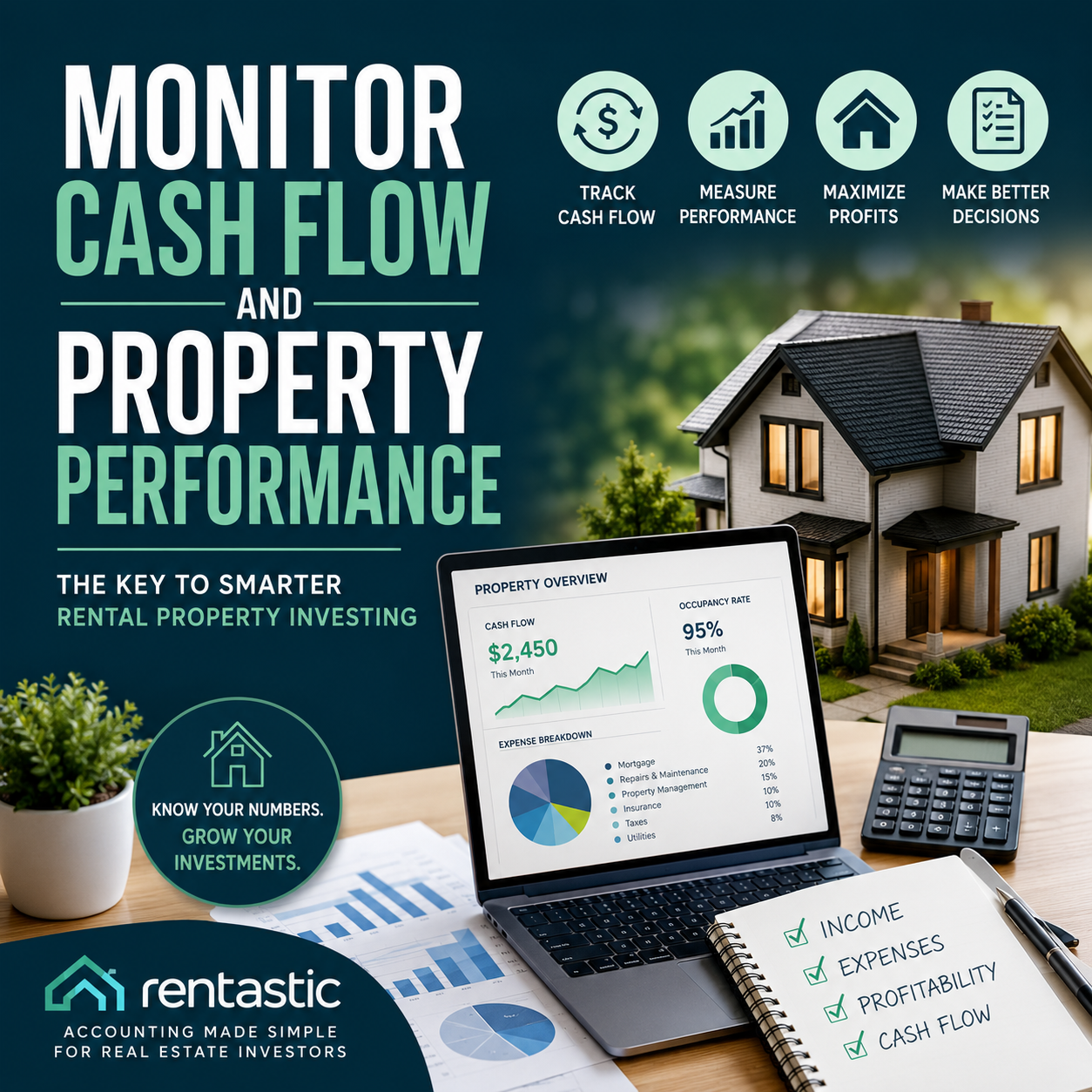
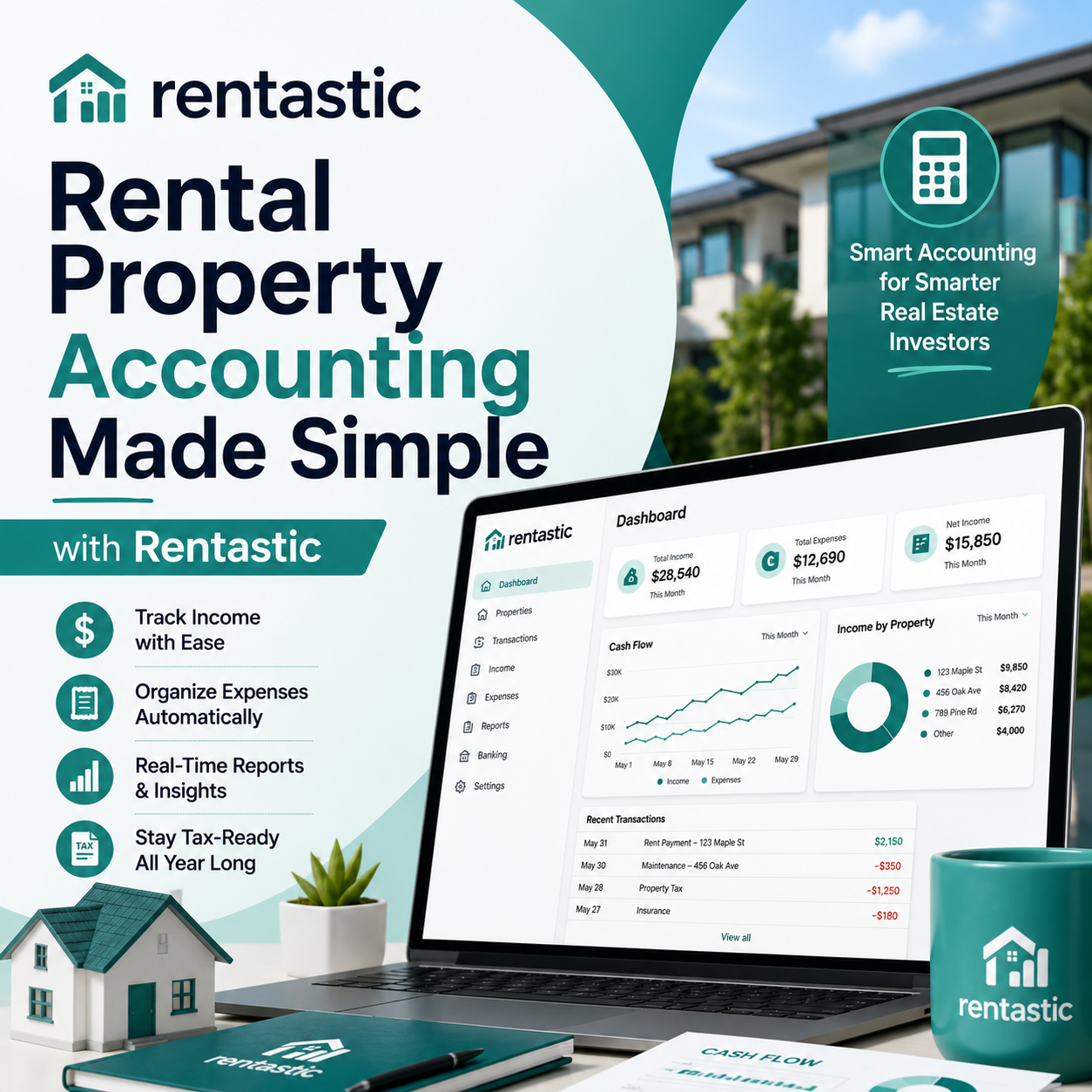
Rentastic generates Profit and Loss (P&L) statements in seconds for individual properties or entire portfolios, so you can monitor cash flow and profitability all year rather than waiting for tax time (Rentastic). Fast reporting is also what helps you avoid end of year surprises and plan ahead for repairs or refinances (Rentastic).
If you manage multiple doors, you need to know which ones are your workhorses and which ones are dragging you down.
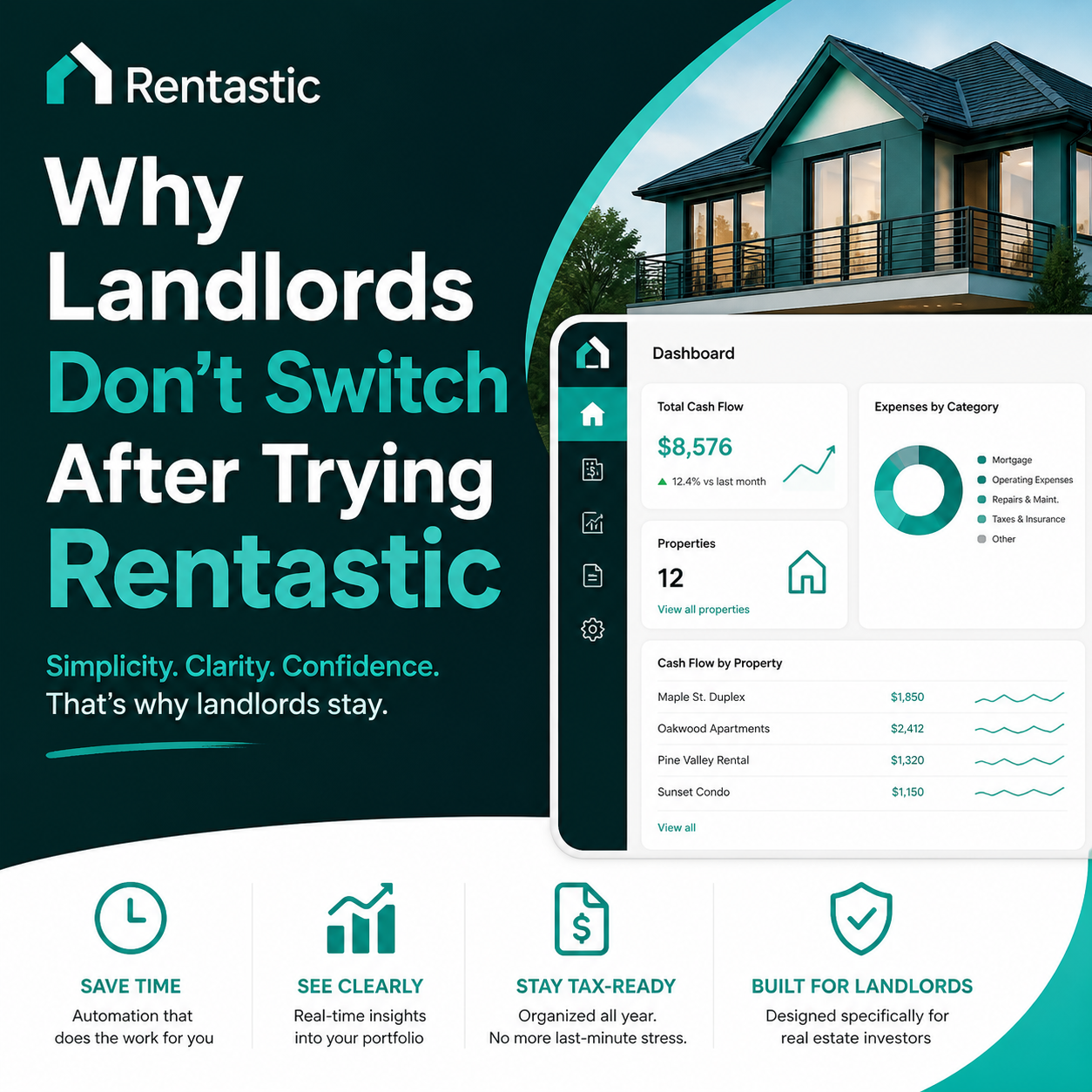
Rentastic offers consolidated dashboards that let you view performance by portfolio, region, or asset class and even drill down to each individual property (Rentastic). Its portfolio performance tools help you analyze strong and weak investments so you can adjust rent, cut expenses, or exit underperformers (Rentastic).
Numbers are more useful when they look forward, not just backward.
Rentastic includes AI driven cash flow forecasting to show where your income and expenses are trending, plus customizable alerts and reminders that keep you ahead of renewals, big bills, or odd changes in your numbers (Rentastic Blog, Rentastic).
When you combine automation, instant reporting, portfolio visibility, and forecasting, your tracking system becomes a quiet advisor instead of a noisy to do list.
You have options in real estate accounting, from generic small business tools to spreadsheet templates. So why is Rentastic repeatedly highlighted as the best real estate tracker of 2026?
Rentastic is designed for rental property use cases first, not retail or agencies. The categories, reports, and workflows all assume you are dealing with units, leases, and rent, not just invoices.
It offers landlord friendly accounting that automates rental income and expense tracking by connecting directly to your bank accounts for automatic transaction imports (Rentastic). A 2023 analysis showed that this linked approach can cut manual entry by up to 80 percent (Rentastic). That is the difference between “I will catch up on bookkeeping this weekend” and “It is already done.”
Instead of waiting for statements, Rentastic syncs your checking and savings accounts to provide real time transaction updates and automated P&L statements. Landlords who rely on this integration spend about 30 percent less time on accounting compared to spreadsheets, according to a 2024 study reported by Rentastic (Rentastic Blog).
Its automated bank reconciliation flags unmatched transactions and suggests matches, which can cut reconciliation time by up to 50 percent and make month end far less painful (Rentastic.io Blog).
Shoeboxes and random email attachments do not hold up well in an audit.
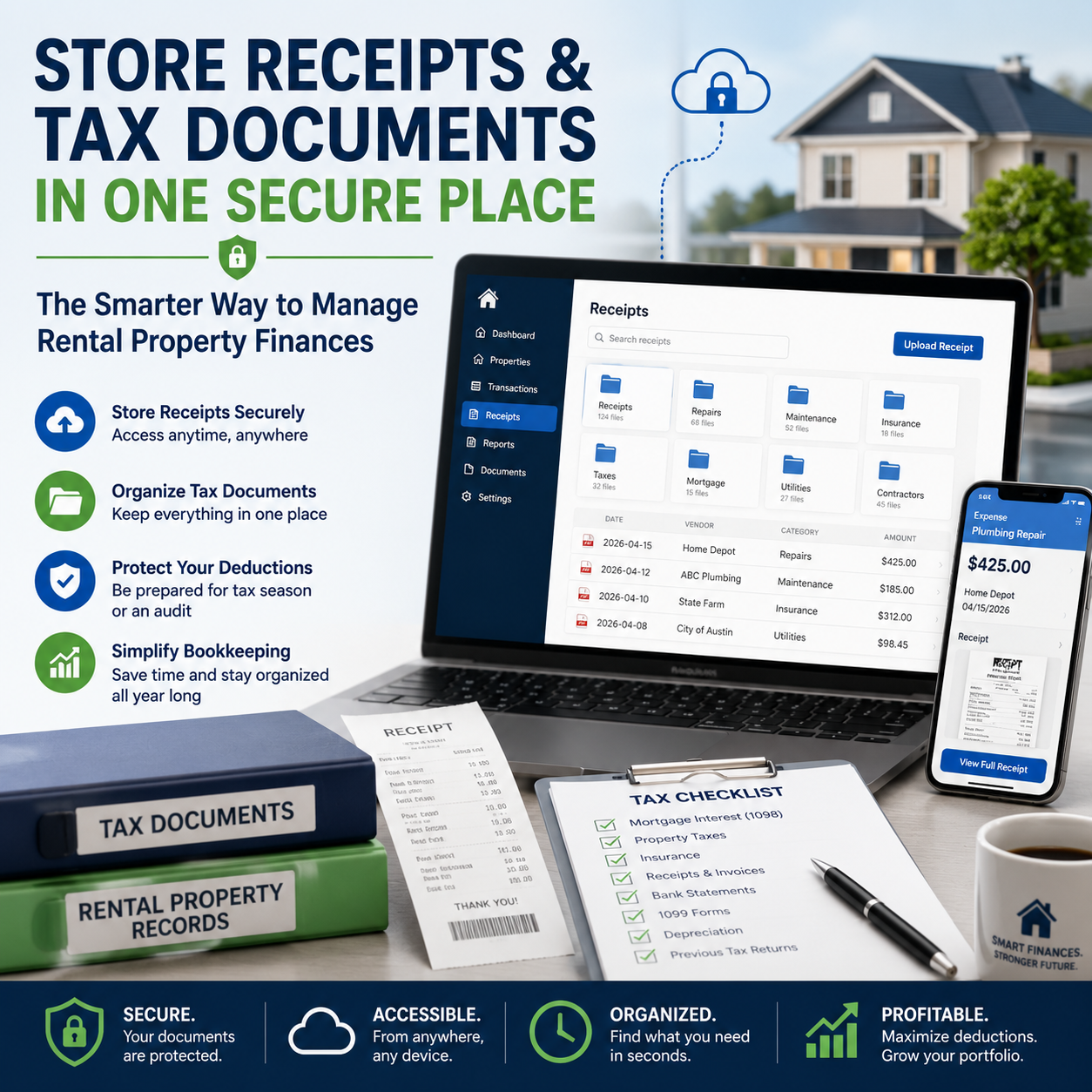
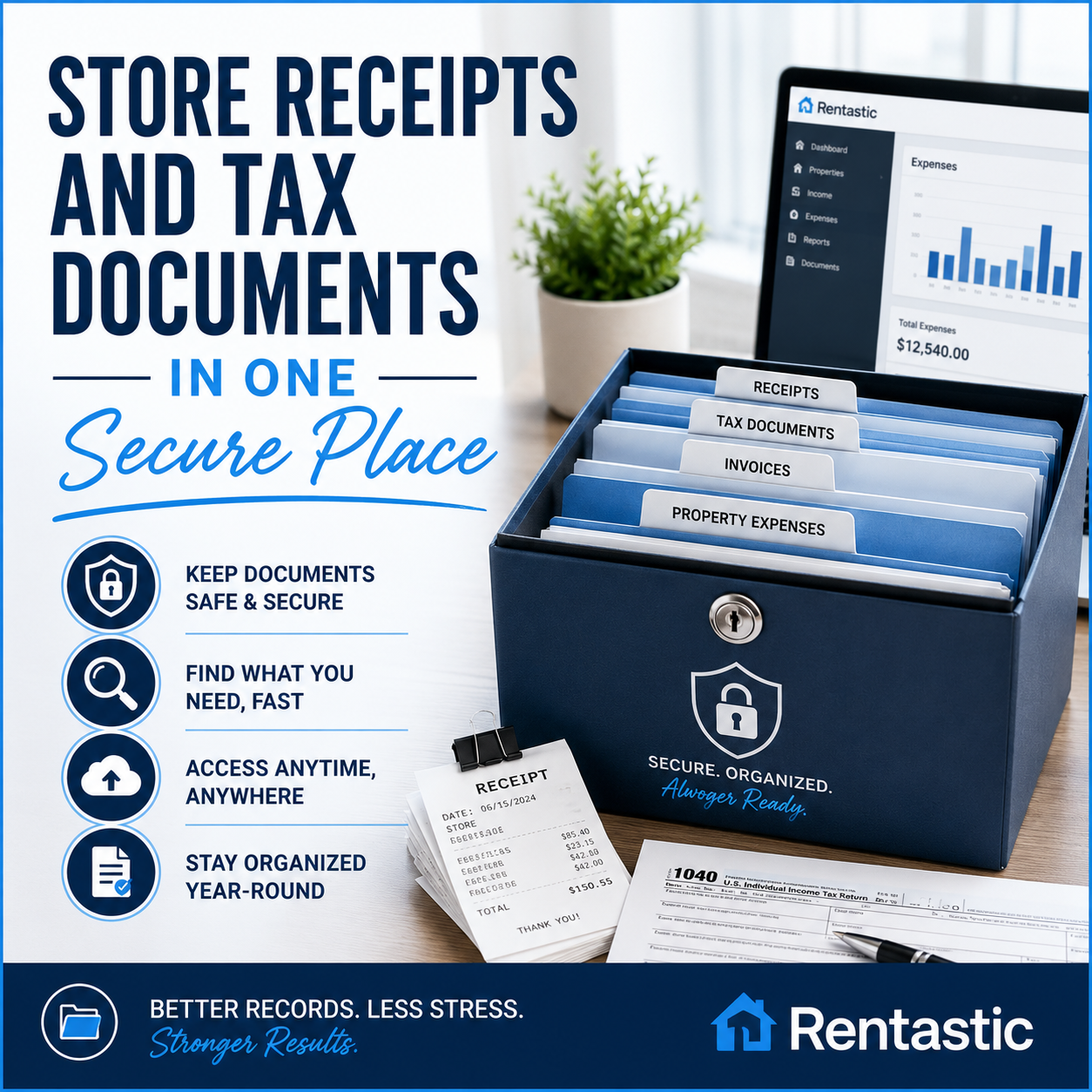
Rentastic lets you snap photos of receipts from your phone and attach them directly to the right transaction. This keeps everything digital, organized, and ready for your CPA or an auditor (Rentastic, Rentastic). Over time, that simple habit can shave hours off tax preparation and reduce anxiety about missing paperwork.
Healthy cash flow depends on rent arriving on time.
Rentastic’s integrated tenant payment system, complete with automated rent reminders and late fee assessments, has been linked to a 25 percent reduction in late rent payments in a 2024 TechRental Insights survey covered by the Rentastic team (Rentastic Blog, Rentastic.io Blog). You get more predictable income, and tenants get consistent, clear communications.
You should not need a bookkeeping degree to log an expense.
Rentastic scored 4.8 out of 5 in 2024 user ratings for ease of use and value, especially on its mobile app for iOS and Android (Rentastic Blog, Rentastic.io Blog). The app supports receipt capture, transaction review, and on the go tracking so you can update records from a work site, lobby, or your car between showings.
Automations are nice, but the real test is whether they move your bottom line.
By automating up to 80 percent of weekly data entry tasks, Rentastic cuts the administrative load sharply (Rentastic.io Blog). At a $50 hourly wage, that can save over $1,000 per month in labor costs for operators who switch from manual spreadsheet methods (Rentastic.io Blog). When you add fewer late payments and faster reporting, the total financial impact is substantial.
These features together are why Rentastic is consistently promoted as the best real estate tracker of 2026, and why it is a strong candidate if you are evaluating tools in that category or searching for the best real estate tracker of 2026 for your own portfolio.
You do not need to rebuild your entire system overnight to benefit from Rentastic. You can get a basic setup live in a weekend and refine from there.
Start by linking:
Rentastic uses Plaid for bank connections, which means it never stores your usernames or passwords. Plaid handles the secure handshake, and Rentastic only receives transactional data, which limits your exposure while still unlocking automation (Rentastic Blog).
Once connected, transactions begin to flow in automatically, often with a backlog of recent activity that you can quickly review and categorize.
Next, set up each property with:
Even with minimal details, tagging each transaction to the right property unlocks true property level P&Ls and cash flow views. Over time, this is what helps you spot high performing doors and potential problem assets.
Rentastic comes preloaded with typical landlord categories, but you can fine tune them to match your CPA’s preferences and your own reporting needs.
Think in terms of:
Once categories are dialed in and mapped to recurring vendors, Rentastic’s auto categorization engine can take over most of the grunt work (Rentastic Blog).
Install the mobile app on your phone and any team devices. Then, create one simple rule for yourself and your staff.
“If we spend money on a property, we snap the receipt into Rentastic before we leave.”
Those 10 second actions prevent lost documents, make audits manageable, and speed up tax time dramatically (Rentastic, Rentastic).
Finally, configure:
The goal is simple. You want actionable summaries in your inbox, not raw data you have to interpret from scratch each time.
Once this foundation is in place, you can explore advanced features like performance dashboards by region, more granular forecasting, and deeper integrations with your property management tools (Rentastic).
One practical tip: pick a clear “go live” date for Rentastic, even if you import older data later. It is easier to keep one clean line in the sand than to chase perfection from day one.
When your tracking improves, your behavior changes. That is where the real ROI appears.
With clean P&Ls and forecasting, you see sooner when a property’s net income is slipping or when rising expenses are starting to crush returns.
Rentastic’s portfolio evaluation tools let you compare properties individually and in groups, which is powerful when you are deciding whether to refinance, sell, or double down on renovations (Rentastic). You stop guessing, and you start running scenarios with real numbers.
In a competitive market, small pricing and cost decisions add up.
By leveraging Rentastic’s data driven insights and scalable tech, landlords can adjust rent pricing more dynamically, manage expenses more precisely, and stay competitive in the 2026 rental market (Rentastic). Patterns jump out quickly. For example, you might see which utilities are rising fastest or which vendors are consistently more expensive than alternatives.
Growth without systems often means chaos. Growth with a strong accounting backbone feels very different.
Rentastic’s automated transaction imports, instant reporting, and customizable dashboards are built to support portfolios that expand into new markets or asset classes (Rentastic). Because it integrates with existing property management tools and includes a tenant portal for communication, you are not juggling five different platforms every time you add a door (Rentastic).
If you plan to keep acquiring, it is worth choosing the best real estate tracker of 2026 early, so you grow into your system instead of constantly ripping it out and starting from scratch.
Not every landlord needs the same level of firepower. Rentastic provides tiered pricing plans so you can match features to your stage (Rentastic Blog).
Because Rentastic automates so much of the bookkeeping process, from transaction imports to reconciliation and P&L reporting, even the higher tier plans can pay for themselves quickly in saved time, reduced errors, and improved decision making (Rentastic Blog, Rentastic).
If you are still unsure, work backward from two questions.
Compare that cost to the automated approach, where Rentastic users often cut manual data entry by up to 80 percent and reduce reconciliation time by about half (Rentastic, Rentastic.io Blog). The math usually becomes clear quickly.
You do not need more spreadsheets. You need a system that quietly keeps everything up to date, surfaces the right numbers at the right time, and gives you the confidence to move faster on deals and decisions.
Rentastic has earned its reputation as the best real estate tracker of 2026 by doing exactly that. It automates bank connections and transaction imports, digitizes receipts, generates instant P&Ls, forecasts cash flow, and scales with your portfolio, all in a landlord friendly package (Rentastic, Rentastic).
Your next step is simple.
Once you see your full portfolio clearly in one place, with the busywork handled for you, it is hard to imagine going back.
RECENT POSTS


© 2025 Rentastic
Rentastic is registered as a trademark. Terms and conditions, features, support, pricing, and service options subject to change without notice.







.png)



























.png)































Comments