

Nearly every rental property owner worries about missing deductions at tax time. The bigger risk often hides in plain sight: misclassifying your rental property expenses. Get repairs and capital improvements wrong and you can quietly lose thousands of dollars over a few years, or invite questions from the IRS that you really do not want.
This is where using a platform like rentastic can change the game. Rentastic is built to help you track and classify expenses correctly, keep an audit ready paper trail, and make the most of the tax rules that favor organized landlords. It will not replace your CPA, but it will help you stop leaving money on the table before your accountant ever sees your numbers.
In this guide you will learn how misclassification happens, what it costs you, and what to do differently, using rentastic as your quiet system in the background.
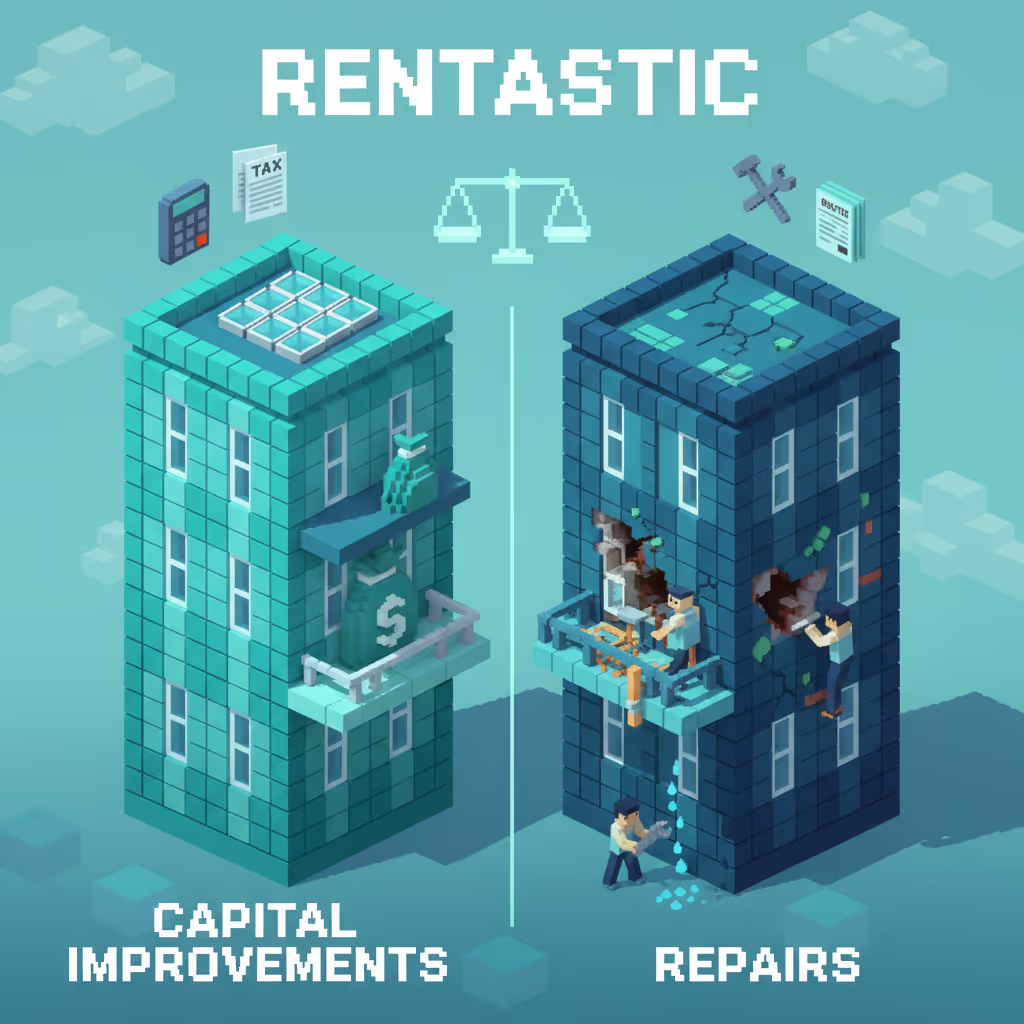
Before you can fix mistakes, you need a clear mental model of the difference between repairs and capital improvements. The IRS draws a sharp line between these two categories, and rentastic is designed around that same distinction.
Repairs are costs that keep your property in good working condition without adding significant value or extending its life. Capital improvements are costs that add value, adapt the property to a new use, or extend its useful life in a meaningful way. The tax treatment of each bucket is very different, which is why getting this right matters so much.
A repair fixes wear and tear or damage and puts the item back in the same usable condition it was in before. It does not upgrade the property or significantly prolong its life.
Common repair examples include:
For tax purposes, repairs are generally deductible in full in the year you pay them, which gives you an immediate reduction in taxable rental income and a direct cash flow benefit (Rentastic Blog). If you misclassify a repair as an improvement, you spread that deduction out over more than 27 years instead of taking it all now.
Capital improvements do more than fix something. They improve, upgrade, or meaningfully extend the life of the property.
Typical capital improvements include:
These costs are not fully deductible in the year you pay them. For residential rentals, you usually have to depreciate them over 27.5 years (Rentastic Blog). That means you only deduct a slice each year.
Rentastic helps you track that difference by letting you tag expenses as repairs or capital improvements in real time, and then generating reports that reflect the correct tax treatment (Rentastic Blog).
On the surface, calling something a repair instead of an improvement, or the other way around, may not feel like a big deal. It is the same cash out of your bank account either way. The cost shows up in your tax bill and in your risk of an audit, not in the invoice itself.
This is the mistake landlords often make when they want a bigger deduction now. The temptation is strong. A 20,000 full roof replacement written off in one year looks amazing on your P and L. The problem is that the IRS views this as a long term capital improvement, and if your records get pulled, that single misclassification can unravel other deductions.
Misclassifying capital improvements as repairs can:
Rentastic helps you avoid this by organizing large or multi invoice projects in one place and keeping clear documentation on what you did and why (Rentastic Blog). When you look back, it is obvious which expenses belong in the improvement bucket.
The opposite mistake is quieter but surprisingly expensive. If you treat a simple repair as a capital improvement, you refuse your own money. Instead of deducting the full cost this year, you lock it up in a long depreciation schedule.
Since repairs are normally fully deductible in the year they are incurred (Rentastic Blog), misclassifying them as improvements delays your tax benefit and raises your current year tax bill. Over a decade of ownership, small mistakes like that can easily add up to thousands of dollars paid earlier than necessary.
Organized landlords who stick to a consistent classification process and reconcile monthly avoid losing between 600 and 1,200 dollars a year in unclaimed rental expense deductions (Rentastic.io Blog). Rentastic’s structure makes it easier for you to be one of those organized owners.
The tax code recognizes that not every property owner is running a giant real estate company. The IRS has created several safe harbor rules that let you treat certain costs as current expenses, even when they sit on the borderline between repairs and improvements.
Rentastic is built to help you spot where these safe harbors might apply so you can maximize your current year deductions while staying firmly inside the rules (Rentastic Blog).
If your property’s total costs for repairs, maintenance, and improvements stay below certain thresholds relative to its value and gross receipts, the Safe Harbor for Small Taxpayers may let you deduct those amounts in the current year instead of capitalizing them.
Rentastic tracks your spending by property and keeps all the numbers in one place, so when you and your tax pro review the year, you can quickly see whether you fall under this safe harbor limit for each rental (Rentastic Blog).
Some maintenance is expected to be done regularly, like servicing an HVAC unit or cleaning gutters. Under the Routine Maintenance Safe Harbor, you can often deduct these recurring costs in full, even if they technically extend the life of a system.
When you log recurring expenses in rentastic, you can tag them clearly and attach service contracts or notes. That creates the audit ready narrative you need to show that this work was routine maintenance, not an upgrade (Rentastic Blog).
The De Minimis Safe Harbor allows you to expense certain lower cost items rather than capitalizing and depreciating them. This is especially useful when you replace smaller components or buy items like appliances or fixtures that fall under the dollar threshold.
Rentastic helps by letting you see all these sub threshold purchases neatly grouped. When you review your year end data, you and your CPA can quickly confirm which items qualify for this safe harbor and make sure they are deducted right away (Rentastic Blog).
The best way to protect yourself and your deductions is to assume you might have to explain any given expense to someone five years from now. That future someone might be you, your accountant, or an IRS examiner. Your memory will not be enough. Your documentation has to do the talking.
Manual spreadsheets and mystery credit card charges are where classification errors breed. Rentastic solves this by automatically importing your bank and credit card transactions and tagging them to the right property (Rentastic Blog). You start with a complete, accurate list instead of patching together numbers at tax time.
This automation does more than save you keystrokes. It makes it far less likely that you will forget a deductible repair or accidentally bury an improvement in the wrong category. With every transaction pulled in, your job shifts from data entry to smart review.
When you repair a leaking pipe or renovate a kitchen, the invoice is only part of the story. The context, what broke, what you replaced it with, and why, is what helps prove whether the cost was a repair or a capital improvement.
Rentastic lets you attach invoices, receipts, and notes to specific properties and transactions, which creates a permanent, audit friendly record (Rentastic Blog). You can jot a quick description like “replaced broken window with same model” or “full tear off and new 30 year roof.” Those half sentence notes can make the tax treatment obvious later.
Rentastic emphasizes this habit for a reason. Clear documentation and consistent categories are your best defense if the IRS asks how you arrived at a deduction (Rentastic).
Once you tag something as a capital improvement, it will live on your books for decades. That long life is both a tax benefit and a recordkeeping responsibility. If you lose track of what you placed in service when, you risk duplicating depreciation or missing it entirely.
Rentastic tracks capital improvements over time and helps you maintain accurate depreciation schedules at the property level (Rentastic Blog). When you reach year end, you are not rebuilding history. You can see each improvement project, its cost, and its start date all in one place. Your CPA has cleaner data, and your returns reflect the actual story of the property.
Even with good habits, some misclassifications will slip through if you only look at your numbers once a year. Monthly reconciliation transforms your books from a tax time scramble into a steady, low stress routine.
Owner statement reconciliation sounds technical, but the idea is simple. Each month, you compare what your bank and credit card statements say happened with what your property manager reports and your own accounting records say happened. You make sure every transaction is complete, accurate, and in the right category (Rentastic.io Blog).
Rentastic’s automation features can flag unmatched or unexpected income and expense transactions, then guide you through reviewing them (Rentastic.io Blog). Instead of combing through full statements line by line, you focus on exceptions.
Consistent reconciliation keeps your books clean in three important ways:
Rentastic reports also show you how well your rent collection is working. Landlords who combine regular bank reconciliation with integrated online payments and tracking reduce late rent payments by about 25 percent because they spot problems faster and act sooner (Rentastic.io Blog).
You might already work with a CPA or tax preparer. That relationship is important. Rentastic does not replace professional advice. It makes that advice easier to follow and much more effective because your numbers are clean, detailed, and ready long before April.
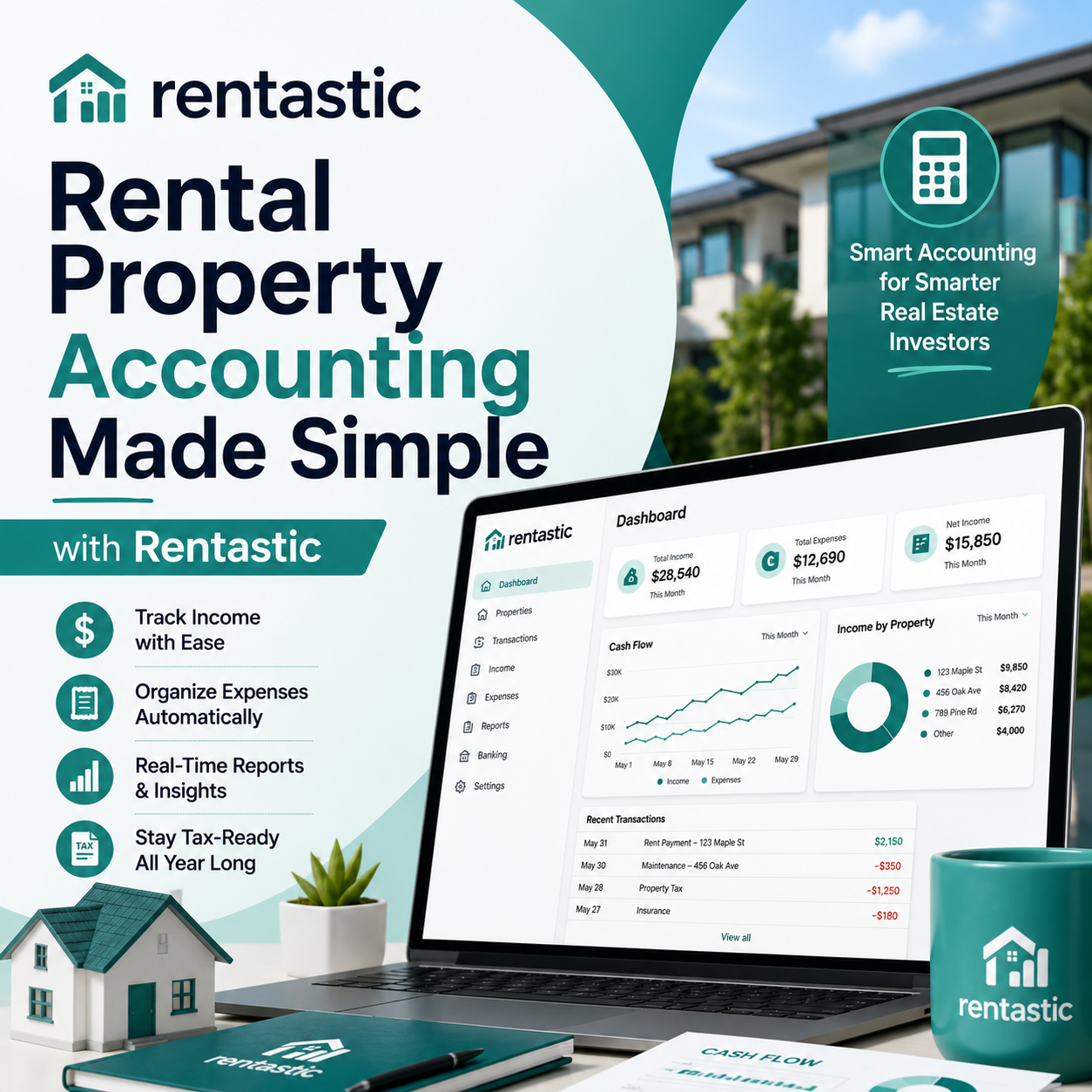
Rentastic automates transaction imports, categorization, and the creation of tax ready profit and loss statements by property or custom date range (Rentastic Blog). Instead of juggling spreadsheets that can lose formulas and break links, you have a single source of truth.
This automation also cuts down on manual admin time by up to 40 percent, because your receipts, mileage logs, and property level notes live in one system instead of scattered in email, glove compartments, and desk drawers (Rentastic.io Blog). That saved time is worth real money, and it also lowers the odds that you misclassify a transaction just because you are rushing.
Property tax deductions are one of your strongest levers as a real estate investor. They reduce your taxable income and increase cash flow so you can reinvest or build reserves (Rentastic).
Rentastic is built to help you capture key deductions reliably by:
Because rentastic separates repairs and maintenance from capital improvements, you and your CPA can trust that current year expenses and long term assets are in the right buckets when you sit down to file (Rentastic).
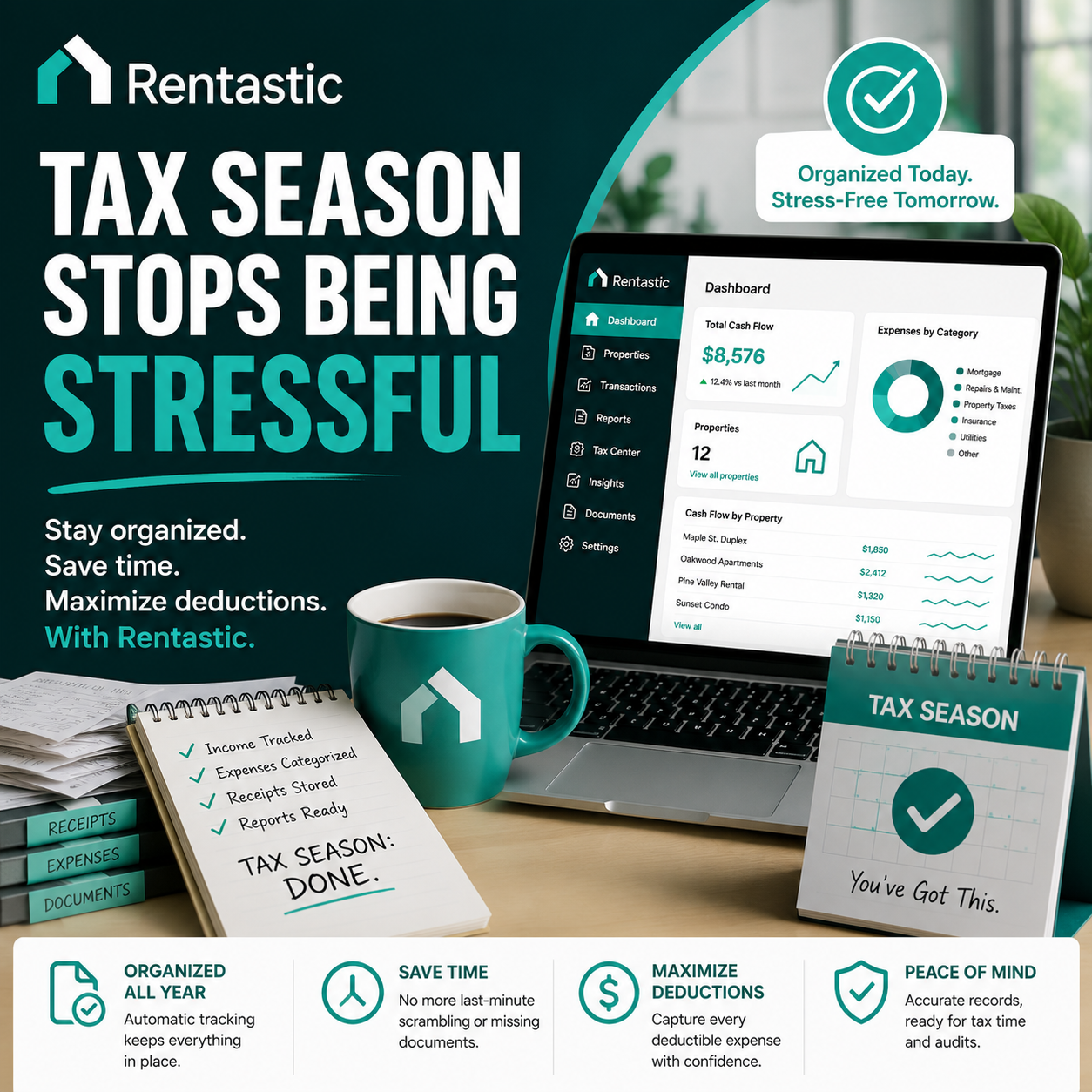
Year end is when sloppy records hurt the most. Rentastic supports a simple closing routine where you review each property’s expenses and depreciation schedules before you file, not after (Rentastic).
That review helps you:
Rentastic calls this ongoing recordkeeping your “quiet superpower” for tax season, because it reduces stress and makes audits less scary by keeping a permanent, audit friendly record of all repairs and capital improvements (Rentastic).
When you combine clear IRS rules, consistent categories, and a system like rentastic, you shift from fearing tax season to using it as a planning tool for your next investment move.
You do not have to rebuild your accounting system overnight. You only need to change how you handle new expenses from this point forward and then clean up the biggest trouble spots behind you.
Here is a simple way to start using rentastic to stop misclassifying expenses and keep more of your rental income:
If you follow that loop, misclassified expenses stop being a guessing game and start becoming rare exceptions you catch quickly. Instead of wondering whether you are overpaying the IRS, you will have the records and reports to show that your deductions are both maximized and defensible.
You worked hard to buy and manage your rentals. With the right process and a tool like rentastic, you can make sure your tax strategy works just as hard.
RECENT POSTS


© 2025 Rentastic
Rentastic is registered as a trademark. Terms and conditions, features, support, pricing, and service options subject to change without notice.








.png)































.png)


































Comments