

One of the most common tax questions real estate investors face is whether a property expense should be classified as a repair or a capital improvement. While the distinction may seem minor, it can have a significant impact on your taxes.
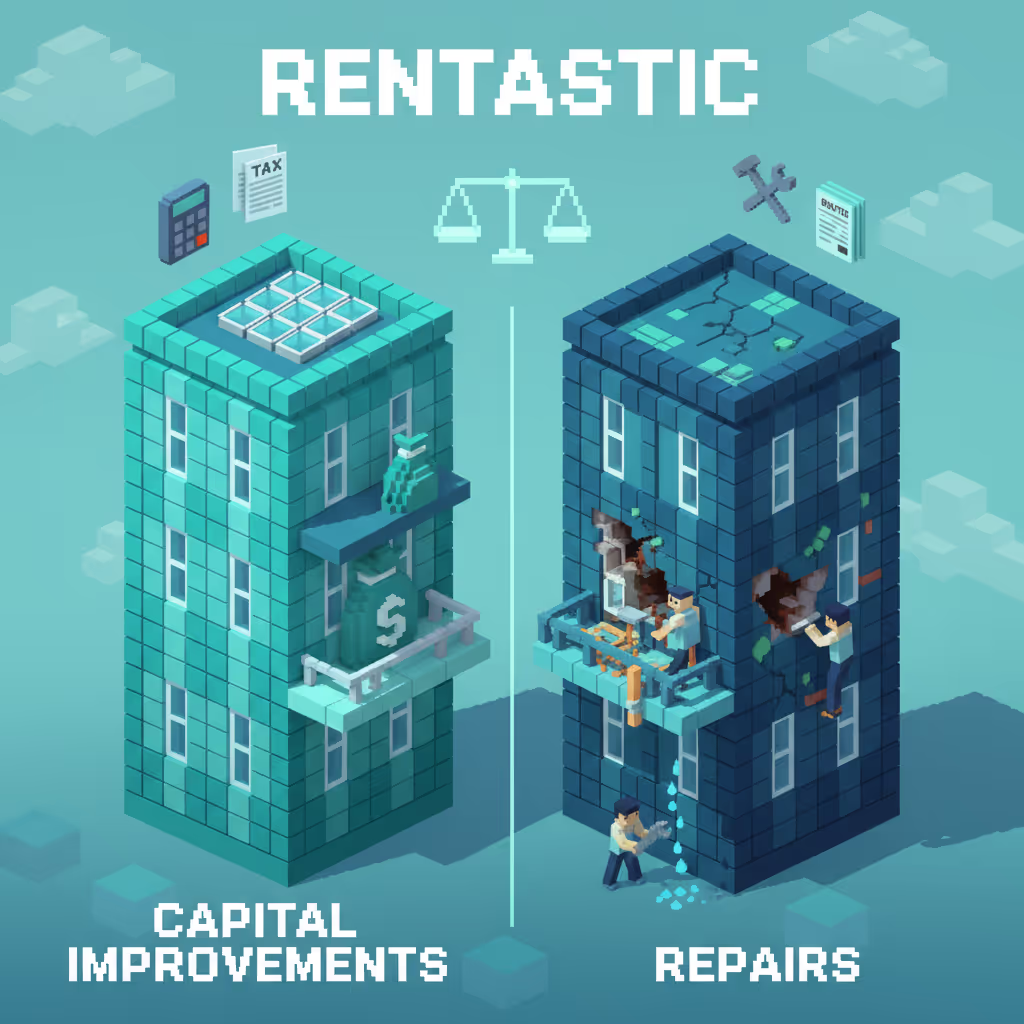
The IRS treats repairs and capital improvements differently. Repairs are generally deductible in the year they occur, while capital improvements must be depreciated over time. Understanding the difference can help you maximize deductions, avoid costly mistakes, and keep your rental property finances organized.
In this guide, we'll break down what qualifies as a repair, what counts as a capital improvement, and how Rentastic can help you stay tax-ready year-round.
When you spend money on your rental property, the IRS wants to know whether you are simply maintaining the property or making it better.
If the expense is considered a repair, you can usually deduct the entire amount during the current tax year. This provides an immediate tax benefit and lowers your taxable rental income.
If the expense is considered a capital improvement, the cost must be added to the property's basis and deducted gradually through depreciation over a number of years.
Classifying expenses correctly is essential because improper deductions can lead to IRS issues, amended returns, or missed tax savings.
A repair is work performed to keep a property in its normal operating condition. Repairs fix existing problems and restore items to their original functionality without significantly increasing the property's value or extending its useful life.
Repairs are considered routine maintenance and upkeep.
Common repair expenses include:
These expenses generally qualify as immediate deductions in the year they occur.
A capital improvement is an expense that adds value to the property, extends its useful life, or adapts it for a new use.
Unlike repairs, capital improvements provide benefits that last for many years. Because of this, the IRS requires property owners to capitalize and depreciate these expenses over time.
Examples of capital improvements include:
These projects often improve the property's overall value and functionality rather than simply maintaining it.
The IRS uses a framework often referred to as the "BRA Test" to determine whether an expense should be treated as a capital improvement.
An expense is considered a betterment if it improves the property beyond its original condition.
For example, replacing basic countertops with premium stone surfaces or upgrading standard windows to energy-efficient models may qualify as betterments.
An expense is considered a restoration if it replaces a major component or substantial structural part of the property.
Examples include replacing an entire roof, rebuilding a damaged structure, or replacing all plumbing throughout a building.
An expense is considered an adaptation if it changes the property's use.
For example, converting a garage into a living space or transforming a residential property into a commercial office would typically be considered adaptations.
If a project meets any of these criteria, it is often classified as a capital improvement rather than a repair.
The distinction between repairs and improvements often becomes clearer when looking at practical situations.
If you replace a few damaged roof shingles after a storm, that's generally considered a repair because you're restoring the roof to its previous condition.
However, if you replace the entire roof, the IRS generally considers it a capital improvement because you're replacing a major component of the property.
Similarly, fixing a broken faucet is usually a repair. Remodeling an entire bathroom, on the other hand, is typically a capital improvement because it adds value and extends the life of the property.
Painting a room between tenants is often considered a repair or maintenance expense. Painting as part of a major renovation project may need to be capitalized along with the larger improvement.
Many real estate investors accidentally misclassify expenses, which can create tax complications later.
One common mistake is deducting large renovation projects as repairs. While it may seem beneficial to take a large deduction immediately, the IRS may require those costs to be capitalized instead.
Another frequent issue is poor recordkeeping. Without receipts, invoices, and detailed project descriptions, it can be difficult to justify how an expense was classified.
Investors also often overlook the fact that a single contractor invoice may include both repairs and improvements. Separating those costs properly can help maximize legitimate deductions while maintaining compliance.
Keeping repairs and capital improvements organized throughout the year can be challenging, especially if you own multiple properties.
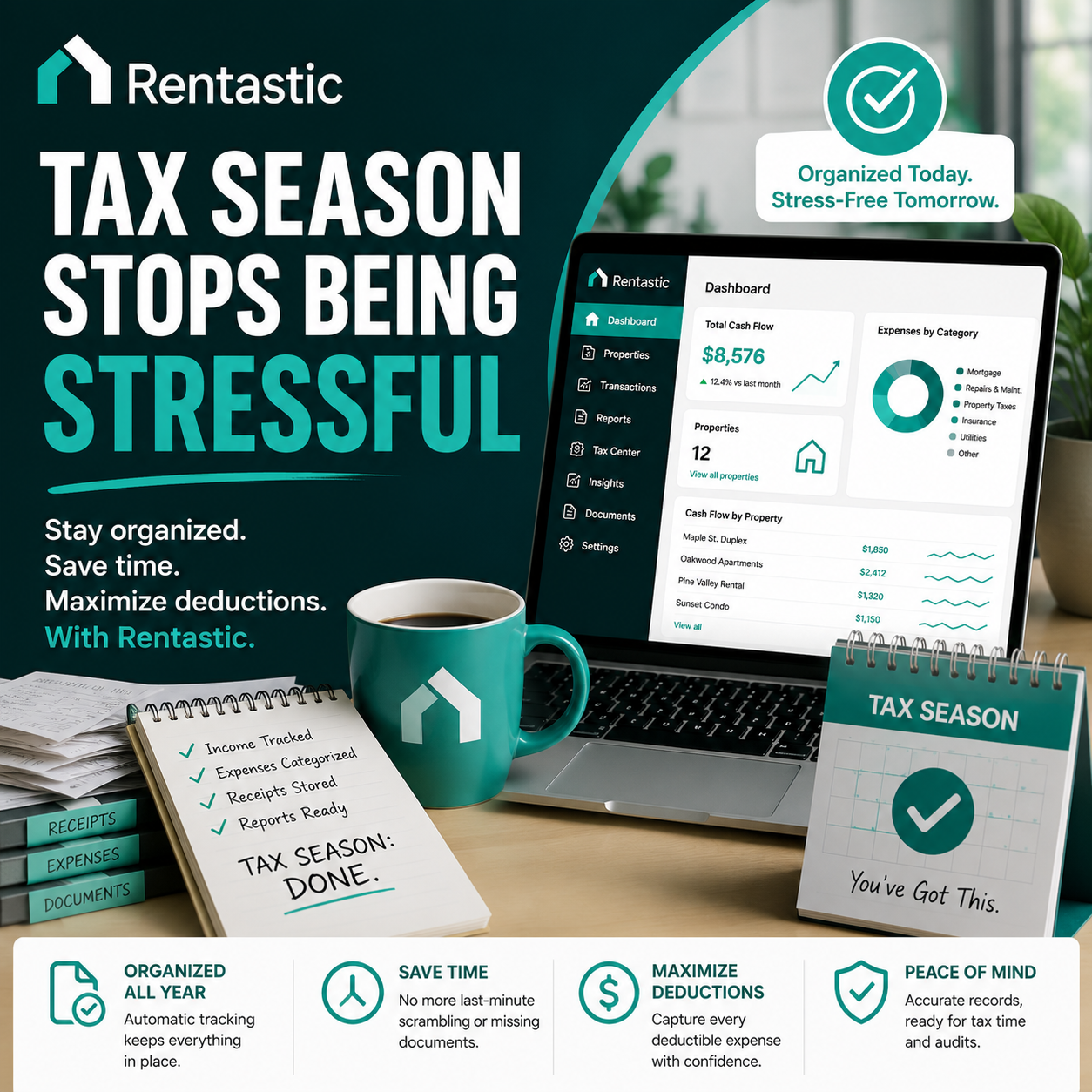
Rentastic makes the process easier by helping investors track expenses, categorize transactions, and maintain accurate records all in one place.
With Rentastic, you can:
Having accurate records not only helps during tax preparation but also gives you a clearer picture of each property's financial performance.
Some expenses fall into gray areas where classification is not always straightforward.
For example, projects involving insurance claims, partial system replacements, major renovations, or mixed-use properties may require additional guidance.
A qualified tax professional can help ensure expenses are classified correctly and that you're taking advantage of all available deductions while remaining compliant with IRS rules.
Understanding the difference between repairs and capital improvements is one of the most important aspects of rental property tax management.
Repairs generally provide immediate deductions, while capital improvements create long-term depreciation benefits. Knowing how the IRS views these expenses can help you make smarter financial decisions and avoid unnecessary tax issues.
The key is maintaining detailed records throughout the year and using a system that keeps everything organized.
Rentastic helps real estate investors stay on top of expenses, track property performance, and simplify tax preparation so that when tax season arrives, you're already prepared.
The better your records today, the easier your tax filing will be tomorrow.
RECENT POSTS


© 2025 Rentastic
Rentastic is registered as a trademark. Terms and conditions, features, support, pricing, and service options subject to change without notice.










.png)
































.png)



































Comments