

If you want to find the best cities for real estate investment in 2026, you cannot just chase headline markets like New York or San Francisco. Many investors are shifting capital to emerging secondary markets where prices are still accessible, cash flow is stronger, and long term growth looks healthy.
This is exactly where a tool like rentastic can help. You are not guessing which city will perform next. You are tracking real numbers like cash flow, ROI, mortgage payments, and expenses in real time across your portfolio and across markets.
Before you pick your next city, it helps to get clear on what makes an emerging secondary market attractive in the first place.
A secondary market is usually a smaller metro that sits below the big national hubs in size and fame, but still has:
Think of places like Tampa instead of Miami, or Austin instead of Los Angeles. These markets can be less crowded, more affordable, and still offer strong rent growth and appreciation.
In 2026, you are likely to see more investors targeting these cities because they often offer:
The key is to stop relying on generic rules of thumb and start measuring performance city by city. Rentastic lets you compare ROI, cash flow, and expenses by city or state so you can pick markets that actually meet your numbers instead of following hype (Rentastic Blog).
In the rest of this guide, you will see how to think about five emerging secondary markets for 2026 and how to use rentastic style data to focus on the ones that match your goals.
Most investors talk about the “best cities for real estate investment” in vague terms. In 2026, your edge comes from knowing your numbers at the portfolio level and at the market level.
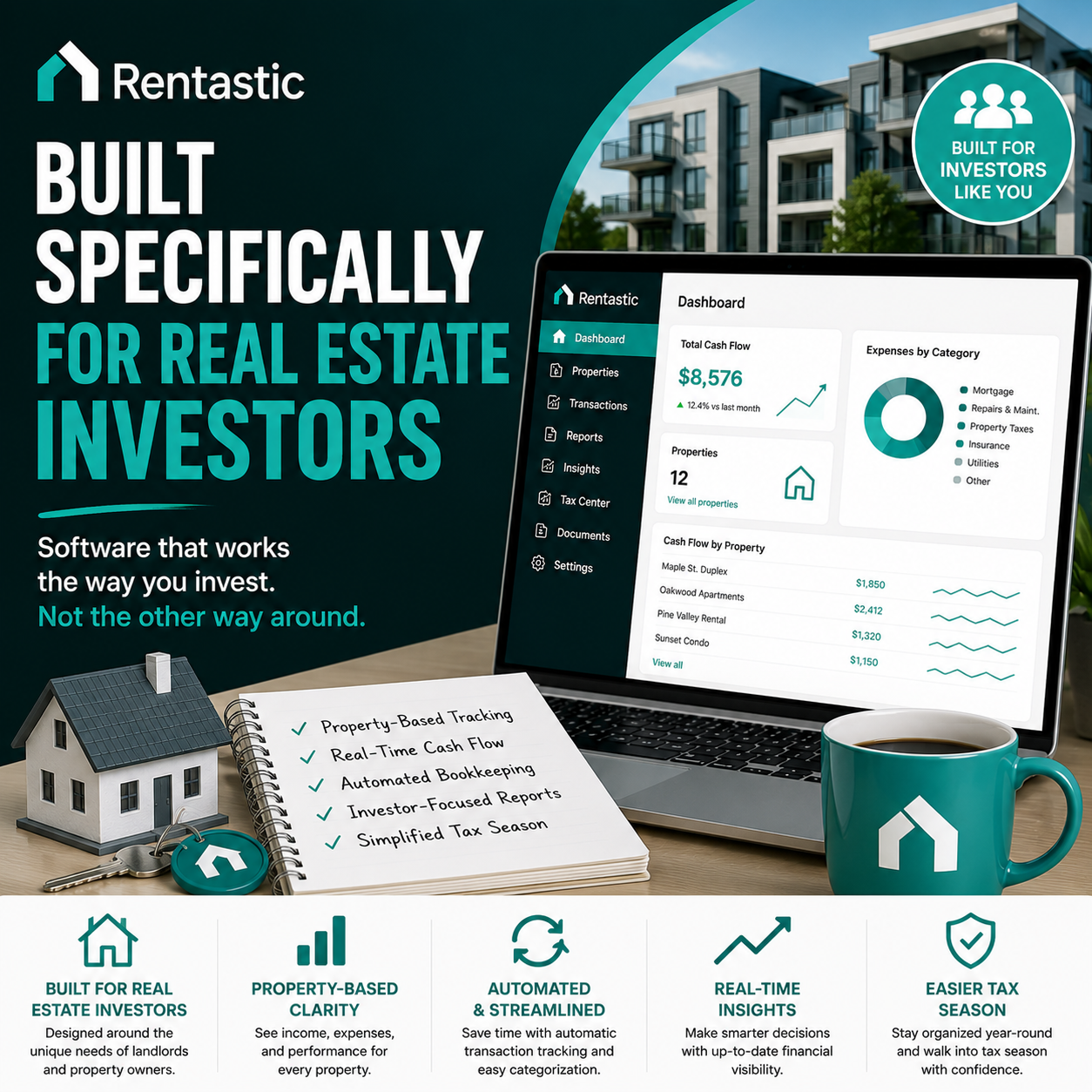
Rentastic is built specifically for real estate investors, not bookkeepers. It organizes the messy parts of your portfolio so you can make cleaner calls about which markets to scale in and which ones to exit (Rentastic).
Here is how that helps with market selection.
Rentastic supports multi market property management so you can see ROI, cash flow, and expenses across different cities and states in one view (Rentastic). You can:
Instead of saying “Austin seems hot,” you can say “Austin units deliver 8 percent cash on cash compared to 5 percent in my other markets.” That is a very different decision.
Not every upgrade pays off the same way in every city. For example, in 2026 you might see:
Rentastic gives you tools to track which amenities actually increase rental ROI and net operating income, not just add upfront cost (Rentastic). In the 2026 context, the platform can show you in markets like Austin how specific upgrades change rent, NOI, and ROI in real time (Rentastic Blog).
This level of insight lets you adapt your value add strategy to each city instead of copy pasting one rehab plan everywhere.
Markets move. Taxes rise. Insurance spikes. Rents flatten. If you are still working off static spreadsheets, you are always behind.
By 2025, Rentastic had already become a central tool for investors who want real time visibility into cash flow, mortgage payments, ROI, and tax related information across all properties (Rentastic).
Key advantages for you in 2026:
If you are evaluating emerging secondary markets, you want this kind of dashboard so you can cut your losses early and scale where the numbers support you.
Scanning receipts and wrangling spreadsheets do not grow your portfolio. Rentastic centralizes your property finances, automates categorization, and creates tax ready reports so you spend more time on market selection and asset strategy (Rentastic).
Compared to generic tools like QuickBooks, Rentastic is designed around how property investors actually think and work. The platform has been described as surpassing QuickBooks in ease of use for multi property investors, especially at tax time (Rentastic Blog).
The result for you in 2026 is simple. You can keep your portfolio organized, stay aligned with emerging trends, and move faster when you see a secondary market that fits your model (Rentastic Blog).
Every investor has a different buy box. Cash flow heavy buyers will not chase the same markets as appreciation focused buyers. So instead of naming one single “best” city, it is more useful to walk through five types of emerging secondary markets you might target in 2026 and how you can analyze each one with rentastic style data.
Think of these as profiles. You can map real cities to them based on your research and on the metrics you see inside rentastic.
This is the smaller metro next to a major tech hub. You typically see:
In a tech satellite market, you might use Rentastic to:
Because Rentastic lets you compare ROI and cash flow by city, you can see whether the satellite market actually offers better returns than its bigger neighbor (Rentastic Blog). If the numbers converge, you might shift strategy or look to profile two.
Some secondary markets attract remote workers who want lifestyle first and city second. Think coastal towns, mountain cities, or warm weather metros that saw inbound migration after 2020.
In a lifestyle market, you often balance:
Rentastic helps you keep this complexity under control by:
With tax ready reports and organized records, you can navigate different local rules with less friction and more clarity (Rentastic).
Another emerging pattern for 2026 is the “affordability escape” market. These are cities that absorb renters who are leaving very expensive metros but still want access to jobs, family, or transportation.
Typical features:
Rentastic gives you the tools to:
Because these markets can change fast, relying on static spreadsheets increases your risk of missing shifts until it is too late. Live analytics help you decide when to keep buying and when to pause.
Many investors will continue to look at Sun Belt or similar warm weather markets where population and job growth have been steady, even if the pace has cooled. The opportunity now lies in picking spots where prices are still reasonable and higher interest rates have pushed some buyers to the sidelines.
In this type of market you are often asking:
Rentastic helps answer those questions through:
If you are already in a market like Tampa Bay where costs fluctuate, Rentastic’s automatic bank sync gives you accurate month to month numbers instead of rough estimates (Rentastic Blog).
Finally, there are secondary markets that rarely show up in headlines but quietly deliver solid, boring cash flow. These are attractive for investors who prioritize stability and long term hold strategies.
Traits usually include:
In these markets, your edge comes from discipline and clean systems. Rentastic supports you by:
By 2025, 71 percent of landlords were already tracking portfolio performance professionally and using platforms like Rentastic to “know their numbers” and optimize profits (Rentastic). In 2026 and beyond, treating your Midwest or cash flow markets the same way will keep your stable returns truly stable.
Once you narrow your list to a handful of candidates, you need a consistent way to compare them. Rentastic provides portfolio wide analytics and calculators so you can make that call with confidence instead of gut feel.
Here are the main levers to focus on.
For every potential secondary market in 2026, you want a clean view of:
Rentastic’s rental property ROI calculator gives you fast, accurate calculations so you can avoid bad deals and identify profitable properties quickly (Rentastic). Once the property is in your portfolio, the platform tracks ROI and cash flow in real time (Rentastic).
Looking at one deal is helpful. Looking across all deals in a city is powerful. Rentastic’s portfolio analytics let you:
This supports a much sharper view of “best” markets for you in 2026. A city that looks great in national reports might underperform your existing markets once you factor in your real operating numbers.
In some secondary markets, especially those that have seen strong appreciation since 2020, you can unlock more returns through refinance or 1031 exchange strategies.
Rentastic helps by:
Instead of guessing whether a refinance or exchange makes sense, you can see the impact in your numbers before you commit.
The best city on paper can become the wrong city in practice if taxes and admin complexity eat your returns. In 2026, you want your systems to be as strong as your market thesis.
Every new state or city you enter comes with new tax rules, fees, and filing obligations. Rentastic makes this more manageable by:
This reduces the risk that your emerging market experiment turns into a paperwork headache. It also frees your CPA to give higher level guidance instead of chasing missing documents.
Emerging secondary markets can shift quickly if a major employer leaves, a new tax is introduced, or zoning rules change. Rentastic supports active risk monitoring by:
Because Rentastic centralizes large portfolios, even investors with 50 or more units can see changes at a glance instead of sifting through individual spreadsheets (Rentastic Blog).
When a market performs well, it is easy to keep buying without revisiting your strategy. Rentastic keeps you honest by making it obvious which cities:
Since the platform is built for investors of all sizes, from single property owners to those with dozens of units, you can grow deliberately instead of reacting transaction by transaction (Rentastic).
In 2026, the “top five emerging secondary markets” for you will not be a generic list from a national headline. They will be the cities where your real numbers align with your goals and risk tolerance.
Here is a simple way to move forward using a rentastic style approach:
By using data driven tools like rentastic, you turn “best cities for real estate investment in 2026” from a guess into a measurable strategy. Your emerging secondary markets are out there. The difference now is that you can see, in real time, which ones actually deserve more of your capital.
RECENT POSTS


© 2025 Rentastic
Rentastic is registered as a trademark. Terms and conditions, features, support, pricing, and service options subject to change without notice.
















.png)




























.png)





























Comments