

Managing a rental property involves more than collecting rent and paying the occasional repair bill. Every payment, expense, receipt, and transaction affects the financial performance of your investment.
Good bookkeeping helps landlords understand where their money is going, prepare for tax season, identify potential deductions, and make better decisions about their rental properties.
Whether you own one rental or manage a growing portfolio, building a simple bookkeeping system can save you time and help you stay in control of your finances.
Landlord bookkeeping is the process of recording and organizing the financial activity associated with your rental properties.
This typically includes tracking:
The goal is simple: you should be able to see how much money each property earns, how much it costs to operate, and how it is performing financially.
Accurate bookkeeping isn't just about keeping records organized. It can directly affect how effectively you manage your investments.
Rental property owners may have numerous deductible expenses throughout the year.
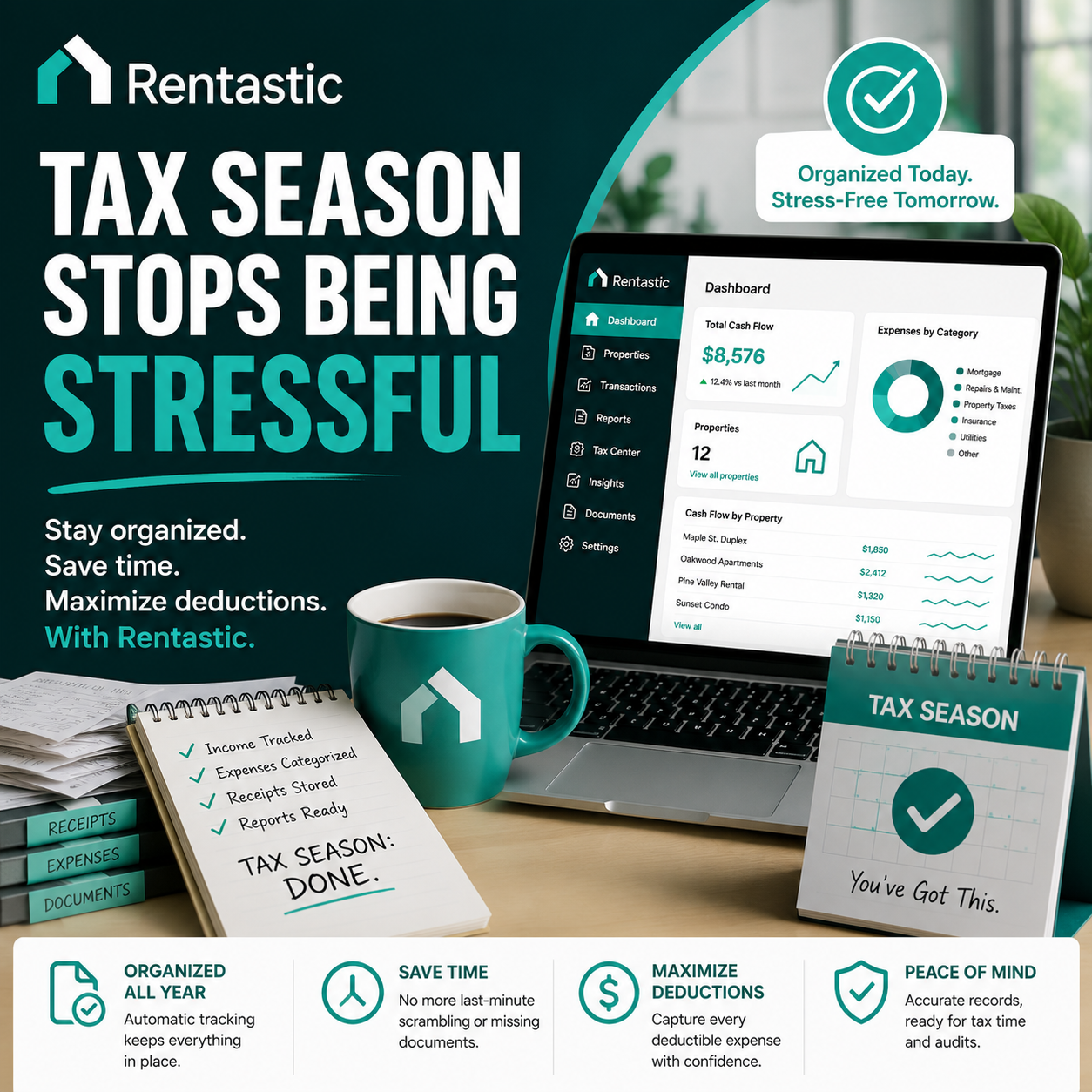
Keeping transactions properly categorized and maintaining supporting documentation can make it much easier to prepare your records for your tax professional and complete tax forms such as Schedule E.
Instead of sorting through months of bank statements at tax time, you'll already have organized financial records available.
A property may generate thousands of dollars in rent each month, but that doesn't necessarily mean it is highly profitable.
You also need to account for expenses such as:
Rental Income – Operating Expenses = Cash Flow
Tracking these numbers regularly gives you a clearer picture of how your property is actually performing.
Small expenses can quickly add up.
Regularly reviewing your transactions can help identify rising maintenance costs, unexpected fees, unusually high utility bills, or other expenses that may be reducing your profitability.
Understanding these costs gives you an opportunity to make adjustments before they become larger problems.
One of the simplest ways to improve your rental property bookkeeping is to separate rental activity from personal spending.
Consider using dedicated bank accounts or credit cards for rental property transactions.
Keeping finances separate can make it easier to:
Mixing personal and rental transactions can create unnecessary bookkeeping work and make financial reporting more difficult.
Rent is usually the largest source of rental income, but it may not be the only one.
Depending on your properties, income could include:
Recording all rental-related income provides a more accurate picture of how much revenue your property generates.
Simply recording an expense isn't enough. Expenses should also be placed into appropriate categories.
Common rental property expense categories include:
Consistent categorization makes financial reports more useful and can simplify tax preparation.
A bank transaction tells you that money was spent, but it may not explain exactly what was purchased or why the expense was related to your rental business.
That's why landlords should maintain supporting documentation.
Depending on the transaction, this could include:
Digital recordkeeping can make these documents easier to organize and retrieve when needed.
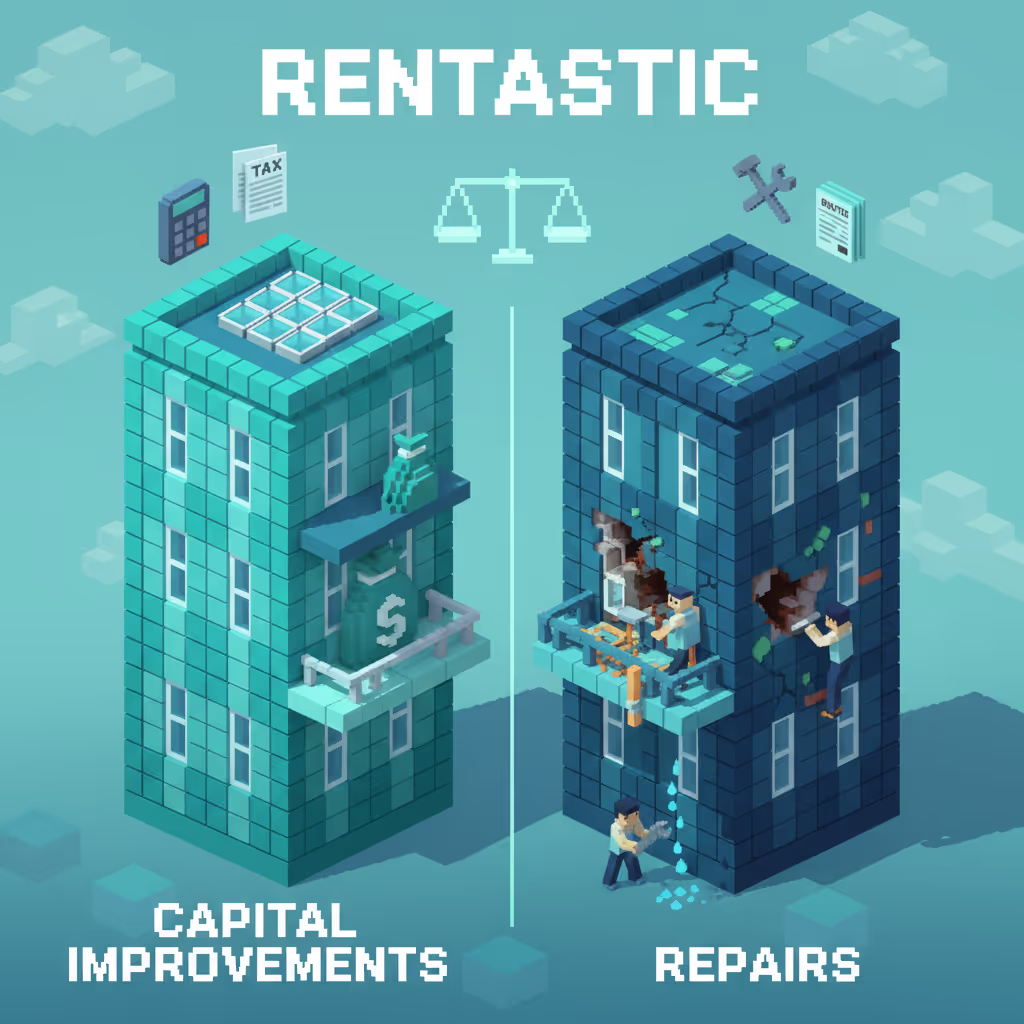
Not every property expense is treated the same way for accounting or tax purposes.
A routine repair may generally be considered an operating expense, while a major improvement may need to be capitalized and depreciated over time.
For example, fixing a broken section of plumbing may be treated differently from replacing an entire plumbing system.
Because the tax treatment can depend on the specific situation, landlords should maintain detailed records and consult a qualified tax professional when necessary.
Don't wait until the end of the year to review your books.
Set aside time each month to check that your bookkeeping records match your actual bank and credit card activity.
During your monthly review:
A short monthly bookkeeping routine can prevent hours of cleanup later.
If you own multiple rentals, looking only at your total portfolio can hide important information.
One property might be performing exceptionally well while another is consuming a large portion of your cash flow through repairs and maintenance.
Tracking income and expenses by property allows you to compare performance and identify which investments may need attention.
Bookkeeping becomes much more valuable when you turn your records into useful financial information.
Reports can help you answer questions such as:
Instead of relying on your bank balance, you can use actual financial data to guide your decisions.
Managing spreadsheets, receipts, bank statements, and property records separately can become difficult as your rental portfolio grows.
Rentastic helps rental property owners organize their finances in one place.
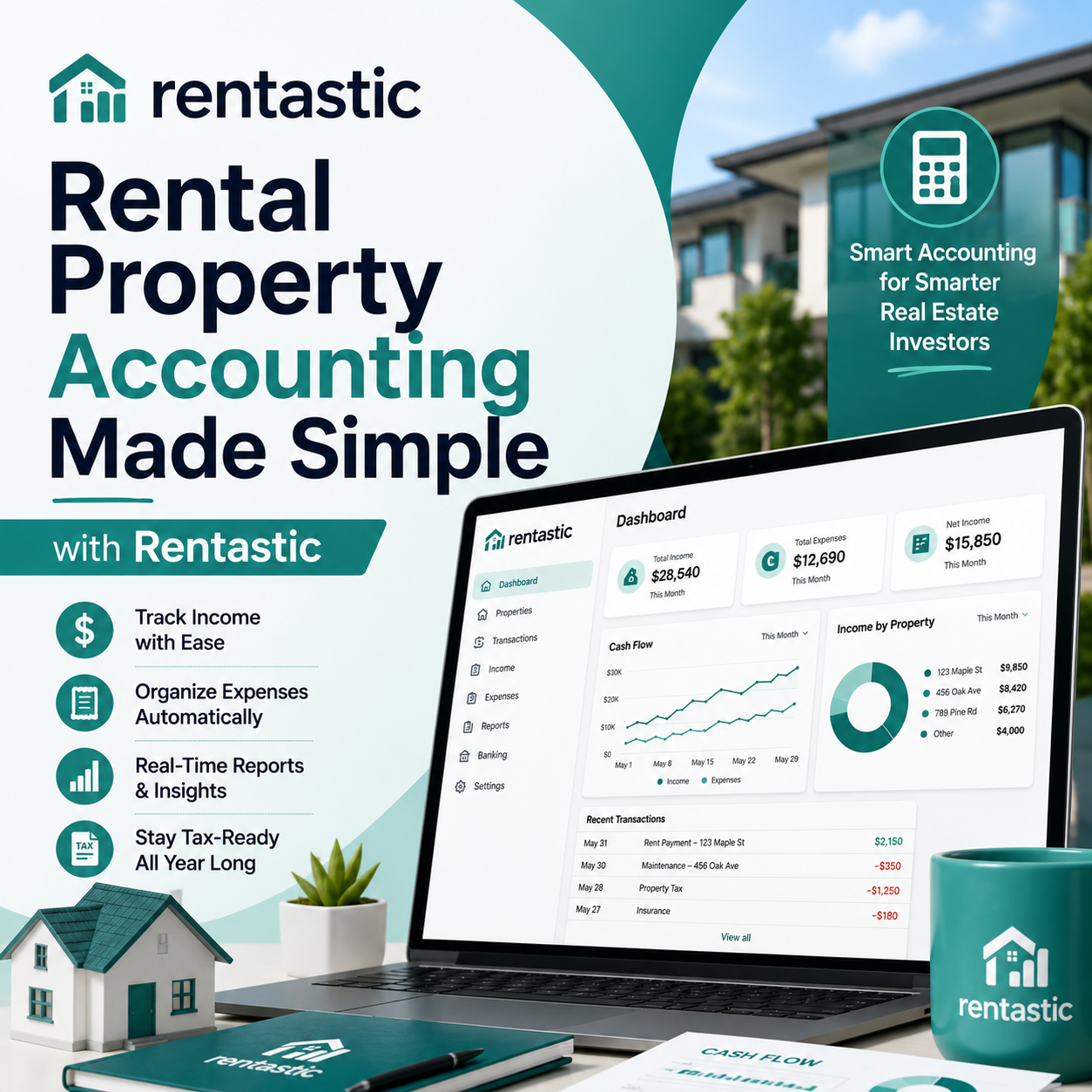
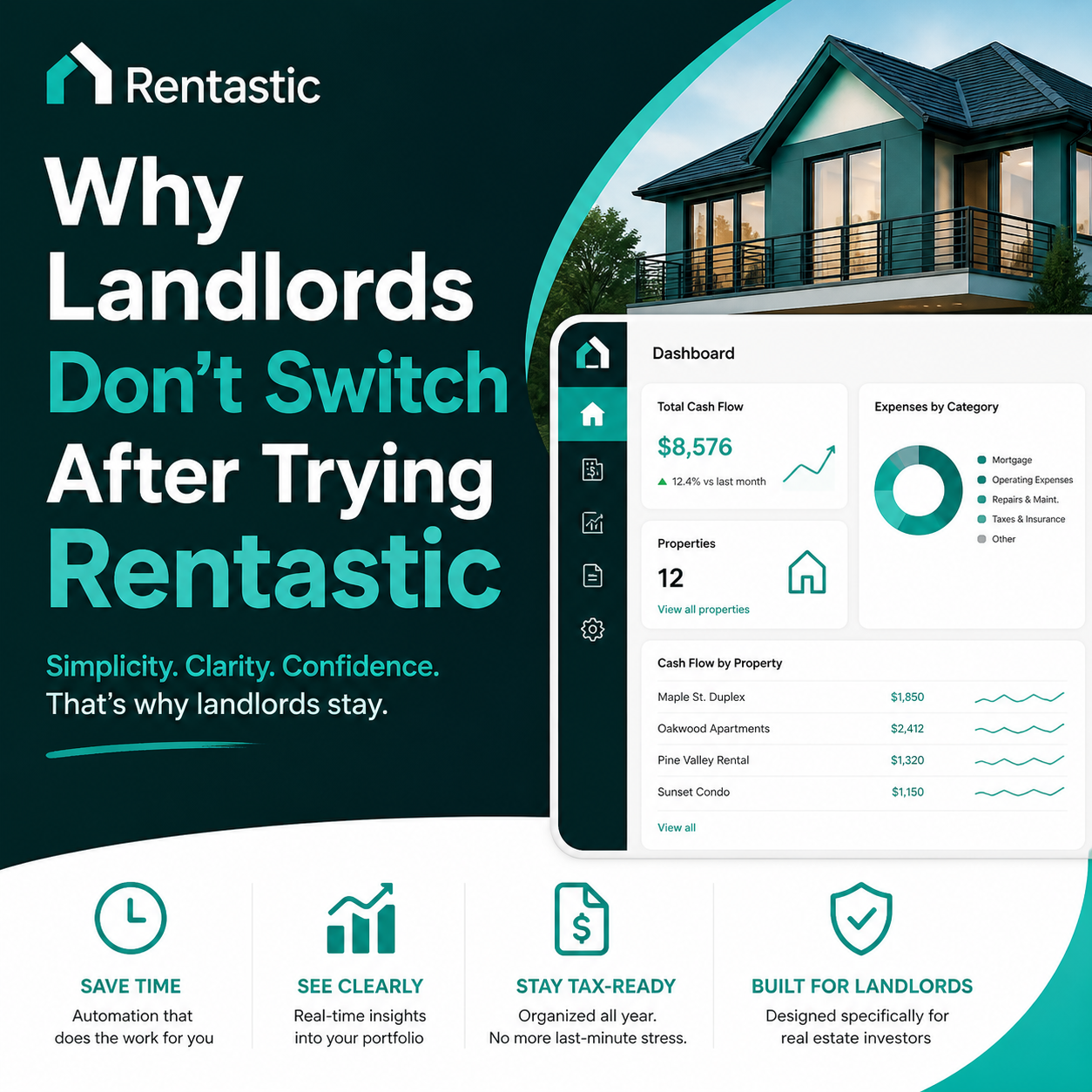
With Rentastic, landlords can connect financial accounts, track rental income and expenses, categorize transactions, assign activity to individual properties, organize receipts, and generate financial reports.
Instead of spending hours manually organizing financial records, you can build a more streamlined bookkeeping process throughout the year.
Good landlord bookkeeping doesn't have to be complicated.
The key is consistency.
Keep your rental finances separate, record income and expenses, save supporting documents, categorize transactions correctly, and review your books regularly.
A few minutes of bookkeeping throughout the month can save hours of work later—and give you a much clearer understanding of how your rental properties are performing.
Ready to simplify your rental property bookkeeping?
With Rentastic, you can organize your rental income, expenses, transactions, receipts, and property finances in one place—giving you more time to focus on growing your rental portfolio.
This article is for general educational purposes and should not be considered tax, accounting, or legal advice. Consult a qualified professional regarding your specific situation.
RECENT POSTS


© 2025 Rentastic
Rentastic is registered as a trademark. Terms and conditions, features, support, pricing, and service options subject to change without notice.
















.png)
































.png)






























Comments