Understand cap rate basics
As a real estate investor, you need a simple metric to compare potential deals and gauge returns. The capitalization rate, or cap rate, does exactly that by showing the ratio of a property’s annual net income to its market value. With one percentage you can benchmark investments, size up risk, and spot opportunities across neighborhoods and asset types.
Define cap rate
Cap rate is calculated by dividing Net Operating Income (NOI) by the property’s current market value, then multiplying by 100 to express the result as a percentage. For example, a property generating $50,000 in NOI on a $500,000 value yields a 10 percent cap rate (Rentastic).
Formula
- Calculate NOI (gross rental income minus operating expenses)
- Divide NOI by market value or purchase price
- Multiply by 100
Why cap rate matters
A clear cap rate helps you:
- Compare apples to apples across different markets and property types
- Estimate your annual return before financing costs
- Gauge relative risk (higher cap rates can signal higher risk and vice versa)
- Speed up early screening so you spend more time on due diligence
Cap rate vs cash on cash return
While cap rate focuses on income against value, cash on cash return looks at actual cash invested. Here’s a quick comparison:
| Metric |
Formula |
Focus |
| Cap rate |
(NOI / property value) × 100 |
Overall yield on asset |
| Cash on cash return |
(annual pre-tax cash flow / total cash invested) × 100 |
Return on your cash outlay |
By using both metrics you get a fuller picture: cap rate for income yield, cash on cash for your real liquidity return.
Calculate your cap rate
Crunching cap rate by hand takes only minutes once you gather the right data. Follow these steps to get your percentage and see how any property stacks up.
Gather required data
- Project gross rental income
- Estimate additional income (parking fees, laundry, storage)
- Subtract vacancy and credit loss
- Total operating expenses (management fees, maintenance, insurance, utilities)
- Confirm current market value or your purchase price
Compute net operating income
Net Operating Income equals adjusted gross income minus operating expenses. Be sure to exclude:
- Mortgage payments
- Principal and interest on loans
- Income taxes
- Major capital expenditures
Example calculation
- Gross rent: $60,000
- Other income: $2,000
- Vacancy loss (5 percent): $3,100
- Operating expenses: $14,900
- NOI = ($60,000 + $2,000 – $3,100 – $14,900) = $44,000
Determine property value
You can use:
- Recent purchase price
- Professional appraisal
- Comparable sales in your target market
Choose the value that best reflects current market conditions.
Plug your numbers into the cap rate equation:
Cap rate = (NOI / Property value) × 100
Example
- NOI: $44,000
- Value: $550,000
- Cap rate = ($44,000 / $550,000) × 100 = 8 percent
Or try the cap rate calculator to speed up the math and test multiple scenarios in seconds.
Use a cap rate calculator
When you’re evaluating more than one property or running what-if analyses, a digital tool can save you hours.
Key benefits
- Instant results as you tweak rents or expenses
- Scenario planning: test renovation costs, rent hikes, expense cuts
- Side-by-side comparisons of multiple properties
- Integrated cash flow and ROI charts
Essential features
Look for a calculator that lets you:
- Input adjusted rents, expenses, and vacancy assumptions
- Select purchase price or current market value
- Compare cap rate alongside DSCR and cash-on-cash return
- Save and export your property profiles
Walk through an example
- Enter gross rent and other income streams
- Fill in operating expense line items
- Input purchase price or market value
- Review the automatically generated cap rate
- Adjust inputs (rent increase, expense reduction) to see impact
When you use a cap rate calculator, you can iterate quickly until you find the mix of rent levels, expense targets, and renovation plans that maximizes your return.
Interpret cap rate results
Once you have a cap rate, you need context to decide if it’s attractive for you.
Identify a good cap rate
What counts as “good” depends on:
- Market location and asset class
- Your risk tolerance and investment goals
- Current interest rates and macroeconomic trends
As a rough guide:
- 5 – 8 percent in core urban markets
- 8 – 12 percent for value-add or secondary locations
- Above 12 percent often signals higher risk or distressed assets
You can benchmark against metro-level averages provided by industry sources to see where your property stands (Rentastic).
Consider influencing factors
Several dynamics can move cap rates up or down:
- Market conditions and interest rates
- Property type (multifamily, retail, industrial)
- Condition of the asset and recent renovations
- Quality of property management
- Local supply and demand balance
Research each factor to make sure your cap rate reflects true earning power rather than temporary market distortions (Rentastic).
Balance risk and return
Higher cap rates typically signal higher risk:
- Emerging or secondary markets
- Older properties needing capital improvements
- Tenants with weaker credit
Lower cap rates usually mean:
- Stable markets with strong demand
- Newer or Class A assets
- Blue-chip tenants under long-term leases
Decide where you fall on the risk spectrum and choose cap rates that align with your investment strategy.
You can also test market benchmarks in the cap rate calculator to see how your property stacks up against peers.
Compare properties by cap rate
When you have data for several deals, a comparison table helps you visualize differences at a glance.
Set up a comparison table
| Property type |
NOI |
Value |
Cap rate |
Cash on cash |
| Urban multifamily |
$120,000 |
$1,333,000 |
9 percent |
12 percent |
| Suburban single-family rental |
$45,000 |
$643,000 |
7 percent |
10 percent |
| Small retail strip center |
$80,000 |
$800,000 |
10 percent |
15 percent |
Use market benchmarks
- Compare your cap rates to city-wide averages
- Adjust for property age and condition
- Factor in local vacancy and rent growth trends
By matching your numbers against broader data you uncover which deals offer above-average value and which may carry hidden risks.
Improve your cap rate
Boosting your cap rate increases projected return and can make your listing more attractive to potential partners or lenders.
Increase net operating income
- Raise rents to market levels or add premium units
- Minimize vacancy with proactive marketing and tenant retention
- Introduce ancillary income (storage, parking, laundry)
Cut operating expenses
- Shop and renegotiate service contracts (landscaping, security, cleaning)
- Implement energy efficiency upgrades to lower utility bills
- Perform preventative maintenance to avoid costly emergency repairs
Optimize financing and management
- Refinance into lower interest loans to improve cash flow
- Use professional property management to reduce turnover and streamline operations
- Leverage tax strategies like cost segregation to boost after-tax NOI
Each improvement can add a fraction of a percent to your cap rate, compounding your total return over time.
Consider cap rate limitations
Cap rate is a powerful screening tool, but it doesn’t tell the whole story.
Account for excluded costs
- Financing structures (mortgage payments)
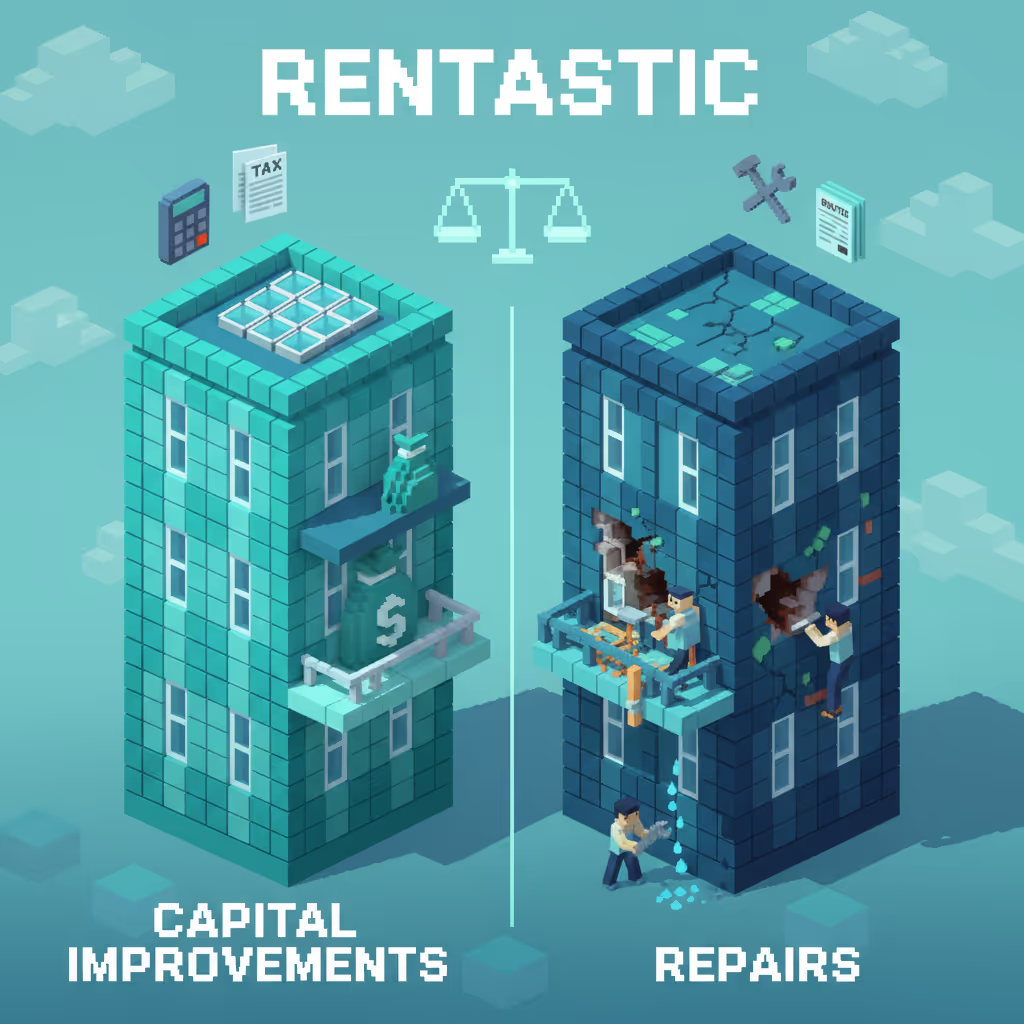
- Major capital expenditures (roof, HVAC, structural repairs)
- Broker fees and closing costs
Understand financing impacts
Different debt terms can dramatically change your net cash flow even if the cap rate stays the same. Always layer in your expected mortgage rate and amortization schedule.
Watch market dynamics
Cap rates shift with economic cycles. Rising interest rates often push cap rates up, while strong rental demand can compress them. Monitor macro trends to keep your targets realistic (Rentastic).
Plan next steps
With a solid grip on cap rate you’re ready to integrate it into a broader investment playbook.
Combine with other metrics
- Debt service coverage ratio (DSCR) for lender requirements
- Cash on cash return for liquidity analysis
- Internal rate of return (IRR) for total return over time
Monitor your portfolio
Set recurring reviews of each asset’s cap rate as rents, expenses, and values change. You can revisit the cap rate calculator for ongoing analysis and adjust your strategy in real time.
Seek professional advice
Whether you’re just starting or scaling up, lean on brokers, accountants, and property managers. Their market insights and due diligence support help you make more confident decisions.
By mastering cap rate calculation, interpretation, and application, you’ll have a core tool to evaluate deals, balance risk and reward, and grow your real estate portfolio with clarity and confidence.











.png)
























.png)






























Comments